
On January 25, 2011, the Los Angeles-based journalist and publisher Elio Zarmati received a phone call from an old friend in Switzerland he had grown up with in Egypt. Their conversation was about the popular uprising, centered in and around Cairo’s Tahrir Square, that had erupted in Egypt and would lead to the resignation of President Hosni Mubarak.
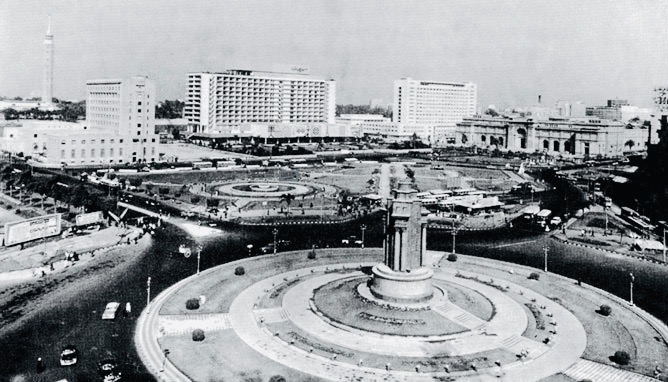
Tahrir Square, named in celebration of Egypt’s independence from Britain, summoned up a mountain of memories for Zarmati. During his final two years in Egypt, he and his father lived in a hotel around the corner from the square, while his mother and her new husband dwelled in a nearby penthouse apartment.
“I had walked through Tahrir Square in joy and in distress, in exuberance and in abysmal misery,” he writes in his often gripping memoir, Goodbye, Tahir Square: Coming Of Age As A Jew Of The Nile (Cherry Orchard Books/Academic Studies Press).
As a child, he had witnessed a previous political upheaval, the revolution of 1952. It spelled finis to the monarchy, ushered in an Arab nationalist government under the eventual leadership of Gamal Abdel Nasser, and drove tens of thousands of Jews to emigrate amid a wave of anti-Zionist fervor.
On January 26 of that fateful year, from the balcony of his grandmother’s residence, Zarmati and his family witnessed Cairo “go up in flames.” Flatbed trucks disgorged hordes of men wielding sticks and torches and yelling anti-British and anti-Zionist slogans.
“For us, Levantine Jews born and raised in Egypt, Nasser’s military coup marked the end of an era that began four thousand years earlier, when Joseph of the many-colored coat was sold into slavery in pharaonic Egypt. In its effort to rally a country still reeling from its defeat in Palestine, the new regime was quick to equate Judaism with Zionism and make the Jews enemies in their native country. In a few months, large numbers of Jews would be expelled, their assets confiscated, and the remaining Jews would become pariahs. In the end, Egypt would be cleansed of its Jews, and all that would remain would be shuttered synagogues, desecrated cemeteries, and a few vestiges of the powerful Jewish culture that had flourished in the land since the early Iron Age.”
This revolution left Zarmati, a U.S. citizen today, profoundly ambivalent about his homeland.
“We share a birthplace, but we’re mortal enemies,” he writes of the fraught relationship between contemporary Arabs and Jews. “Decades of enmity, a succession of wars, and rivers of blood separate us. We’re enemies, even though Egypt and Israel signed a peace treaty …”
The current generation of Egyptians “do not know that there is such a thing as Egyptian Jews,” he adds sadly.
While Zarmati recognizes that Nasser restored Egyptians’ pride in their nation, he is conflicted by him. “I would have loved him too, were it not for his eagerness to wipe the Jews off the maps of the Arab world.”
Zarmati and his father remained in Cairo for another eight years following the revolution, but in their minds, the vibrant, cosmopolitan city they loved had vanished.
In his vivid book, he summons up memories of a place and a time that shaped him.
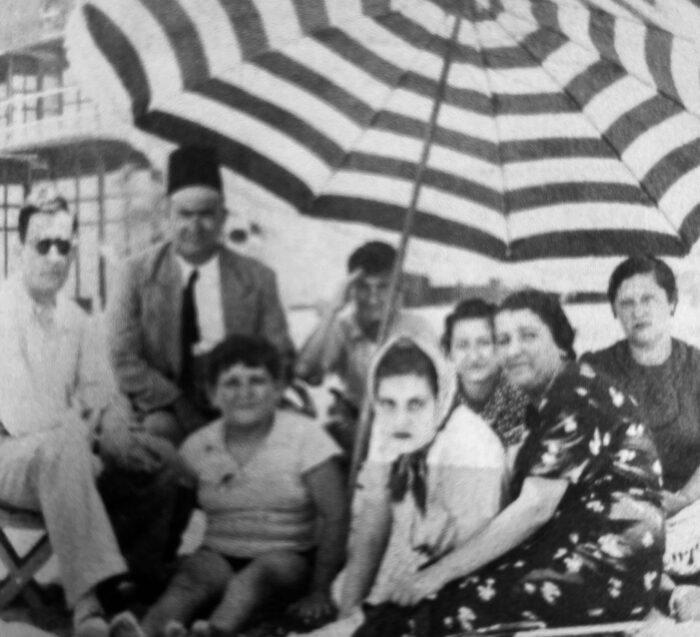
Zarmati grew up in a household riven by his parents’ incompatibility and their eventual divorce. He and his father — the owner of a clothing shop frequented by the local elite and British army officers — moved out of the family residence and decamped in the spacious home of Zarmati’s maternal grandparents, which was maintained by a bevy of servants.
“Everything about them was in opposition,” he writes of his dueling parents. “My mother’s family was Egyptian first, and European second. My father’s was the reverse. They were both native francophones, but at home my paternal family’s second language was Ladino, while my mother’s was Arabic.”
As an Egyptian Jew, Zarmati had trouble reconciling his status with the increasingly dire situation of Jews in Egypt after the first Arab-Israeli war in 1948. As he succinctly puts it, “Every year during Passover, I was struck by the absurdity of celebrating the exodus from Egypt while we were still in Egypt. If Jews had really reached the Promised Land, why did they return to the land of slavery?”
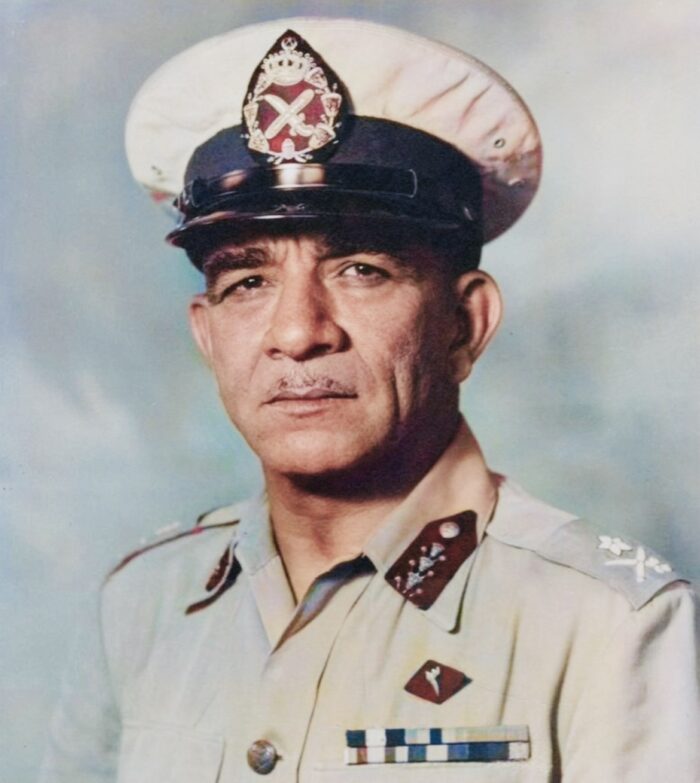
Egyptian state radio broadcasts were filled with anti-Israel rants, but since the Arabic language used the word “Jew” for Israelis and Jews alike, the lack of distinction alarmed the Jewish community. One of the revolution’s leaders, General Mohammed Naguib, tried to ease tensions by visiting a synagogue on Yom Kippur and embracing the grand rabbi, but his appearance would be little more than a respite.
A measure of normalcy returned to Egypt a few months after the revolution, leading Zarmati to assume that his “visceral bond with Egypt and its people” remained intact.
In fact, he struggled with his “nebulous identity” as a Jew in Egypt. “Being the son of a European father and a mother with deep Jewish-Arab roots had been a source of great anxiety in my early childhood, but the persecution of the Jews by the new Egyptian regime had led me to embrace my European roots to the detriment of the Jewish Arab side of my being.”
The 1956 Sinai war, pitting Egypt against an alliance consisting of Israel, Britain and France, exacerbated his problem.
“It was as though the disparate elements in our hearts and minds were fighting one another in an excruciating civil war — Egypt, the country of our birth, against Israel, the land of our religion, France, the core of our culture, and Britain, the kingdom that had saved us from the Nazis at the gates oif El Alamein.”
Several months after that war, Zarmati’s father decided to leave Egypt, saying he had reached “the end of the road” and predicting that not a single Jew would be left in the country in five to ten years. Two of his relatives, both of whom were anti-Zionists and staunch Egyptian nationalists, had no such intention to emigrate.
After applying for an exit visa, father and son moved into a hotel in Cairo that had become a haven for Jewish families waiting for visas. “On my mother’s side, I heard no talk about leaving Egypt. She and her friends continued to believe that the current political situation was just a temporary crisis.”
In the meantime, Zarmati had to cope with the realities of the day. At his French school, the French faculty was replaced by Egyptian, Lebanese and Syrian Arabs. And in an incident redolent of the times, a traffic cop slapped him against a lamppost before denigrating him as a “son of a Jewish whore.”
When he and his mother visited the synagogue in the old Jewish quarter, known as Haret el-Yahood, he would often explore that medieval neighborhood. While he was proud of his maternal grandfather’s central role in the construction of the shul, he felt shame at the very existence of a Jewish “ghetto.”
As he writes, “It harkened back to an era when Egypt’s rulers confined their Jewish subjects to their own quarters … In recent decades, the Jews had not been oppressed, but the buildings and streets of Haret el-Yahood still exuded the stench of centuries of servitude, ignorance and poverty. It was a stain that time hadn’t rubbed out, a permanent blemish on the Jewish soul.”
Like some Egyptian Jews, Zarmati could neither speak nor read classical Arabic, a deficiency his father tried to ameliorate by hiring a tutor. His teacher, Ostaz Kamal, was a nationalist whose older brother had fought in the first Arab-Israeli war in 1948 and had witnessed the expulsion of Palestinians from their homes in what is now Israel.
Zarmati was interested in learning about this facet of the war. His first reaction was disbelief, but as he accumulated more knowledge, he was shocked and appalled. “The thought of Jews violating our most fundamental beliefs was shaking the bedrock of my entire being.”
He does not elaborate on this important point. This creates a yawning gap in his narrative, which all too often is top-heavy with unnecessary details.
Zarmati entices a reader with his voluminous and graphic accounts of his adolescent love affairs. He briefly dated a high-spirited American girl with whom he almost had intercourse. He relates his sexual adventure with a prostitute who brought him to climax and swallowed his semen with “groans of pleasure as though she was drinking a sweet nectar.” He finally lost his virginity with a young Egyptian woman who was engaged to be married to a wealthy, much older landowner.
Zarmati glosses over his father’s amorous adventures, but pays close attention to his heart-felt fling with Calista, an alluring Greek woman they both liked and admired.
His odyssey in Egypt ended in the spring of 1960, when he and his father finally received exit visas, both of which were stamped with a huge ‘Y’ (Yahoodi, or Jew) in red. On his last night in Cairo, before boarding a plane bound for Paris, he rode around Tahrir Square on his bicycle and cycled to a bridge over the Nile to take in final views of the city.
If he had left Egypt prior to the crackdown on Jews, he muses, he might have remembered a kinder, gentler Egypt. This was not to be. “For years, I had lived in a no-man’s land in which my past was erased, my future hijacked, and my present frozen.”
Yet he still cares about Cairo. It was a city where he immersed himself in “new worlds” of literature, history and art, where he discovered the wonders of love and sex, where he came of age in “the rubble of my vanishing world,” and where he could exclaim for the last time, “Adieu, Tahrir Square.”
Zarmati, in Goodbye, Tahrir Square, has written an intense and engaging account of a bygone era in modern Egyptian history. It was a time when Jews in Egypt and in much of the Arab world felt reasonably comfortable and relatively secure.