
Germany, in 1941, launched a vigorous propaganda campaign to curry favor with Muslims in the Middle East, the Balkans, Crimea and the Caucasus, territories the German army had conquered or intended to capture.
Two of Germany’s major allies, Italy and Japan, made similar efforts to recruit Muslims on their side during World War II.
Germany’s enemies, Britain, France and the Soviet Union, presented themselves as friends of Islam as well. In 1942, Prime Minister Winston Churchill said that Britain “must not on any account break with the Muslims.”
The Axis and Allied scramble for recruiting Muslims was driven by sheer numbers. Approximately 150 million Muslims lived under British and French colonial rule between North Africa and southeast Asia. The Soviet Union was home to 20 million Muslims.
Adolf Hitler’s Nazi regime courted Muslims assiduously after belatedly realizing that Islam was a geopolitical force strategically important to Germany’s plan of conquest. Hitler was fascinated with Islam and thought it was a strong and practical faith, in contrast to his jaundiced view of Christianity as an artificial and weak religion. German propagandists amplified the theme that Germans and Muslims faced common foes in Britain, France, the Soviet Union and Jews.
“Germany’s attempts to mobilize Muslims … were not the result of long-term planning, but developed over the course of the war as the tide turned against the Axis,” writes David Motadel in his splendid book, Islam and Nazi Germany’s War, published by Harvard University Press.

To the best of my knowledge, it is the first comprehensive work on Nazi Germany’s policy toward Islam during the war. It goes beyond Jeffery Herf’s first-class book, Nazi Propaganda for the Arab World, in terms of its scope. Drawing on more than 30 archives in 14 countries, Motadel’s volume places Islam on the political and strategic map of the war.
According to Motadel, a professor of history at the London School of Economics and Political Science, Germany’s interest in mobilizing the Islamic world began with a seven-page memorandum that the retired archaeologist and diplomat Max von Oppenheim sent to the German Foreign Office on July 25, 1940, shortly after the fall of France and at the beginning of the Battle of Britain.
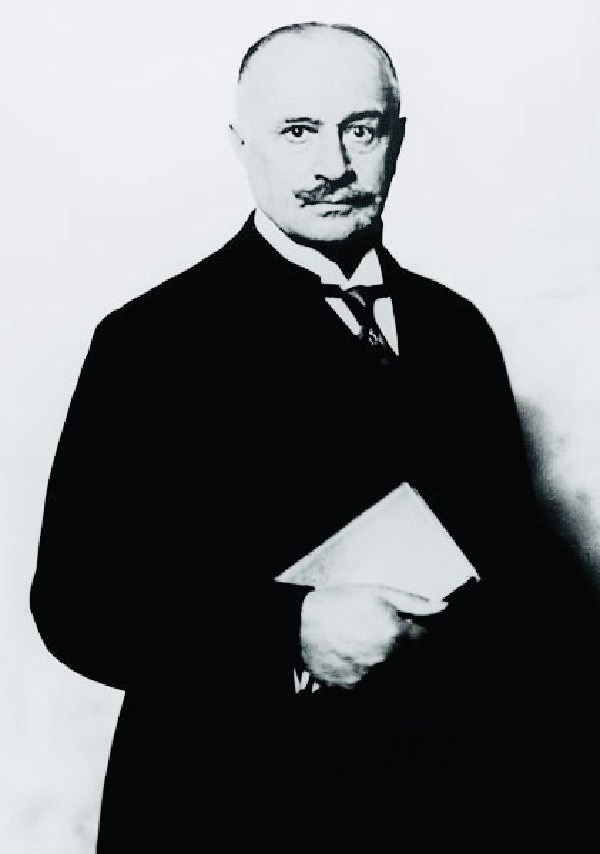
A Middle East specialist whose Jewish family had converted to Christianity in the mid-19th century, Oppenheim suggested that German war aims could be advanced by provoking unrest in the Muslim corridor from Egypt to India. Muslim-inhabited regions were not unknown to German diplomacy, as Motadel points out. During the late 19th century, Germany ruled colonies in Cameroon, Togo and East Africa, using Islam as a tool to create order and stability.
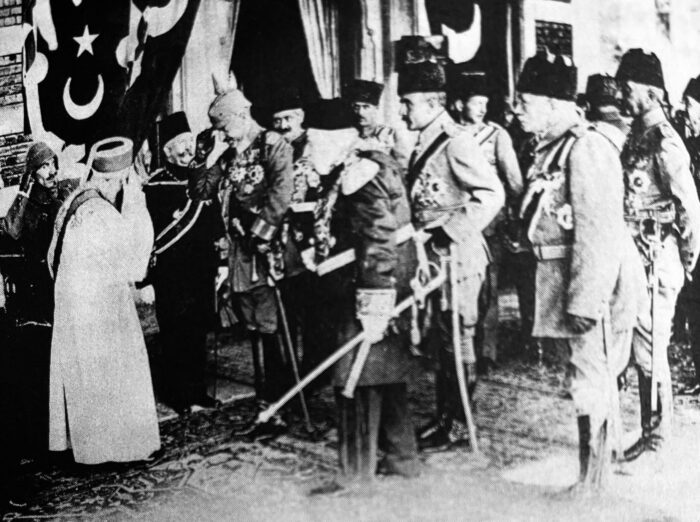
And during World War I, when Germany was aligned with the Ottoman Empire, German embassies and consulates circulated pan-Islamic propaganda. These efforts failed, as Motadel explains.
Until Oppenheim’s memorandum, German officials had shown remarkably little interest in the Middle East or Islam because Hitler respected the imperial ambitions of Britain and Italy in that region. But with Italy’s military failures in North Africa and the Balkans, Germany’s outlook drastically changed.
“It was only in 1941, when German troops became involved in North Africa, advancing toward the Middle East, that policy makers in Berlin began to consider the strategic role of Islam more systematically,” Motadel writes.
Among these officials were Wilhelm Melchers, a career diplomat who had served in Iran and Palestine, and Fritz Grobba, an Orientalist in charge of Arab affairs at the Foreign Ministry and the ambassador to Iraq during the interwar period.
The Wehrmacht, having concluded that Islam’s opposition to communism could be advantageous to Germany, took the lead in promoting the Third Reich as the liberator of Muslims from the Bolshevik yoke. The Nazi ideologue Johann von Leers, a future convert to Islam, already had advanced the idea that Islam and Judaism were irreconcilably at odds, and that the founder of Islam, Mohammed the Prophet, had been hostile to Jews.

The SS jumped in too, forming Muslim units with recruits from Bosnia, Herzegovina, Albania and the Soviet Union.
In addition, Germany recruited Muslim religious leaders, ranging from the Lithuanian Jakub Szynkiewicz to the Palestinian Haj Amin al-Husseini.
On November 28, 1941, Hitler granted Husseini, the mufti of Jerusalem, an audience in Berlin. Husseini’s intention was to secure a written guarantee that Germany would support Palestinian and Arab independence, but Hitler evaded the issue. Husseini’s request for another meeting with Hitler was unsuccessful.
Nonetheless, Husseini continued to work for the Nazis. At the ceremonial opening of the Islamic Central Institute in Berlin on December 18, 1942, he delivered an antisemitic speech in which he condemned the “malicious, mendacious and treacherous behavior” of Jews.
A few months before the outbreak of the war, the Nazi regime began broadcasting short radio programs to North Africa and the Middle East. But it was not until February 11, 1941 that Germany officially launched its religiously-charged propaganda campaign directed at Muslims.
This date coincided with the landing of German troops in Libya, an Italian colony. They were led by General Erwin Rommel, the first commander of the Afrika Korps. For the next two years, they fought in the Libyan desert, Tunisia and on the fringes of Egypt.
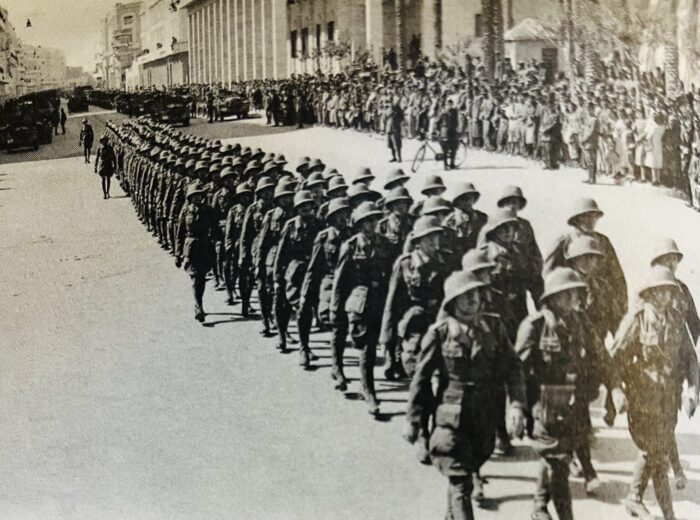
Germany, too, became embroiled in Rashid Ali al-Kilani’s failed coup in Iraq.
As the Afrika Korps got closer to Egypt, German broadcasts grew increasingly vile. Jews were excoriated as “poisonous reptiles” and “the worst enemies of Islam,” intent on violating Muslim women and killing Muslim children.
In the meanwhile, German planes dropped pamphlets, leaflets and postcards characterizing Britain and the United States as the friends of Jews and the Allies as the foes of Islam. In Syria, Lebanon and Palestine, Nazi operatives circulated leaflets portraying Hitler as the “protector of Islam” and warning of the imminence of a Jewish state encompassing large swaths of the Middle East.
Among the first Muslims targeted by Nazi propaganda were colonial soldiers in the French army fighting to defend France. Following German defeats at the battles of Stalingrad in the Soviet Union and Al-Alamayn in Egypt, the Germans encouraged hundreds of thousands of Muslim volunteers to join special military units.
They included Azerbaijanis, Georgians, Tatars, and northern Caucasians. They were told that, in the name of Islam, they could liberate their lands from foreign and Bolshevik hegemony.
Crimean Muslims served in Otto Ohlendorf’s Einsatzgruppen D, a mobile murder squad tasked with murdering Jewish civilians and Soviet functionaries.
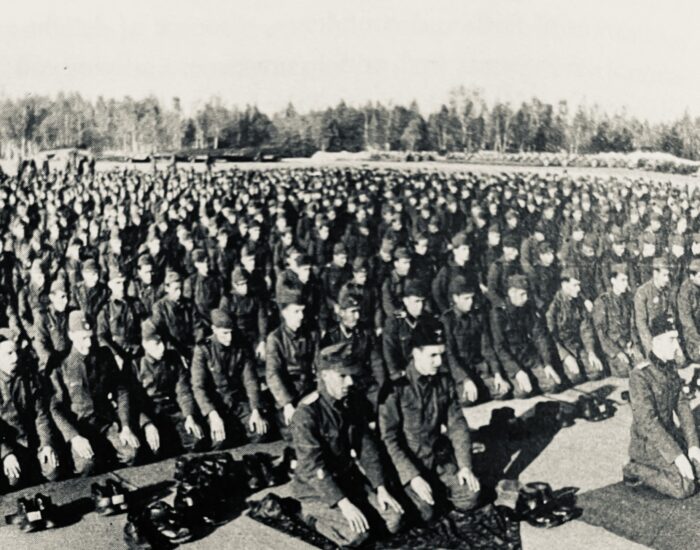
The Wehrmacht was the first to recruit Muslims, whom Hitler considered trustworthy soldiers. Toward the end of the war, the SS became the strongest force in the mobilization of Muslims.
Muslim soldiers were exposed to vicious antisemitic propaganda. A booklet, Islam and Judaism, framed anti-Jewish hatreds within an Islamic context to motivate Muslims. Still other Nazi publications called for Islamic solidarity with Palestinians and denounced Zionism.
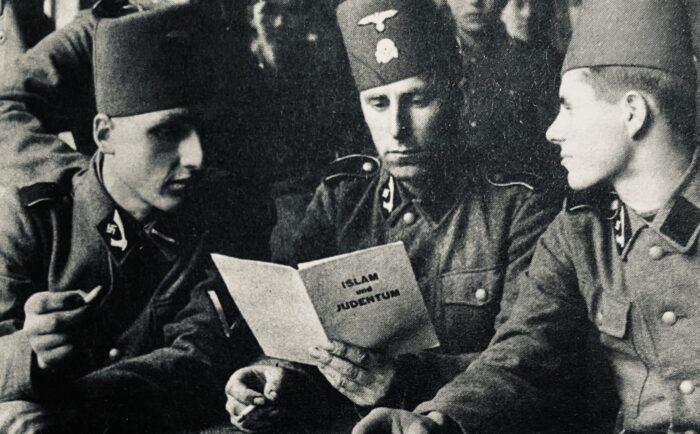
As Motadel correctly observes, inherent Nazi racism played havoc with Germany’s attempt to win over Muslims. Hitler had postulated in Mein Kampf, his autobiographical and political manifesto, that non-Europeans, such as Arabs, were racially inferior. And his chief ideologue, Alfred Rosenberg, had welcomed the subjugation of the Islamic world under European imperial domination.
Realizing he had backed himself into a corner, Hitler took steps, before and during the war, to appease Muslims.
Arabs, Turks and Iranians were excluded from the rigid racial restrictions of the 1935 Nuremberg laws, which stripped Jews of Germany citizenship and forbade Jewish-Christian marriages. The terms “antisemitic” and “antisemitism” were replaced with “anti-Jewish.”
In Russian-occupied Muslim areas, the Nazis reopened mosques that had been closed by the secular Soviet state, supported the reintroduction of Islamic education in the elementary school curricula, and endorsed the reemergence of religious festivities. In 1943, when the Wehrmacht occupied Bosnia and Herzegovina, the Muslims there were categorized as “racially valuable people.”
Be that as it may, the Nazis discouraged mixed German-Muslim marriages, and ordinary German soldiers in the field often had little respect for Muslims and Islam.
During the first phase of Germany’s invasion of the Soviet Union, the SS executed many circumcised Muslim prisoners of war on the assumption that they were Jewish. Having been apprised of this egregious error, the SS sent out a directive cautioning soldiers not to confuse Muslims with Jews.
When confusion arose as to whether the Karaites and Krymchaks in the Crimea were Jewish, the Nazis resolved the problem by classifying the Karaites as ethnically Turkic and the Krymchaks as purely Jews, dooming them to extermination.
In the Bosnian city of Sarajevo, Motadel says, no less than 20 percent of its Jewish residents converted to Islam or Catholicism to escape persecution. The converts remained vulnerable because the Nazis defined Jewishness on the basis of race rather than religion.
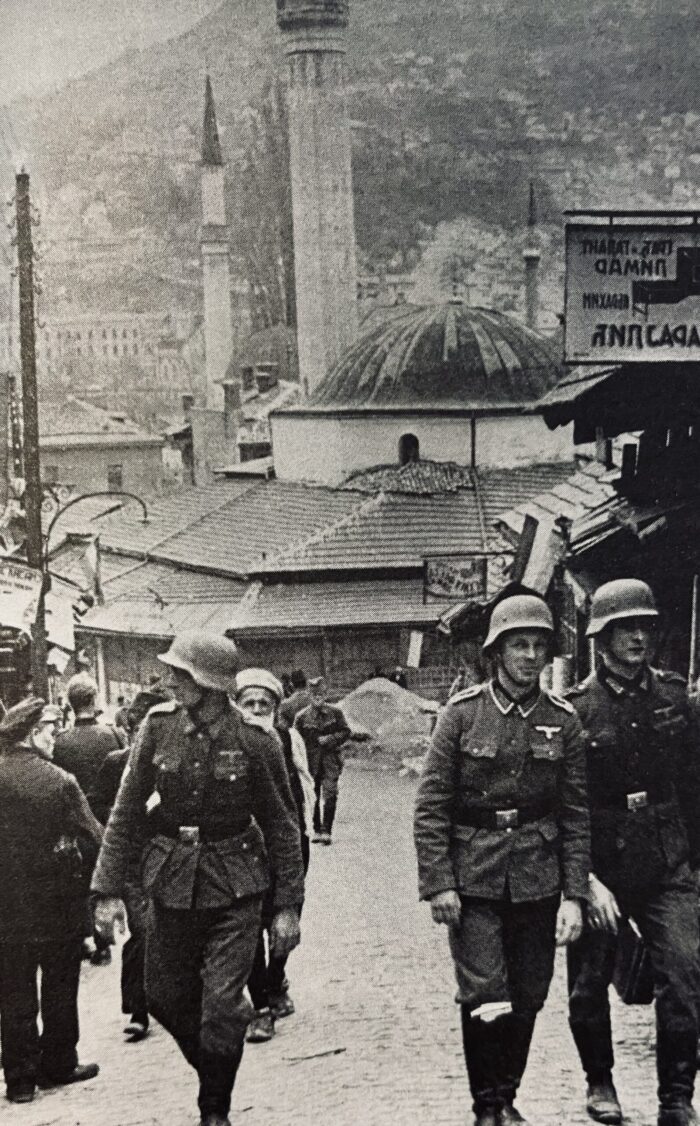
As for the attitude of Muslims toward the Nazi persecution of Jews in their localities, Motadel believes it ranged from collaboration and profiteering to empathy and, in some cases, solidarity with the Jewish victims.
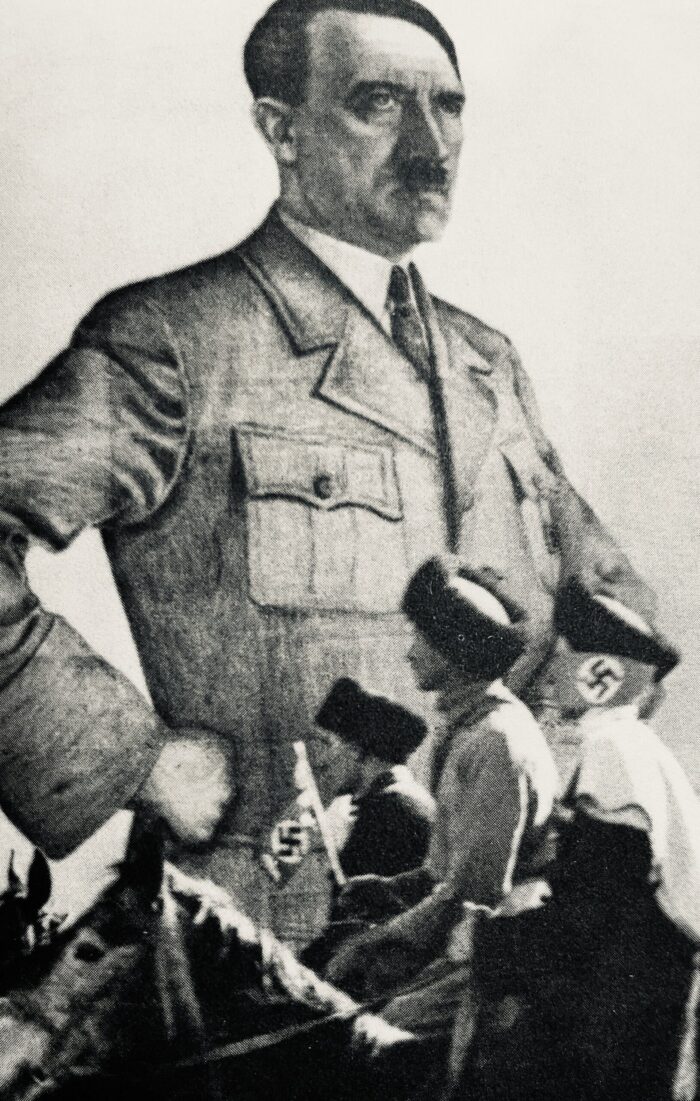
In both Crimea and the Caucasus, most Muslims welcomed the arrival of the Germans, who did not miss the opportunity to present themselves as the liberators of Islam. Muslims suspected of betrayal were harshly mistreated.
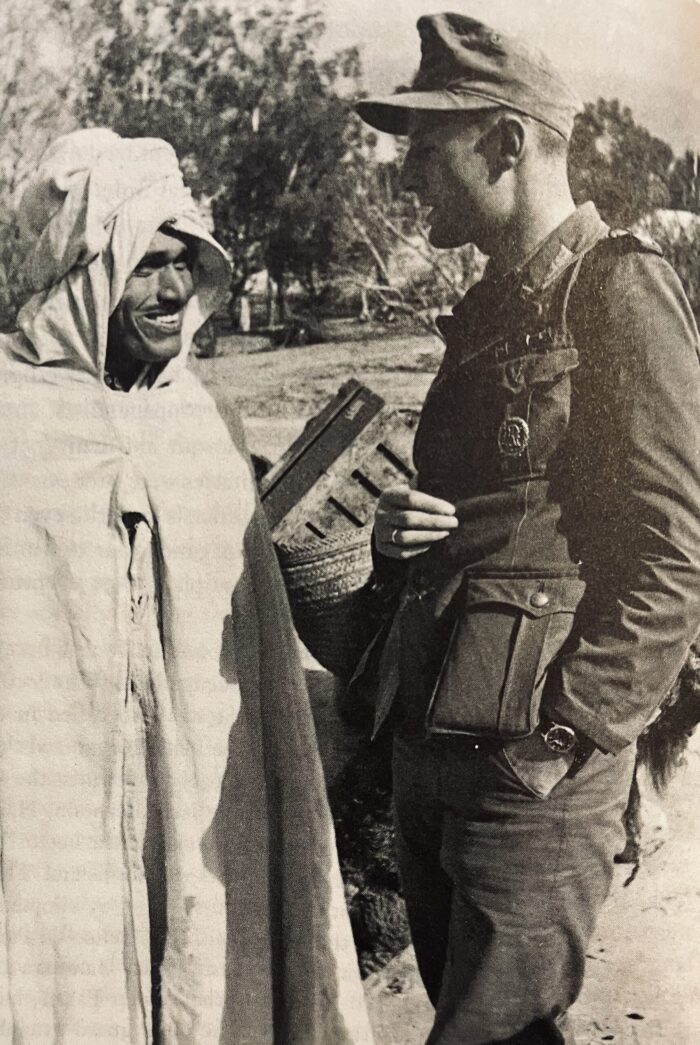
Motadel thinks that Nazi propagandists faced severe problems from the very outset. Their appeals were often crude and vulgar and generally did not appeal to educated elites. Outside of the Soviet Union, the Germans avoided the thorny question of independence from colonial rule. As he writes,”Respecting the imperial interests of Italy, Vichy France and Spain in North Africa and the Middle East, authorities in Berlin had to accept that their alliances cost them much sympathy among Muslims.”
The Nazis’ “blatant exploitation” of religion offended many Muslims. And Germany was unable to counter the Allied propaganda campaign.
“Overall, German propaganda failed,” he states.”Uprisings against the Allies in North Africa and the Middle East did not take place. Desertions of Muslim soldiers from the enemies’ ranks remained marginal.”
In short, Germany’s call for jihad more or less fell on deaf ears. Even Hassan al-Banna, the leader off the Muslim Brotherhood in Egypt, pledged his loyalty to the ruling authorities.
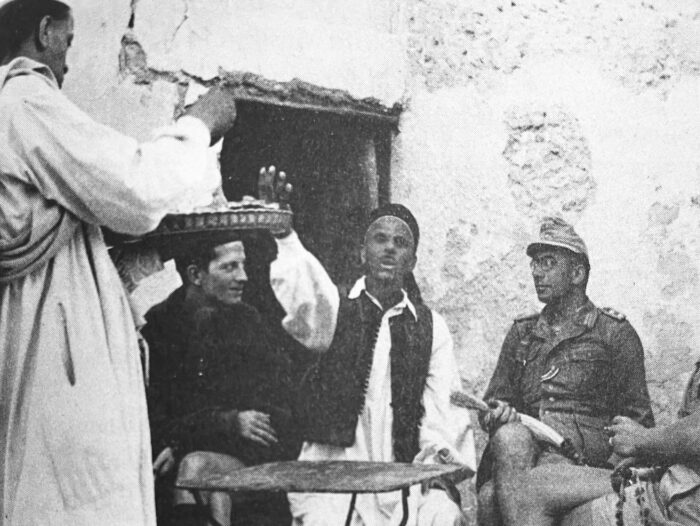
Such was the failure of Germany’s campaign that an Iranian cleric named Ruhollah Musavi, later to be known as Ayatollah Khomeini, the first supreme leader of post-revolutionary Iran, categorized “Hitlerite ideology” as “the most poisonous and heinous product of the human mind.”
Germany’s call for religious violence against Jews elicited mixed responses. Nazi propaganda succeeded in generating anti-Jewish and anti-Zionist resentment in North Africa and the Middle East. But with the exception of the pogrom in Baghdad in 1941, which claimed the lives 0f an estimated 179 Iraqi Jews, there were no major anti-Jewish outbursts, and the sultan of Morocco, Mohammed V, protected his Jewish subjects, Motadel notes.
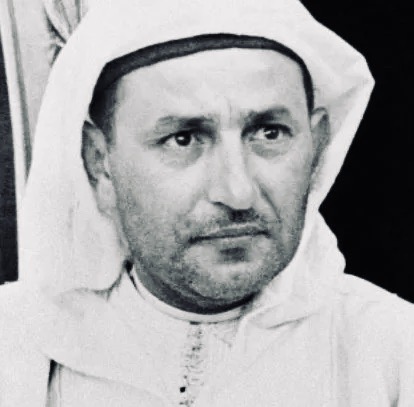
Muslim collaborators faced retribution in the Soviet Union and the Balkans, but the United States, in the early days of the Cold War, regarded Muslim veterans of the Wehrmacht as potential assets to destabilize the Soviet Union.
In conclusion, Motadel places Germany’s wartime propaganda campaign in its proper historical context.
“German attempts to make use of Islam can be seen as an episode in the longer historical story of the strategic employment of Islam by the (non-Muslim) great powers in the modern age. Compared to other campaigns for Islamic mobilization, Germany’s policy was both one of the shortest-lived and one of the most improvised. In geographic scope and intensity, however, it was one of the most vigorous attempts to politicize and instrumentalize Islam in modern history.”
In Islam and Nazi Germany’s War, a deeply-researched work, Motadel surveys this complex geopolitical relationship with erudition and panache, producing an invaluable work of scholarship.