
Israel’s audacious strike in Qatar on September 9 is one more tangible sign that it has revamped its military doctrine since Hamas’ bloody rampage on October 7, 2023.
Having been caught by surprise by Hamas’ onslaught, Israel has acted preemptively and decisively to weaken its enemies in the Gaza Strip, Lebanon, Iran, Syria and Yemen.
In accord with this strategic calculation, Israel has all but decimated the military capabilities and the leadership of Hamas and Hezbollah in two separate wars. As well, Israel has battered Iran’s nuclear facilities and killed its top commanders in a 12-day war, bombed the Houthis in Yemen in reaction to Houthi drone and missile attacks, and struck post-Assad Syria in a succession of airstrikes to degrade its armed forces.
And now, in one of its most demanding missions, the Israeli Air Force bombed a residential building in Doha, Qatar’s capital, where senior members of Hamas had gathered. They had convened to discuss a ceasefire proposal, supported by U.S. President Donald Trump, to end the protracted Israel-Hamas war in the Gaza Strip.
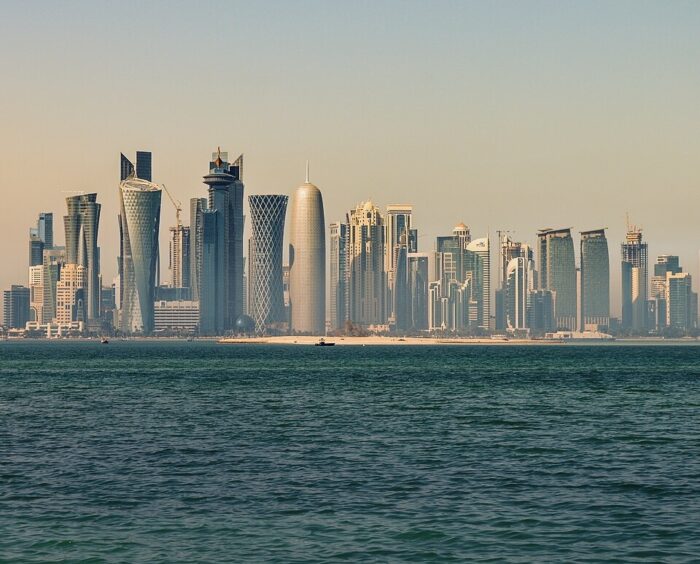
The Hamas leaders that Israel targeted were Khalil al-Hayya, who has directed its operations in Gaza since the Israeli assassination of his predecessor, Yahya Sinwar; Zaher Jabarin, the commander of Hamas forces in the West Bank; Muhammad Darwish, the head of its Shura Council, and Khaled Mashaal, the head of its overseas branch and the object of a botched Israeli assassination in 1997.
Six people, including Hayya’s son, were reportedly killed in this surgical bombing raid, but Israel fell short of killing its intended targets.
Hamas dismissed the strike as a failure.
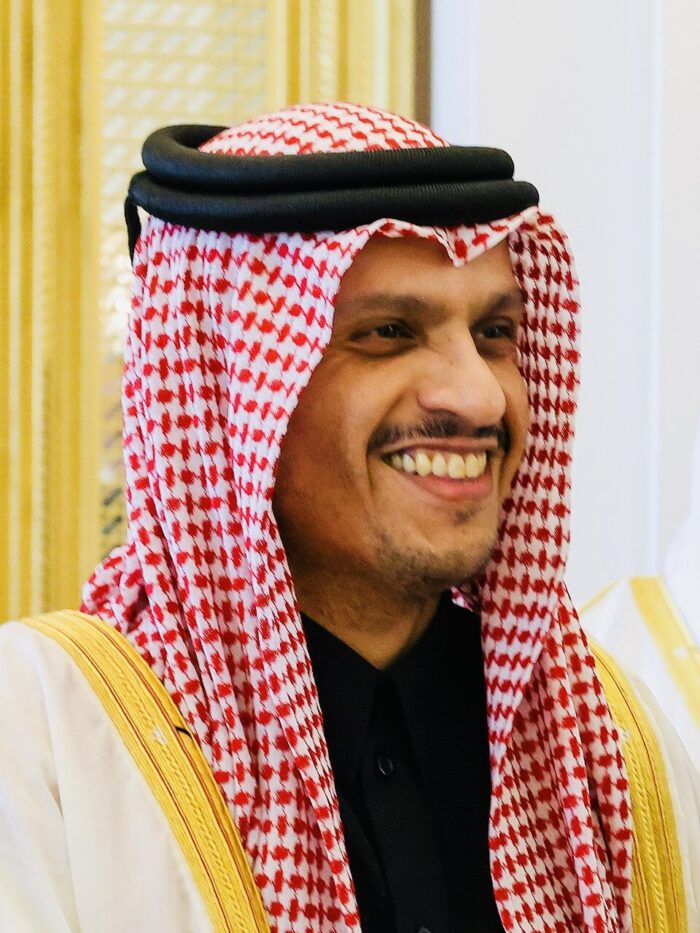
Qatar’s prime minister, Sheikh Mohammed bin Abdulrahman al-Thani, denounced Israel’s strike as “state terrorism” and a flagrant violation of its sovereignty. He promised a response and accused Israel of sabotaging “every attempt to create opportunities for peace.”
Qatar, a key U.S. ally in the Arab world, is a major supporter of Hamas.
From 2012 until 2023, Qatar, in cooperation with Israel, transferred upwards of $1.8 billion to Gaza. These funds were used to pay the salaries of civil servants, to funnel assistance to poor families, to buy fuel for power generation, and to keep the peace. According to the Shin Bet Israeli intelligence agency, Hamas diverted some of the funds to acquire weapons and build tunnels.
Qatar, along with Egypt, played a role in brokering ceasefires in November 2023 and January 2025, resulting in the release of more than 100 Israeli hostages. Although Israel and Qatar do not have diplomatic relations, Israeli delegations have often gone to Doha to work on truce proposals.
The last ceasefire broke down this past March, prompting Israel to resume its military campaign in Gaza. The collapse of the truce left some 50 living and deceased hostages in Hamas’ captivity.
The Israeli air strike in Doha, which has elicited widespread condemnation and a U.S. rebuke, came as a “total surprise” to Qatar. Israel and its ally, the United States, had assured Qatar that it was a safe haven and that there would be no attacks on its territory, according to the Washington Post.
The Wall Street Journal reports that Egypt and Turkey warned Hamas officials in Qatar of a possible Israeli strike and advised them to bolster their security.
Israel has long threatened to kill Hamas leaders wherever they may be. Last week, General Eyal Zamir, the commander of the Israel army, said that Israel would deal vigorously with its enemies anywhere in the world.
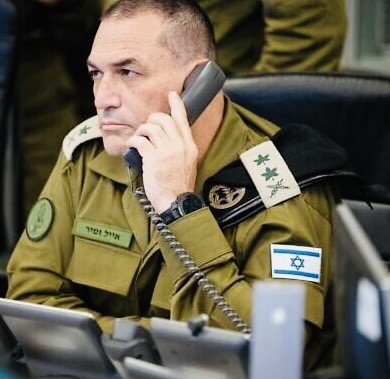
“These are the terrorists whose only aspiration was to be the spearhead for the destruction of the State of Israel,” he said. “We will continue to carry out this mission everywhere, at any range, near and far, in order to settle accounts with our enemies.”
“We are settling a moral and ethical account on behalf of all the victims of October 7,” he added. “We will not rest and we will not be silent until we bring back our hostages and defeat Hamas.”
In striking Hamas in Qatar, Israel took a calculated gamble.
Qatar is the site of the largest U.S. military base in the Middle East. Qatar has purchased billions of dollars worth of weapons and munitions from the the United States. Qatar presented Trump with a luxury Boeing jet during his state visit this past May, a gift he gladly accepted despite the obvious conflict of interest.
Israel was also aware that a strike of this magnitude, particularly if successful, could imperil the hostages who are still alive.
In justifying its unprecedented attack, Prime Minister Benjamin Netanyahu and Defence Minister Israel Katz said they had ordered it due to “an operational opportunity” and in light of the fact that the current Hamas leadership “initiated and organized the October 7 massacre. Over are the days when leaders of terror enjoy immunity anywhere.”
They also cited a recent terrorist attack mounted by Hamas near Jerusalem that claimed the lives of six Israeli civilians. Hamas’ military wing, the Qassem Brigades, took responsibility for it after praising it the day before.
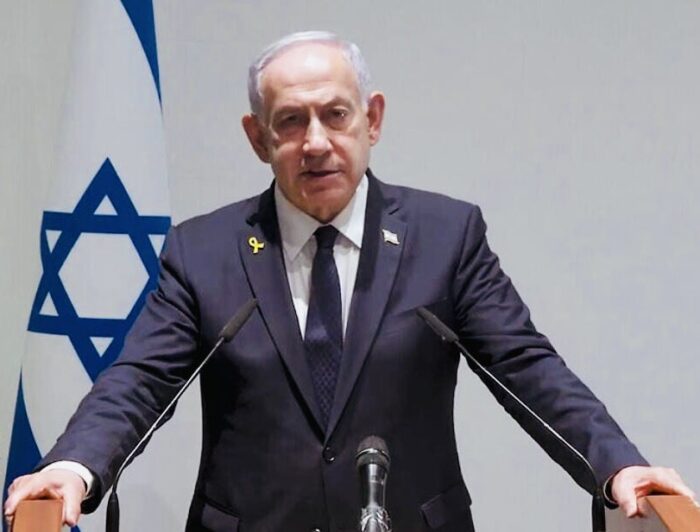
Netanyahu warned Qatar on September 10 that Israel will no longer tolerate the presence of Hamas officials in Doha. Comparing Israel’s strike to U.S. operations in Afghanistan after Al Qaeda’s September 11, 2001 terrorist attacks on September 11, 2001, he said, “You either expel them or you bring them to justice. Because if you don’t, we will.”
The Israeli media initially reported that Trump was aware of Israel’s planned strike and had green lighted it. Trump said he found out about it from the U.S. military and expressed displeasure with it.
“I was very unhappy about it, very unhappy about every aspect,” he said. “This was a decision made by Prime Minister Netanyahu, it was not a decision made by me.”
Trump, however, called the elimination of Hamas “a worthy goal.” He said that Qatar would not be attacked by Israel again.
The White House press secretary, Karoline Leavitt, criticized Israel for “unilaterally bombing inside Qatar, a sovereign nation and close ally of the United States that is working very hard and bravely taking risks with us to broker peace.”
Israel’s strike, she said emphatically, “does not advance Israel’s or America’s goals.”
Netanyahu claimed that the strike in Qatar “can open the door to the end of the war in Gaza.” As he put it, “Israel has accepted the proposal put forward by President Trump to end the war, beginning with the immediate release of all our hostages, which have been held in the dungeons of Gaza for 700 days. If President Trump’s proposal is accepted, the war can end immediately. We can begin once again to pursue the expansion of peace in our region for the benefit of all.”
It remains to be seen what the short-term or long-term consequences of Israel’s strike will be. But in the meantime, Israel is preparing to invade Gaza City. Israel already controls three-quarters of Gaza.
What seems clear is that neither peace, nor a ceasefire, loom on the horizon. Israel and its foes remain locked in bitter combat.