
It was unlike any day in Israel’s history.
On October 7, 2023, thousands of Hamas terrorists from the Gaza Strip stormed into southern Israel, unleashing an atrocity on a scale that Jews thought was no longer possible after Israel’s creation in 1948.
Israel was caught “completely by surprise,” write Yaakov Katz and Amir Bohbot in their masterful book, While Israel Slept: How Hamas Surprised The Most Powerful Military In The Middle East, published by St. Martin’s Press.
Hamas succeeded in lulling Israel into a disastrous sense of complacency despite Israel’s superb armed forces, the strongest, best-trained and most technologically advanced in the region. “What happened was that Hamas put Israel to sleep,” they argue in a searing indictment of Israel’s lack of preparedness.
Yet, as they correctly acknowledge in this thoroughly-researched and thoughtful volume that focuses on the events prior to October 7, Hamas’ invasion of a string of kibbutzim, towns and army bases in the southwest Negev Desert was not entirely surprising.
In the weeks preceding the attack, soldiers had filed reports and warnings about suspicious activity along the border. And during the years leading up to it, Israel was fully aware that Hamas was building an army and an array of tunnels in preparation for a massive assault.
In 2016, two years after the last Gaza war, the then defence minister, Avigdor Liberman, presented a paper to cabinet colleagues warning that Hamas intended to bring the next cross-border war into Israel itself.

And in 2022, the army’s intelligence unit released a booklet, Jericho Walls, outlining Hamas’ operational plan for a major raid. This prescient booklet provided “an almost exact summary of what would happen on October 7,” Katz and Bohbot say.

Yoav Gallant, the minister of defence, was stunned. At this point, he could have launched a preemptive strike to decapitate Hamas’ leadership and dismantle its military capabilities, an idea that the government had considered.
The proposal was shelved because Israel’s political and military leadership sought peace and quiet and was focused on two stronger enemies, Hezbollah and Iran, both of which supported Hamas logistically and financially.
And in keeping with its conception of reality, Israel thought that Hamas was deterred and desired a long-term ceasefire. Israel also believed that Hamas was more interested in economic stability than a renewal of fighting, and was incapable of mounting an attack of this magnitude.
The authors, both of whom are Israeli journalists, expertly weave a mountain of material into a coherent and readable narrative.
They contend that several tactical strategic failures led to October 7. As they succinctly put it, “There was the intelligence blindness that missed what Hamas was planning. There was the collapse of the Israeli defensive measures along the border that had been created to stop attacks of this kind.” Last but not least, Israeli forces stationed near Gaza were “outnumbered and outgunned.”
What Israel forgot on the eve of October 7, they claim, was elementary. Hamas, an Islamic organization dedicated to establishing a Muslim state in Israel, the West Bank and Gaza, was intent on destroying the world’s only Jewish state, an objective clearly stated in its national charter.
Hamas was emboldened by its mistaken belief that Israel was divided and vulnerable. Prime Minister Benjamin Netanyahu’s scheme to overhaul the judiciary was extremely divisive, having triggered nation-wide protests that Hamas misinterpreted as weakness. And due to Israel’s fear of incurring a high number of casualties in a ground offensive, Hamas erroneously assumed that Israel would never venture deep into Gaza.
Just hours before thousands of Hamas gunmen breached the billion dollar high-tech border fence, the Shin Bet, Israel’s internal intelligence agency, received an alert that some of its operatives had activated their cell phones with Israeli SIM cards. This was a signal that something was brewing, but it was dismissed as a training exercise.
Israel made a similar error before the outbreak of the 1973 Yom Kippur War, having mistaken an imminent Egyptian offensive to capture the defensive Bar Line Line along the Suez Canal as just another exercise.
The authors make two more valid points. First, Israel did not have a single spy in Gaza who could tip off the government of the latest developments. Second, only four battalions guarded the border area when many more were required.
However, the authors credit the commander of the Israeli navy base in Ashdod with having had the foresight to deploy an additional patrol boat to protect Israel’s coast near Gaza. His decision was critical in staving off a Hamas naval attack that could have resulted in a mass casualty event.
Far from being only an analysis of the events that transpired before October 7, While Israel Slept is also an insightful exploration of Hamas’ development.
Founded as a charitable organization in 1987, during the first Palestinian uprising, Hamas soon transformed itself into an armed group dedicated to upending the 1993 Oslo accord. In pursuit of this objective, Hamas sent a stream of suicide bombers into Israeli cities who exacted a terrible toll on civilians. On the advice of Hezbollah, an Iranian proxy, Hamas developed its first rocket, the Qassem, in 2001, during the second intifada. By 2014, Hamas had fired over 12,000 rockets into Israel.
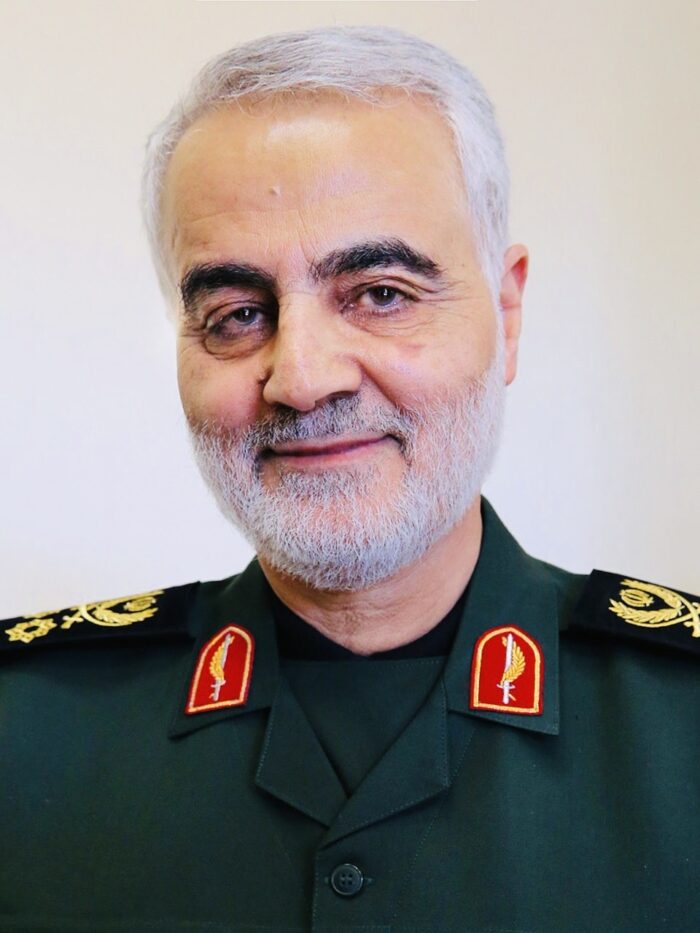
Hamas strengthened its strategic relationship with Iran after one of its leaders, Yahya Sinwar, met Quds Force commander Qassem Soleimani in Tehran in 2012.
Another turning point in Hamas’ military buildup took place when a Muslim Brotherhood leader, Mohammed Morsi, succeeded Hosni Mubarak as Egypt’s president in 2012. The short-lived Morsi regime allowed Hamas to smuggle vast quantities of weapons through tunnels into Gaza. By 2024, more than 150 tunnels had been constructed under the Philadelphi Corridor, which demarcated Egypt’s border with Gaza. Israel destroyed several tunnels in Gaza from 2008 onward, but many more remained undetected and untouched.
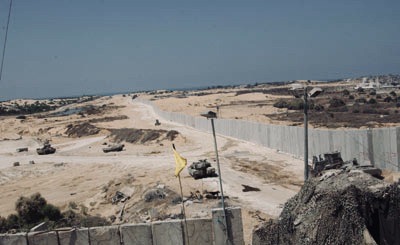
Israel assumed that Hamas would use the tunnels to launch an attack on its border communities. But as the authors point out in an acute observation, not a single Hamas gunman crossed into Israel through a tunnel on October 7, rendering irrelevant Israel’s vigilance of the tunnel network.
With the outbreak of the second Palestinian uprising in 2000, Israel struck the Hamas leadership by means of targeted assassinations. In one of its greatest successes, Israel killed Salah Shehadah. Apart from being its top military commander, he forged Hamas’ alliance with Iran and played a key role in the manufacture of the first Qassem rocket. During the final two years of his life, he planned and oversaw more than 100 terrorist attacks that claimed the lives of 474 Israelis.
The authors’ examination of Hamas’ finances is instructive, inasmuch as it sheds light on a pivotal operational aspect of its existence.
By the early 2000s, Hamas had accumulated properties in the Middle East worth around $500 million. In addition, Hamas imposed taxes of about $40 million a month on the Palestinians of Gaza. With Israel’s permission, Qatar, a major U.S. ally, pumped hundreds of millions of dollars into Gaza to keep it afloat. Israel hoped that the funds would pacify Hamas.
“It would take the attacks of October 7 for Israel to recognize its mistake and understand that cash payments to terrorist groups do not buy quiet,” they conclude.
Katz and Bohbot are also critical of Netanyahu’s handling of the Israel-Hamas war, which broke out on October 27. “Time and time again, Netanyahu placed political survival above the national interest, allowing the war to extend unnecessarily.”
Beyond stating that Israel would take charge of security in Gaza after the war, Netanyahu failed to present a vision of its political future. “When succession is not established, a power vacuum will always be filled by a hostile enemy,” they write in an implicit reference to Hamas.
Looking ahead, they advise Israel to consider a “dramatic shift” in its defence doctrine and adopt a “preemptive strike” policy to prevent Hamas, and Hezbollah, from reconstituting their forces. “Preemptive action will need to become Israel’s new pillar of defence.”
They close with a mixed message.
Judging by October 7 and its aftermath, Israel can overcome any external threat. What Israel cannot overcome is the threat posed by disunity. “It is time for Israel to rise above internal discord and recognize that unity is its strongest defence.”
Since Israel is torn by deep and seemingly irreconcilable religious and political fissures, it is debatable whether Israelis possess the capacity to achieve the kind of unity that will be necessary for Israel’s long-term survival.