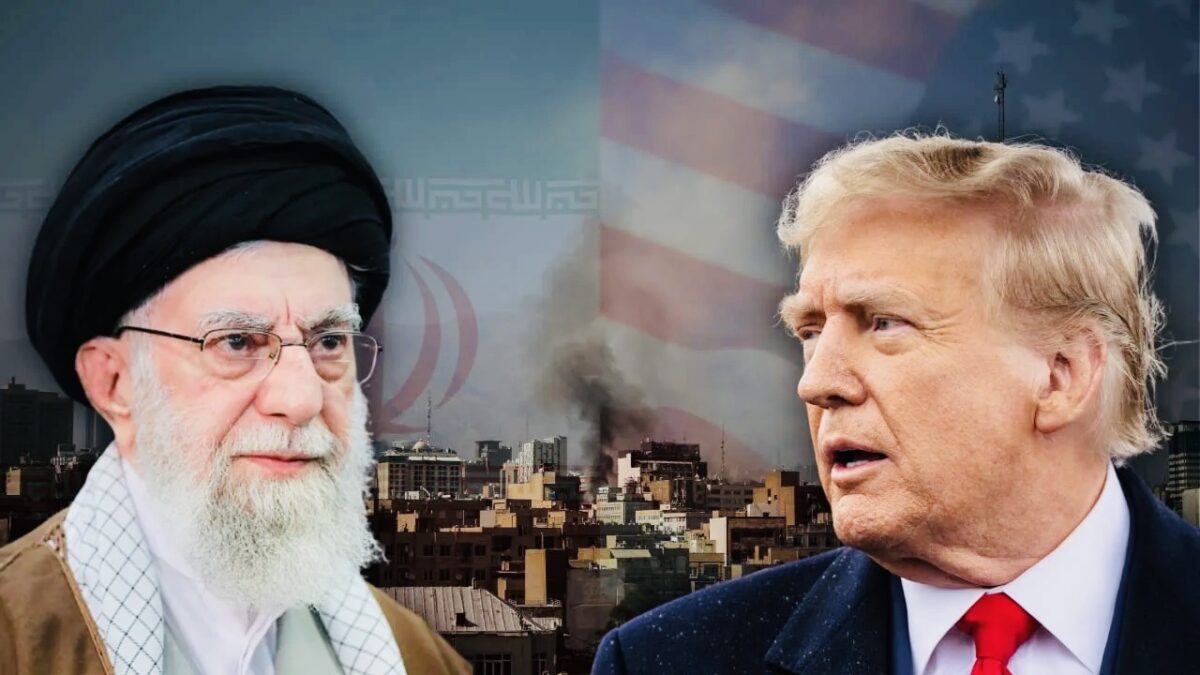
Iran’s highly controversial nuclear program has ignited Israel’s second war with Iran in less than a year. It broke out on February 28, when the United States and Israel attacked the Islamic Republic of Iran in a preemptive offensive intended to destroy its military and nuclear capabilities and decapitate its leadership.
Within hours of the commencement of the coordinated campaign, Israel announced that Iran’s 86-year-old supreme leader, Ayatollah Ali Khamenei, who ruled the country since the late 1980s, had been killed in an air strike. It was a devastating blow that shook the theocratic regime, which is ideologically dedicated to Israel’s destruction.
The joint attacks took place several days after the third round of U.S.-Iran talks ended on an uncertain note. The negotiations were aimed at reaching an agreement on Iran’s nuclear program, which particularly alarms the United States and Israel.
Interestingly enough, the first Israel-Iran war also erupted following the failure of diplomacy. Last June, after five futile rounds of negotiations between the United States and Iran, Israel struck Iran in Operation Rising Lion. The United States, in Operation Midnight Hammer, later joined the 12-day war, bombing three Iranian uranium enrichment plants.
U.S. President Donald Trump claimed that the sites were “obliterated,” but in actuality they were seriously damaged.
The latest talks, mediated by Oman, produced no breakthroughs, prompting Trump to unleash U.S. military power. His resort to force was not altogether surprising. On February 20, he gave Iran a deadline of “10 to 15 days” to agree to a deal to stop its enrichment of uranium. U.S. Vice President JD Vance urged Iran to take his ultimatum “very seriously,” but the regime declined to follow his advice.
Nor was Iranian leadership prepared to impose limits on its ballistic missile program or curtail its sponsorship of the Axis of Resistance, an anti-Israel alliance composed of Hamas, Hezbollah, the Houthis of Yemen and pro-Iranian militias in Iraq. These were issues of vital importance to Trump and Israeli Prime Minister Benjamin Netanyahu.
Trump, having been told by U.S. negotiators Steve Witkoff and Jared Kushner that Iran was unwilling to accede to his demands, delivered a stern message on February 27.
He said he was displeased with the state of negotiations with Iran. “I’m not happy … that they’re not willing to give us what we have to have,” Trump told reporters in Washington. But he cautioned he had yet to decide whether to go to war with Iran. Trump said he would “love not to use force” and “do it the peaceful way.” And in a reference to Iran’s leadership, he noted, “They’re very difficult people, very dangerous people.”
In the most recent rounds of talks in Oman and Switzerland, Iran rejected a U.S. demand to stop the enrichment of uranium, insisting it had the right to do so for peaceful purposes. In a speech on February 17, Khamenei dismissed that demand and the additional demand to limit Iran’s ballistic missile program.
Since Trump’s unilateral withdrawal from the 2015 Iran nuclear agreement, Iran has made provocative moves. Iran has enriched uranium to levels that have no peaceful application. Iran has periodically prevented international inspectors from examining its nuclear facilities. Iran has expanded its ballistic missile arsenal.
Last week, the International Atomic Energy Agency released a report saying it “cannot verify whether Iran has suspended all enrichment-related activities.” Nor could it ascertain the “size of Iran’s uranium stockpile.”
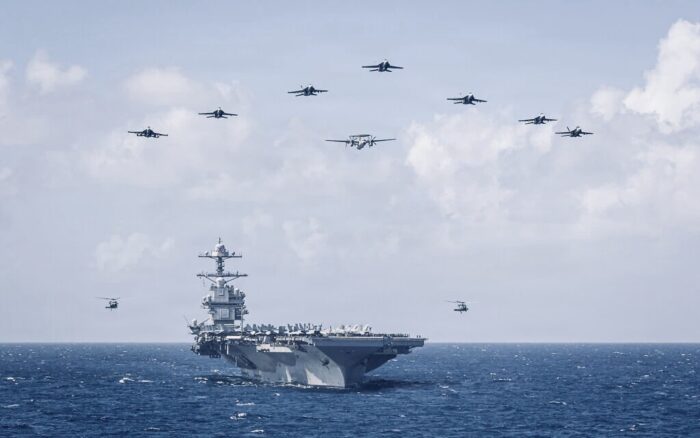
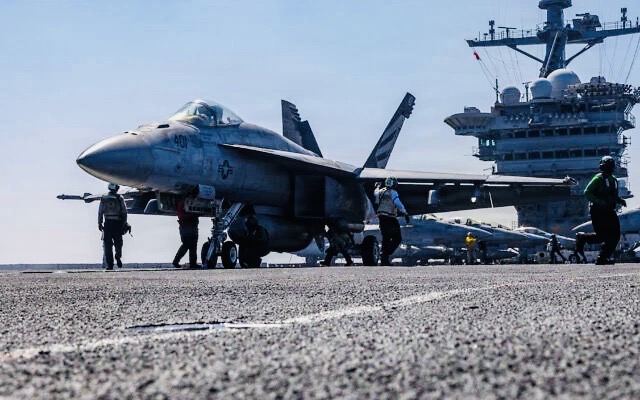
In the face of these disturbing developments, the United States sent naval vessels to the Middle East in an exercise designed to coerce Iran to accede to its demands. The armada was spearheaded by the USS Abraham Lincoln and the USS Gerald R. Ford aircraft carrier groups, carrying dozens of high-performance aircraft and long-range cruise missiles.
The military buildup, the most massive since the U.S. invasion of Iraq in 2003, positioned the United States to strike, among other targets, Iranian nuclear sites, short-and medium-range missiles and their launchers, and the headquarters of the Islamic Revolutionary Guard Corps.
With the United States and Iran sliding toward war, Trump reportedly told Netanyahu that he would support Israeli strikes on Iran’s ballistic missile facilities. And he disclosed he was considering a limited attack on Iran.
Israeli government officials, meanwhile, told reporters that the U.S.-Iran impasse was unbridgeable.
On February 27, in an unmistakable sign that war was inevitable, the U.S. embassy in Jerusalem advised its employees to leave Israel and “should do so TODAY.”
In the early hours of February 28, the United States and Israel struck Iran, respectively dubbing the attacks Operation Epic Fury and Operation Lion’s Roar.
Iran was hit at a moment of weakness.
Its air defences were degraded by Israel in 2025. Its economy, crippled by U.S. and European sanctions, is in free fall. And the Iranian regime is unpopular. In January, security forces killed at least 7,000 protesters in anti-government demonstrations. Trump claims that 32,000 were fatally shot.
Ironically, the U.S. and Israel jointly went to war at a time when Israel’s image in the United States has sunk to a new low.
According to a Gallup poll released on February 27, there has been a sea change in the public’s perception of Israel, the U.S.’ chief ally in the Middle East. In an unprecedented development, more Americans sympathize with the Palestinians than with Israel. While 41 percent of Americans expressed sympathy for the Palestinian cause, 36 percent side with Israel.
Trump attacked Iran without congressional approval, arousing a storm of criticism among Democrats and several Republicans.
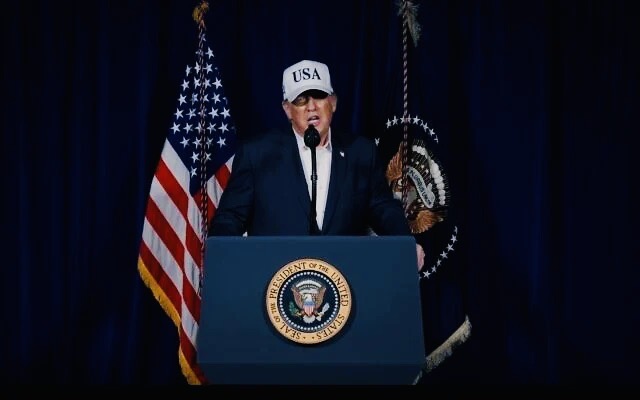
In announcing his momentous decision in a video post on his Truth Social site, he said the U.S. would target Iranian nuclear plants, “raze their missile industry to the ground,” “annihilate their navy,” and prevent the Axis of Resistance from harming American troops in the region.
Explicitly calling for regime change, he urged Iranians to “take over your government” once the U.S.-Israel campaign draws to a close. “No president was willing to do what I am willing to do tonight,” he said. “Now you have a president who is giving you what you want, so let’s see how you respond.”
Addressing the Islamic Revolutionary Guard, the armed forces, and the police, Trump urged them to surrender. “I say tonight: you must lay down your weapons and receive complete immunity — or, alternatively, face certain death. So lay down your arms. You will be treated fairly with total immunity, or you will face certain death. Finally, to the great, proud people of Iran, I say tonight that the hour of your freedom is at hand.”
As he spoke, American aircraft launched a multitude of strikes from bases across the Middle East and aircraft carriers.
Netanyahu, in his rationale for attacking Iran, said that Operation Lion’s Roar was initiated “to remove the existential threat” posed by Iran, and to “create the conditions” for Iranians to change their destiny.
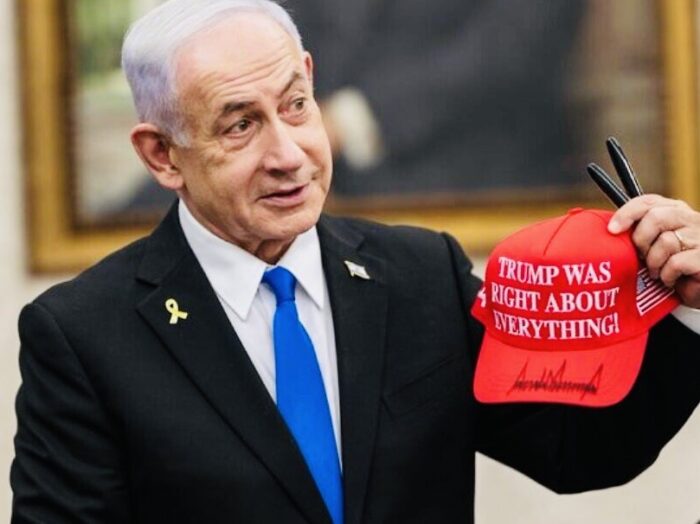
“This murderous terrorist regime must not be allowed to arm itself with nuclear weapons that would enable it to threaten all of humanity. Our joint action will create the conditions for the brave Iranian people to take their destiny into their own hands. The time has come for all segments of the people in Iran — the Persians, the Kurds, the Azeris, the Balochis, and the Ahwazis — to rid themselves of the yoke of tyranny and bring about a free and peace-seeking Iran.”
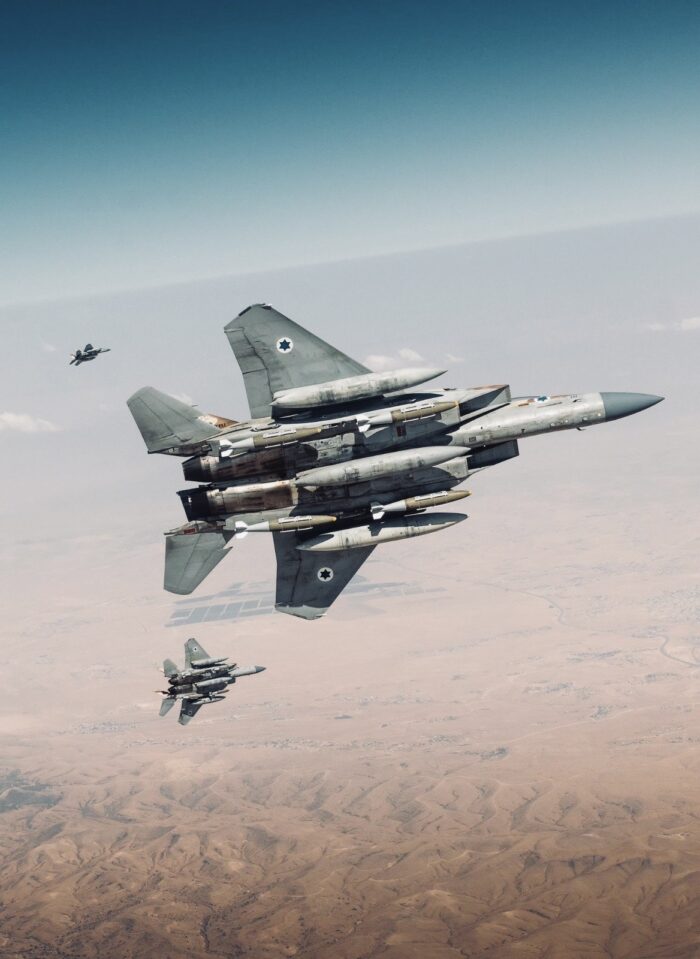
In attacking Iran, Israel deployed some 200 aircraft to strike 500 targets, including the entire Iranian leadership.
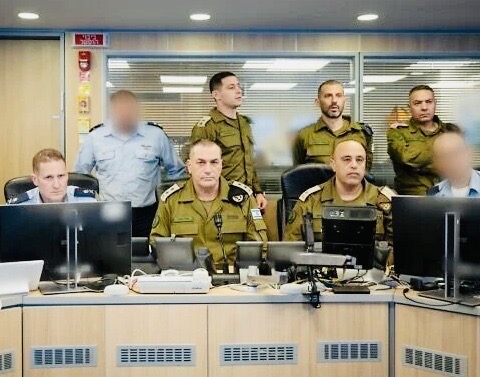
Apart from killing Khamenei, Israel eliminated Defence Council Secretary Ali Shamkhani, Islamic Revolutionary Guards Corps Commander Major General Mohammad Pakpour, Defence Minister Brigadier General Aziz Nasir Zadeh, Security Minister Esmail Khatib and Intelligence Organization director Brigadier General Majid Khademi.
Israeli fighter jets struck the Ministry of Intelligence, the Ministry of Defence, the Atomic Energy Organization and the National Security Council.
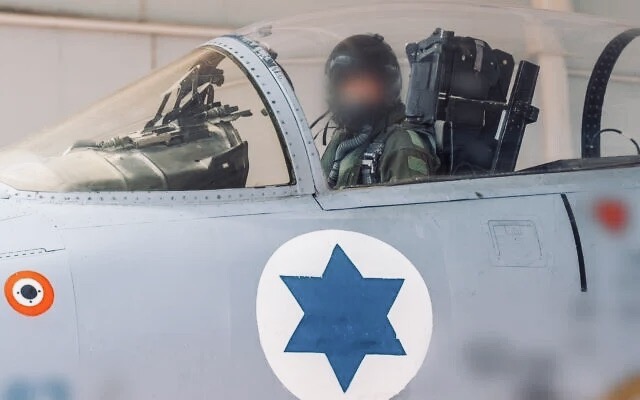
Beyond Tehran, the Israeli Air Force bombed military facilities in Isfahan, Kermanshah, Tabriz, Qom, Karaj, Khorramabad, Bandar Kangan, Bushehr and Baluchestan, near the Pakistani border In addition, Israel reportedly struck pro-Iranian militias in Iraq.
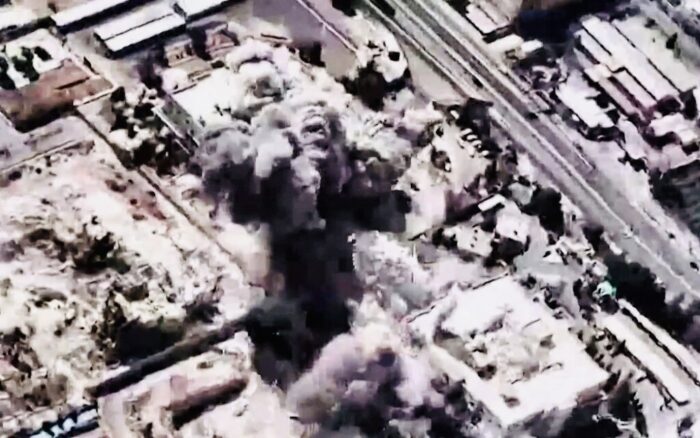
Iran warned of a “crushing response” and Iranian Foreign Minister Abbas Araghchi, claiming that Trump was serving the interests of Israel rather than the United States, promised that Iran “will teach aggressors the lesson they deserve.”
Iranian retaliatory missile strikes demolished two apartment buildings in Tel Aviv and Beit Shemesh that resulted in the deaths of ten people.
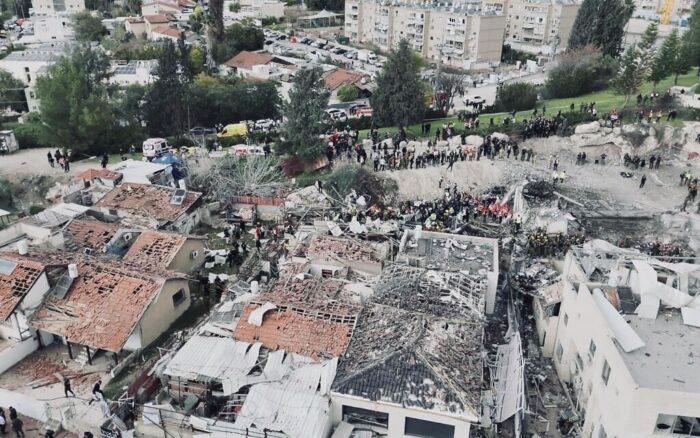
And Iran struck U.S. bases and civilian infrastructure in the United Arab Emirates, Qatar, Bahrain, Oman, Kuwait, Saudi Arabia and Jordan.
The Islamic Revolutionary Guard Corps closed the Strait of Hormuz, a global shipping lane through which 20 percent of global oil and liquefied natural gas passes.
The closure of the strait will inflict significant damage on Iran’s enemies, but it will also adversely affect the export of Iranian oil, the lifeblood of its already battered economy.