Canadian Prime Minister Mark Carney’s lack of clarity regarding Canada’s position on the current war in Iran has drawn scathing criticism.
Lloyd Axworthy, the former foreign minister of Canada, has described the Canadian response as “very confusing.”
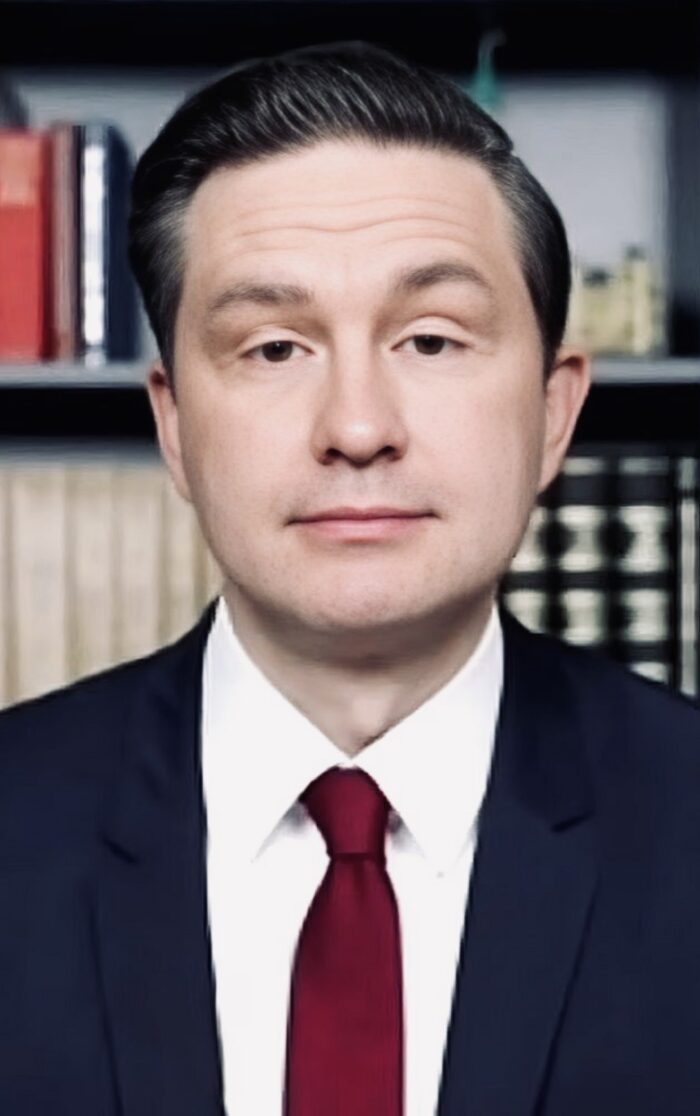
Pierre Poilievre, the leader of the Conservative Party, has criticized Carney for juggling several different positions.
Pierre Poilievre
He released the following statement:
“The regime in Tehran is the principal source of terror in the Middle East and around the world. It tried to build nuclear weapons to annihilate our allies. It massacred tens of thousands of its own people. It orchestrated the attacks of October 7, 2023, murdered Canadian passengers on Flight PS752, sought to kill prominent Canadian leaders, and ruthlessly targets Canadians of Jewish and Iranian descent. It has shown no good faith in negotiations to change course.
“That is why Conservatives support the courageous people of Iran in toppling this terror regime and reclaiming their destiny after 47 years of the regime’s occupation. Conservatives support a democratic, free and permanently denuclearized Iran that lives in peace and security with its neighbors. And Conservatives support the United States, Israel, and our allies across the Gulf to defend their sovereignty and dismantle the clerical military dictatorship of Iran.”
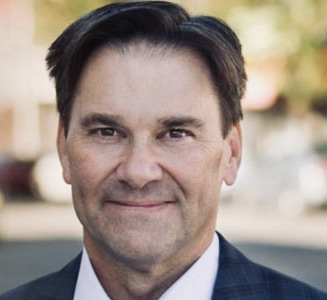
Don Davies, the interim leader of the left-of-center New Democratic Party, condemned Carney’s statements as “unprincipled, incoherent and contradictory.” Claiming that Canada’s position “changes by the day,” he chided Carney for refusing “to rule out sending Canadian Forces into this illegal war.” The NDP wants Canada to condemn the war as a violation of international law and exclude the possibility of Canadian participation, he said.
Don Davies
Last night, the issue was directly addressed in the House of Commons after Carney agreed that a parliamentary debate was necessary. Carney’s office said he would be absent because he planned to attend a Ramadan event.
Two days ago, Carney discussed the war with U.S. President Donald Trump. Details of their conversation were not divulged, but the Prime Minister’s Office released a statement: “Canada was not consulted, did not participate, and has no plans to participate in the offensive actions against Iran that are being undertaken by the U.S. and Israel. The initial conflict has spread widely as a result of attacks by Iran and its proxies on other countries across the broader Middle East.”
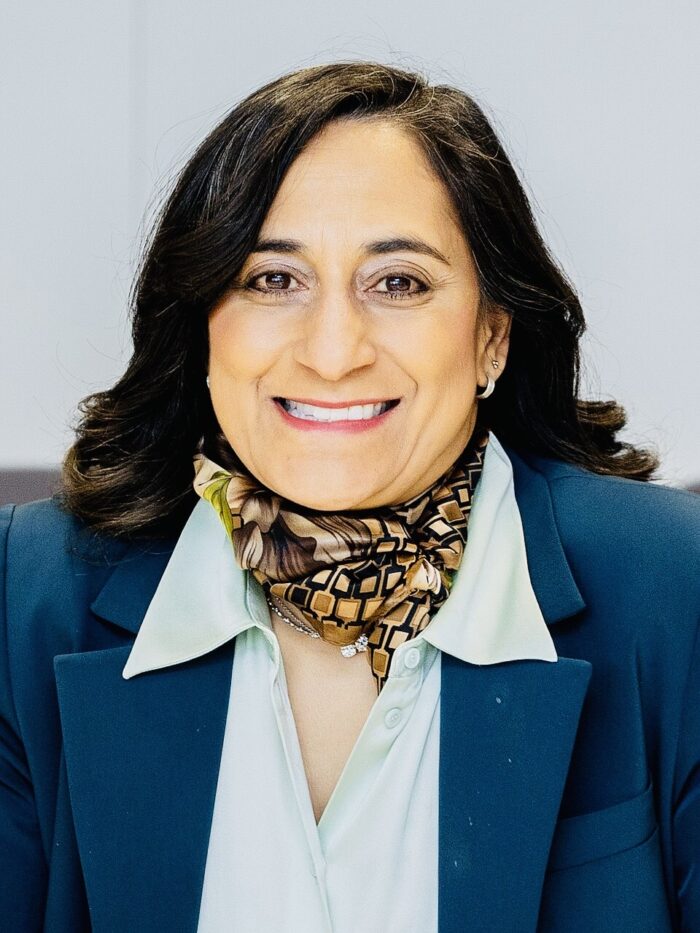
At last night’s debate in Parliament, Foreign Minister Anita Anand said, “On the recent military strikes carried out by the United States and Israel, we were not consulted in advance about these operations, and we have no intention of joining them. At the same time, Iran must never obtain nuclear weapons and grow its arsenal of missiles that represent a serious threat to international peace and security.”
“The U.S. strikes come as a result of a failure of the international order,” she added. She said that “the focus must be on rapid de-escalation,” and that international law “binds all parties, including the United States and Israel.”
Canada’s “top priority” is helping Canadians stranded in Iran and the rest of the Middle East to leave, she noted.
When the war broke out on February 28, Carney was in India on a state visit. His reaction, in an official government statement, was supportive of the United States and Israel:
“Canada’s position remains clear: the Islamic Republic of Iran is the principal source of instability and terror throughout the Middle East, has one of the world’s worst human rights records, and must never be allowed to obtain or develop nuclear weapons.
“Canada and our international partners have consistently called upon the Iranian regime to end its nuclear program, including at the 2025 G7 Leaders’ Summit in Kananaskis and with the United Nations’ reimposition of sanctions in September.
“Despite diplomatic efforts, Iran has neither fully dismantled its nuclear program, halted all enrichment activities, nor ended its support for regional terrorist proxy groups. Canada stands with the Iranian people in their long and courageous struggle against Iran’s oppressive regime. Canada has listed the Islamic Revolutionary Guard Corps as a terrorist entity, and has sanctioned 256 Iranian entities and 222 individuals in response to the regime’s repression and its violence both against its own people, and persistently, beyond its borders. Canada reaffirms Israel’s right to defend itself and to ensure the security of its people.
“Canada supports the United States acting to prevent Iran from obtaining a nuclear weapon and to prevent its regime from further threatening international peace and security.”
During his next stop, in Australia, Carney expressed “regret” for having voiced support for the U.S. and Israeli operation. He said that air strikes by the United States and Israel represented “a failure of the international order” and “appear … inconsistent with international law.”
At the same time, he declined to “categorically rule out” Canadian military participation if circumstances required it. He framed the question as “a fundamental hypothetical” and said that Canada would stand by allies when appropriate.
He called for a rapid deescalation of the war and respect for international rules.
Following Carney’s lead, Anand refused to state explicitly whether the U.S.–Israeli strikes are illegal.
Anita Anand
Canada’s shifting messaging has indeed been confusing. Perhaps Carney is keeping his options open.
He may be trying to strike a delicate balance between supporting allies and opposing Iran’s nuclear ambitions, while criticizing the legality of the attacks and avoiding a commitment to join the war.
In practice, he is attempting to balance three competing forces.
He faces pressure from the United States, Canada’s closest strategic ally. Canada is tied to its southern neighbor through NORAD and NATO commitments, intelligence sharing and military cooperation. If the war intensifies and widens, the Trump administration may ask Canada to step up.
Canadian skepticism toward the war pushes Carney in another direction. Canadians have been wary of foreign wars since Vietnam and Afghanistan. While Canada did not send combat troops to Vietnam, 158 Canadian soldiers were killed in Afghanistan, producing a kind of war fatigue.
Due to this legacy, Canadians generally support peacekeeping and diplomacy rather than wars. Canadian participation in the Iran war would likely be politically unpopular unless Canada itself was attacked by Iran, an extremely unlikely scenario. Carney’s emphasis on de-escalation and international law is designed to reassure a domestic audience.
Another constraint for Canada is international law and Canadian diplomatic tradition. Canada often frames foreign policy issues around multilateral institutions such as the United Nations. If the U.S.–Israeli strikes are perceived internationally as pre-emptive attacks, they raise legal questions about the UN charter. That explains Carney’s comment that U.S. and Israeli strikes might be “inconsistent with international law.”
Despite its cautious tone toward the war, Canada regards the Islamic regime in Iran with suspicion. In 2012, Canada cut diplomatic relations with Iran, citing its threats to regional peace and security, support of terrorism and suppression of human rights. Specifically, Canada deplored Iran’s nuclear program and its sponsorship of proxies such as Hamas and Hezbollah.
In 2020, Canada condemned the shooting down by Iran’s Islamic Revolutionary Guards Corps of Ukraine International Airlines Flight 752, which killed 55 Canadian citizens and 30 permanent residents.
As a result of this history, Canadian politicians have a dim view of the Iranian regime, even if they oppose the current war itself.
In short, Carney’s mixed signals may be due to his desire to satisfy three different constituencies at once: the United States, Canadian voters, and international partners.
If Carney chooses to stay out of the war, there are several roles that Canada may perform. Canada can contribute defensive military support, help protect Arab Gulf allies and vital shipping lanes, and share intelligence with the United States and Israel.
Only time will tell whether Canada would be willing to carry out any of these tasks.