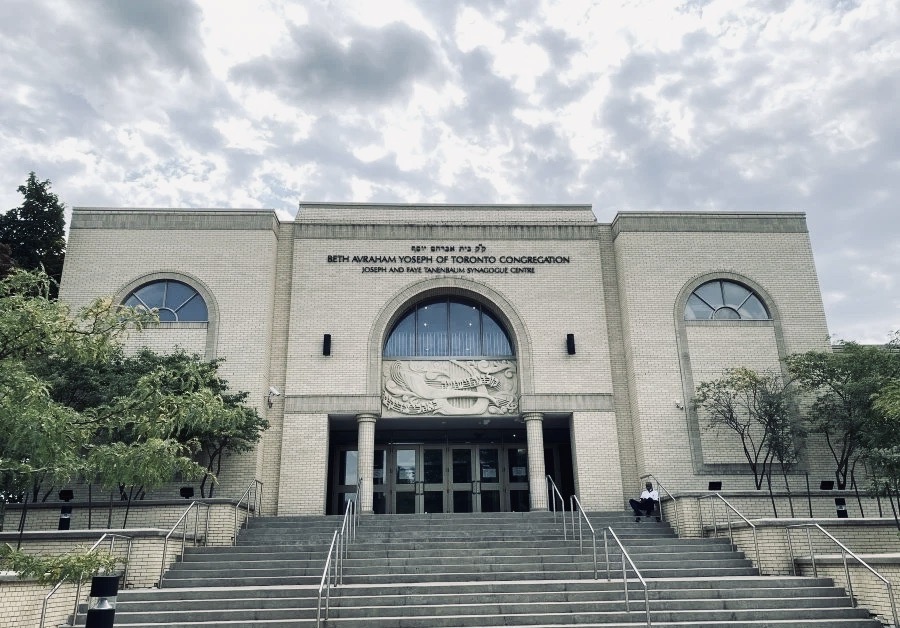
Canada’s normally peaceful and placid facade has been violently ripped away by a wave of arson, vandalism, shootings and firebombings directed at Jews and the Jewish community from coast to coast.
Since Hamas’ attack in Israel on October 7, 2023 and Israel’s subsequent invasion of the Gaza Strip three weeks later, antisemitic incidents have skyrocketed to record levels as synagogues, Jewish day schools, Jewish institutions and Jewish-owned businesses have been periodically attacked.
The current war in Iran, plus Israel’s renewed war with Hezbollah — Iran’s most important regional proxy — has triggered a fresh spate of antisemitic attacks in Canada, as well as in the United States and Europe.
The statistics are alarming.
According to a B’nai Brith Canada report published last April, there were 6,219 antisemitic incidents in Canada in 2024. This translates into an average of about 17 incidents of harassment, vandalism and violence per day.
Statistics Canada reports that antisemitic hate crimes nearly tripled from 2020 to 2024.
Although Jewish Canadians represent roughly one percent of Canada’s population, they account for a disproportionate percentage of hate-crime victims.
The situation has not gone unnoticed in Israel.
Israeli President Isaac Herzog said recently that “all eyes are on Canada.” Israel’s Canadian-born deputy foreign minister, Sharren Haskel, has expressed fear that an antisemitic incident may yet “end in blood.” Israeli ambassador Iddo Moed has described Canada as one of the “centers of antisemitism.”

It is fair to ask whether Moed is exaggerating, but the fact of the matter is that antisemitic attacks have spiked in the past two-and-a-half weeks.
Two synagogues in Toronto and a shul in a northern suburb were struck by gunfire earlier this month following the joint military operation launched by the United States and Israel in Iran on February 28.
Temple Emanu-El, in North York, was targeted on March 2 shortly after Purim celebrations. Bullet holes pierced the front door of Shaarei Shomayim, in central Toronto, 30 minutes later. And on March 6, eight bullets were fired at Beth Avraham Yoseph in Thornhill.

No one was injured in any of these assaults.
“Three synagogue shootings over the span of one week is a pretty good indication that things have gone awry,” columnist Robyn Urback wrote in The Globe and Mail newspaper on March 10. She added that the outbursts of antisemitism are becoming “an existential crisis for Jews contemplating their future in Canada.”
The problem is not confined to Canada, which has the world’s fourth largest Jewish community. Antisemitism in the United States has been on the rise for the past eight years, ever since the Tree of Life synagogue massacre in Pittsburgh, which claimed the lives of 11 worshippers.
Last week, a naturalized American citizen from Lebanon drove an explosives-laden truck into Temple Israel in West Bloomfield, Michigan. He caused enormous property damage, but no injuries or deaths. The 41 year-old-attacker, Ayman Mohamad Ghazali, who fatally shot himself, was presumably responding to the deaths of his brother (reportedly a Hezbollah commander), niece and nephew, who were killed during a recent Israeli air strike in Lebanon.
J Street, a liberal, pro-Israel group that has been critical of Israel’s policy toward the Palestinians, issued a sharp statement after the attack: “We must be crystal clear: Blaming or targeting American Jews for the actions of the Israeli government is antisemitism — full stop.”
This raises an important issue. All too often, anti-Zionism bleeds into antisemitism, conflating all Jews with Israel.
Across the ocean, in Amsterdam, a Jewish school was damaged by an explosion. The mayor, Femke Halsema, denounced the “deliberate attack against the Jewish community.” Meanwhile, a synagogue in Rotterdam was firebombed.
The upsurge of global antisemitism is an unsettling reminder that the oldest hatred is a recurring phenomenon, whether under the guise of religious, racial or political animosity.
It is especially disturbing in a multicultural nation like Canada, which is widely regarded as a beacon of tolerance and freedom, notwithstanding its ugly periods of xenophobia and racism before World War II.
My European immigrant parents, David and Genia, knew nothing about this dimension of Canada’s past and regarded Canada positively. Survivors of the Holocaust, they arrived in Canada in the winter of 1948. I was their only child, having been born in Germany. They believed that Canada would be a haven for us and Jewish newcomers like themselves. They were right. From this perspective, Canada did not disappoint them. Until their deaths in 2016, they lived lives free of the noxious antisemitism that bedevilled them in pre-war Poland.
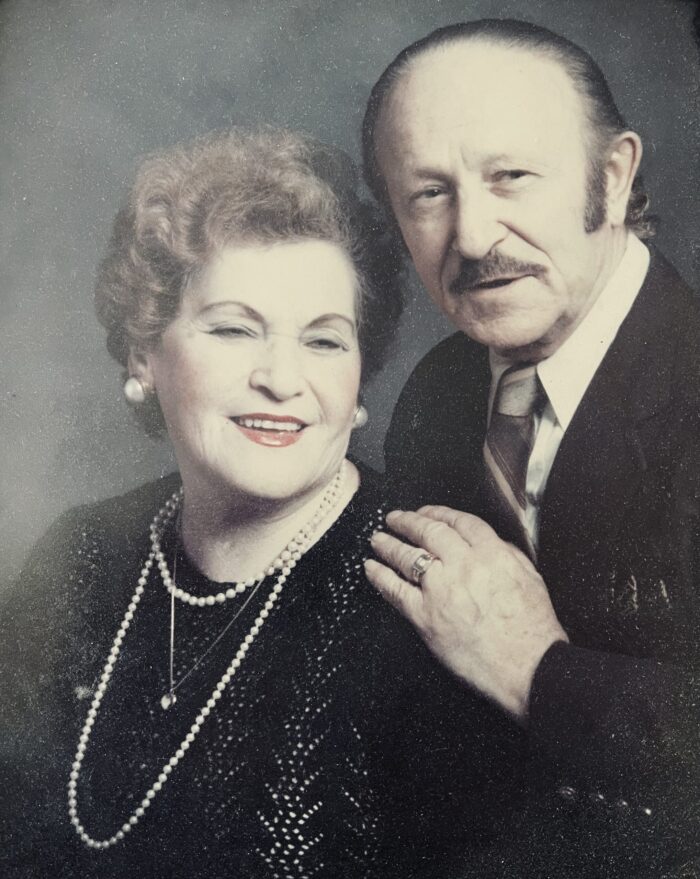
I grew up in a care-free milieu. But as a teenager, I experienced the sting of antisemitism three times. Since then, I have not personally felt it. But in the past three years, it has metastasized across Canada.
A month after Hamas’ invasion of Israel, a synagogue in Vancouver was damaged by an arsonist, shuls in Victoria and Halifax were vandalized by antisemitic graffiti, and Jewish schools and daycare centers in Montreal and Toronto were subjected to bomb threats and shootings.
Windows were smashed at Kehillat Shaarei Torah, a synagogue in Toronto, in May 2024. During the same month, shots were fired at the Bais Chaya Mushka Girls Elementary School in Toronto. The school building would be attacked two more times in that year.
In Montreal, where I came of age, Congregation Beth Tikvah was firebombed in 2024.
By the summer of that year, more than 100 Jewish institutions — synagogues, schools and community centers — had received bomb threats and 12 synagogues had been vandalized.
Last year, Jewish businesses and community facilities reported numerous incidents, including graffiti and vandalism.
The National Post, in a strongly-worded front page editorial, recently urged the federal government to do more to ensure the safety of Jewish citizens. “If the Liberals are serious about tackling this issue, after two-and-a-half years of indifference, they need a whole-of-government approach aimed at imposing serious consequences on the perpetrators of violent crimes.”
While the police have made some arrests, the newspaper pointed out, many other cases remain unsolved. And when suspects are charged, prosecutors rarely seem interested in “making an example of them.”
Police in Toronto have laid hundreds of charges in connection with cases of vandalism and harassment targeting Jewish institutions and people, but almost half have been withdrawn, according to Michael Teper, the president of The Canadian Antisemitism Education Foundation.
Protesters who vandalized the Jewish-owned Indigo bookstore in downtown Toronto in 2023, in reaction to the owner’s links with Israel, received conditional discharges, or the charges were ultimately dropped. Protesters who were charged with public incitement of hatred at a Walk with Israel in 2024 also got off scott free.
The National Post says that about 60 percent of such cases never even reached trial. It reports that Toronto police chief Myron Demkiw informed the Ontario government last year that charges laid over unlawful behavior at anti-Israel protests were generally dropped.

In the face of these events, Canadian Prime Minister Mark Carney, the leader of the centrist Liberal Party, has promised to use “every tool available to confront antisemitic violence and hatred.”
In the past year, the federal government has taken steps to rein in antisemitism.
Earlier this month, Minister of Public Safety Gary Anandasangaree announced that upwards of $10 million will be available to eligible organizations through the Canada Community Security Program to assist Jewish communities to improve security in schools, day cares, overnight camps and synagogues.
“Any hate-motivated violence … is unacceptable and will not be tolerated anywhere,” the ministry said in a press release. “The government of Canada is working directly with Jewish community organizations to identify and support specific needs.”
Critics, citing the extremely high cost of security, dismiss the $10 million grant as insufficient. Jewish groups like B’nai Brith contend that tens of millions of dollars annually may be required annually to protect Jewish community institutions.
A proposed bill, C-09, introduced in 2025, is intended to create buffer zones around places of worship, criminalize intimidation near synagogues and Jewish day schools, and strengthen hate crime penalties.
While cities have increased policing, many Jewish leaders believe that the response has been lacking in light of the scale of the threat. As an observer notes, there is a growing realization that local police departments are unable to protect Jews from rising antisemitism.
Jewish community leaders have asked governments and public institutions to apply existing regulations to curb harassment and incitement in schools, universities and workplaces and to issue clear and consistent statements that antisemitism is incompatible with Canadian values.
At the end of the day, stronger anti-hate laws and greater police enforcement will be necessary.
Certainly, Canada can learn a thing or two from officials in the United States charged with providing security at Jewish institutions.
Kerry Sleeper, a senior official at the Secure Community Network, a Jewish security organization, said recently, “We are in the midst of the most elevated and complex threat environment the Jewish community and this country has seen in modern history.”
Mitchell Silber, the executive director of the Community Security Initiative, told the Jewish Telegraphic Agency last week that Jewish institutions need additional layers of protection such as multiple armed guards outside entrances and increased screening. “The Jewish community has to up its game in terms of the external security of its locations,” he said.
American Jewish institutions currently spend $765 million annually on security, according to the Jewish Federations of North America. Typically, a Jewish organization spends 14 percent of its annual budget on security. Eric Fingerhut, the president and chief executive of the Jewish Federations, describes this expenditure as a “Jewish tax.”
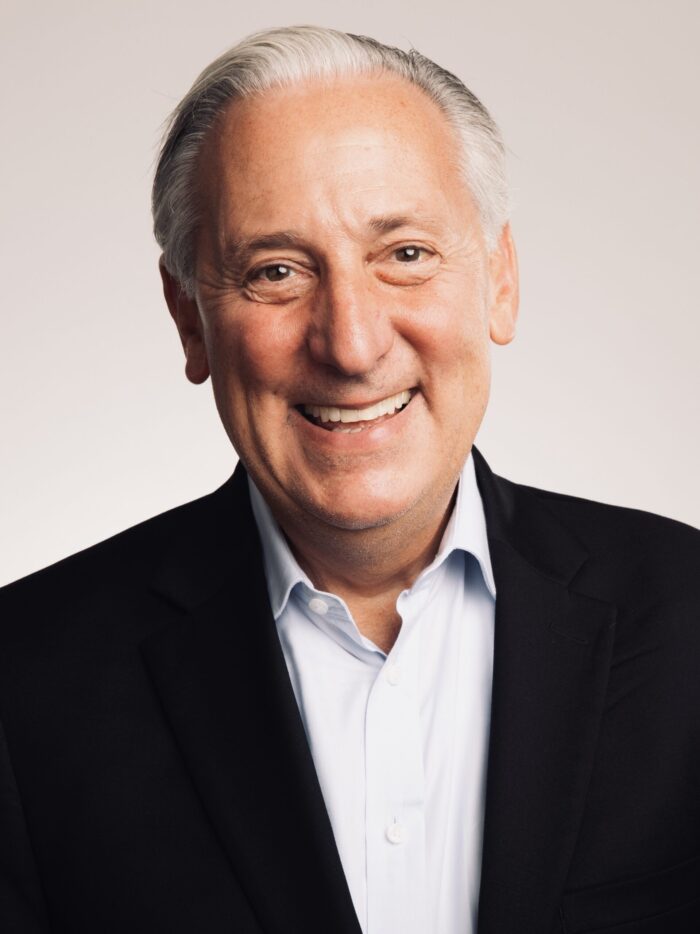
The American Jewish Committee, in a recent survey, found that 91 percent of American Jews feel less safe since last year’s firebombing of the residence of Pennsylvania’s Jewish governor, Josh Shapiro.
Like Jews in the United States, Canadian Jews have been thrown into a state of anxiety and unease. As Urback warned in her column, “We are reaching a tipping point, and Canada’s leaders must treat it as such … It is well beyond time for Canada’s leaders to say, plainly, that this stops now.”
It remains to be seen whether they are equal to the challenge.