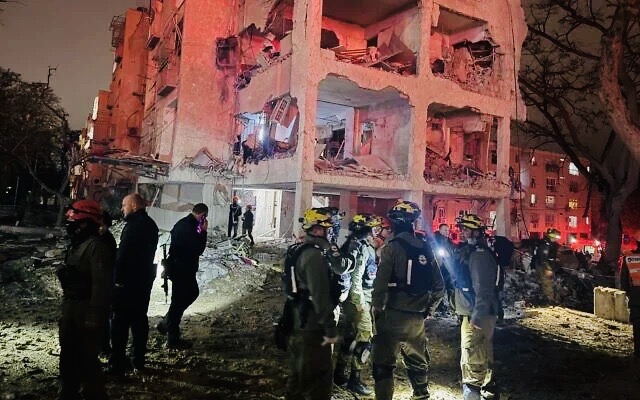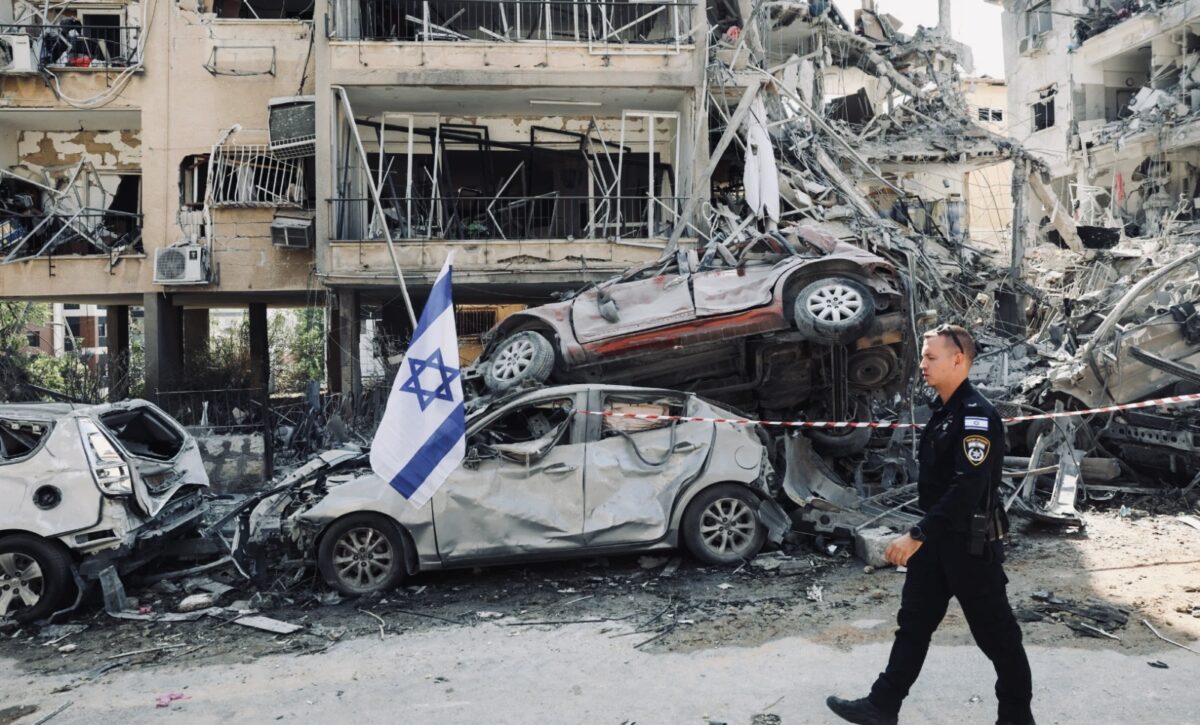
Israel has absorbed four rounds of punishing Iranian ballistic missile and drone bombardments since the spring of 2024. Although Israel has managed to intercept about 90 percent of the projectiles, the few that have gotten through have caused damage and claimed lives, proving that even the best air defence system is not 100 percent hermetic.
Israel is inured to such attacks.
Israeli towns and villages in the northern Galilee were terrorized by katyushas launched from southern Lebanon by Palestinian guerrillas in the late 1960s, 1970s and early 1980s.
During the 1991 Gulf War, residential buildings in Tel Aviv and elsewhere were damaged by Iraqi Scud missiles fired on the order of President Saddam Hussein.
In 2006, during Israel’s first war with Hezbollah, missiles rained down on northern and central Israel.
Since the start of the current war pitting the United States and Israel against Iran, the Iranian regime, Israel’s deadliest enemy, has fired more than 400 missiles and several hundred drones at Israeli cities.
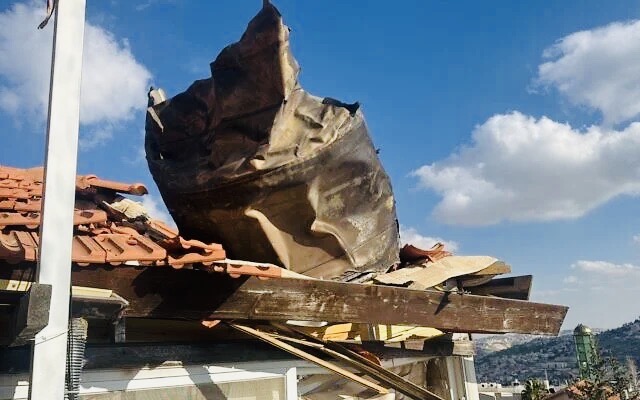
During last June’s 12-day war, in which the United States participated, Iran launched 400-plus ballistic missiles and upwards of 1,000 drones at Israel.
In its first direct clash with Israel, in April 2024, Iran directed 120 ballistic missiles, 30 cruise missiles and 170 drones at Israel. These barrages prompted Israeli air strikes, which greatly damaged Iran’s anti-missile batteries. During the course of the Iranian strikes, Israel received interception support from the U.S. France, Britain and Jordan.
Six months later, Israeli cities and military bases were struck by 200 Iranian ballistic missiles. The Israeli Air Force responded by destroying more of Iran’s air defences, leaving Iran virtually defenceless.
Israel’s armed exchanges with Iran in April were initially set off by an Israeli air strike that levelled Iran’s consulate in Damascus and killed several members of the Islamic Revolutionary Guards Corps, including two generals.
Iran’s reliance on ballistic missiles is easily explainable. In a monograph published on March 23, the Institute for National Security Studies at Tel Aviv University noted that Iran’s security doctrine rests on “a conception of power that centers on missiles and UAVs as both offensive and defensive pillars. These capabilities enable Iran to challenge militarily superior adversaries, chiefly the United States and Israel… They allow Tehran to exert sustained pressure, even without air superiority, while threatening targets across the region.”
During the current war, around 70 percent of Iranian ballistic missiles have carried cluster munitions, according to open sources. There have been more than two dozen such incidents at 100 separate impact sites.
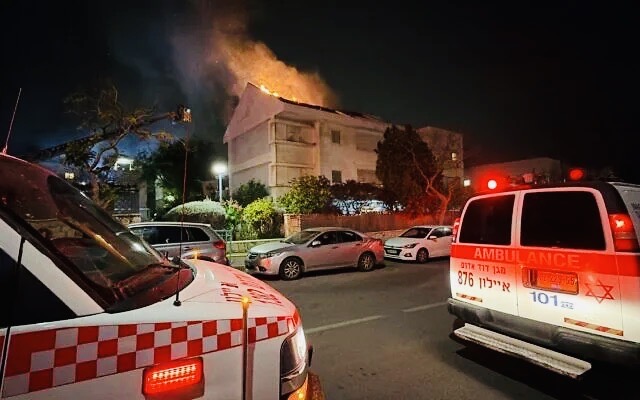
Cluster munition warheads contain sub-munitions that disperse over a wide area and are designed to maximize destruction and terrorize civilians. Once dispersed, the bomblets are more difficult to intercept.
Ballistic missiles with cluster munitions have struck Tel Aviv, Ramat Gan, Jaffa, Bat Yam, Holon and Petah Tikvah. Conventional Iranian missiles have slammed into Haifa, striking an oil refinery, and into Tel Aviv, hitting a train station. Missile debris has landed in the Arab quarter of Jerusalem.
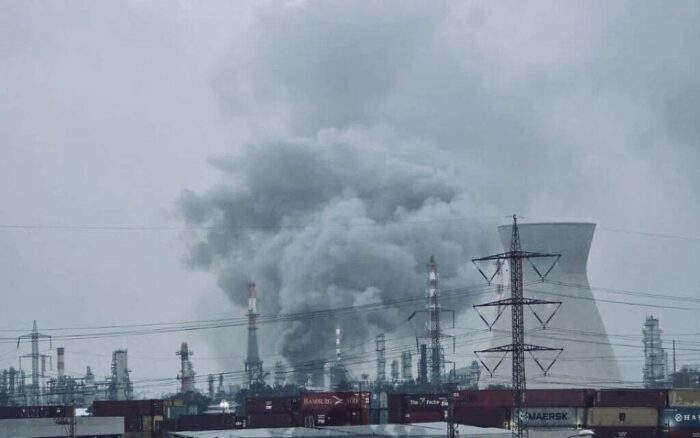
Damage to critical infrastructure has been limited, but scores of buildings have been shattered, the Israeli press says. Iranian missiles have struck military installations, but the Israel Defence Force has not released details.
Since the outbreak of the war, 13 civilians and two foreign nationals have been killed in Israel, along with four Palestinians in the West Bank.
In the worst single incident, nine people died when a ballistic missile tore through an apartment building in Beit Shemesh.
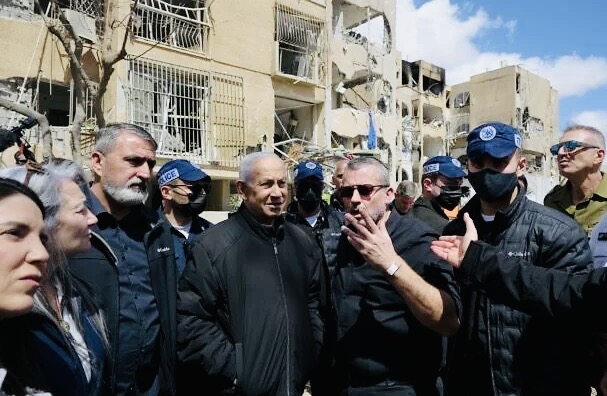
Ballistic missiles aimed at Israel’s nuclear reactor on the outskirts of Dimona struck a housing complex in the city and in the nearby town of Arad, wounding about 200 people. In the last Iranian attack, a ballistic missile carrying cluster bomblets crashed into Bnei Brak, wounding nine people.
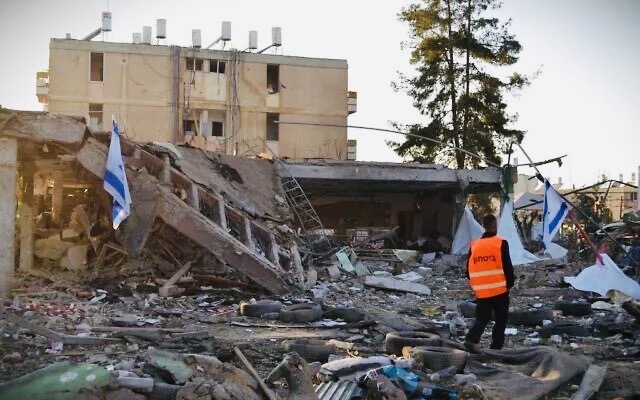
Israel’s Ministry of Health reports that some 4,000 people around the country have been hospitalized so far, some of whom were injured in the rush to reach bomb shelters.
Speculation has abounded that Israel, having apparently run short of interceptors since last year’s war with Iran, has begun to conserve them. The supply of interceptors has been a source of concern, since the current war has only reached its “midway” point, according to General Eyal Zamir, the chief of staff of the armed forces.
The New York Times reports that the director general of the Ministry of Defence, Amir Baram, travelled to the United States earlier this month to purchase more interceptors.
At present, Israel’s air defence system consists of the Iron Dome, which shoots down short-range rockets; David’s Sling, which intercepts medium-range missiles, rockets and cruise missiles, and the Arrow 3, which downs projectiles in outer space.
These systems are supplemented by a U.S. THAAD system operated by American soldiers.
During the previous Israel-Iran war, 31 people were killed, 3,000 were injured, and 13,000 were rendered homeless, according to Israeli reports.
During the course of that war, an Iranian missile struck the renowned Weizmann Institute of Science in Rehovot, destroying laboratories, damaging equipment, and wiping out years of academic research. No fatalities were reported, but the blast injured 42 people in the adjacent area. Iran claimed it had targeted nearby military sites.
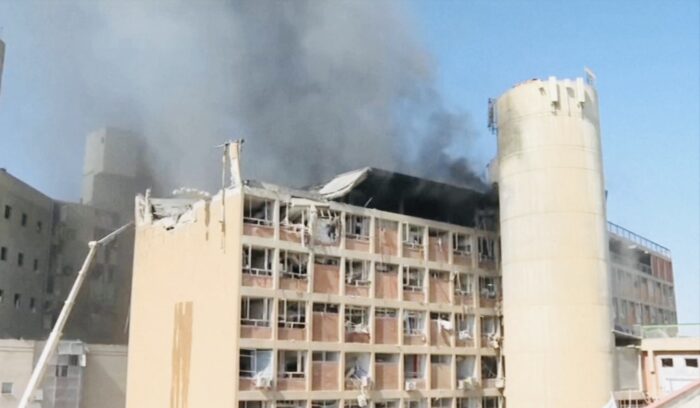
Shortly afterward, the Soroka Hospital in Beersheba suffered a direct hit, injuring many people and forcing emergency services to reroute patients.
The Iranian missile barrages led to 53,500 direct damage claims valued at $1.1 billion, said Shay Aharonovich, the director of the Israel Tax Authority. Indirect damage claims were higher.
It remains to be seen what kind of a toll the current war will take on Israeli lives and property, but it is expected to be on the hefty side, especially if it drags on considerably longer.