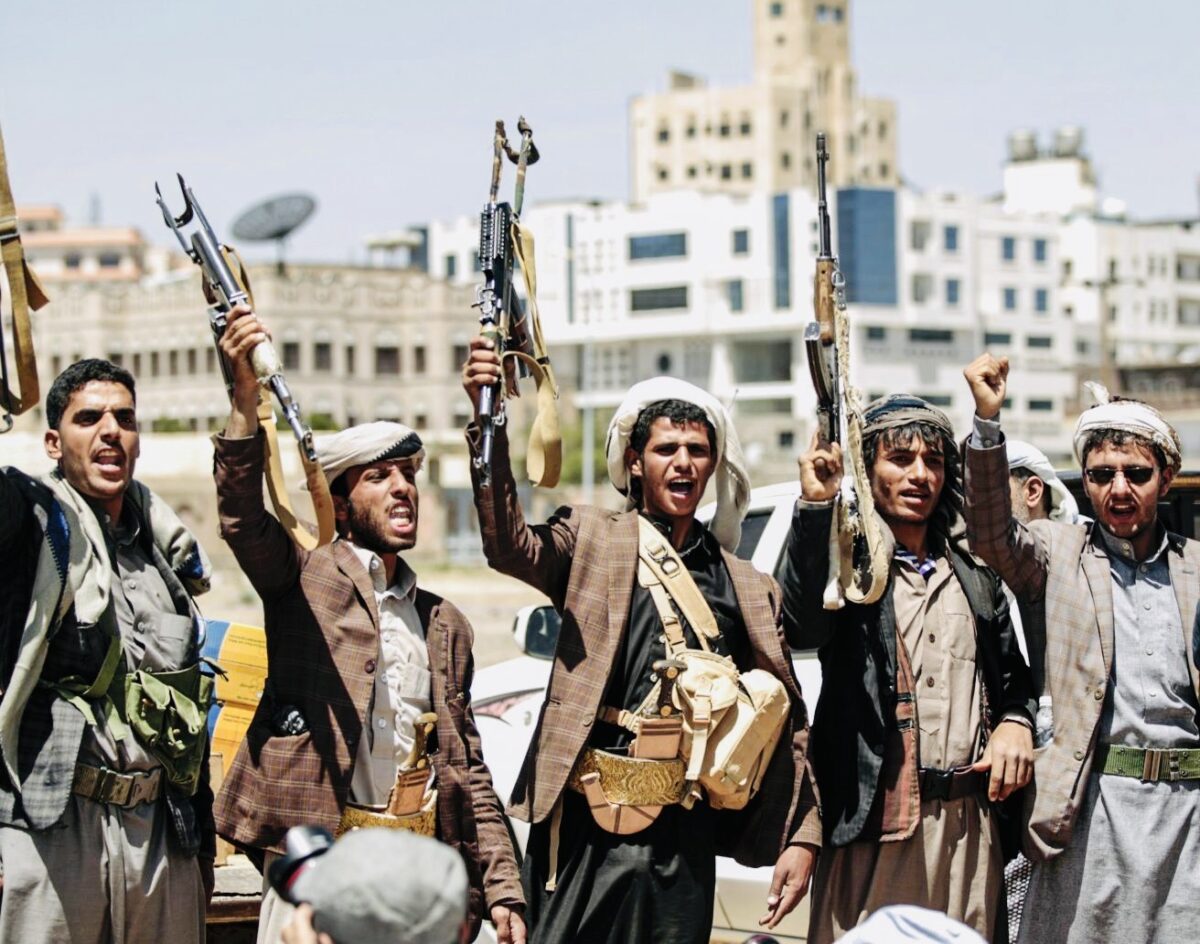
Two more members of Iran’s Axis of Resistance have been drawn into the month-long war waged by the United States and Israel in Iran.
On March 28, the Houthis of Yemen launched their first attack against Israel since the end of the two-year war in the Gaza Strip last October. Targeting “sensitive Israeli military sites,” they fired a ballistic missile at Beersheba and a drone at Eilat, both of which were downed.
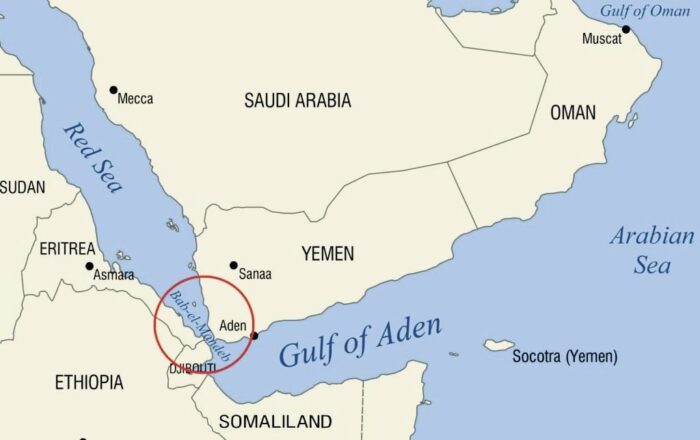
The Houthis, who have vowed to press ahead with more attacks, may yet try to block the Bab el-Mandab strait, a chokepoint at the mouth of the Red Sea between Yemen and the Arabian peninsula.
In the meantime, a network of pro-Iranian militias in Iraq, known as the Popular Mobilization Forces (PMF), are also helping Iran. While the PMF is formally a part of Iraq’s state security apparatus, many of its militias maintain independent command structures and strong ideological and military ties to Iran’s Islamic Revolutionary Guard Corps.
Since the outbreak of the Iran war on February 28, the PMF has struck the U.S. embassy in Baghdad and American bases throughout Iraq, turning it into a conflict zone.
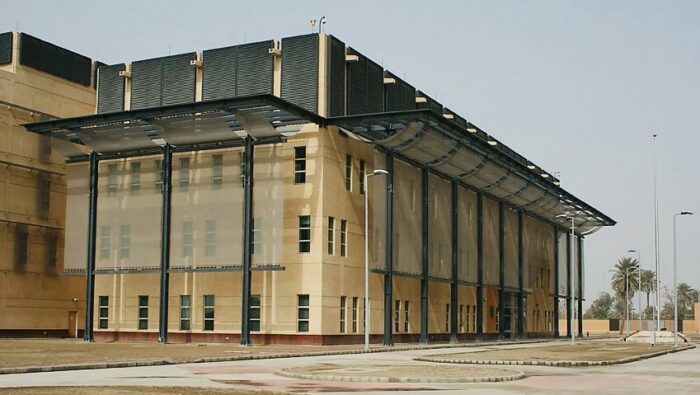
U.S. and Israeli aircraft have bombed PMF sites in retaliatory strikes, according to open sources such as the Institute for the Study of War, a think tank in Washington, D.C.
The participation of the Houthis and the PMF in the war means that all but one of Iran’s allies in the Axis of Resistance have been mobilized in defence of the Iranian regime, and that the Middle East is embroiled in what looks like a regional war.
Hezbollah, the Lebanese militia, entered the fray on March 2, triggering its third war with Israel in Lebanon in 20 years. Hamas, which was battered by Israel in the recent war and currently controls 47 percent of the Gaza Strip, is still inactive.
The Houthis, whose slogan is “Death to America, Death to Israel and a Curse on the Jews,” joined the war on Iran’s behalf after issuing threats that it was prepared to intervene. “We confirm that our fingers are on the trigger for direct military intervention,” Yahya Saree, its spokesman, said in a televised speech.
Until two days ago, the Houthis sat out the war, watching developments carefully. What appears to have pushed them across the line were Israeli air raids on two major steel factories and two nuclear sites in Iran on March 27.
The Israeli Air Force bombed the Khuzestan Steel plant, near Ahwaz, and the Mobarakeh Steel factory in Isfahan, reportedly causing immense damage to Iran’s economy.
The strikes led Iranian Foreign Minister Abbas Araghchi to vow that Israel would pay a “heavy price” in retribution.
On the same day, Israeli aircraft hit a yellowcake production facility near Yazd, the only one of its kind in Iran, as well as a heavy water reactor in Arak, which has produced plutonium.
These devastating strikes may have prompted the Iranian regime to ask the Houthis for military assistance.
The Houthis, who have been entrenched in northern Yemen since 2014, have been fighting Israel since Hamas’ one-day invasion of southern Israel on October 7, 2023. Acting in support of Hamas, they initiated hostilities against Israel, describing their strategy as a means by which to force it to halt its offensive in the Gaza Strip.
From the autumn of 2023 onward, the Houthis launched dozens of missiles and drones at Israel. Israeli air defences downed 90 percent of the projectiles, but the Houthis were not entirely unsuccessful. One missile that got through crashed into an apartment building in central Tel Aviv in 2024, killing one man. The missile threat posed by the Houthis forced the port of Eilat to temporarily close down.
Israel retaliated with a series of air strikes in Yemen, damaging critical infrastructure and killing members of its leadership. Yet the Houthis remained defiant and unbowed.
The Houthis, in a bid to cause global economic pain, also attacked merchant vessels in the Red Sea and the Gulf of Aden, forcing shipping companies to reroute ships to the Suez Canal in Egypt and around the southern tip of Africa. These detours caused significant delays, increasing the price of household goods around the world.
For a while, the United States bombed Houthi sites in a concerted air campaign in Yemen, but halted its strikes after negotiating a ceasefire with the Houthis. The truce left Israel to deal with the Houthis singlehandedly.
With a US-brokered ceasefire in Gaza in October 2025, the Houthis ceased their attacks against Israel and international shipping.
Although an integral component of the Axis of Resistance — the brainchild of the late Quds Force commander Qassem Soleimani — the Houthis have “never viewed Iran as their center of gravity, command-and-control hub, or treaty ally in a mutual defence pact,” says the Institute for National Security Studies at Tel Aviv University. “Instead, they have treated Iran as an important ideological and military partner in support of a distinctly Yemeni component of the pan-Islamic ‘resistance.’
“Iran’s radical brand of anti-Western, activist Shiite thought helped shape the paranoid and extremist worldview of the movement’s founder, Husayn al-Houthi, whose lectures serve as the ideological basis for the group today. Since Husayn’s death in 2004, these ties have deepened considerably.”
Over the past decade, Iran has provided the Houthis with training and advanced weaponry ranging from ballistic missiles to long-range drones.
In Iraq, where Iran has exerted considerable political influence since the fall of Saddam Hussein’s Baathist regime in 2003, Kata’ib Hezbollah is widely regarded as one of the most powerful pro-Iran proxies within the PMF orbit. It has repeatedly targeted U.S. troops in Iraq.
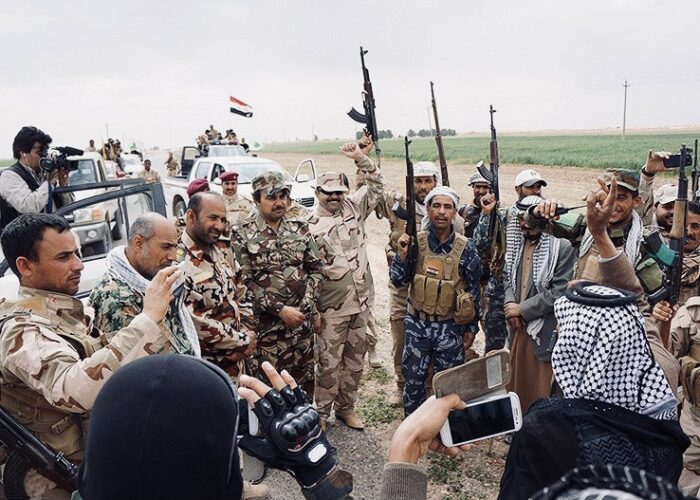
Its allies include Asa’ib Ahl al-Haq, the Badr Organization, Harakat Hezbollah al-Nujaba, and the Islamic Resistance in Iraq, which attacked Israel during the Gaza war.
These groups, which are overseen by the Islamic Revolutionary Guard Corps, hold significant power in Iraq’s parliament, influencing the passage of legislation and the selection of cabinet ministers. Having issued statements in support of the Iranian regime, they apparently answer to Iran rather than to Iraq’s prime minister.
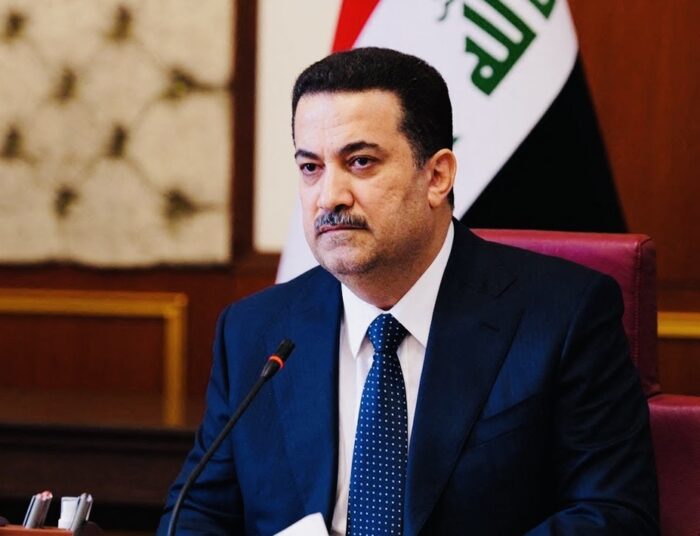
The current prime minister, Mohammed Shia al-Sudani, faces immense pressure to rein the militias. His options are limited. In an implicit reference to Iran, he recently told U.S. Secretary of State Marco Rubio that Iraq’s airspace, territory and waters should not be used for military action targeting neighboring countries.
Since the outbreak of the war in Iran, the Iraqi militias have launched hundreds of drones and missiles at U.S. sites in Iraq, particularly its northern Kurdistan region.
U.S. and Israeli reprisals in Iraq have been limited but persistent, targeting the bases, command posts and checkpoints of the militias.
Unlike the United States, Israel has not officially acknowledged its military role in Iraq. By all accounts, Israeli air strikes focus on advanced weapons transfers and infrastructure linked to Iran’s Islamic Revolutionary Guards Corps. But Israel’s most important contribution is the production of targeting intelligence on militia leadership, weapons depots, and drone and missile infrastructure.
Whether the U.S. and Israeli air campaign in Iraq will be effective has yet to be determined. But if the past is any guide, the Iraqi militias have no intention of backing down, even in the face of superior firepower.
It would appear that Iran can depend on its regional allies to stir chaos and instability.