A pro-Palestinian organization in Germany is trying to smear Israel by means of a deceitful political campaign.
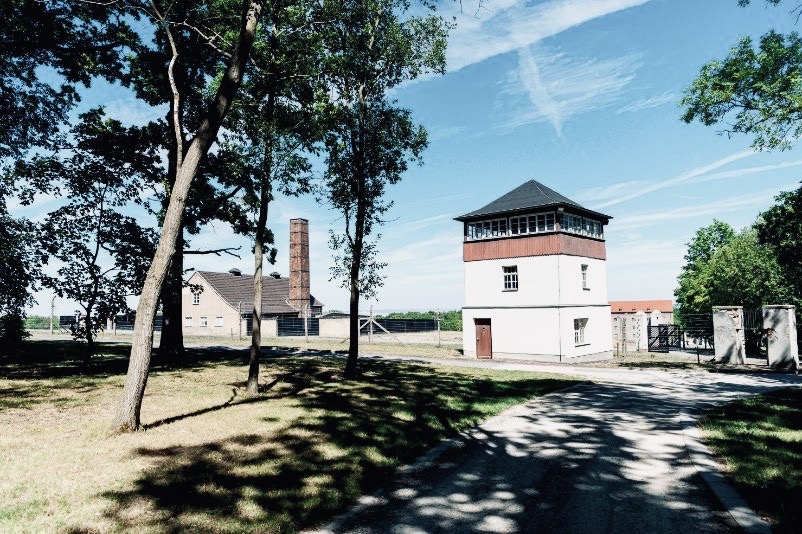
Kufiyas in Buchenwald hopes to stage a rally in the Buchenwald concentration camp memorial on April 12 to mark the 81st anniversary of its liberation by U.S. troops on April 11, 1945. Kufiyas in Buchenwald conceived the idea after a German court ruled that Buchenwald was within its rights to refuse entry to visitors who wear Palestinian keffiyehs.
Subsequently, the city of Weimar, within whose municipal boundaries Buchenwald lies, said it would ban the event, but offered a downtown square as an alternative location.
Rejecting Weimar’s offer, Kufiyas in Buchenwald called on the memorial to lift restrictions on pro-Palestinian symbols and speech at the site so that it can address “the genocide in Gaza, commemorate victims of genocide and fascism” and “fight against all genocides, particularly the genocide currently taking place in Palestine.”
Kufiyas in Buchenwald, which is supported by the International Jewish Anti-Zionist Network and the Voice for a Just Peace in the Middle East, announced that it would challenge the ban in court.
It is obvious that Kufiyas in Buchenwald is shamelessly using the Holocaust and German guilt to advance its partisan political objectives. Being ideologically anti-Zionist, it is committed to Israel’s dismantlement as a Jewish state.
No one is fooled by its genocidal agenda.
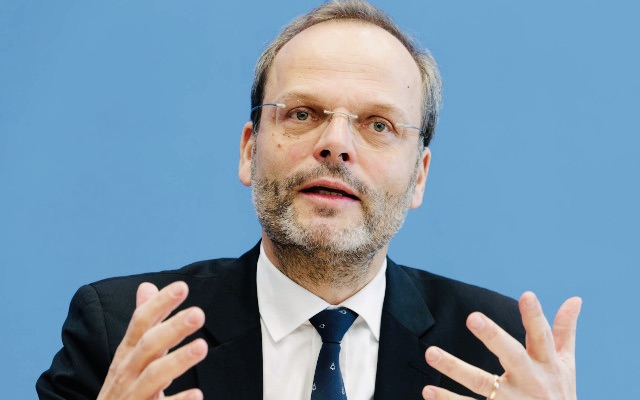
Felix Klein, Germany’s commissioner of combating antisemitism, told the Jüdische Allgemeine newspaper that he viewed its proposed rally as “disrespectful self-promotion and a perfidious attempt to relativize the murder of over 11,000 Jews in the Buchenwald concentration camp by comparing it to Israel’s actions in the recent Gaza war.”
A coalition of 17 organizations, including several Jewish communal and academic groups, released a statement accusing Kufiyas in Buchenwald of “instrumentalizing the Buchenwald memorial site as a platform for anti-Jewish agitation.”
Certainly, its planned rally would be a slap in the face of Holocaust memorialization.
Two hundred and fifty thousand prisoners were incarcerated in Buchenwald from the time it was established by the Nazi regime in 1937 until it was permanently closed some seven years later. By that point, 56,000 of its inmates had been murdered.
Buchenwald, which is situated on the slopes of a hill about eight kilometers from Weimar, held a diverse group of prisoners ranging from German political dissidents and German Jews to captured Red Army soldiers and homosexuals.
Conditions in the camp were abominable and prisoners were terribly mistreated. Upon its arrival in the camp, the American army found 21,000 bedraggled and starving inmates, the majority of whom were on the brink of death.
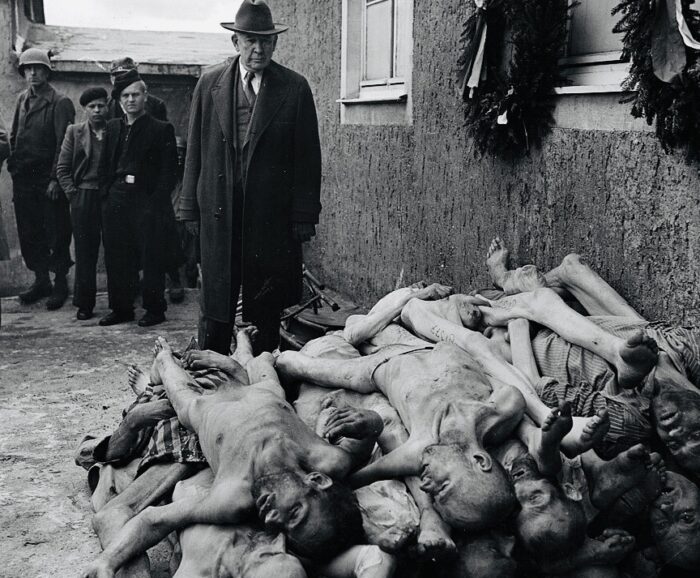
Eight decades on, Buchenwald is a searing symbol of Nazi fanaticism and savagery, a memorial dedicated to the victims of Hitlerite oppression. It definitely is not a place to score political points or a platform from which to hurl baseless accusations at Israel.
Rather than honestly attempting to keep faith with these hallowed precepts, Kufiyas in Buchenwald is trying to mangle and distort them for its own narrow and self-interested purposes.
Under no circumstances should Buchenwald be used as a forum for partisan politics. This would be beyond the pale.