High-level U.S.-Iran talks are due to begin in Islamabad on April 11, four days after the United States and the Iranian regime accepted a two-week ceasefire proposal brokered by Pakistan to pause the war in Iran.
The fighting erupted on February 28 after the United States and Israel launched joint air strikes in Iran. These attacks killed Iran’s supreme leader, Ayatollah Ali Khamenei, and almost 50 key political and military figures in the Iranian regime ranging from Ali Shamkhani, the secretary of the Defence Council, to Aziz Nasirzadeh, the defence minister.

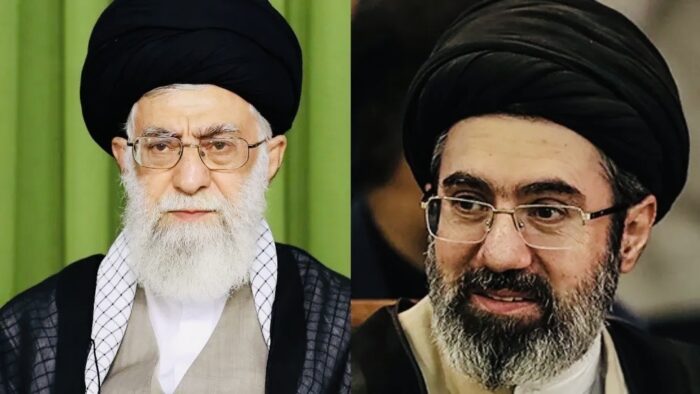
Khamenei’s son and successor, Mojtaba, was wounded on the first day of the war and has yet to show his face in public.
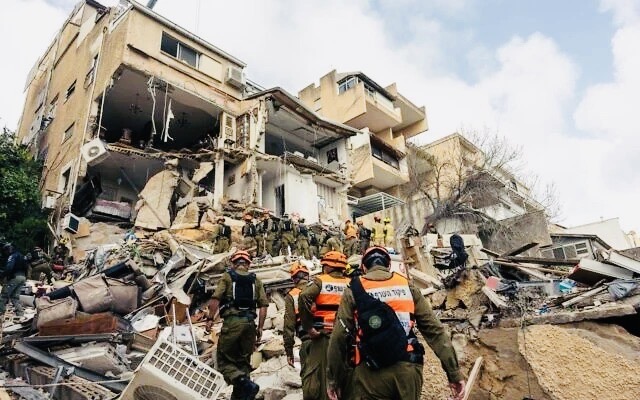
When the ceasefire was announced, the Human Rights Activists News Agency reported that at least 1,665 civilians had been killed in Iran. In Israel, the civilian death toll stood at 20, with more than 7,00o wounded. Over the course of 39 days of war, Iran fired approximately 650 ballistic missiles and hundreds of drones at Israel. More than 90 percent were shot down. In the Gulf states, 32 people were killed. The United States lost 13 soldiers.
The negotiations in Pakistan’s capital are sure to be extremely arduous and lengthy because the ceasefire is clouded by ambiguities and complicated by issues that may well defy a resolution.
A resumption of the war is possible, though neither the United States nor Iran wish to renew hostilities.
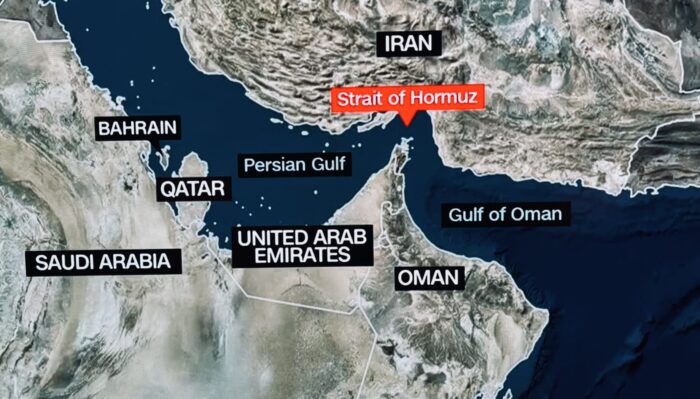
The truce was hammered out shortly after U.S. President Donald Trump issued an apocalyptic ultimatum threatening to extinguish Iran’s “whole civilization” if the Iranian regime did not fully reopen the strategic Strait of Hormuz, through which 20 percent of the world’s oil and liquified natural gas flows.
The day before, Trump sent a crude warning to Iran, “Open the Fuckin’ Strait, you crazy bastards, or you’ll be living in Hell — JUST WATCH! Praise be to Allah.”
Justifying the Trump administration’s acceptance of the truce, U.S. Vice President JD Vance said that American forces had “largely accomplished its military objectives.”
Echoing Vance’s assessment, U.S. Secretary of Defence Pete Hegseth and the chairman of the U.S. Joint Chiefs of Staff, General Dan Caine, claimed that Iran’s military capabilities and industrial defence base had been decimated during the course of the U.S.-Israel air campaign in Iran.
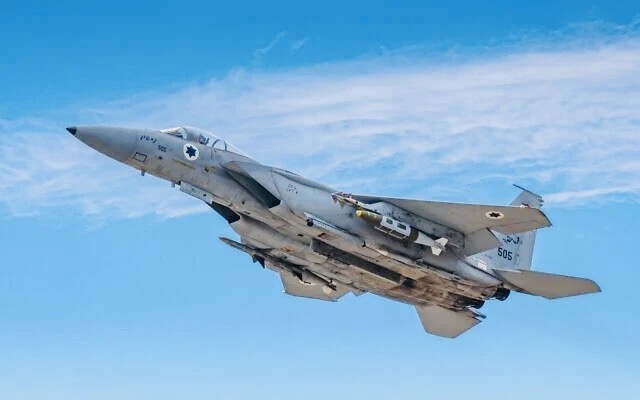
The U.S. and Israel carried out 13,000 and 8,500 sorties respectively.
Israeli Prime Minister Benjamin Netanyahu reportedly urged Trump to press on with the war, arguing that a ceasefire at this point carried significant risks.
Trump, bent on extricating himself from a “forever” war and concerned that his presidency would be imperilled by the drastic uptick in the price of oil, decided that a ceasefire would be preferable.
All the same, the war has left Trump’s political base fractured, with some of his former supporters having accused him of violating his promise to keep the United States out of unwinnable wars in the Middle East.
As expected, critics seized on Trump’s decision to abandon fiery rhetoric and pursue diplomacy, denigrating him as “Taco” (Trump always chickens out).
While he and his team declared victory, Iran made an identical claim.
At a press conference on April 8, Hegseth said that the United States had won the war, and that Iran had “begged” for a ceasefire because it had run “out of options and out of time.” In his view, Operation Epic Fury was “a historic and overwhelming victory on the battlefield. A capital V military victory.” He added that the U.S.and Israel had achieved “every single objective,” including the destruction of Iran’s navy, air defence system, and missile production capability.
The ceasefire means that Iran will “never, ever” possess a nuclear weapon. “We finished completely destroying Iran’s defence-industrial base, a core pillar of our mission. They can no longer build missiles.”
Hegseth admitted that Iran is not completely defenceless. “They can still shoot, we know that,” he said. “They can still shoot here and there, but that would be very unwise.”
Iran claimed it had achieved a “historic victory” over the United Stares and Israel.
There is some truth to its claim.
Iran, which faced severe internal unrest in January, successfully survived a ferocious onslaught. The U.S. and Israel appear to have failed to dismantle Iran’s nuclear program, one of the stated goals of the operation. Iran bombarded Israel and the Arab Gulf states with an unending salvo of ballistic missiles and drones and remained defiant and unbowed. Iran took control of the Strait of Hormuz, causing global economic disruption.
Given these factors, state-orchestrated rallies in Tehran celebrated the truce as a “total and complete victory” over the United States and Israel.
Despite the heated rhetoric, the United States and Iran were primed for talks. Iran realized that a protracted war would further destroy or damage its critical infrastructure. The United States was aware that the disruption of energy supplies could set off a global recession that would inevitably affect its own economy.
China, worried by the mounting costs of the war, apparently pushed Iran, its ally, to show flexibility, defuse tensions, and embrace a ceasefire.
Apart from being tenuous, the truce is rife with question marks.
As Elliott Abrams, a former U.S. diplomat and conservative commentator, wrote, “Well, there is a ceasefire. Or perhaps not. It includes Lebanon. Or it doesn’t. Iran’s 10-point plan is an acceptable working document for the United States. Or it isn’t the one U.S. negotiators saw. The Strait of Hormuz will be open. Or passage requires Iranian approval and a toll.”
He added, “All this confusion is unsurprising, because the only meeting of the minds between President Donald Trump and whoever is ruling in Tehran was that the United States would stop attacking Iran. In return, Iran would stop attacking all its Arab neighbors and Israel — though not immediately, we soon learned. My own guess is that at the end of two weeks allotted for negotiations, two more weeks will be allotted, and then two more. There may never be much more than a ceasefire agreed, given the distance between Iranian and American demands.”
Robert Malley, a liberal who was President Joe Biden’s special envoy for Iran, said that the ceasefire is so ambiguous that the United States and Iran are already arguing over it. “It’s hard to know not just where you go from here, but where you are to begin with,” he told The New York Times. “The talks are starting on very weak grounds.”
Indeed.
The truce, in essence, has not even remotely resolved the fundamental issues that triggered the war.
It leaves a theocratic and autocratic government, backed by the Islamic Revolutionary Guard Corps, in charge of a cowed population.
Trump claims that “complete and total regime change” has occurred, with “different, smarter, and less radicalized minds” governing the country. Trump’s claim is untrue. As Karim Sadjadpour, an Iran scholar at the Carnegie Endowment for International Peace, put it, “There has been personnel change in Iran, not regime change. Different men with the same ideology.”
In addition, Iran remains a cocky, dangerous and destabilizing force in the region.
Iran is supposedly still in possession of a stockpile of 440 kilograms of 60 percent enriched uranium, which is currently buried under the rubble of two shattered Iranian nuclear facilities. Iran has enough near-bomb-grade material to produce nearly one dozen nuclear bombs, as Iranian Foreign Minister Abbas Araghachi told U.S. negotiators Steve Witkoff and Jared Kushner at one of their meetings prior to the war. Trump claims that this nuclear “dust” should not be a problem. “We’ll always be watching it by satellite,” he said on April 1.
The Strait of Hormuz is effectively in Iran’s hands and few ships are getting through. Iran, too, has reportedly begun charging tankers exorbitant tolls. The Iranian regime exercised no such authority prior to the war.
The war has been a traumatic experience for Arab Gulf states. Countries like Saudi Arabia and the United Arab Emirates were pummelled by Iranian missiles and drones, causing extensive damage to their petroleum industry. They feel vulnerable and believe that the United States did not protect them.
As the fragile ceasefire took hold, Netanyahu claimed that it did not apply to Israel’s current military campaign in Lebanon. Iran has threatened to resume the war and close the Strait of Hormuz if Israel does not halt its offensive in Lebanon.
Trump and Vance initially backed Israel’s position, while Pakistan and Iran claimed that Lebanon was included in the truce. Britain, France, Canada and the European Union have sided with Iran, with British Foreign Secretary Yvette Cooper having said that leaving Lebanon out of the ceasefire would “destabilize the whole region.”
Two days ago, following the deadliest Israeli air strikes in Beirut targeting Hezbollah offices, Trump partially backtracked and asked Netanyahu to scale back Israel’s bombing of Lebanon so as to preserve the ceasefire. After his phone call with Trump, Netanyahu said that Israel will continue to strike Hezbollah “with force, precision, and determination.”
He also announced that Israel would launch direct negotiations with Lebanon “as soon as possible” to disarm Hezbollah and reach a full peace agreement with Lebanon, which has been in a state of war with Israel since its creation in 1948. The conditions under which the talks would take place was immediately in dispute, with Lebanon demanding a ceasefire first and Israel insisting that negotiations be conducted under fire.
Meanwhile, negotiators in Islamabad will face immense stumbling blocks. Trump’s 15-point peace plan is greatly at odds with Iran’s 10-point plan.
Trump’s plan calls for the dismantling of Iran’s nuclear facilities in Natanz, Isfahan and Fordow, a permanent commitment from Iran never to develop nuclear weapons, the handover of Iran’s stockpile of enriched uranium to the International Atomic Energy Agency, a commitment from Iran to allow the IAEA to monitor all elements of its remaining nuclear infrastructure, and iron-clad guarantees that Iran will no longer enrich uranium.
The plan also places strict limits on the range and number of Iran’s ballistic missiles, pressures Iran to end its support of regional proxies such as Hezbollah, Hamas and the Houthis, envisages the full reopening of the Strait of Hormuz, and envisages the removal of all sanctions imposed on Iran.
Iran’s 10-point plan is just as maximalist.
A commitment from the United States not to restart the war. The controlled passage of ships through the Strait of Hormuz in coordination with the Iranian armed forces. An acceptance of Iran’s nuclear enrichment program. The lifting of all primary and secondary sanctions against Iran. The end of all resolutions against Iran at the IAEA and the United Nations Security Council. The withdrawal of U.S. combat forces from all bases in the Middle East. Full compensation to Iran for damages caused during the war, to be secured through tolls paid to Tehran by vessels transiting the Strait of Hormuz. The release of all Iranian assets and properties frozen abroad. The ratification of all these clauses in a binding United Nations Security Council resolution.
The gaps between the opposing proposals are so immense that it is inconceivable that they can be reconciled within the next two weeks, if at all. Months of extremely difficult and messy negotiations lie ahead.
It is safe to assume that Iran will consume Trump for a long time to come.