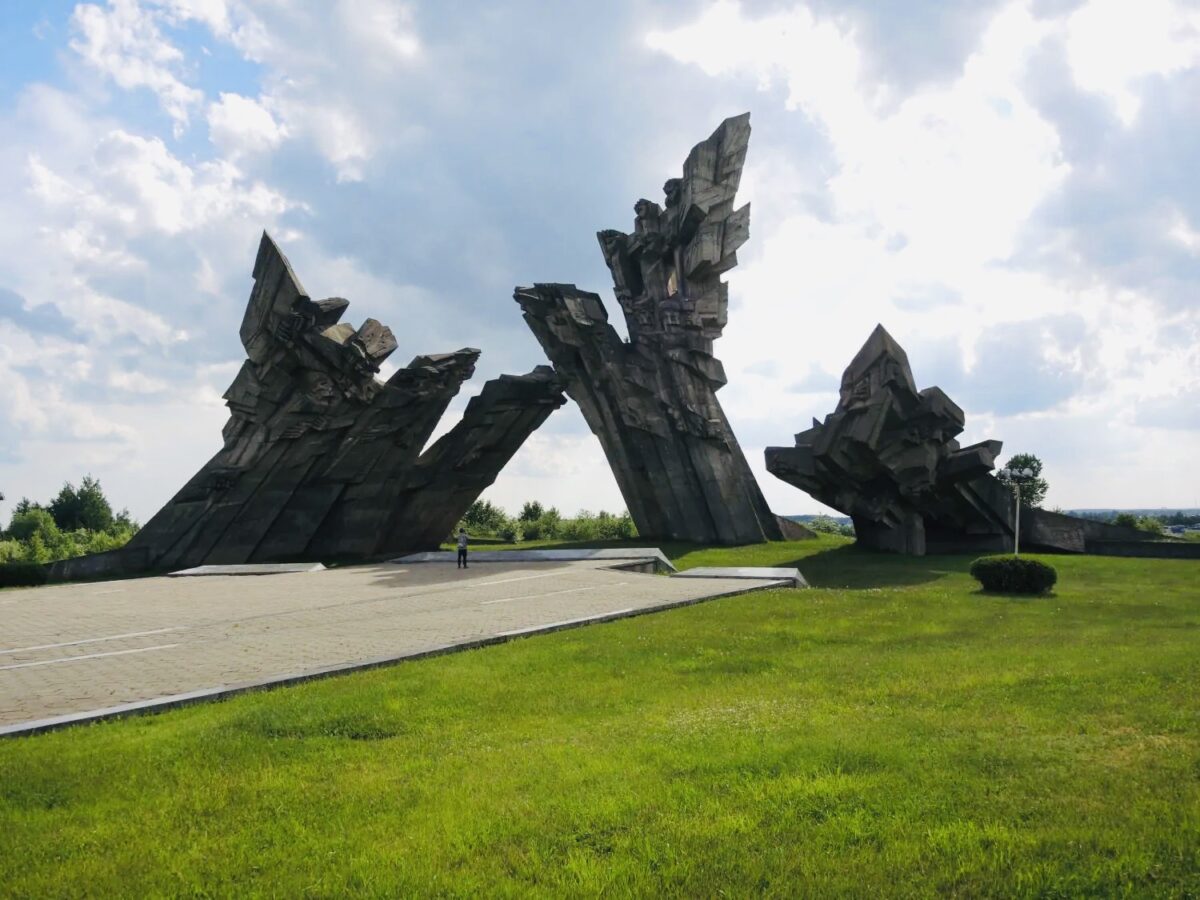
To Lithuanian historian Algimantas Kasparavicius, the greatest tragedy of 20th century Lithuania occurred not when it lost its statehood following the Soviet Union’s invasion in June 1940, but a year later, when Nazi Germany stormed into the country and proceeded to murder nearly all of its Jewish citizens in the Holocaust.
It goes without saying that some Lithuanians assign far more importance to Lithuania’s loss of independence than the mass slaughter of Jews. As the Lithuanian American historian Saulius Suziedelis acknowledges, many Lithuanians have had difficulty accepting “the historic weight of the Shoah,” in part because it competes with the Stalinist crimes committed by the Soviet occupiers between 1940 and 1941 and again from 1944 until 1990.
Nevertheless, Lithuanian historians, journalists and human rights activists have devoted increasing attention to the vanished world of the Litvaks, or Lithuanian Jews, since the restoration of Lithuania’s sovereignty in 1990.
As Suziedelis writes in Crisis, War, And The Holocaust In Lithuania (Academic Studies Press), a superior academic work accessible to a general readership, an understanding of the enormity of the Shoah in this Baltic state requires knowledge of what was destroyed in four short years. Proceeding from this assumption, he devotes about the first third of his massive book to the rich pre-1940 history of Lithuanian Jewry.
Suziedelis, a professor emeritus at Millersville University of Pennsylvania and an expert in Russian and East Central European affairs, begins with the settlement of Jews in the Polish-Lithuanian Commonwealth. By the mid-18th century, the substantial Jewish community there, rooted in a culture steeped in the Yiddish language, was the largest in the Diaspora. Suziedelis explores it at length without getting bogged down in jargon or minutiae.
Under Russian imperial rule, Lithuania lay within the boundaries of the Pale of Settlement, to which most Jews in Russia were forcibly confined. “Here, until the early 1900s, mass violence against Jews was virtually unheard of,” he claims.
Lithuania, he points out, was the birthplace of the Bund, the General Jewish Workers Union, a socialist movement that looked askance at Zionism and would be an important institution in Poland after World War I.
Although a vast religious and cultural gulf separated Jews from Christians, Jewish traders and merchants constituted a vital component of the Lithuanian economy in the 19th century. In the city of Kaunas, for example, more than 90 percent of the traders were Jewish. Yet 10 percent of the country’s Jews were farmers, an often overlooked fact.
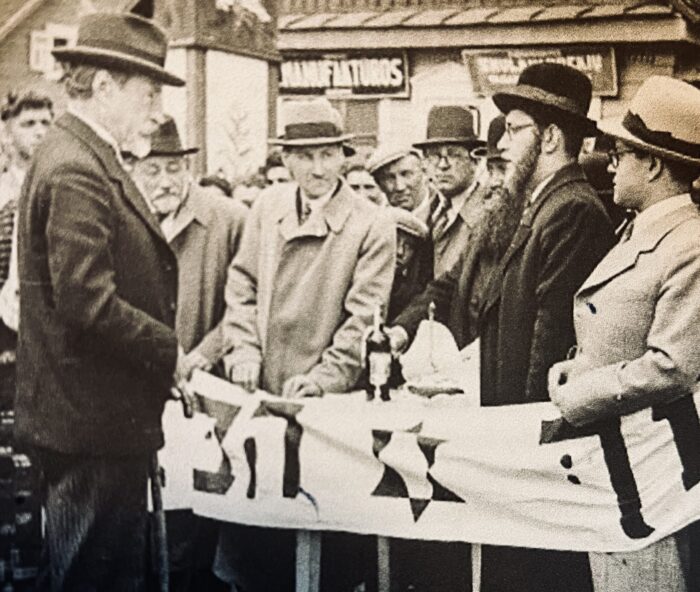
In 1923, when Lithuania’s Jewish population was 153,000, representing 7.5 percent of the total population, Jews owned 83 percent of commercial and retail shops. During the 1930s, the proportion of Jews in this sector would decline. Yet Jews would still play an integral role in the pharmaceutical, sawmill, tobacco, alcohol and transportation industries, while the brothers Dovid and Gedal Ilgovski were prominent in real estate development.
What role, if any, Jews played in the arts and literature scene is left unmentioned by Suziedelis. But he does not fail to notice that three Jews, one minister and two deputy ministers, were appointed to Lithuania’s first post-independence government in 1918.
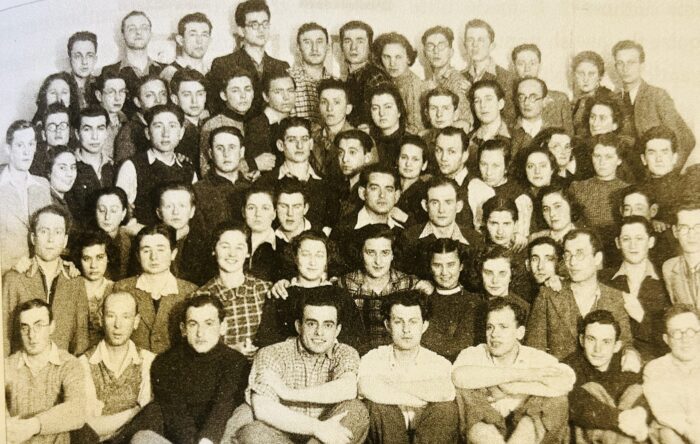
Emigration sapped the Jewish community from 1920 onward, with most Jews immigrating to South Africa and Palestine. Suziedelis does not ascribe the outflow to antisemitism, but it may have pushed some Jews to leave.
Antisemitic incidents, especially vandalism directed at Jewish institutions, were localized, short-lived and relatively infrequent, he says. They were condemned by the government, whose opposition to antisemitism was driven by a concern for Lithuania’s international reputation and the calculation that Jews could be useful allies, particularly against neighboring Poland. The government hewed to this view despite the influence of the Polish language and Polish culture among educated urban Jews in the Vilnius region.
Lithuanian governments from 1918 until 1940 did not pass a single antisemitic statute, says Suziedelis, implicitly comparing Lithuania to governments in Germany, Italy and Romania that brutalized or mistreated Jews. Furthermore, Lithuania funded Jewish schools.
Suziedelis’ treatment of the Soviet occupation of Lithuania is calibrated. Wealthier Jews tended to oppose it on the grounds that private property would be nationalized and democracy would be buried. Observant Jews adopted a similar attitude, fearing that synagogues and religious organizations would be closed. Working class Jews, on the other hand, generally approved of the Red Army presence, leading to the Judeo-Bolshevik canard that extreme Lithuanian nationalists promoted tirelessly.
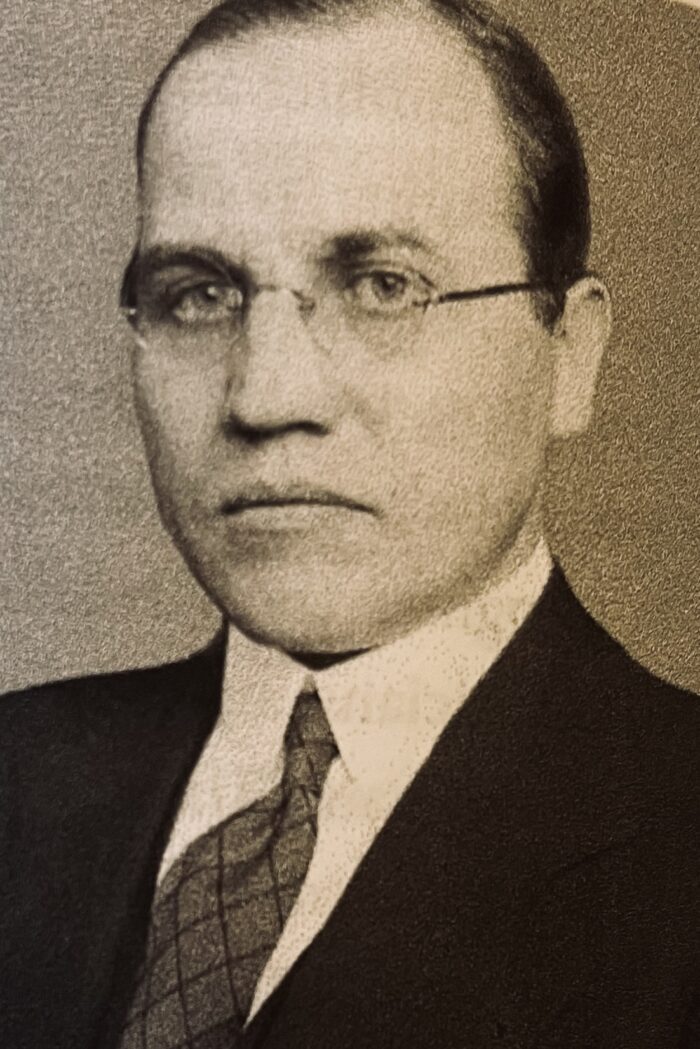
Kazys Skirpa, the leader of the Lithuanian Activist Front, denounced the Soviet takeover of Lithuania, embraced a virulent form of antisemitism, and welcomed the arrival of the German army in 1941. “It is very important on this occasion to get rid of the Jews,” he said, accusing them of disloyalty.
No evidence exists that Skirpa and his associates advocated the physical extermination of Lithuanian Jews, Suziedelis notes. But their calls for the expulsion of Jews and the expropriation of Jewish property “injected a radical antisemitic component into the political rhetoric” of the times.
With the Wehrmacht invasion of Lithuania on June 22, 1941, the fate of its Jewish inhabitants was sealed. In short order, pogroms erupted, the first ones unfolding in western border towns.
While the Lithuanian government and the Lithuanian Activist Front criticized “unsanctioned violence and criminality in general,” they never publicly censured anti-Jewish attacks led by roving bands of armed men.
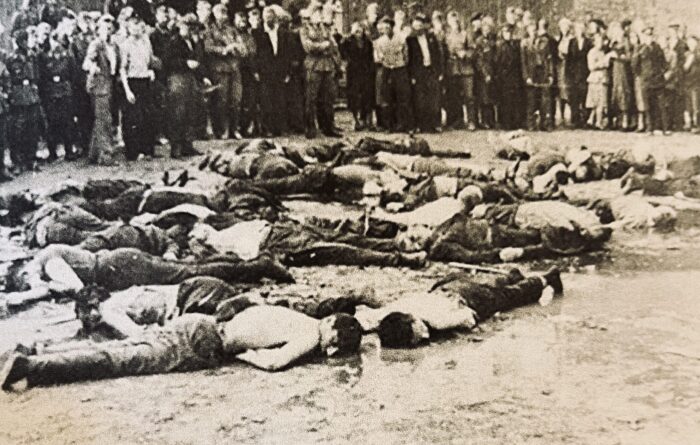
According to Suziedelis, the bloodiest outbreaks of antisemitic mob violence in Lithuania’s history occurred in two Kaunas districts, Vilijampole and Lieutukis, in June 1941. These atrocities were witnessed by German soldiers and Lithuanian bystanders. Further massacres erupted in the Paneriai (Ponary) forest and in Darbenai, Plunge, Ylakiai and the Seventh Fort.
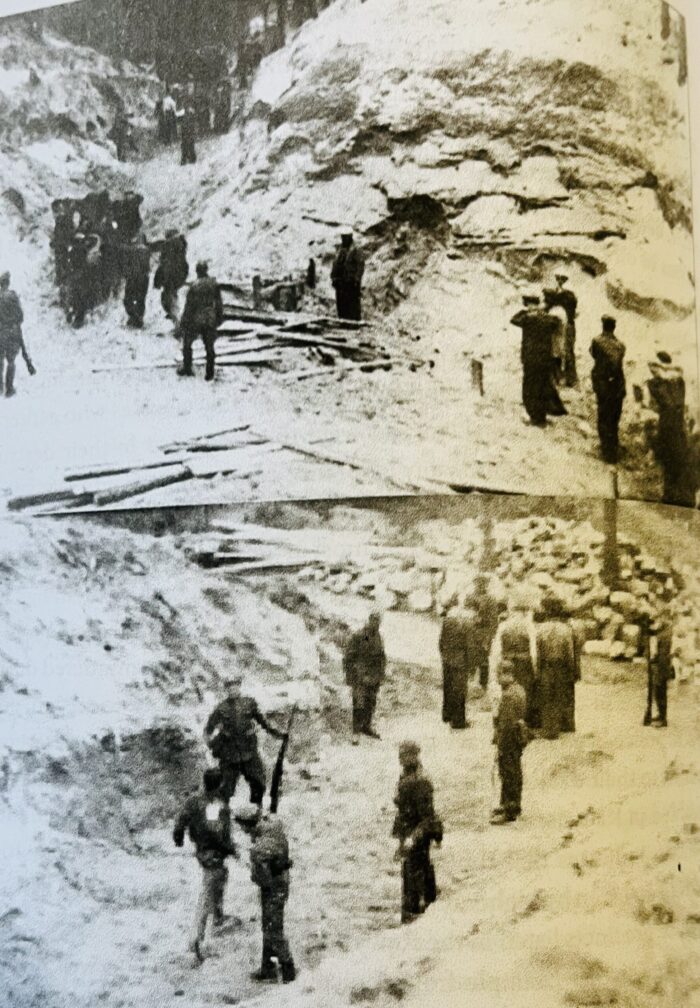
By August 1941, however, 90 percent of Lithuanian Jews were still alive. Within four months of that date, 80 percent had been slain. “At its core, the destruction … involved a campaign of sustained mass shootings … which effectively annihilated the country’s historic Jewish shtetls,” he writes. “During the same period, the Nazis and their collaborators also massacred thousands of urban Jews … in major ghettos in Vilnius (Vilna), Kaunas and Siauliai.” They were liquidated in 1943 and 1944.
The pro-German Lithuanian press lauded the mass murder of Jews. Lithuania’s archbishop proclaimed that “guilty” Jews who had supported the Soviet invasion had “brought on the hatred of Lithuanian society against all Jews.”
Some Lithuanians were clearly hostile to Jews, pleased that they had been removed from society. Still others tried to help, repulsed at the violence meted out to their Jewish neighbors.
Suziedelis devotes a few pages to the heroic efforts of two foreigners who assisted Jews. Jan Zwartendijk, the acting Dutch consul in Kaunas, issued some 2,000 permits to Jews of various nationalities to travel to the Caribbean island of Curacao. Chiune Sugihara, the Japanese consul in the same city, handed out twice as many visas.
When German forces entered Vilnius on June 24, 1941, 60,000 or so Jews were still in the city. Three thousand had managed to flee eastward into the Soviet Union. The Germans, in cooperation with Lithuanian and Estonian police, deported many Jews to Riga and points north. Still others were shot in the vicinity of Vilnius.
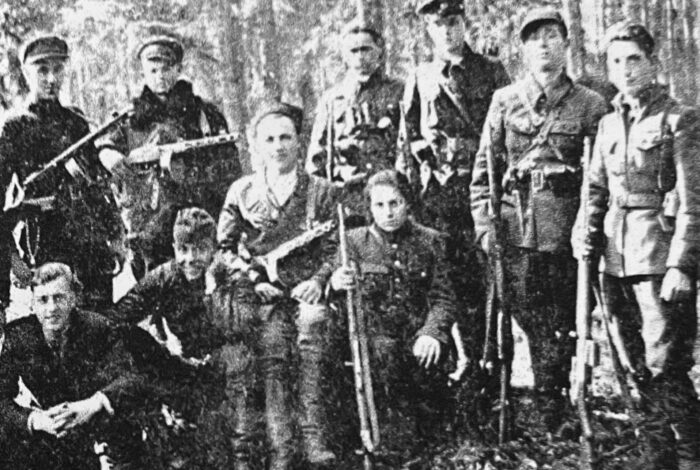
A number of Jews fought back, joining partisan bands in the forests. Few had military training. Suziedelis says that Jewish recruits within the broader Soviet partisan movement did not always receive the welcome they may have expected because anti-Jewish bigotry was pervasive.
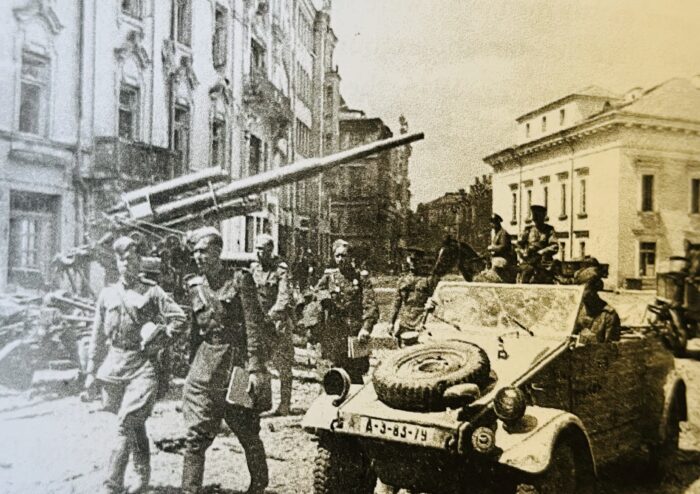
An estimated 10,000 Lithuanian Jews survived the Holocaust. The majority had joined the partisans or were hidden by rescuers. The remainder spent the war years in the Soviet Union.
Upwards of 17,000 emigrated between 1959 and 1990. By 2009 and 2021, Lithuania’s Jewish population had shrunk to 5,000 and 3,000.
Until the late 1980s, when Lithuania was a Soviet province, the wartime suffering of Jews was placed within “the historic framework of the struggle against fascism.” But once Lithuania regained independence, the picture changed. An exhibit on the Holocaust, the first in the former Soviet Union, was opened. Jewish organizations created a registry of Holocaust sites. Lithuanian scholars began investigating the Holocaust and the history of the Litvaks. The Ministry of Culture sponsored publications memorializing the pre-war Jewish community.
Suziedelis, in this splendid volume, performs an important function. Eight decades after the Holocaust, he raises awareness and understanding of the Litvaks, an accomplished minority that contributed much to Lithuania, but whose virtual destruction has left it all the poorer.