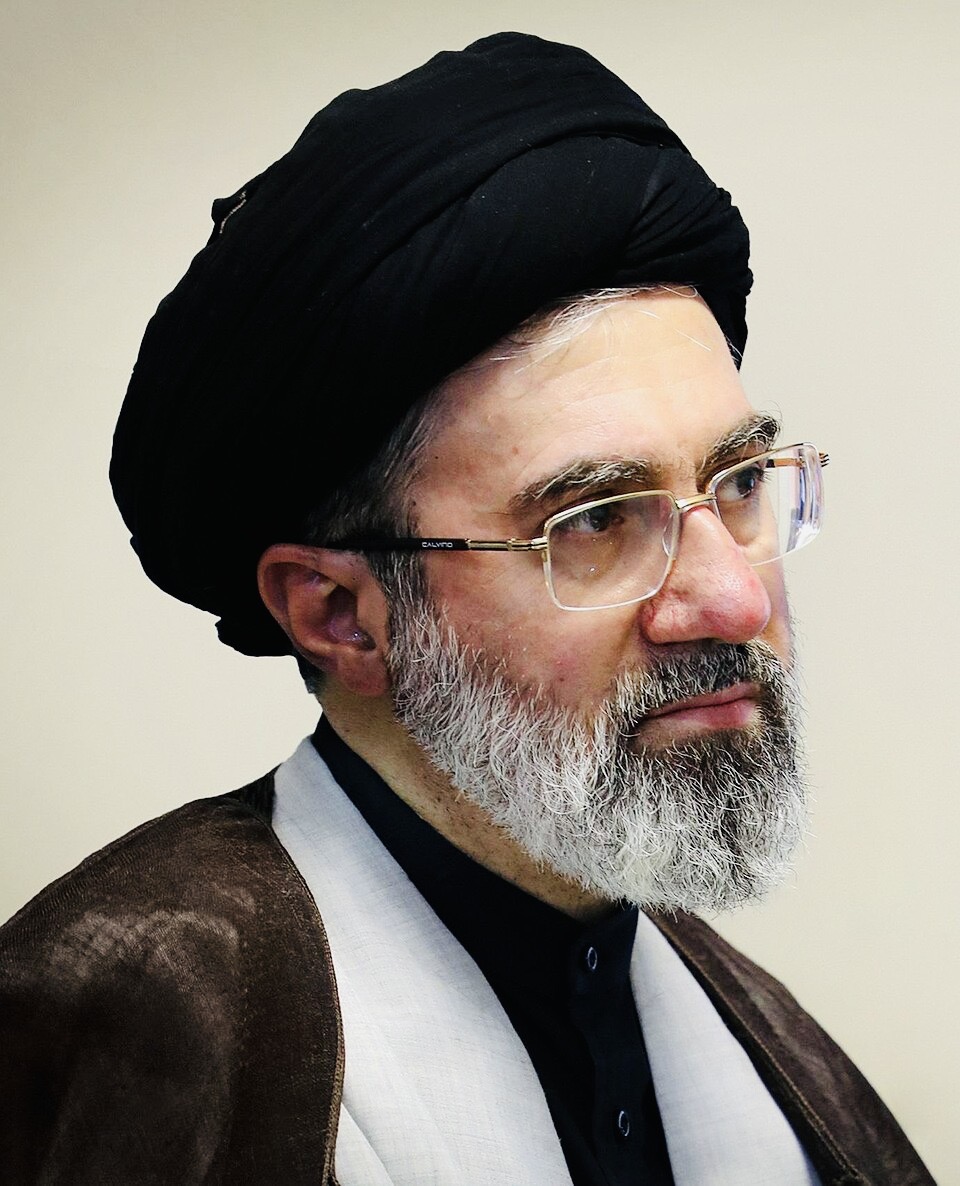
The United States and Israel appear to have reached diametrically opposed conclusions regarding the outcome of the still unsettled war in Iran.
The conflict erupted on February 28 when the U.S. and Israel jointly attacked Iran, targeting its leadership and military assets in daily air strikes. The war wound down on April 8 following a two-week ceasefire arranged by Pakistan. President Donald Trump unilaterally extended it on April 21 to provide Iran with sufficient time to submit a peace proposal.
Since then, the ceasefire has been repeatedly violated, with Iran and the United States having exchanged fire and Iran having fired missiles and drones at the United Arab Emirates, a U.S. ally. In addition, Iran has continued to block the Strait of Hormuz, while the United States has imposed a blockade on Iranian ports in the Persian Gulf.
Despite the current state of play, U.S. Secretary of State Marco Rubio announced on May 5 that the war has drawn to a close. “Operation Epic Fury is concluded. We achieved the objectives of that operation,” he claimed, keenly aware that the war has been unpopular domestically, led to much higher gasoline prices at home, and fractured Trump’s political base.
Prime Minister Benjamin Netanyahu delivered a far different message during an interview with CBS’ 60 Minutes on May 10. As he put, “It’s not over because there’s still nuclear material, enriched uranium that has to be taken out of Iran. There are still proxies that Iran supports. There are ballistic missiles that they still want to produce.”
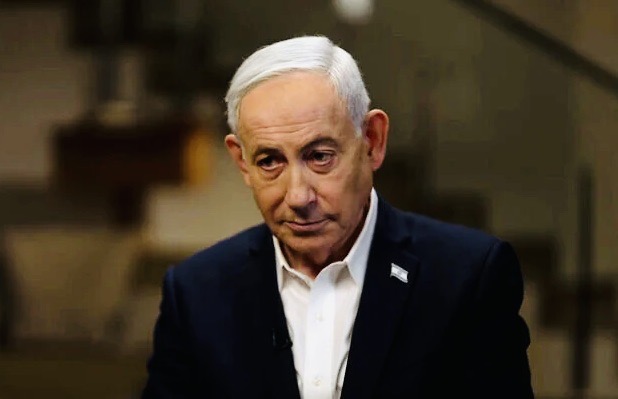
During this uncertain period, the United States and Iran have submitted duelling peace plans, none of which have been acceptable to either side.
The Trump administration has sent Iran a one-page memorandum calling for a formal end to the war and the reopening of the Strait of Hormuz. Under the U.S. proposal, which has yet to be officially released, issues like Iran’s nuclear program, its stockpile of ballistic missiles, and its support of regional proxies would be addressed at a later date.
The Wall Street Journal claims that the United States is also demanding the dismantlement of Iran’s nuclear enrichment facilities in Fordow, Isfahan and Natanz, an Iranian commitment to give up its nuclear ambitions, the removal of all enriched nuclear material from Iran, a 20-year moratorium on enrichment, and a ban on underground nuclear activities.
Iran has rejected the bulk of U.S. demands. Behnam Saeedi, the vice chairman of Iran’s Parliamentary National Security and Foreign Policy Commission, said on May 7 that its red lines include enrichment, complete sanctions relief, and the release of frozen Iranian assets. He warned that negotiations would fail if the United States declines to accept Iran’s “right” to enrichment.
According to the official Iranian broadcaster, Iran has demanded U.S. war reparations, recognition of its sovereignty over the Strait of Hormuz, an end to American sanctions, and a ceasefire in Lebanon to stop the current war between Israel and Hezbollah, its chief regional proxy.
The Wall Street Journal claims that Iran’s counter-proposal calls for a permanent end to the war, the gradual reopening of the Strait of Hormuz, and the lifting of the U.S. naval blockade on Iranian ports, to be followed by talks over its nuclear program and other relevant matters.
Iran’s Foreign Ministry spokesman, Esmaeil Baghaei, described Iran’s proposals as “generous and responsible” and condemned Washington’s demands as “unreasonable” and a call to surrender. He charged that the United States is “the greatest threat to international peace and security,” and that U.S. military bases in the Middle East have created “a cycle of violence and bullying in the region.”
Iranian leaders believe they currently hold the advantage, says Danny Citrinowicz, a researcher at the Institute for National Security Studies at Tel Aviv University. “One thing is clear: The Iranian regime’s reply reflects the mind-set of a leadership that believes it survived the war and won, not that it lost it,” he wrote on social media. “As a result, its demands remain high and its willingness to compromise is extremely limited.”
The Institute for the Study of War has come to a similar conclusion: “Iranian leaders are trying to dictate the terms for ending the war, which illustrates that the Iranian regime perceives that it has the upper hand in the conflict at this time. Iran’s proposed terms would require the United States to give up its leverage over Iran before any negotiations could take place, which would likely make it more challenging to extract nuclear concessions from Iran.”
Iran’s hardline position was articulated by its president, Masoud Pezeshkian, in an X post a few days ago: “We will never bow down to the enemy.”
As expected, Trump has belittled Iran’s counter-proposal as “totally unacceptable” and a “piece of garbage,” though he has not listed his objections. Trump, on his Truth Social site on May 10, accused Iran of “playing games” and delaying negotiations. On other occasions, he has threatened to restart the war if no deal is reached.
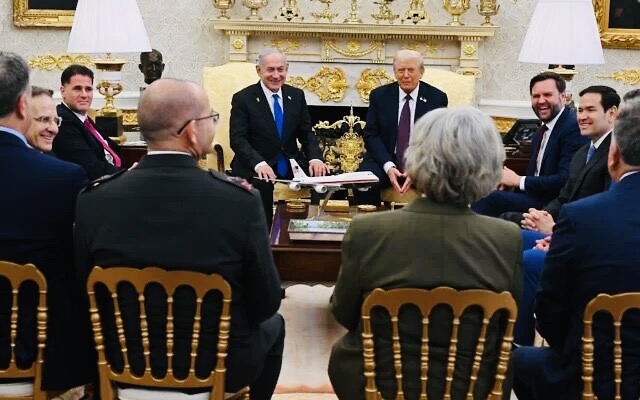
Two days ago, Trump said that Iran is governed by “lunatics” and that the ceasefire is “on massive life support.” Today, he threatened to “finish the job” if Iran rejects his terms to end the war.
In the face of American threats, Iran has hardened its position, particularly with respect to the Strait of Hormuz, an international waterway through which about 20 percent of the world’s oil and natural gas passes.
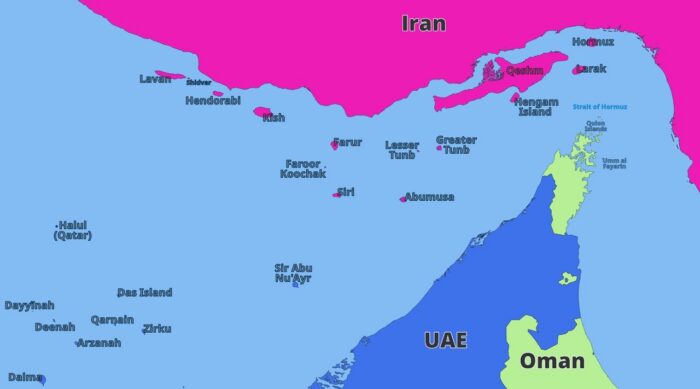
Since the outbreak of the war, Iran has allowed only a small and selective number of ships to pass through the Strait of Hormuz and has enforced its policy through missile and drone attacks and mining.
“Iran’s principal strategic objective at this time is to secure recognition of its sovereignty over the Strait of Hormuz, which would fundamentally remake regional and global maritime norms in a manner extremely detrimental to U.S. interests,” says The Institute for the Study of War. “Iranian officials continue to frame control over the Strait of Hormuz as a key strategic interest and a critical component of long-term Iranian deterrence. Iran likely views control over the strait as essential to restoring deterrence against the United States and Israel.”
On April 30, Iranian Supreme Leader Mojtaba Khamenei released a statement in which he said that Iran would reap “economic gains” from its “new management” of the Strait of Hormuz.
Khamenei’s adviser, Mohammad Mokhber, has said that Iran’s control over this major chokepoint gives it the ability to affect the global economy. He added that Iran “will not lose the strait under any circumstances.”
The virtual closure of the Strait of Hormuz has been catastrophic economically. Gasoline prices around the world have soared and have risen to an average of $4.50 per gallon in the United States, pushing up inflation and the cost of food.
Iran, whose economy was already in a parlous state prior to the war, is suffering as well. Since the imposition of the U.S. blockade on April 13, not a single Iranian oil tanker has succeeded in exiting the strait, through which 98 percent of Iran’s petroleum exports flow, according to the Kpler maritime data company.
Both sides clearly want to put the war behind them. But neither the United States nor Iran are in the mood to compromise at the moment, thereby blocking the path toward a viable solution and consigning them to a contentious twilight zone of no-peace-and-no war.