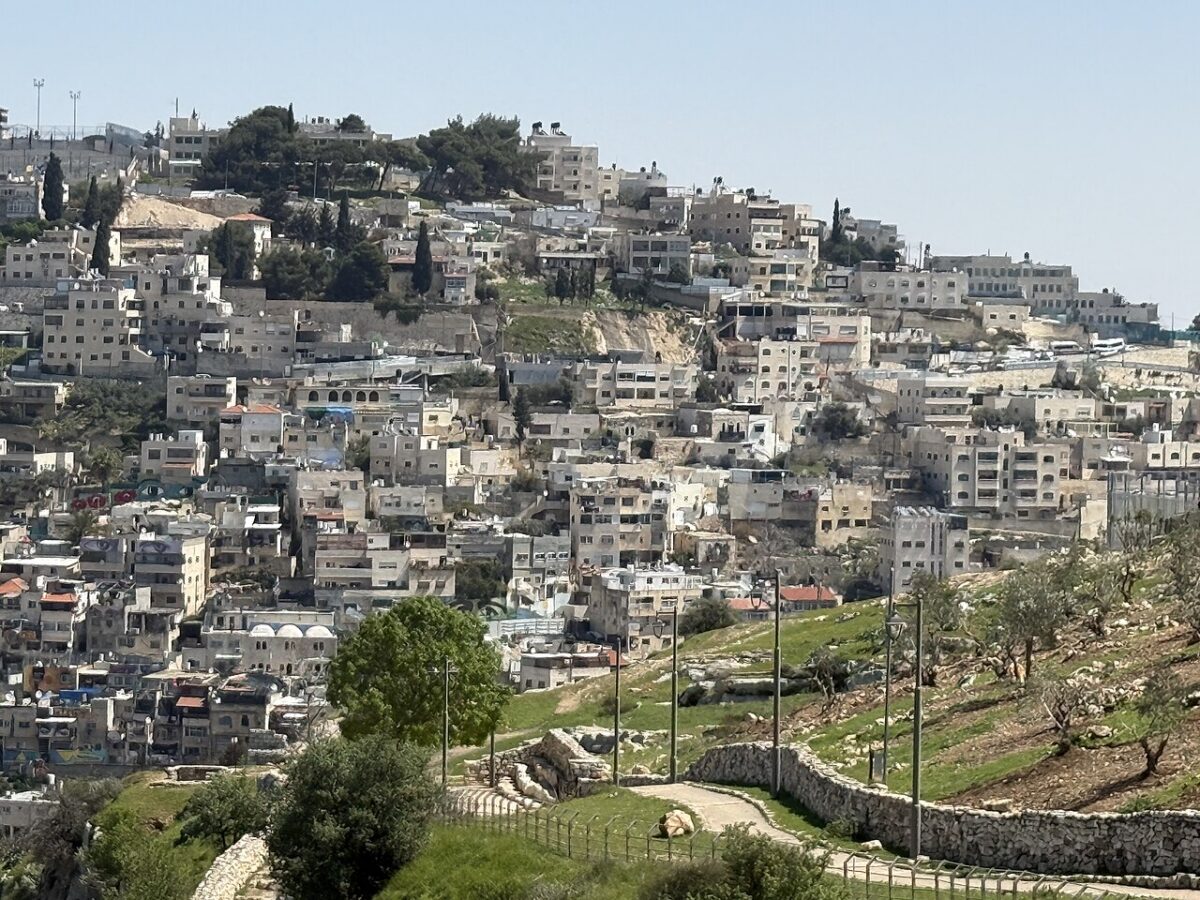
Silwan, a largely Palestinian neighborhood in East Jerusalem near the Temple Mount and the Western Wall, has emerged as a flashpoint in Israel’s conflict with the Palestinians.
In the past few years, 28 families, consisting of 160 Palestinians, have been forcibly displaced from their homes in Silwan, according to the United Nations. These displacements, having taken place through evictions or home demolitions, have benefited Israeli Jews, some of whose ancestors lost their homes before and during Israel’s birth.
Trans-Jordan, later known as Jordan, conquered the eastern part of Jerusalem during the first Arab-Israeli war in 1948, and Silwan fell under Jordan’s administration.
In 1967, shortly after the Six Day War, Israel expanded the boundaries of greater Jerusalem and unilaterally annexed Silwan and other Arab neighborhoods. Since then, a steady stream of Jews has flowed into Silwan, which is inhabited today by 55,000 to 60,000 Palestinians and upwards of 2,800 Jews.
Israel, in 1970, passed the Legal and Administrative Matters Law, which allows Jews to reclaim ownership of land and buildings that were once owned by Jews, but which are now owned by Palestinians. Jews have invoked this legislation to claim Palestinian homes in Silwan and other localities in Israel’s capital city.
Bissan Tibi’s 52-minute documentary, One Street in Silwan, explores this explosive issue from a Palestinian point of view. It will be screened at the Toronto Jewish Film Festival, which runs from June 4-14.
Tibi, an Israeli Arab, was born and raised in Neve Shalom, a utopian Jewish-Arab community in Israel. Her impressionistic film unfolds in cinematic snapshots on Batn al-Hawa Street, where Palestinians and Jews live in close proximity and barely coexist. It focuses on an elderly man and a few prepubescent girls who live there.
Heavily-armed Israeli soldiers and plainclothes guards patrol Silwan to preserve the peace, such as it is. At one point, loud gunfire is heard as soldiers suddenly appear. Oddly enough, Tibi does not elaborate on the disturbance.
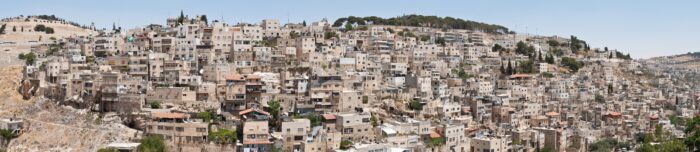
This is not a stridently anti-Israel film. That being said, it is peppered with polemical fragments.
A Palestinian tour guide tells a group of foreign visitors that the Israeli government has collaborated with right-wing Jewish settler organizations to facilitate the eviction of Palestinians from Silwan. Palestinian representatives usually refer to this process as “ethnic cleansing.”
A Palestinian girl murmurs, “We always have trouble in Gaza and Silwan.” Palestinian boys brandishing toy guns pretend to be undercover Israeli operatives. A young Palestinian man bound for prison kisses his nieces goodbye.
Although Tibi shies away from politics per se and concentrates on the lives of Palestinians in Silwan, the politics of the Arab-Israeli conflict permeates the film.
“We will never leave Silwan!” several Palestinian boys shout in unison after knocking on the metal door of a Jewish compound. In still other segments, unidentified Palestinians throw rocks at Jewish settlers, an Arab woman shouts, “Let Allah take them to hell,” and a little girl informs her playmates that Israeli soldiers on patrol are close by.
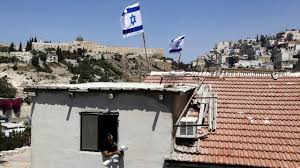
The message is crystal clear.
Israel occupies Silwan, and the Palestinians of Silwan intend to display steadfastness in the face of rumors that 750 residents are earmarked for eviction. Israeli human rights organizations believe that 1,500 to 2,000 Palestinians are at risk at being displaced.
The camera occasionally pans on Jewish settlers walking on Batn al-Hawa Street, but they basically remain ciphers since Tibi has refrained from interviewing them. Her film would have been richer in substance and nuance had she talked to the settlers and included clips of their conversations.
Despite this glaring omission, Tibi manages to convey the gist of her argument in One Street in Silwan, which turns on the supposition that Palestinians in Silwan live on borrowed time.