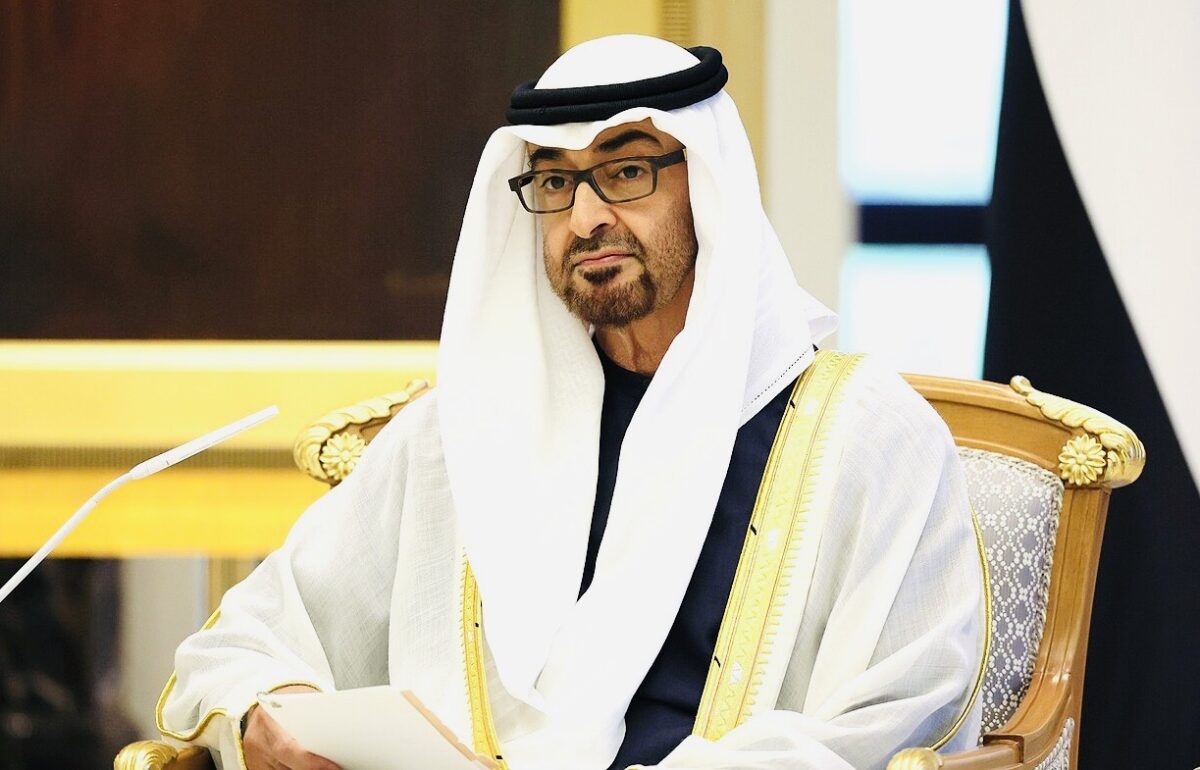
Israel’s relationship with the United Arab Emirates is like no other in the Arab world.
Israel has forged peace treaties and normalization accords with several Arab states since it signed a peace treaty with Egypt in 1979. But the bilateral ties Israel has formed with the UAE remain unique, as a recent news story indicated.
Last month, Axios reported that Israel sent an Iron Dome air defence system, along with soldiers to operate it, to the UAE during the war in Iran. This was the first time Israel had ever dispatched the Iron Dome to an Arab state.
Mike Huckabee, the U.S. ambassador to Israel, confirmed the Axios report and conveyed his appreciation to the UAE.
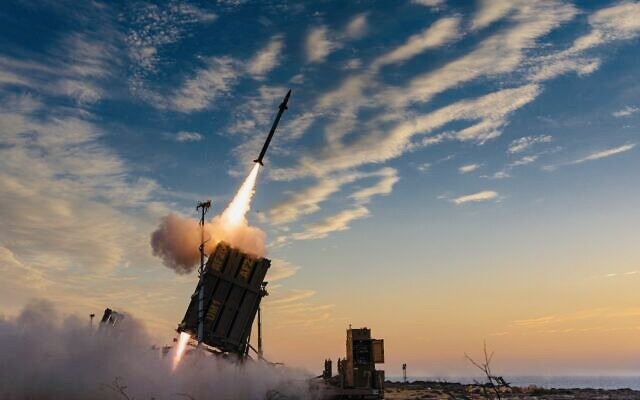
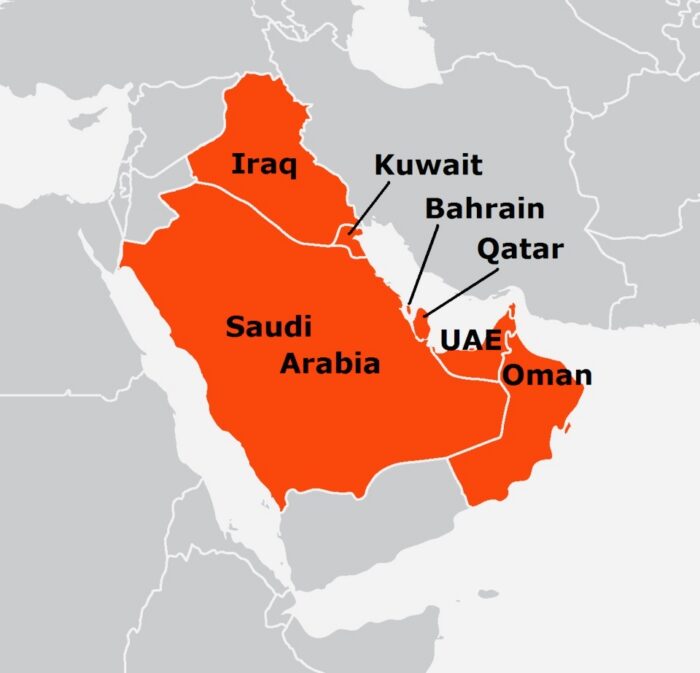
Israel’s dispatch of the Iron Dome to the UAE occurred shortly after the United States and Israel jointly attacked Iran on February 28. By way of response, the Iranian regime fired a barrage of ballistic missiles and drones at Israel and pro-American Arab Gulf states ranging from Saudi Arabia and Qatar to Kuwait and Oman.
The UAE was struck by more than 2,000 Iranian drones and some 550 ballistic missiles and bore the brunt of Iran’s onslaught. Oil and gas fields were hit, as were hotels and airports, causing billions of dollars worth of damage. Ten civilians were killed.
Prior to the war, the UAE had been trying to improve its relations with Iran.
On May 13, Prime Minister Benjamin Netanyahu disclosed that he had secretly visited the UAE — which established official relations with Israel in 2020 under the U.S.-brokered Abraham accords — and had met its leader, President Sheikh Mohammed bin Zayed Al Nahyan.
They reportedly conferred in the oasis city of Al-Ainby, near the Oman border, on March 26, during the U.S.-Israel war with Iran. Their meeting lasted several hours. Netanyahu’s office said that it produced a “historic breakthrough” in Israel-UAE relations.
The UAE, however, denied that it had taken place and dismissed the statement from the prime minister’s office as “entirely unfounded.”
As the Emirati Foreign Ministry put it, “The UAE reaffirms that its relations with Israel are public and conducted within the framework of the well-known and officially declared Abraham Accords, and are not based on non-transparent or unofficial arrangements. Accordingly, any claims regarding unannounced visits or undisclosed arrangements are entirely unfounded unless officially announced by the relevant authorities in the UAE.”
“The UAE calls on media outlets to exercise accuracy and professionalism, and to refrain from circulating unverified information or promoting misleading political narratives,” it added.
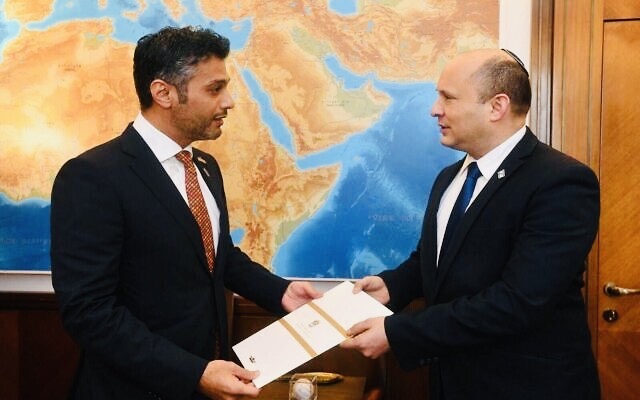
Channel 12 in Israel reported on May 17 that Emirati officials had asked Netanyahu to keep the meeting confidential and were upset when he disclosed it. Netanyahu leaked it to the media, the channel said, after learning that his rival and former prime minister, Naftali Bennett, was expected to travel to the UAE the following day for meetings with bin Zayed and top-level Emirati officials.
Ziv Agmon, Netanyahu’s former spokesman, claims that Netanyahu’s account is accurate.
“As someone who knows the United Arab Emirates well and has lived there for long periods of time, and as someone who accompanied the prime minister on the historic trip that has been top secret until today, I can say that the prime minister was received in Abu Dhabi with the honor of kings,” he wrote on Facebook.
“Sheikh (Mohamed) bin Zayed, his family members, and other dignitaries welcomed us and were happy to see the prime minister of Israel on their soil,” he said. “The sheikh greatly respected the prime minister and personally drove the prime minister in his personal car from the plane to the palace.”
“The things the prime minister concluded during this amazing visit will be talked about for generations to come. A great success!”
Despite its pique over Netanyahu’s announcement, the Emirati Foreign Ministry has not denied that other Israeli dignitaries have visited the UAE recently.
According to The Wall Street Journal, the outgoing director of the Mossad, David Barnea, paid at least two visits during the Iran war. The Kan public broadcaster reports that the head of the Shin Bet internal intelligence agency, David Zini, also visited the UAE. The Times of Israel said that General Eyal Zamir, the commander of the Israeli armed forces, was a visitor as well.
In spite of the flap over Netanyahu’s visit, Israel has formed solid political, economic and military relations with the UAE. By all accounts, they outstrip Israel’s bilateral arrangements with Egypt, Jordan, Bahrain, Morocco and Sudan.

Yet there have been bumps on the road.
When Netanyahu assumed his sixth term in December 2022, his office announced that he would visit the UAE. The trip was abruptly cancelled by the UAE after National Security Minister Itamar Ben Gvir went to the Temple Mount, a flashpoint in the Arab-Israeli conflict.
In November 2023, the UAE invited Netanyahu yet again on a visit. Its invitation was remarkable because the international community had criticized Israel for invading the Gaza Strip after Hamas’ attack against Israel on October 7 of that year. Citing the outbreak of the Israel-Hamas war, Netanyahu was unable to leave the country.
Anwar Gargash, a senior UAE official, explained that the UAE was obliged to abide by its peace agreement with Israel. As he said, “The UAE has taken a strategic decision, and strategic decisions are long-term.”
Recognizing its obligations to the Palestinians, the UAE dispatched tons of humanitarian aid to Gaza and established a field hospital and a desalination plant there.
To no one’s surprise, Iran, Israel’s arch enemy, has lashed out at the UAE’s relations with Israel. Iran is particularly displeased by Israel’s shipment of the Iron Dome to the UAE and by the parade of high-ranking Israeli officials who have visited of late.
As Iranian Foreign Minister Abbas Araghchi wrote on X,“Netanyahu has now publicly revealed what Iran’s security services long ago conveyed to our leadership. Enmity with the Great People of Iran is a foolish gamble. Collusion with Israel … is unforgivable.”
Iran’s Foreign Ministry has warned that the UAE will face “dangerous consequences” if it does not distance itself from Israel and the United States.
The Iranian regime has not elaborated on its veiled threat. But in recent weeks, Iran has continued firing ballistic missiles and drones at the UAE, causing grave concern that Iran is intent on seriously damaging its critical infrastructure.