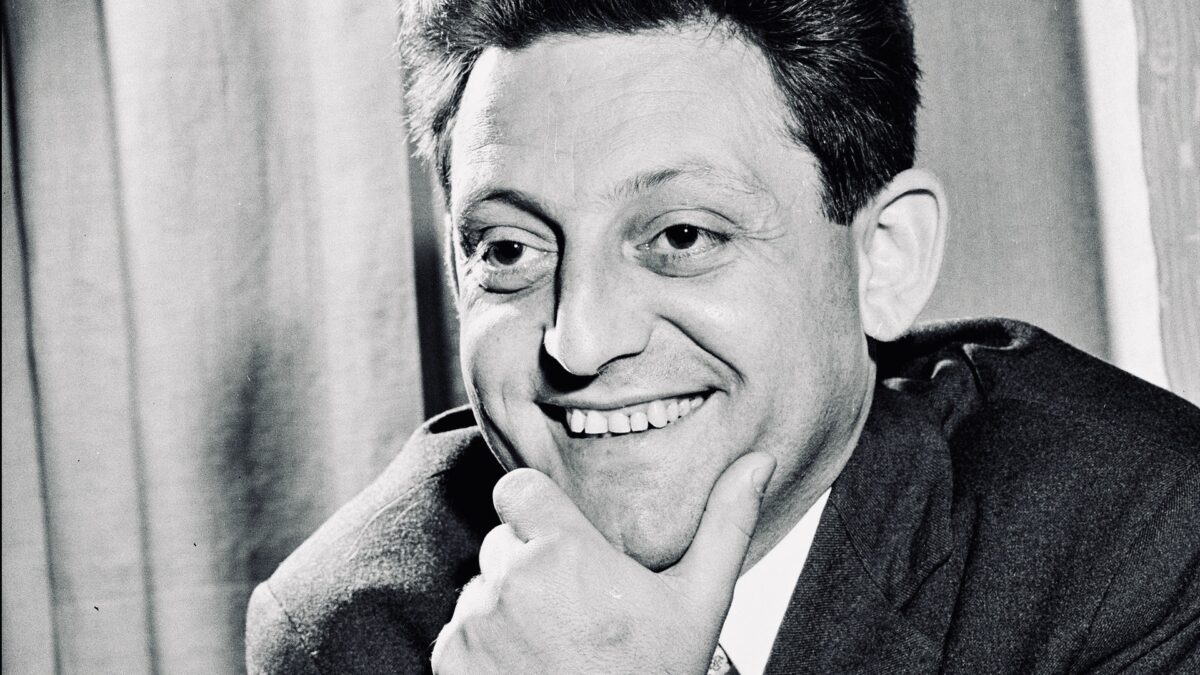
Hans Rosenthal was a beloved superstar on West German television from 1971 to 1986. His popular and lucrative quiz show, Dalli, Dalli, was watched by millions.
In 1978, he faced an agonizing dilemma.
His boss wanted him to host Dalli, Dalli on November 9. This was no innocuous date. It coincided with the show’s seventh anniversary and the 40th anniversary of Kristallnacht, the nation-wide pogrom that shook Nazi Germany in 1938.
As a Jew, Rosenthal had qualms about appearing on a light-hearted show on that somber day. Caught between public duty and private conscience, he asked for a postponement, a request that was denied.
Oliver Haffner’s German language feature film, Rosenthal, delves into this sensitive issue. It will be screened at the Toronto Jewish Film Festival, which runs from June 4-14.
Rosenthal was born in Berlin in 1925, eight years before the Nazi seizure of power and Adolf Hitler’s appointment as Germany’s chancellor. After the untimely deaths of his parents, Rosenthal was placed in a Jewish orphanage. In 1943, at the height of the Holocaust, he went into hiding, assisted by three German women who loathed the Nazi regime.
Several of his relatives were not as fortunate. Rounded up by the Nazis, they perished during the Holocaust.
The movie, in several flashbacks to the Nazi era, refers to this abominable period in his life. Yet the Holocaust permeates its spirit from start to finish.
Rosenthal (Florian Lukas), an assimilated Jew who downplayed his past but who was involved in current Jewish community affairs, is portrayed as a brilliant entertainer, a devoted husband who loves his wife Traudl (Silke Bodenbender), and a grandfather who adores his grandchildren.
The new Germany has shaped his career and has been good to him. His memoir, Two Lives in Germany, is reflective of his rollercoaster journey. The first half was horrendous. The second half has been wonderful.
When 1978 rolled around, he was compelled to confront his demons yet again. West Germany’s chancellor, Helmut Schmidt, had announced he would deliver a speech in Cologne to mark the anniversary of Kristallnacht. The Central Council of Jews in Germany assumed that he would join Schmidt at the event.
Rosenthal’s assistant minimized its importance and urged him to skip the ceremony. Her comments were reflective of a certain mindset in postwar Germany. The Nazi interregnum was gone and Germans should leave it behind and focus on the present.
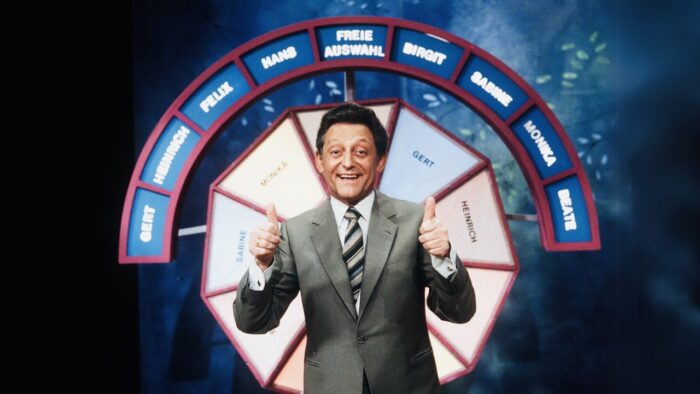
Rosenthal was torn by indecision because he shared this common German view, at least to some extent. Most of his viewers did not know he was Jewish, and Rosenthal preferred to abide by the status quo, even though his wife advised him to open up. Perhaps he feared that some of his fans would abandon him if he discussed his Jewish roots in a country so closely identified with antisemitism and genocide.
This haunting issue appears in a minor scene two-thirds of the way through the film. A middle-aged couple lounging on a North Sea beach catch sight of Rosenthal as he emerges from his cottage. The man mentions that Rosenthal is Jewish and adds condescendingly, “He’s a good Yid.”
Three decades after the defeat of the Third Reich, it is clear that anti-Jewish notions, attitudes and stereotypes still determine the outlook of some Germans toward Jews.
Lukas, in his convincing performance as Rosenthal, implicitly conveys this complexity in a film that honestly grapples with an indelible stain on German history.