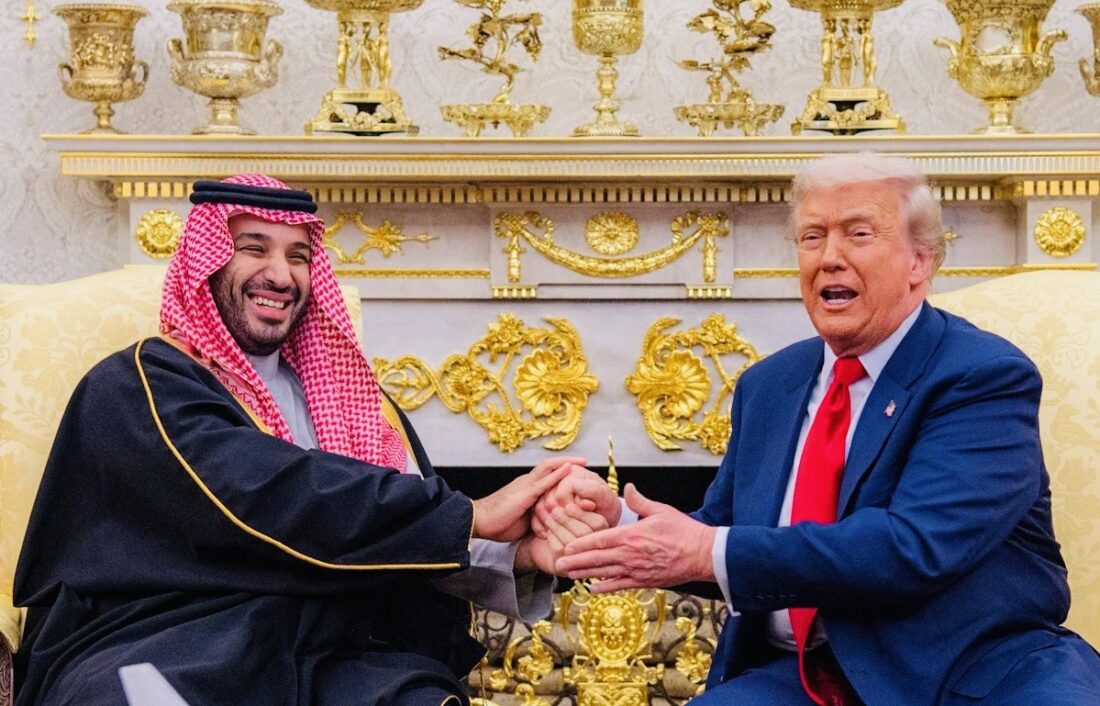
President Donald Trump’s new nuclear agreement with Saudi Arabia has already become mired in confusion. Within 24 hours of its announcement, Trump appeared to rewrite one of its most important conditions.
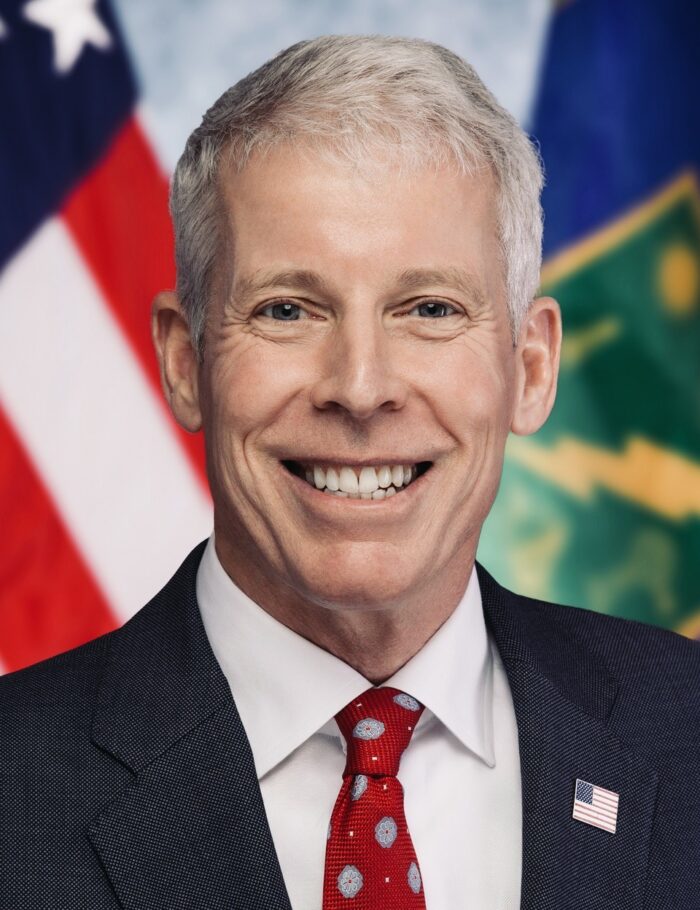
On July 23, the United States announced that it would build a civilian nuclear program in Saudi Arabia, causing consternation in Israel. The deal, which is to be submitted to the U.S. Congress for review, was signed by U.S. Energy Secretary Chris Wright and Saudi Minister of Energy Abdulaziz bin Salman, a member of Saudi Arabia’s royal family. The text has yet to be released.
CNN reports that Wright failed to tell Trump that he would be announcing the deal, thereby surprising and angering him. But a day before the announcement, The Wall Street Journal disclosed that an agreement was being finalized.
A day later, Trump retroactively added a key clause, saying in a social media post that the agreement was contingent on Saudi Arabia recognizing Israel and joining the 2020 Abraham accords, which the Saudi government tacitly supported but declined to join.
By adding this important stipulation, Trump emulated his predecessor, Joe Biden, whose administration conditioned nuclear cooperation with Saudi Arabia on its recognition of Israel and its entry into the Abraham accords.
Buoyed by Trump’s abrupt announcement, Israeli Prime Minister Benjamin Netanyahu hailed it as a “historic leap forward for peace in the Middle East.”
By contrast, Saudi Arabia — the seat of Islam and one of the most influential states in the Arab world — remained conspicuously silent.
The reason is obvious.
The agreement, which is supposed to last 30 years, made no mention of Saudi normalization with Israel, and this glaring omission explains why Saudi Arabia did not release a communique. As a result, the Saudis have been placed in a politically awkward position by Trump.
Saudi Arabia’s position is clear, and Trump is well aware of it. The Saudi de facto leader, Crown Prince Mohammed bin Salman, will not normalize ties with Israel unless the Israeli government agrees in principle to a two state solution and establishes an unambiguously clear path toward Palestinian statehood.
Saudi Arabia’s demand strikes at one of the most contentious issues in Israeli politics. Netanyahu and his right-wing government categorically reject this condition, having indicated that a Palestinian state in the West Bank and the Gaza Strip would be a security threat to Israel and thus unacceptable.
Israel’s historic claim to much of the West Bank, the ancient land of the Jewish people, is another reason why Palestinian statehood is anathema in Israeli leadership circles. In pursuit of its policy, Israel has built scores of settlements and outposts in the West Bank, which is currently inhabited by about three million Palestinians and 500,000 Jewish settlers.
Israel’s campaign to keep the West Bank under its control is a source of conflict with virtually every member state of the United Nations. Yet Israel has not been deterred from expanding its network of settlements.
Many analysts believe that Israel’s long-term objective is to break up the contiguity of the West Bank and thereby make it impossible for the Palestinians to form a geographically viable state.
When Trump’s White House press secretary, Karoline Leavitt, was asked by reporters why his new condition was not mentioned in the initial announcement, she replied that he was the “final dealmaker.” She also noted that he had previously urged Saudi Arabia to join the Abraham accords, the Arab members of which are the United Arab Emirates, Bahrain, Morocco and Sudan (which, due to its civil war, has been sidelined from the process).
Leavitt was essentially correct, yet she omitted valuable information.
Shortly after the accords were signed, Trump asked more Arab and Muslim states to participate, but his request was ignored or rebuffed. The issue lay dormant following Hamas’ attack in Israel on October 7, 2023. Hamas’ raid triggered Israel’s invasion of the Gaza Strip, which, in turn, sparked the two-year war with Hamas and its sister organization, Islamic Jihad.
Two months ago, Trump urged a host of Muslim countries, notably Saudi Arabia, Qatar and Pakistan, to form diplomatic relations with Israel and join the accords. Much to his ire, they responded with “a mix of silence and bemusement,” as The New York Times reported.
After the nuclear agreement with Saudi Arabia was announced, Democrats and Republicans on Capitol Hill raised the issue of nuclear proliferation, which is not in the American national interest.
And as Channel 12 in Israel reported, Netanyahu and his ministers were upset that Israeli-Saudi normalization was excluded from the accord.
Netanyahu reportedly phoned U.S. Secretary of State Marco Rubio to register his disappointment. Rubio told him that the deal would include normalization.
A day later, Trump officially confirmed this point.
It remains to be seen whether Saudi Arabia will accept this addition, or whether Israel will bow to the Saudi demand and acquiescence to Palestinian statehood.
In all likelihood, Netanyahu will not accept this condition, just as his government rejected it during Biden’s presidency. Netanyahu wants to normalize relations with Saudi Arabia and considers it one of his foreign policy priorities, but not at the price of Palestinian statehood and losing the West Bank.
In light of all these complicating factors, the question now is whether this agreement will hold or implode. In all probability, it may collapse if normalization is included.
Whether it survives may ultimately depend on whether Trump can reconcile two positions that currently appear irreconcilable: Saudi Arabia’s insistence on Palestinian statehood as the price of normalization, and Netanyahu’s equally firm rejection of such a state. Unless one side retreats, the agreement is likely to remain in limbo.