
Canada’s recent decision to recognize Palestinian statehood was not unexpected, but it hinges on several key commitments that the Palestinian Authority must carry out.
Canada has long supported the concept of a Palestinian state, but waited for years to translate principle into reality.
On July 30, just days after France and Britain separately announced their intention to recognize a Palestinian state at the United Nations General Assembly in September, Prime Minister Mark Carney made a similar announcement.
Carney edged into his position incrementally.
Last week, he expressed support for a two-state solution that “guarantees peace and security for Israelis and Palestinians.” A month ago, he endorsed the creation of a “Palestinian state that recognizes the right of Israel to exist.”
Last autumn, dozens of Canadian parliamentarians from the ruling Liberal Party, the New Democratic Party, the Green Party and the Bloc Québécois called for the establishment of a sovereign and independent Palestinian state in the West Bank and the Gaza Strip.
Carney’s recognition of Palestinian statehood is predicated on a few conditions.
The Palestinian Authority, which fully and partially controls 40 percent of the West Bank but not a single inch of the Gaza Strip, must enact fundamental reforms to stamp out corruption and inefficiency. In addition, the Palestinian Authority must hold general elections in 2026 in which Hamas can play no role, and must agree to a demilitarized Palestinian state.
It remains to be seen whether the Palestinian Authority will honor these solemn promises.
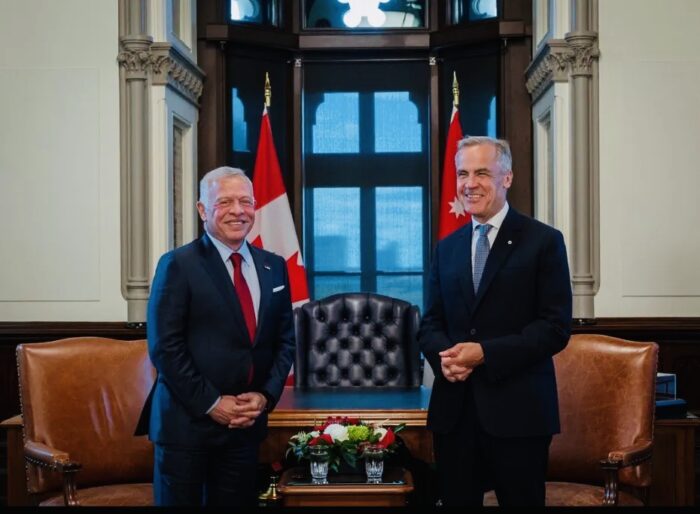
Prior to making his announcement, Carney met King Abdullah II of Jordan in Ottawa and spoke with Palestinian Authority President Mahmoud Abbas, both of whom are strong supporters of a two-state solution.
Carney’s assumption is that Abbas will abide by Canada’s conditions. Mona Abuamara, the former chief representative of the Palestinian General Delegation to Canada, told the Canadian Broadcasting Corporation that the commitments set out by Carney are achievable.
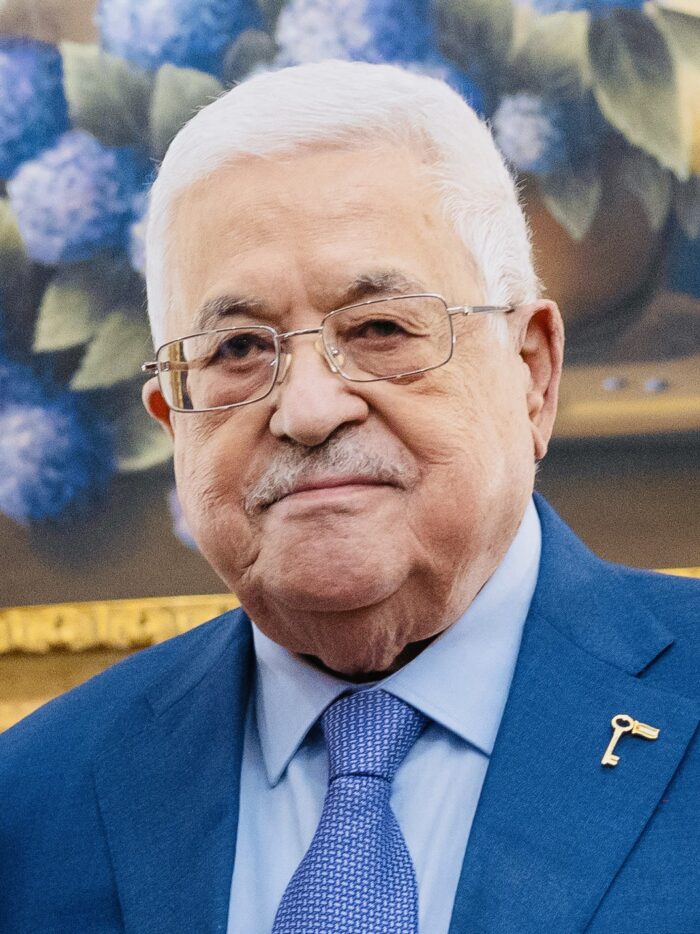
The Centre for Israel and Jewish Affairs, representing Jewish federations across Canada, is skeptical. Panning Carney’s “misplaced faith” in the Palestinian Authority, it claimed that “extending recognition, absent real change on the ground, is a recipe for another failed Palestinian pseudo-state controlled by terrorists. It is deeply concerning that the government did not make statehood recognition contingent on the removal of Hamas from Gaza and the return of Israeli hostages. This only emboldens Hamas and condemns Palestinians and Israelis — including the hostages and their families — to more suffering.”
Carney, who succeeded Justin Trudeau as prime minister in March, said he had acted now because “the prospect of a Palestinian state is literally receding before our eyes.”
He acknowledged that, in offering recognition of a Palestinian statehood before peace talks can produce a tangible outline of a two-state solution, Canada had changed its policy with respect to this issue.
Last November, Trudeau suggested that Canada was heading in that direction. Carney made it official, saying that approach was “no longer tenable.”
He listed a number of factors to explain his decision.
Hamas’ “heinous terrorist attack” against Israel on October 7, 2023, plus its “violent rejection of Israel’s right to exist and of a two-state solution,” spurred him to follow in the footsteps of France and Britain.
He was also concerned by the expansion of Israeli settlements in the West Bank, the passage of a recent motion in the Knesset calling for the annexation of the West Bank, and the upsurge of Jewish settler violence against Palestinians.
Carney, too, cited the “rapidly deteriorating humanitarian disaster in Gaza.”
He added, “The deepening suffering of civilians leaves no room for delay in coordinated international action to support peace, security, and the dignity of all human life. Preserving a two-state solution means standing with all people who choose peace over violence or terrorism, and honoring their innate desire for the peaceful coexistence of Israeli and Palestinian states as the only roadmap for a secure and prosperous future.”
For these reasons, he explained, Canada would recognize “the State of Palestine at the 80th Session of the United Nations General Assembly in September.”
Several days ago, Canadian Foreign Affairs Minister Anita Anand attended a United Nations conference in New York City that endorsed a two-state solution. It was sponsored by Saudi Arabia and France.
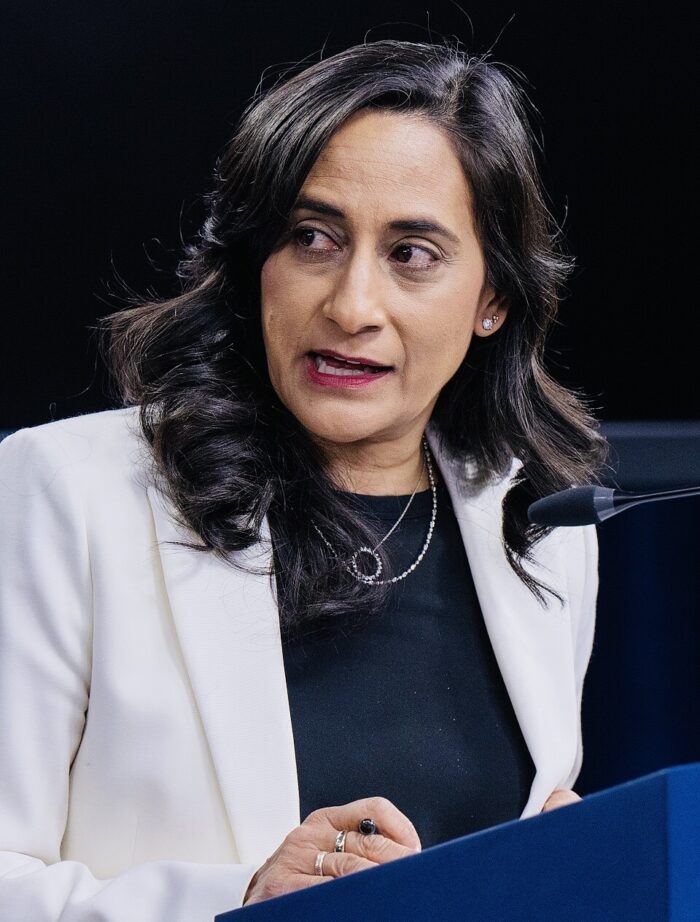
In voting for that resolution, she called for Hamas’s disarmament and its exclusion from participation in the governance of “an eventual” Palestinian state.
The left-of center New Democratic Party hailed Carney’s announcement, but said it should have been made sooner. The Conservative Party in Canada, while supportive of a two-state solution, said that a unilateral declaration of Palestinian statehood “destroys the path to a lasting two-state solution” and rewards Hamas.
Israel rejected Carney’s recognition.
“The change in the position of the Canadian government at this time is a reward for Hamas and harms the efforts to achieve a ceasefire in Gaza and a framework for the release of the hostages,” Israel’s Foreign Ministry said.
U.S. President Donald Trump denounced it was well. “Wow! Canada has just announced that it is backing statehood for Palestine,” he wrote on his Truth Social site. “That will make it very hard for us to make a Trade Deal with them. Oh’ Canada!!!”
Germany, one of Israel’s closest allies, has no intention of recognizing a Palestinian state at the present. But on July 31, German Foreign Minister Johann Wadephul warned that if negotiations for a two-state process do not commence, Germany may be compelled to reconsider its policy.
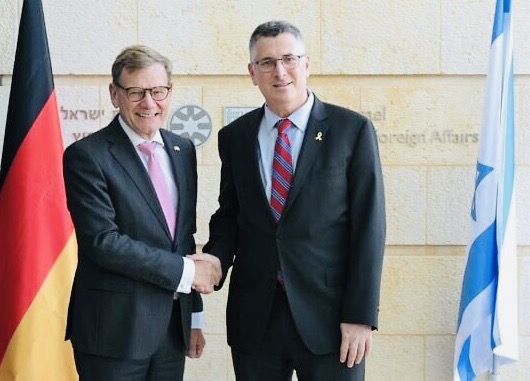
As he said before leaving on a trip to Israel and the West Bank, “To resolve the conflict sustainably, a negotiated two-state solution remains the only path that enables both peoples to live in peace, security, and dignity. For Germany, the recognition of a Palestinian state comes more at the end of that process. But such a process must begin now. If that process continues to be blocked, Germany must consider reacting accordingly.”
Wadephul’s comments are surely a sign of the times.
Portugal and Australia are on the cusp of emulating France, Britain and Canada, and more nations are likely to follow suit if Israel tries to block a two-state solution.
Bottom line: Israel will be hard-pressed to stymie the ultimate formation of a Palestinian state, whose time may have come.
Statement by Canadian Prime Minister Mark Carney on July 30 concerning recognition of Palestinian statehood: