Lebanon is approaching a moment of truth concerning an issue of the utmost importance regarding its stability as a nation.
Earlier this month, the Lebanese government, headed by President Joseph Aoun, accepted a U.S. proposal outlining a process that would ultimately lead to the disarmament of Hezbollah, the cessation of Israeli military operations in Lebanon, and the withdrawal of Israel’s remaining troops in southern Lebanon. Since last November, Israel has maintained five posts in southern Lebanon.
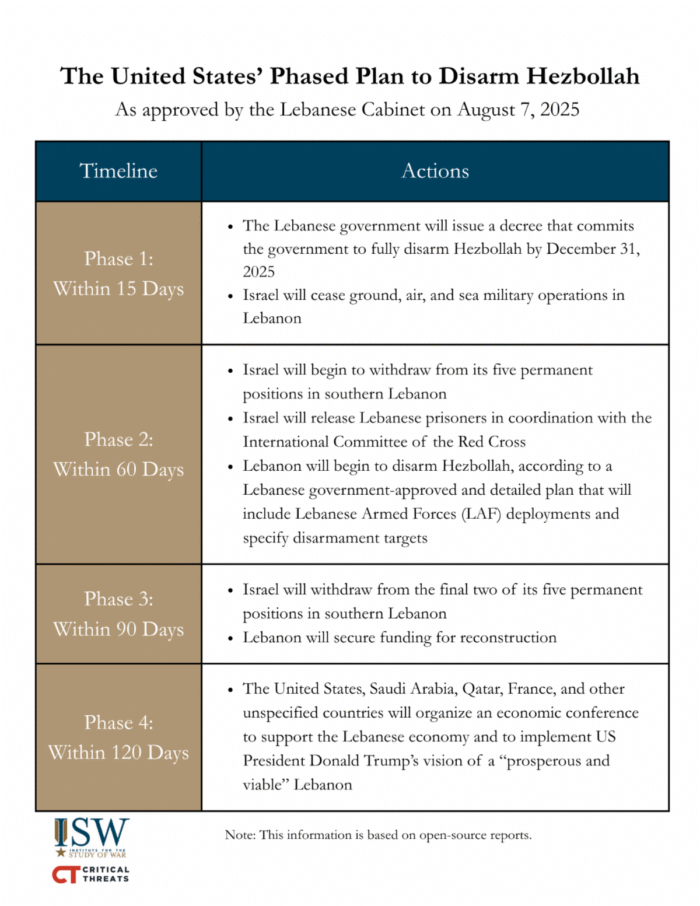
The plan, submitted by Tom Barrack, the U.S. ambassador to Turkey and President Donald Trump’s special envoy to Syria, was hailed by the American Task Force on Lebanon (ATFL), a Lebanese American organization. “ATFL welcomes the Lebanese cabinet’s momentous decision to endorse the objectives of a U.S. proposal for the full implementation of the November 2024 ceasefire agreement. ATFL commends President Joseph Aoun and Prime Minister Nawaf Salam for their bold leadership and the Lebanese cabinet for taking this courageous and necessary step toward restoring the state’s exclusive authority over arms.”
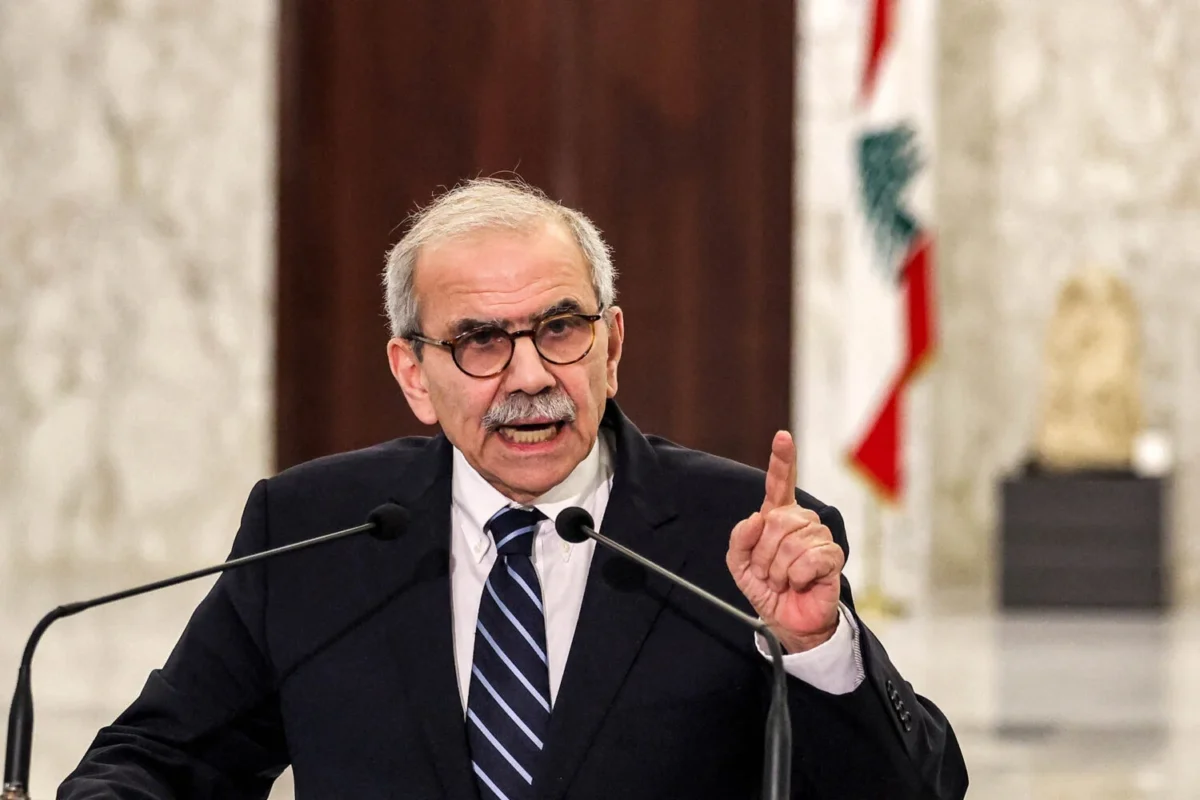
Since assuming office in January, Aoun has called for a state monopoly on weapons, a notion that Hezbollah has vehemently rejected for decades.
Late last month, he demanded that Hezbollah — one of Israel’s bitterest enemies and a member of Iran’s Axis of Resistance — should hand over its weapons to the Lebanese army.
As he put it in a televised speech, “It is the duty of all political parties … to seize this historic opportunity without hesitation and push for the exclusivity of weapons in the hands of the army and security forces and no one else.”
On August 5, Salam announced that the Lebanese Council of Ministers had instructed the Lebanese armed forces to create a plan to establish a state monopoly on arms.
The following day, Hezbollah — which was seriously degraded by Israel in last year’s war in Lebanon — released a statement condemning Salam’s directive and characterizing it as a “major sin.” Hezbollah claimed that it was “a clear violation” of the Lebanese government’s commitment to the 1989 Taif Agreement, which requires all Lebanese militias except Hezbollah to disarm.
But under United Nations Security Council resolutions adopted since the 2006 Israel-Hezbollah war, only the Lebanese army and United Nations peacekeepers are permitted to possess weapons and all private armed organizations must be disarmed.
When the Lebanese cabinet convened on August 7 to discuss the American proposal, a group of ministers affiliated with or loyal to Hezbollah walked out in a show of defiance.
At a press conference following the meeting, Information Minister Paul Morcos said that the government would not be deterred by Hezbollah’s recalcitrance, and that the U.S. proposal would be sent to the Lebanese army by August 31 and be implemented by the end of this year.
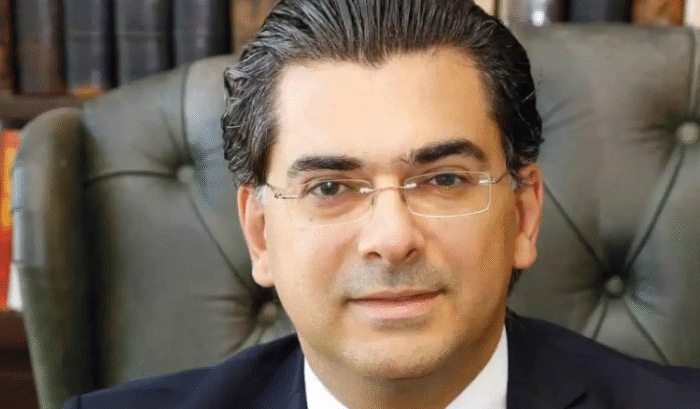
Barrack hailed the government’s “historic” decision, but it remains to be seen whether Hezbollah will abide by it.
So far, Hezbollah has refused to buckle under Lebanese and U.S. pressure. “We will not submit to Israel,” said Hezbollah’s secretary general, Naim Qassem. “Anyone calling for the surrender of weapons is serving Israel.”
Accusing Barrack of using “intimidation and threats” in an attempt to cow Hezbollah, Qassem claimed that the United States was only interested in “aiding Israel.”
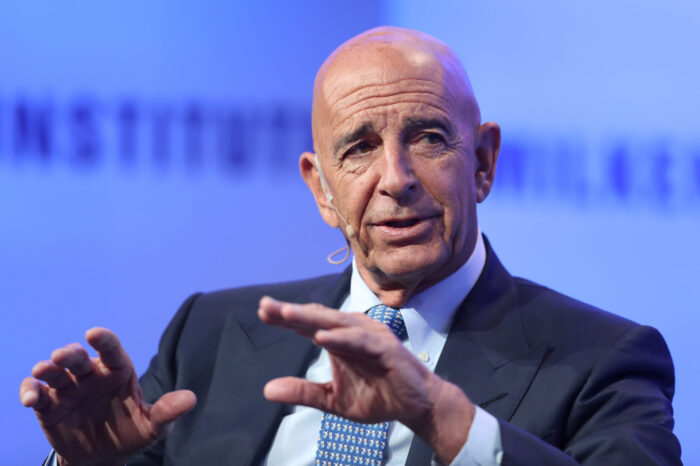
Still defiant despite its drubbing during last year’s war, Qassem threatened to launch missiles at Israel if it engages in a “large-scale aggression“ against Lebanon.
Since a U.S. and French-brokered ceasefire ended the war last November, Israel has carried out more than 500 air strikes against Hezbollah, killing some 230 operatives and destroying some of its bases.
Most recently, Israel killed a Hezbollah commander in a drone strike in Lebanon’s northeastern Bekaa Valley, one of Hezbollah’s strongholds. This followed a wave of Israeli strikes targeting rocket launchers, weapons depots and storage buildings.
Israel says it strikes when Hezbollah violates the truce. Under the terms of the ceasefire, Israel is entitled to act against immediate threats posed by Hezbollah.
In accordance with the truce, Hezbollah is obliged to withdraw its forces north of the Litani River, a distance of about 30 kilometers from the Israeli border, while the Lebanese army is supposed to dismantle Hezbollah’s military infrastructure south of the river.
To date, Lebanese troops have dismantled over 500 Hezbollah military positions and weapons depots in southern Lebanon. The United Nations Interim Force in Lebanon has dismantled what appeared to be a Hezbollah tunnel network and has confiscated several weapons caches.
The truce, however, is vague concerning the disposition of Hezbollah’s weapons and facilities north of the Litani.
Hezbollah claims that the ceasefire applies only to the south. Israel and the United States maintain that it covers all of Lebanon. Hence the continuing tension.
Apart from demanding Hezbollah’s disarmament, the Lebanese government has taken steps to curb its smuggling activities.
Three months ago, in a major development, Lebanese authorities fired several Hezbollah-affiliated employees who work at the Rafik Hariri International Airport in Beirut and began inspecting all arriving planes and passengers.
In the past year, Iran has tried to use the airport to smuggle funds to Hezbollah. Iran resorted to this subterfuge after losing its smuggling routes through Syria following the downfall of its ally, Syrian President Bashar al-Assad, last December.
In the meantime, the Lebanese army has closed a number of smuggling routes and increased its presence along the Syrian border.
According to the Iranian media, Hezbollah has begun to rebuild its shattered command structure. Iranian Foreign Minister Abbas Araghchi said recently that Hezbollah will remain a “dominant force,” and that Iran will continue to support it. Ali Akbar Velayati, the international affairs adviser of Iran’s supreme leader, Ali Khamenei, has said that Iran will oppose any U.S.-supported effort to disarm Hezbollah
Observers believe that Hezbollah will be hard-pressed to reconstitute itself to the pre-war level partly because so many of its most seasoned commanders were eliminated by Israel.
Qassem acknowledges that Hezbollah suffered crippling blows during the war. Israel killed 5,000 of its fighters and wounded 13,000. Israel assassinated Hezbollah’s secretary general, Hassan Nasrallah. Israel degraded the Radwan Force — which was primed to invade northern Israel a day after Hamas launched an invasion of southern Israel on October 7, 2023 — and destroyed most of its attack tunnels and military infrastructure near the Israeli border.
Hezbollah acknowledges that none of its 3,000 operatives injured in Israel’s audacious pager attack in Beirut last September have recovered.
In short, Israel has virtually demolished Hezbollah, which was one of its most formidable foes before 2023.
The question now is whether Hezbollah will accede to Lebanon’s demand and disarm. Like Hamas in Gaza, Hezbollah is reluctant to lay down its arms.