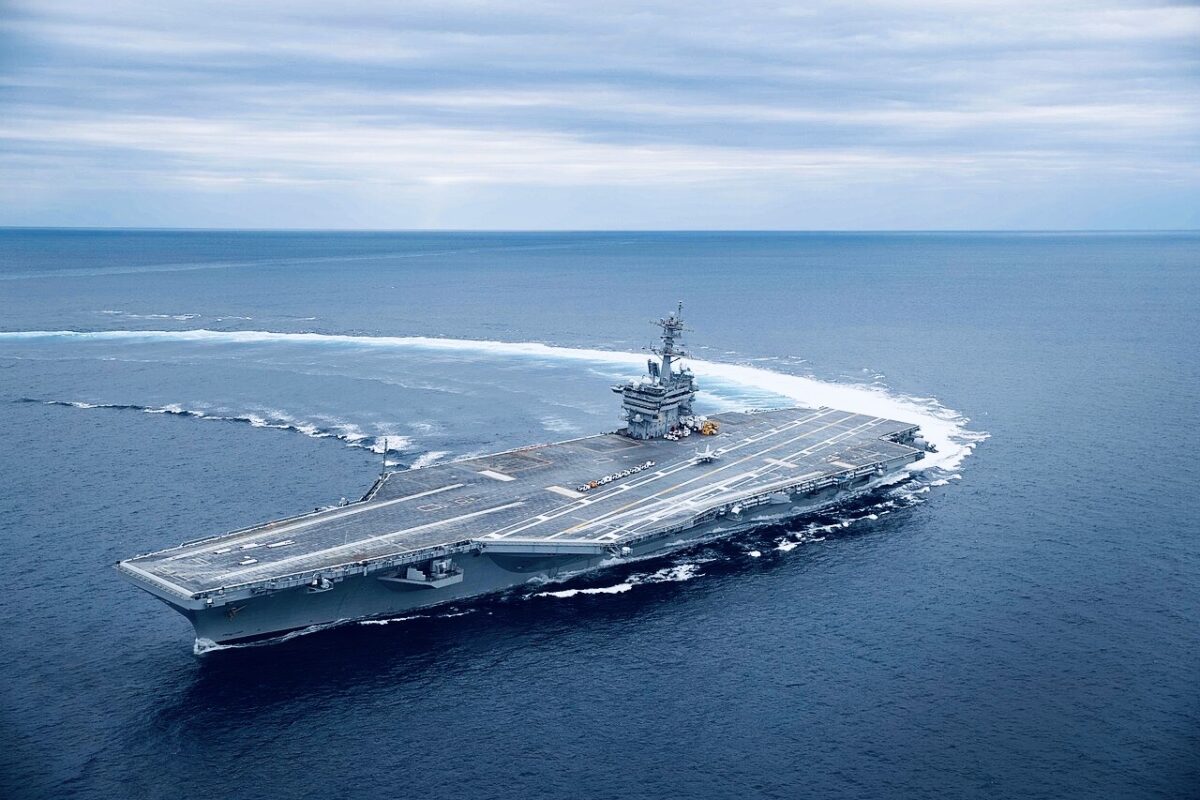
The first set of talks between the United States and Iran in nearly a year took place in Oman on February 6 amid mutual mistrust and fears that diplomacy may fail and give way to a renewal of war in the Middle East.
Last June, Israel attacked its arch enemy, Iran, bombing its nuclear and ballistic missile facilities and killing some of its key military commanders and nuclear scientists during a 12-day war. Iran retaliated by firing a barrage of ballistic missiles at Israel, some of which crashed into residential and university buildings, causing 31 deaths and severe property damage.
The United States joined the war more than a week later, striking Iranian uranium enrichment sites in Fordo, Natanz and Isfahan.
These events did not stop the march of diplomacy, as evidenced by the negotiations in Oman. After the first round of indirect talks ended, U.S. President Donald Trump exuded confidence, calling them “very good.” Iran “looks like it wants to make a deal very badly,” he claimed without elaborating.
The lead Iranian negotiator, Foreign Minister Abbas Araghchi, delivered an upbeat message as well. The talks had gotten off to a “good start” amid a “constructive atmosphere” focused on establishing a framework for future meetings.
Behind these uplifting and soothing words lay stark realities.
Immediately after the talks, Trump signed an executive order threatening to impose secondary tariffs on any country that imports goods from Iran.
Araghchi acknowledged that U.S.-Iranian negotiations are still bedevilled by a “lack of trust” that has yet to be “overcome.”
And in a tacit reference to the ominous U.S. military buildup in the Middle East, which began after the Iranian regime ruthlessly killed thousands of anti-government protesters, he said that “a prerequisite for any dialogue is refraining from threats and pressure.”
The U.S. delegation, headed by Trump’s special envoy Steve Witkoff and the president’s son-in-law and advisor Jared Kushner, included Admiral Brad Copper, the head of the U.S. Central Command in the Middle East. His presence, in dress uniform, was a vivid reminder that the aircraft carrier USS Abraham Lincoln and other vessels in the U.S. Navy have reached a point in the Arabian Sea close to Iran’s coast.
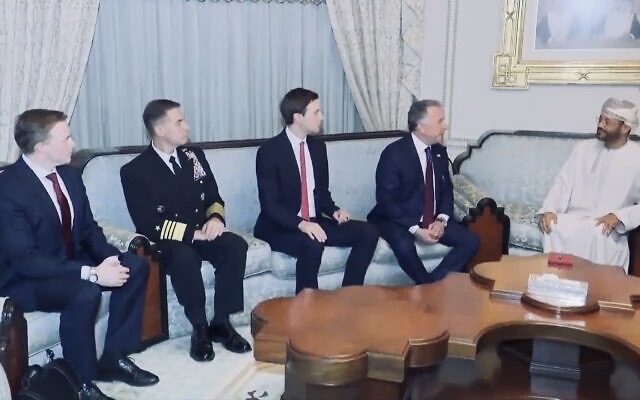
Neither Witkoff nor Kushner spoke to reporters after the talks. But last May, Witkoff, referring to Iran’s nuclear program, said, “We have one very, very clear red line, and that is enrichment. We cannot allow even one percent of an enrichment capability.”
By all accounts, he carried this position into talks with Iranian officials in Muscat, Oman.
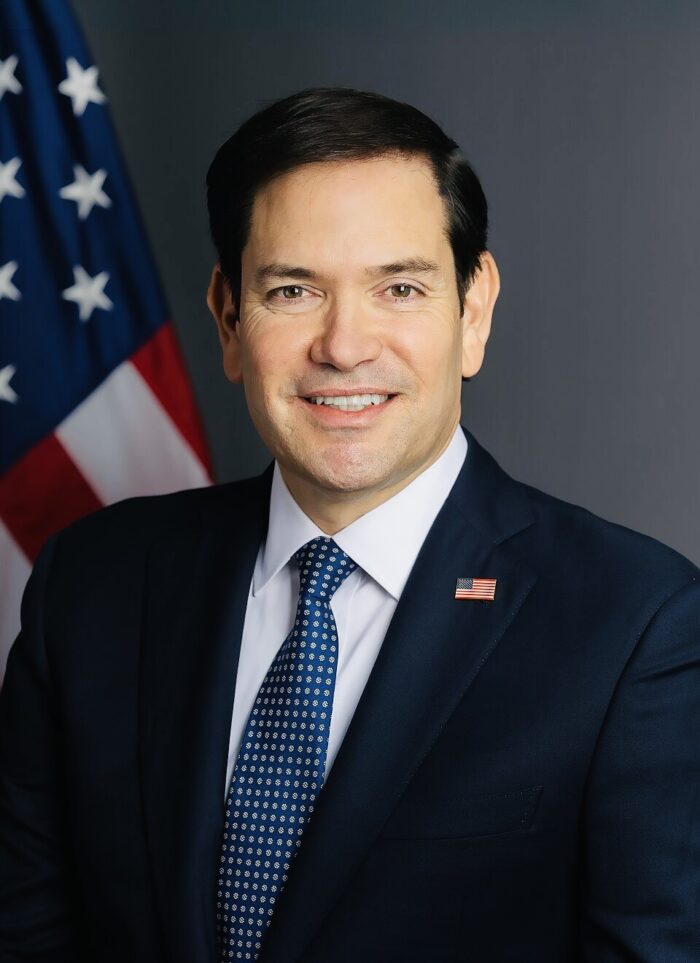
On the eve of their meeting, U.S. Secretary of State Marco Rubio said that the topics on the table should be Iran’s nuclear program, its arsenal of ballistic missiles, its support of regional proxies, and its recent brutal crackdown on protesters.
“I’m not sure you can reach a deal with these guys,” he said somberly, “but we’re going to try to find out.”
Prior to the talks, Araghchi dismissed Rubio’s concerns. Only the nuclear file would be discussed, he said. “We are not discussing any other issues with the Americans,” he added.
In an interview with CNN last week, Araghchi called Iran’s right to enrich uranium non-negotiable. Last June, he told reporters that enrichment was “our undeniable right.” He repeated this assertion on February 8.
Araghchi has also ruled out talks on Iran’s ballistic missiles, calling them essential to its security. “Iran’s missiles and defence systems will never be the subject of any negotiations.”
Araghchi has warned the United States that Iran’s military forces are ready “with their fingers on the trigger” to respond to aggression. “Just as we are ready for negotiations, we are ready for warfare.”
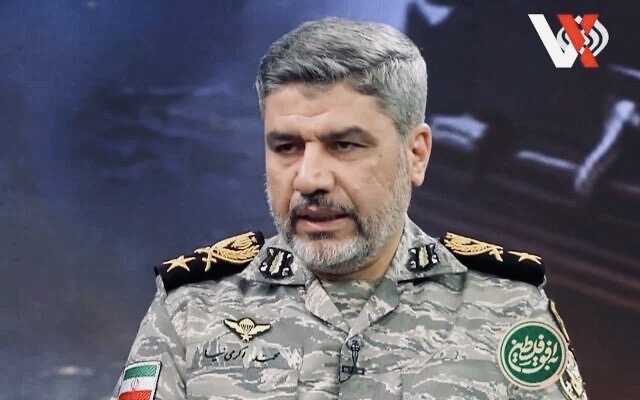
Iran’s army spokesperson, Mohammad Akraminia, has said that Iran is prepared for armed conflict with the United States. As he put it, “We have always announced that we are ready to confront any option and any scenario that the enemy considers, and if the enemy chooses the option of war, we are ready for any option in war conditions.”
The situation is indeed tense.
Days before the talks got under way, U.S. forces downed an Iranian drone near the USS Abraham Lincoln and Iran tried to stop an American-flagged ship in the Strait of Hormuz.
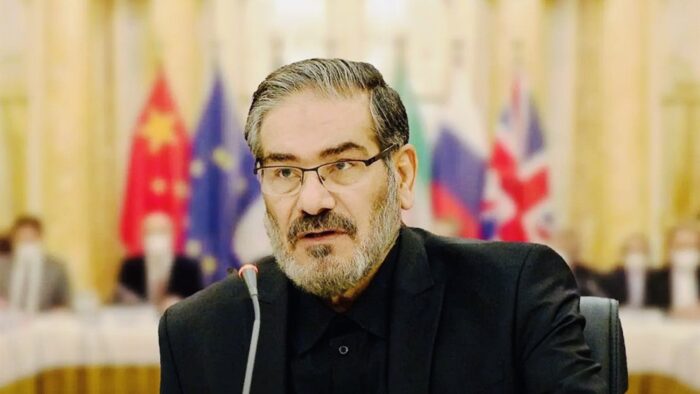
At the same time, Ali Shamkhani, a senior adviser to Iran’s supreme leader and the object of an Israeli assassination attempt last June, has threatened to strike Israel if the United States commences hostilities. He said that “the heart of Tel Aviv” would be in Iran’s crosshairs.
Prime Minister Benjamin Netanyahu has warned Iran that it will face “a powerful response” should Israel be attacked.
With tensions simmering, Netanyahu is due to meet Trump on February 11 in Washington to discuss the current negotiations with Iran.
The latest confrontation between the United States and Iran began after tens of thousands of protesters in Tehran and other Iranian cities took to the streets to complain about the deepening economic crisis that grips the country.
As a result of crippling U.S. and Western European sanctions, the value of Iran’s currency has plummeted to record low levels, fueling inflation, wiping out people’s savings and creating high unemployment.
With some demonstrators calling for the overthrow of the Islamic regime, the authorities blamed the United States and Israel for encouraging the unrest, the worst since the 1979 Islamic revolution.
Trump, having sent an “armada” of naval vessels to the region and threatened to attack Iran, assured protesters that “help is on its way.” So far, these have been empty words.
Feeling emboldened by his adventure in Venezuela early last month, he has warned the Iranian leadership, led by Ayatollah Ali Khamenei, that “bad things” would probably happen if Iran does not agree to U.S. demands.
The Trump administration is insisting on a permanent end to all enrichment of uranium on Iranian soil and the disposal of Iran’s current stockpiles of enriched uranium up to 60 percent, limits on the number and range of Iran’s ballistic missiles, and an end to Iran’s support of proxy groups in the Axis of Resistance.
Warning that “time is running out” for Iran to negotiate such a deal, he has threatened to launch an attack “with speed, great power, enthusiasm, purpose and violence.”
Iran is unlikely to compromise on its red lines, which cover uranium enrichment, its ballistic missile program and its support of the Axis of Resistance, whose members include Hamas, Hezbollah and the Houthis in Yemen.
Trump’s demands, while legitimate, greatly reduce the chances that the United States and Iran can to reach a diplomatic solution in subsequent rounds of negotiations.
Khamenei has warned that a U.S. attack would trigger a regional war, an outcome feared by neighboring Muslim states such as Turkey, Qatar, Saudi Arabia and Egypt.
According to the Axios news site, the United States and Iran will conduct another round of talks in due course. The Israeli media reports that the United States told the Iranian regime that it expects Iran to make a “tangible and significant concession” regarding the nuclear file in the next round of talks.
Iran may well bend to American pressure on this issue, but Iran is unlikely to accede to U.S. demands on its ballistic missiles and surrogates in the Middle East.
If Trump means what he says, the United States has embarked on a perilous collision course toward war with Iran that will surely affect Israel and the entire region.