
Iran’s nuclear program was seriously degraded by Israel and the United States in massive air strikes this past June, but Iran may still be able to rebuild it.
The Iranian regime publicly denies that it seeks nuclear weapons, claiming they do not align with the tenets of Islam. Yet Iran, contrary to the 2015 nuclear agreement, has enriched uranium to 60 percent levels that have no peaceful application, prevented international inspectors from examining its nuclear facilities, and expanded its ballistic missile arsenal.
Due to Iran’s recalcitrance, the United Nations sanctions that were lifted under the landmark deal nine years ago were reinstated by Germany, France and Britain on September 27 under the “snapback” mechanism.
The sanctions that were reimposed on Iran include financial and banking restrictions, bans on uranium enrichment or reprocessing, an embargo on conventional arms sales to Iran, and limitations on ballistic missile tests.
A resolution sponsored by China and Russia, two of Iran’s allies, sought to delay the “snapback” sanctions for six months, but it gained the support of only four countries in the 15-member Security Council.
Western countries made intensive efforts to persuade Iran to compromise, but they failed due to Iran’s refusal to make concrete commitments on scaling back its nuclear program, which Israel views as an existential threat.
Iran condemned the reinstatement of sanctions as “legally baseless and unjustifiable.” In the face of these sanctions, some Iranian parliamentarians suggested that Iran should consider withdrawing from the Nuclear Nonproliferation Treaty.
Israel has hailed the sanctions as a “major development in response to Iran’s ongoing violations, especially on its military nuclear program.” Israel’s Foreign Ministry said that “every tool” should be used to “prevent a nuclear-armed Iran.”
The sanctions were reimposed after European and Iranian diplomats met in Geneva last month in an attempt to limit Iran’s nuclear enrichment program and achieve significant progress in reaching a new and improved nuclear agreement.
During U.S. President Donald Trump’s first term, the United States unilaterally withdrew from the old agreement, which was known as the Joint Comprehensive Plan of Action (JCPOA). This emboldened Iran to enrich uranium to far higher levels than the JCPOA permitted.
Germany, Britain and France offered to extend the deadline for Iran’s acceptance of a new deal, but in return, they expected Iran to resume talks on the status of its near-weapons-grade uranium stockpile and to give inspectors from the International Atomic Energy Agency (IAEA) access to all its nuclear sites.
Iran reached an agreement with the IAEA on the second issue on September 9, almost three months after it suspended such cooperation following the 12-day war with Israel in June.
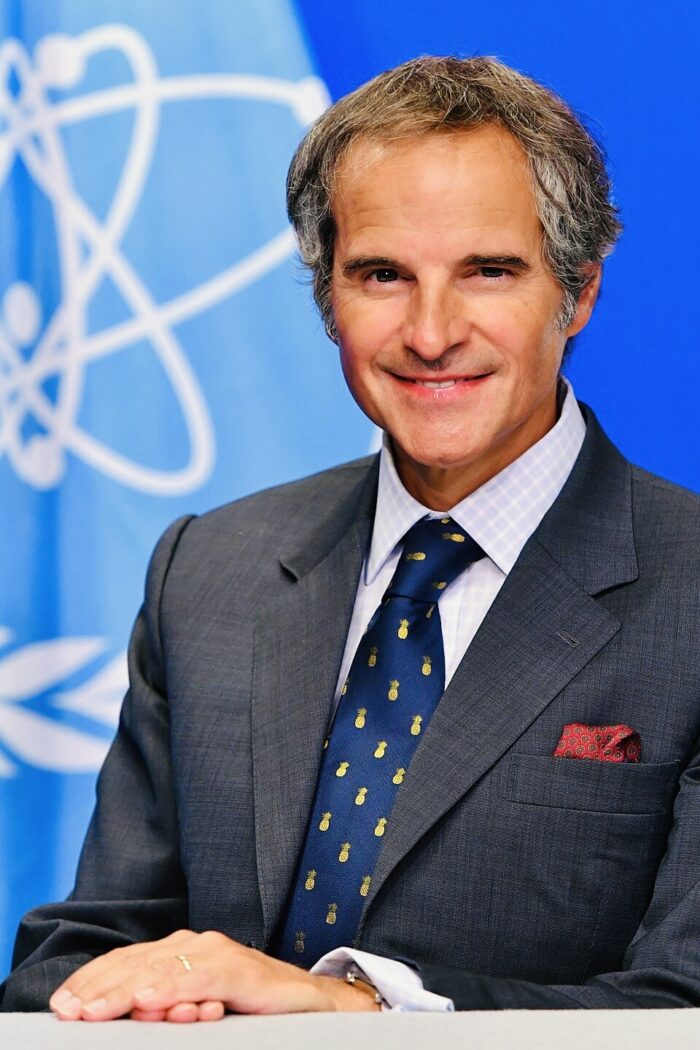
Rafael Grossi, the IAEA’s director general, said that he and Iranian Foreign Minister Abbas Araghchi had agreed on “practical modalities to resume inspection activities in Iran.” Grossi called it “an important step in the right direction.”
Despite this step forward, the IAEA has yet to ascertain the status of the 440.9 kilograms of uranium in Iran’s possession. Iran enriched it to 60 percent prior to the outbreak of the Israel-Iran War on June 13.
What remains clear is that Iran has not been a nuclear threshold state — a nation capable of enriching uranium to a 90 percent weapons-grade level within a matter of weeks — since last that war.
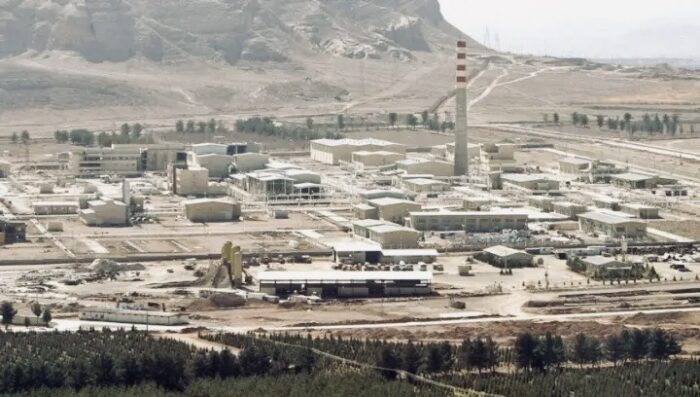
In separate operations, Israeli and U.S. aircraft bombed the three main facilities associated with Iran’s uranium enrichment program.
The Natanz plant, targeted by Israel and the U.S., was severely damaged, with about 15,000 of its centrifuges having been reportedly destroyed.
The Fordow site, struck by the U.S., suffered major damage. Trump claimed it has been “obliterated.”
The Isfahan Nuclear Technology Center, bombed by the Israeli Air Force, was badly damaged and is likely inoperable today.
In addition, Israel assassinated more than ten Iranian nuclear scientists.
As a result of these strikes, Iran no longer has a clear path to produce weapons-grade uranium, according to the Institute for Science and International Security.
Yet these bombing raids did not eliminate Iran’s nuclear capabilities, says the Institute for National Security Studies at Tel Aviv University. “Iran maintains residual capabilities that could eventually enable the rebuilding of its nuclear program and the development of nuclear weapons.”
Most importantly, Iran has the scientific knowledge to build an atomic device. Judging by an article in the British daily The Telegraph, Iran’s nuclear scientists have been sent into hiding to protect them from future Israeli strikes.
The Institute for National Security Studies calculates that Iran has several options at its disposal in the wake of the war.
Iran can abandon its nuclear program altogether, which is highly unlikely.
Iran can negotiate a new nuclear pact with the original signatories: the United States, Russia, China, Germany, France and Britain.
Iran can gradually restore its threshold status without a formal agreement.
Iran can covertly break out toward a nuclear weapon.
The United States and Israel have threatened to launch new air strikes should Iran enrich uranium to a weapon-grade level. But if Iranian President Masoud Pezeshkian is to be believed, Iran has no interest in developing a nuclear arsenal. As he told the United Nations General Assembly a few days ago, Iran will “never seek to build a nuclear bomb.”
Whether he is telling the truth has yet to be determined. In the meantime, Iran will be judged by its actions and not its words.