When the United States and Israel jointly went to war with Iran on February 28, President Donald Trump predicted that the conflict would last from three to five weeks. Prime Minister Benjamin Netanyahu did not commit himself to a deadline, preferring to keep his options open.
Almost six weeks on, there is no end in sight to the war. Iran has proven to be a resilient enemy capable of absorbing enormous pain and of fighting back.
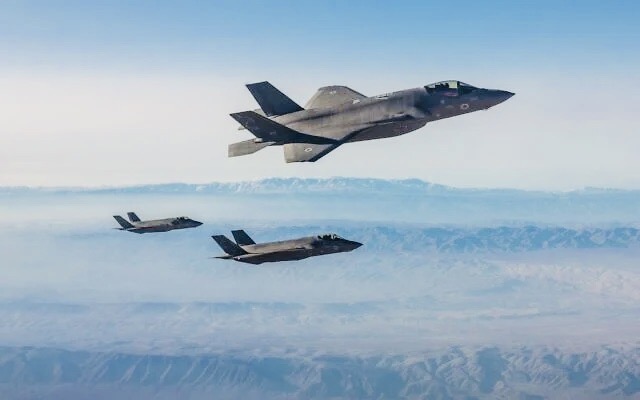
Iran has been hammered relentlessly by a barrage of air strikes. Israel, the U.S.’ junior partner, has dropped 15,000 bombs on Iran since the start of the war, according to Defence Minister Israel Katz and General Eyal Zamir, the chief of staff of the Israeli armed forces. Israel’s bombing campaign is far more intense than it was during Operation Rising Lion, its first war with Iran in June 2025.
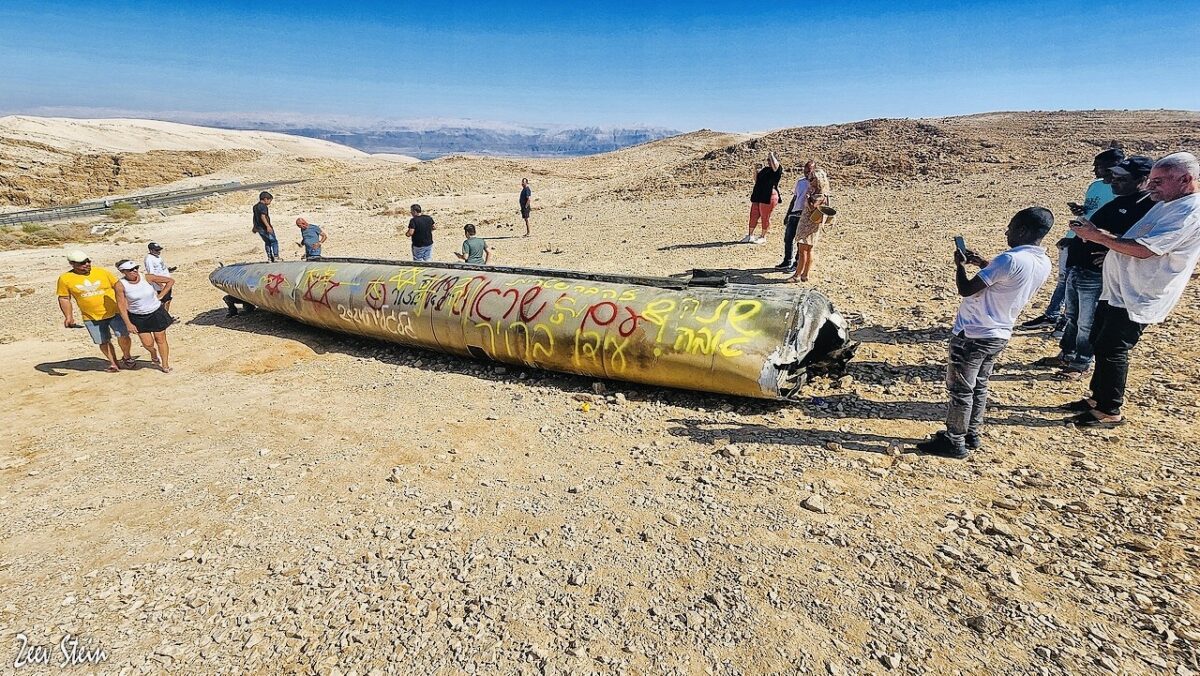
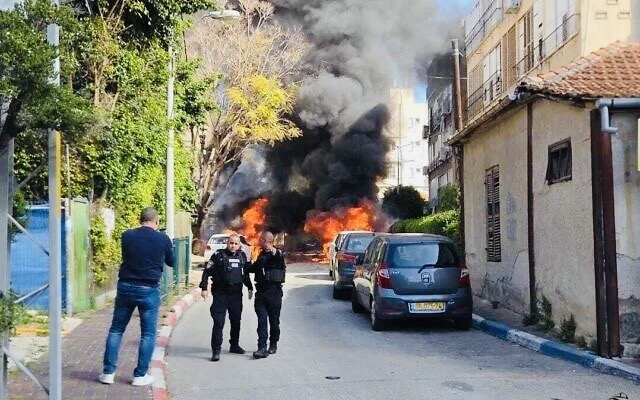
Nevertheless, Iran is still firing ballistic missiles and drones at Israel, the Arab Gulf states and Jordan, causing considerable damage to residential neighborhoods, industrial sites and military bases. Iran’s proxies, Hezbollah, the Houthis and Iraqi Shi’a militias, are busy attacking Israel and American forces in Iraq.
Two days ago, in an illustration of Iran’s gumption, an Iranian missile shot down an F-E15 fighter jet, the first U.S. combat aircraft to be downed during the war. On the same day, an A-10 Warthog plane assisting in the rescue of the F-15 crew crashed into the Persian Gulf.
In another calculated act of defiance, Iran has taken control of the Strait of Hormuz, an international waterway through which 20 percent of the world’s oil supply passes. Iran’s seizure of the strait is astonishing in light of the fact that its navy has been virtually destroyed. Iran seized the strait to keep energy prices high enough to compel Trump to call a halt to the war. In the meantime, Iran has imposed hefty tolls on ships transiting through the strait.
Trump claims that Iran is desperate for a ceasefire. But Iranian officials stoutly deny his unsubstantiated assertion and insist that Iran will not negotiate with the United States under duress unless it ends its military campaign and promises not to restart it. Iran has rejected Trump’s 15-point peace plan, and Pakistan’s diplomatic effort to arrange talks between the warring parties has reportedly hit a brick wall.
The bottom line is that Iran seems prepared for a lengthy and grinding war of attrition, a prospect that Trump hardly relishes. He knows that skyrocketing oil prices are bound to have a detrimental effect on the U.S. economy and erode his standing in the Republican Party. Trump may well declare “victory” sooner rather than later, giving Iran a respite.
Netanyahu is more realistic today than he was in the wake of the 12-day war with Iran in 2025. When it ended last June, he declared that Israel’s “historic victory” would “stand for generations.” In retrospect, his proclamation was an exaggeration, an example of wishful thinking. Israel underestimated the speed with which Iran could rebuild its military capacity.
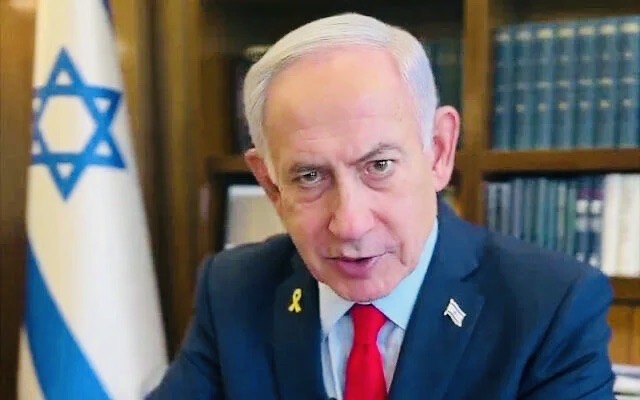
While the Iranian regime has been weakened in the current war, Netanyahu apparently realizes that the regime is not on the cusp of crumbling. Indeed, Iran may be able to withstand a protracted war. Survival would be seen as a victory in Tehran.
If this war ends on an inconclusive note, Israel may find itself at war with Iran yet again. As Netanyahu put it recently, “If we must defeat them again and again, we will defeat them again and again.”
During the course of this war, Israel has focused on removing Iran as a strategic threat to its very existence. In pursuit of this goal, Israel has sought to systematically destroy or disable Iran’s air defences, ballistic missiles and drones, launchers and defence industry.
Israel targeted some of these sites in October 2024 and then again last June. This time around, Israel is hitting every single military production facility on its list. So far, 1,700 factories and workshops have been struck, according to the Times of Israel.
On March 19, a day after Israeli jets bombed the South Pars natural gas field, Netanyahu announced that Israel had wiped out Iran’s industrial base. Claiming that Iran can no longer manufacture ballistic missiles or enrich uranium, he said, “We are continuing to crush these capabilities. We will crush them to dust, to ashes.”
Eight days later, as Israel shifted to bombing economic targets, Israeli aircraft struck two major steel factories, which are vital to Iran’s missile building program. On April 3, the Israel Defence Force announced that it had destroyed 70 percent of Iran’s steel production capacity.
More recently, Israel bombed the Bandar Imam Petrochemical Complex, Iran’s largest petrochemical facility, and a cement factory. The perimeter of the Russian-built Bushehr nuclear power plant was hit as well. Whether the attack was intentional is still unclear.
Israel and the United States have continued to degrade Iran’s nuclear program, the ostensible cause of the war. Two days ago, they bombed the Laser and Plasma Research Institute, a specialized research center at Shahid Beheshti University in Tehran province. It has played a role in nuclear weapons research and development in disciplines ranging from centrifuge cascades to uranium separation, says the Institute for the Study of War.
Iran’s cache of 440 kilograms of 60 percent enriched uranium, believed to be deeply buried under rubble at the Isfahan and Natanz nuclear sites, has yet to be found. Trump is supposedly thinking of sending commandos to retrieve the fissile material. It would surely be a complicated and dangerous mission.
In addition, Israel has gone after Iran’s leadership, having assassinated a string of top-ranking officials from supreme leader Ayatollah Ali Khamenei on down. Among them have been Ali Larijani, the secretary of the National Security Council; Gholamreza Soleimani, the commander of the Basij Force, the militia affiliated with the Islamic Revolutionary Guards Corps; Esmaeil Khatib, the minister of intelligence, and Mohammed Pakpour, the commander of the Islamic Revolutionary Guards Corps.
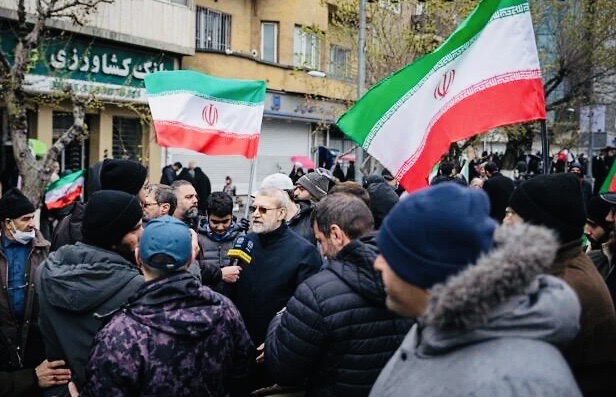
These assassinations dealt the regime severe and embarrassing body blows, but Iran’s fallen leaders were replaced in short order.
The Israel Defence Force estimates that some 5,000 Iranian soldiers have been killed, with tens of thousands having been wounded. The Iranian casualties are a drop in the bucket, considering Iran’s population of 93 million.
Israel also has bombed the offices of security forces, which were instrumental in brutally crushing nation-wide protests in December and January. Netanyahu predicted that the strikes would create “optimal” conditions for a popular uprising and, perhaps, even regime change. “I’m telling the Iranian people, the moment you can come out for freedom is getting closer. We are standing beside you and helping you. But at the end of the day, it’s up to you.”
The prospect of tens of thousands of Iranians taking to the streets again in mass anti-government demonstrations is extremely slim. Potential protesters have been warned by Iran’s chief of police that they will be treated as enemies if they dare mount demonstrations. Trump has acknowledged this reality.
Prior to the war, David Barnea, the director of the Mossad, assured Netanyahu and the Trump administration that Israel’s external intelligence agency was capable of generating riots that could lead to the collapse of the Iranian regime. This assurance prompted Trump to encourage Iranians to “take over” the government.

Nearly six weeks into the war, an uprising has yet to materialize. The Iranian regime, though weaker, is still very much intact and seemingly strong enough to squelch a rebellion.
By the same token, Iran appears to have more ballistic missiles and launchers than was previously assumed.
Last month, Israel announced that it had destroyed or damaged around 60 percent of Iran’s estimated 470 ballistic missile launchers. But judging by a U.S. intelligence estimate, Iran is still in possession of around half of its launchers, some of which are buried under the rubble of buildings brought down by air strikes.
The relentless bombing campaign has not driven Iran into the “Stone Ages,” as Trump recently threatened. But Iran’s nuclear program, plus its military capabilities, have been vastly degraded, much to Israel’s benefit and its Arab Gulf neighbors.
This does not mean that Iran has ceased to be a menace to the region. Yet Iran’s capacity to terrorize and destabilize the Middle East appears to have been drastically reduced, which is not an insignificant achievement.