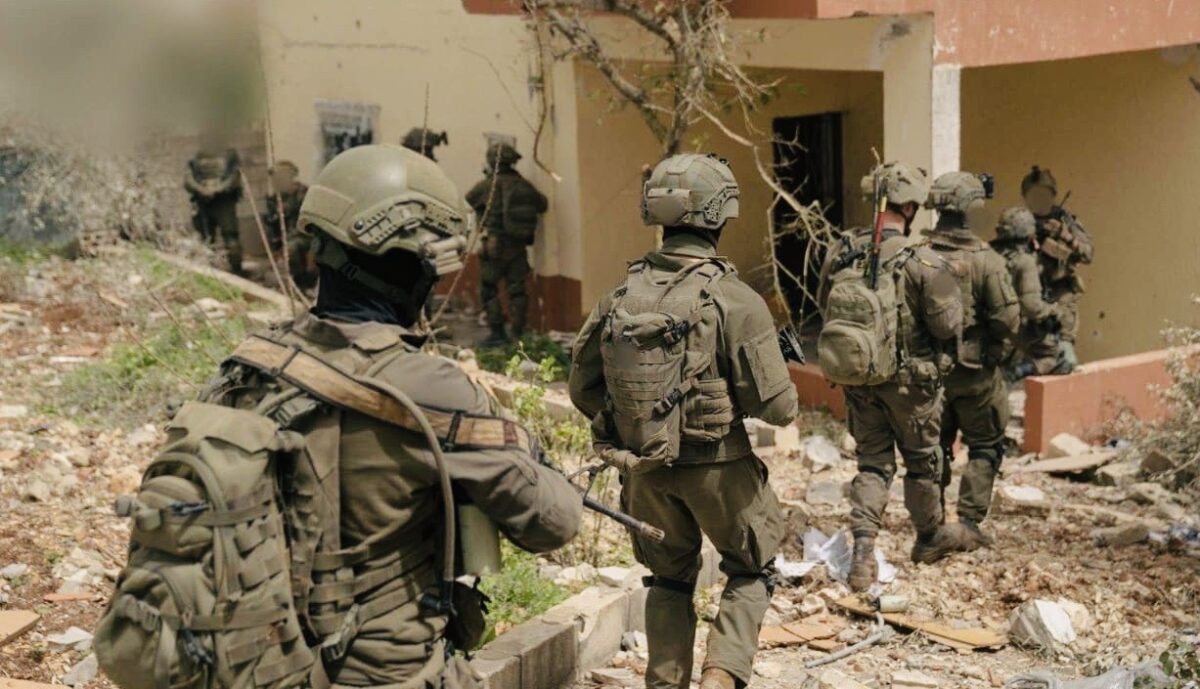
On April 8, shortly after the United States and Iran accepted a Pakistani proposal to abide by a two-week ceasefire in the war in Iran, Israel carried out a massive wave of air strikes aimed at Hezbollah sites in Lebanon.
These attacks, the deadliest in decades, complicated the peace talks between the United States and Iran in Islamabad, the capital of Pakistan.
Iran, claiming that the Israeli assault violated the ceasefire, threatened to call off negotiations altogether unless Israel stopped its military offensive. Pakistan, which has no diplomatic relations with Israel, supported Iran’s contention that the truce applied equally to Lebanon.
Despite Iran’s threat, talks got underway on April 11. Mediated by Pakistan, they were the highest-level meeting between U.S. and Iranian representatives since Iran’s Islamic Revolution in 1979. But after 21 hours of negotiations in an atmosphere laden with suspicion and mistrust, Vice President JD Vance, the lead U.S. negotiator, acknowledged that they had failed.
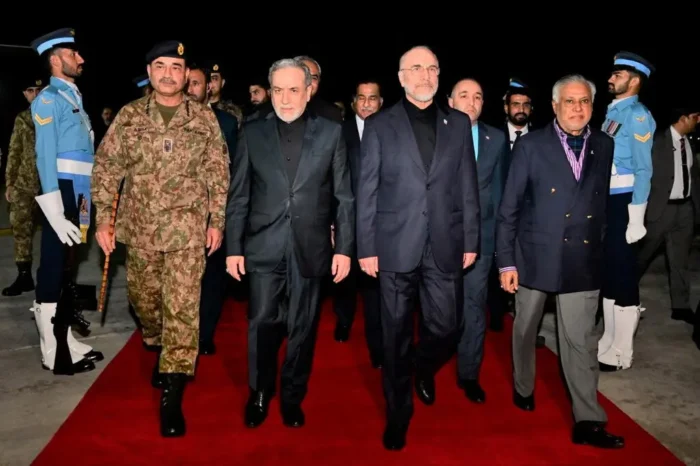
Iran rejected “our final and best offer,” Vance said, paving the way for his prompt departure from Pakistan.
The current war in Lebanon figured prominently in the negotiations.
European leaders argued that Israeli strikes in Lebanon were undermining the tenuous two-week truce in Iran. “The severity with which Israel is waging war (in Lebanon) could cause the peace process as a whole to fail,” said Chancellor Friedrich Merz of Germany, one of Israel’s closest allies. Kaja Kallas, the top European Union diplomat, said that Israel was placing the ceasefire “under severe strain.” British Prime Minister Keir Starmer said that Israel’s attacks “should stop.”
Pushing back, Israeli Prime Minister Benjamin Netanyahu claimed that there was no connection between the talks in Pakistan and the fighting in Lebanon, and that Israel would press on with its campaign to degrade Hezbollah.
U.S. President Donald Trump and Vance initially backed Israel. Subsequently, in three telephone conversations described as “tense” by the media, Trump asked Netanyahu to scale down the severity of Israel’s attacks.
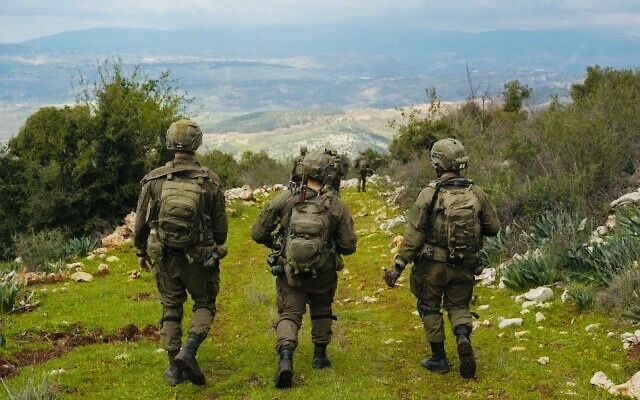
Acceding to Trump’s request or demand, Israel cancelled further air strikes in Beirut, but continued its offensive in the rest of Lebanon as Israeli forces and Hezbollah exchanged blows.
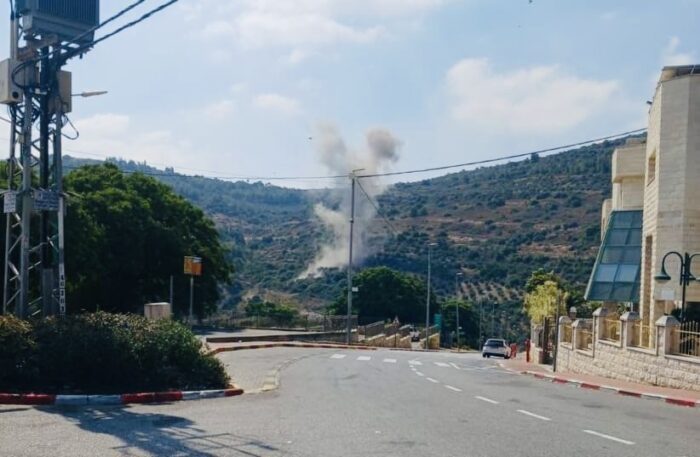
However, Israel belatedly accepted Lebanon’s offer of direct talks. Lebanon, which has been in a technical state of war with Israel since its creation in 1948, offered Netanyahu this option last month after the Israeli army invaded Lebanon for the second time in two years.
Israel launched its latest invasion after Hezbollah, Iran’s primary proxy in the Middle East, fired rockets into the Galilee on March 2, a few days after the United States and Israel attacked Iran.
Four days ago, within a matter of 10 minutes, the Israeli Air Force struck a wide range of targets in central Beirut and the rest of Lebanon, killing 357 people and wounding over 1,800. Defence Minister Israel Katz said that more than 200 Hezbollah operatives had been eliminated in one fell swoop as Israel targeted Hezbollah’s command centers and other infrastructure.
Lebanese President Joseph Aoun called the attacks “barbaric.”
In the last month, Israel has killed over 1,400 Hezbollah operatives. Among them have been the chief aide of Hezbollah’s secretary general, hundreds of Radwan Force members, 15 Hezbollah rocket artillery unit commanders, and 250 Hezbollah rocket operators. Israel, too, has destroyed more than 200 Hezbollah rocket launchers and 1,300 rocket launch tubes.
Despite Netanyahu’s refusal to halt Israel’s offensive in southern Lebanon, Israeli and Lebanese diplomats are due to conduct direct talks in Washington on April 14 at the U.S. State Department.
Israel’s delegation will be led by its ambassador to the United States, Yechiel Leiter. Lebanon’s envoy in Washington, Nada Hamadeh Moawad, will attend, as will the U.S. ambassador to Beirut, Michel Issa. Netanyahu said that the talks will focus on Hezbollah’s disarmament and the prospect of a formal Israel-Lebanon peace treaty.
Netanyahu said that Hezbollah, in the period before Hamas’ invasion of southern Israel on October 7, 2023, had planned to “invade and conquer” the Galilee. “We are still fighting them, it’s not over,” he noted.
Lebanon, on the other hand, will reportedly demand a ceasefire before serious talks can begin.
Leiter, following a telephone conversation with Moawad, said in a statement on April 10 that the Israeli government has no intention of agreeing to a truce with Hezbollah. He reiterated that Hezbollah remains “the main obstacle to peace” between the two countries.
That being the case, Hezbollah’s disarmament is likely to be the main topic at the forthcoming talks in Washington.
Last December, Lebanese Prime Minister Nawaf Salam claimed that the government was close to disarming Hezbollah south of the Litani River, and that it was moving toward the goal of confiscating Hezbollah’s stockpile of weapons north of the river.
At the same time, Lebanese Foreign Minister Youssef Raajji demanded that Hezbollah’s military infrastructure be disbanded.
They issued these statements after the Lebanese government declared all Hezbollah military and security operations illegal and “outside the law” and insisted that only the state can decide matters of war and peace. Hezbollah was instructed to confine itself to politics, surrender its weapons and stop rocket launches and attacks from Lebanese territory.
The government also ordered state media to stop referring to Hezbollah as a “resistance” movement and demanded that members of Iran’s Islamic Revolutionary Guards Corps (IRGC) leave the country. This order covered Iran’s ambassador in Beirut, Mohammed Reza Shibani.
For all practical purposes, Hezbollah ignored virtually all of the government’s demands, underscoring Israel’s contention that the Lebanese government is weak and that Hezbollah forms a state-within-a-state in Lebanon.
The proof is in the pudding.
Hezbollah, at Iran’s behest, initiated the latest hostilities in Lebanon in defiance of the government. And while some IRGC personnel left, Shibani remained at his post on the insistence of Nabih Berri, the Speaker of the Lebanese parliament and an ally of Hezbollah and Iran.
Lebanon’s ability to rein in Hezbollah is very limited.
A deeply divided nation, Lebanon has generally chosen coexistence over confrontation with Hezbollah so as to avoid another civil war. The last one ended in 1990 after 15 years of bloodshed.
Lebanon’s reticence to seriously confront Hezbollah has been documented.
Hezbollah, which was basically created by Iran after Israel’s 1982 invasion of Lebanon, is not only a powerful militia, but a major political party with seats in parliament and influence in cabinet decisions.
Instead of cracking down on Hezbollah, a succession of Lebanese governments have tried to manage and accommodate it within the system.
The Lebanese Armed Forces have not challenged Hezbollah either. The implicit understanding is that the army’s function is to focus on internal stability and border security and refrain from engaging in clashes with Hezbollah.
In the wake of the 2006 Israel-Hezbollah war, Lebanon, in accordance with United Nations resolution 1701, agreed to deploy the army to southern Lebanon, work alongside the United Nations Interim Force in Lebanon, and prevent armed groups, including Hezbollah, from operating south of the Litani River.
In practice, the Lebanese government implemented this plan only partially as Hezbollah retained its foothold near and around the Israeli border. Various Lebanese governments attempted to address this issue by trying to integrate Hezbollah into the army, but their efforts failed.
Hezbollah justifies its position on the grounds that its arsenal of weapons constitute a “resistance” force against Israel. Its rationale resonates with parts of the Lebanese population, particularly Shi’a Muslims in the south.
Lebanese governments have occasionally acted to rein in Hezbollah, but its actions have been piecemeal and cautious, falling far short of a strategy to dismantle Hezbollah.
The underlying problem is that Lebanese government is fragmented along sectarian lines and lacks the will and the capacity to challenge Hezbollah, which is stronger militarily than the army.
Israeli Defence Minister Israel Katz is committed to Hezbollah’s disarmament through “military and political means.” But the chief of staff of the Israel Defence Forces, General Eyal Zamir, said recently that this is neither a “realistic” nor a “required” goal, and that his objective is to significantly weaken Hezbollah.
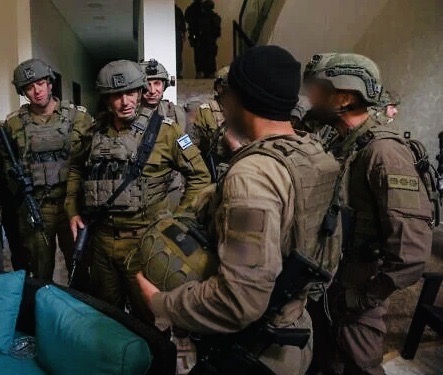
General Rafi Milo, the commander of Israeli forces in Lebanon, suggested that Hezbollah is stronger than was previously assumed. In an unusually candid admission, he acknowledged that Israel had overestimated the damage it inflicted on Hezbollah during its 2024 offensive in Lebanon.
During the 15-month ceasefire that followed, Hezbollah regrouped and rearmed in preparation for another round of warfare.
Be that as it may, Israel hopes that the end result of its upcoming talks with Lebanon in Washington eventually will lead to a peace treaty.
It’s an objective that Israel almost achieved four decades ago.
On May 17, 1983, following the withdrawal of the PLO from Lebanon, Israel and Lebanon signed what looked like a peace agreement. Its key provisions included mutual recognition, an Israeli withdrawal from Lebanon, a commitment by Lebanon to prevent attacks on Israel from its territory, and an implicit end to their state of war.
Although the agreement was staunchly supported by the United States, it quickly unravelled.
Syria, Lebanon’s powerful neighbor, regarded it as a threat to its influence in Lebanon. Syrian President Hafez al-Assad denounced it, effectively blocking its implementation. Lebanese President Amin Gemayel lacked the authority to enforce it. Many factions, especially Muslim and pro-Syrian groups, rejected it as a capitulation to Israel.
The intensification of Lebanon’s civil war, plus Hezbollah’s bombing of U.S. Marine barracks in Beirut, weakened U.S. resolve and destabilized the environment needed to sustain the agreement.
Succumbing to Syrian pressure and internal unrest, Lebanon formally abrogated it in March 1984, effectively nullifying it.
Israel maintained a self-declared security zone in southern Lebanon until May 2000.
In short, the May 17 agreement collapsed because it was imposed on a fractured Lebanon, opposed by Syria, and was bereft of the political and military conditions it needed to survive.
Today, Hezbollah and its supporters, as well as Iran, have voiced bitter opposition to a rapprochement between Israel and Lebanon. Objectively, it will remain a mirage unless Hezbollah is effectively disarmed.
If the past is any guide of what the future may hold, the Lebanese government will not seriously confront Hezbollah, thereby dooming Lebanon to further chaos, violence and uncertainty.