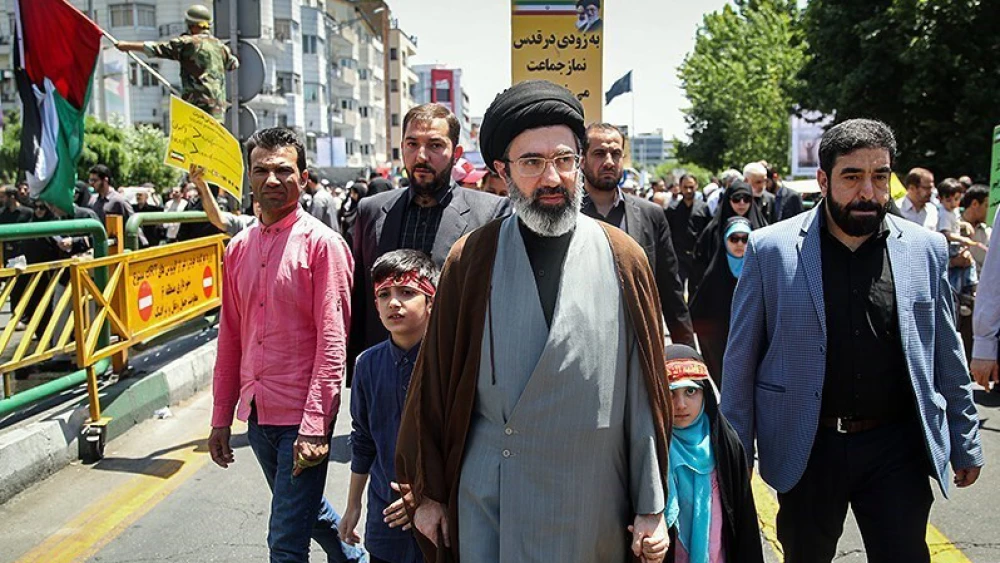
Nearly two weeks after the United States and Israel went to war with Iran, President Donald Trump appears eager to wrap it up expeditiously, worried by the skyrocketing price of oil and concerned that about two-thirds of Americans oppose the war.
Since almost day one, Trump has issued a cascade of contradictory remarks about its possible length.
Yesterday, less than week after calling for Iran’s “unconditional surrender” and claiming that he seeks the destruction of the Iranian regime, Trump said that Iran is “pretty much at the end of the line.” He qualified his assessment by saying that the war will not necessarily finish “immediately.”
Previously, Trump laid down two markers.
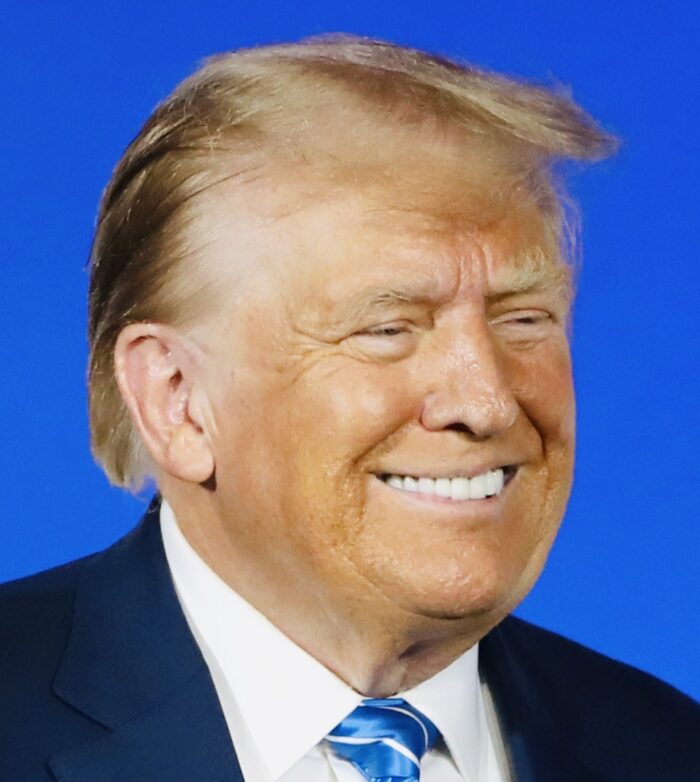
He would wind down the war “soon,” as there was “practically nothing left to target.” He predicted that it would end “very soon,” and that he, rather than Prime Minister Benjamin Netanyahu, would have the final say in ending it.
In an unmistakable sign that Trump and Netanyahu may disagree on timelines, Israeli Defence Minister Israel Katz said on March 11, “The operation will continue without any time limit, as long as required, until we accomplish all objectives and achieve victory in the campaign.”
Israel’s objectives are the destruction of Iran’s nuclear program and arsenal of ballistic missiles and drones, the elimination of its proxies in the Axis of Resistance, and the ouster of its Islamic fundamentalist government.
U.S. Secretary of State Marco Rubio set out American aims on March 9. “The goals of this mission are clear,” he said. “It is to destroy the ability of this regime to launch missiles, both by destroying their missiles and their launchers; destroy the factories that make these missiles, and destroy their navy.”
U.S. Defence Secretary Pete Hegseth, pivoting away from the emphasis on regime change, said he is focused on assuring that Iran’s nuclear facilities and ballistic missiles are destroyed so that it can no longer has the capability to attack Israel, Arab states or even the United States.

Several days ago, Hegseth told 60 Minutes that the war has “only just begun.” He has since stated that it will end “on our timeline” and “at our choosing.”
With the debate over the duration of the war consuming the Trump administration, the United States and Israel are racing to achieve some or all of their objectives.
General Dan Caine, the chairman of the U.S. Joint Chiefs of Staff, has disclosed that Iranian missile and drone strikes have dropped off considerably due to the U.S.’ punishing air campaign.
“Our strikes mean we’ve made significant progress in reducing the number of missile and drone attacks out of Iran,” he said. “Ballistic missile attacks continue to trend downward 90 percent from where they’ve started. And one-way attack drones have decreased 83 percent since the beginning of the operation, a testament to our air defenders and our air defence systems.”

While air strikes have degraded Iran’s capabilities, Iran still retains upwards of 50 percent of its missiles and launchers, Pentagon officials said in briefings to Congress.
The bottom line is that the U.S. and Israel achieved air supremacy in the skies over Iran within two to three days of the outbreak of the war on February 28.
It took the Israeli Air Force an equal amount of time to attain air superiority during Israel’s 12-day war with Iran last June.
“Iran right now is totally exposed to air strikes,” Amir Eshel, the former commander of Israel’s air force, told The New York Times.
U.S. and Israeli fighter jets have bombed missile launchers, missile and drone factories, as well as anti-aircraft batteries, rendering Iran all but defenceless.
Iran has retaliated by firing missiles and drones at Israel and the Arab Gulf states.
Newspaper and television accounts of U.S. and Israeli operations have generally been skimpy, but the Institute for the Study of War, a think tank based in Washington, has delved into them on a far more systematic, detailed and granular level.
A snapshop:
On March 5, Israel and U.S. targeted the Parchin Military Complex, a missile production site where missiles and drones are developed and manufactured. Israel destroyed it in an air raid in October 2024 and again during the war in June 2025, but Iran rebuilt it.
An underground missile base south of Shiraz, in Fars province, was hit. It is reportedly one of at least 25 bases from which Iran can launch medium-range ballistic missiles.
On March 7, the Islamic Revolutionary Guards Corps aerospace force in Tehran, the principal operator of the Iranian missile and drone arsenals, was struck. The day before, the Shiraz Electronics Industries Zone in Fars province was bombed. It produces military electronics for the Iranian armed forces ranging from radars and avionics to missile guidance components.
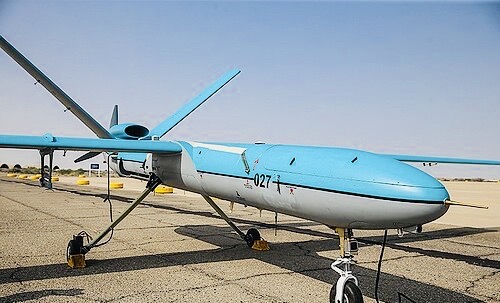
Shahed Aviation Industries in Isfahan, which produces Shahed-136, Shahed-129, and Shahed-171 drones, was struck, as was the Shahroud missile plant in Semnan province. The Islamic Revolutionary Guards Corps used this facility to make missile engines and develop, test, and launch solid-propellant missiles. It was previously attacked by Israel in October 2024 and during last year’s war.
The Israeli Air Force struck Mehrabad Airport in Tehran on March 6, destroying seven cargo aircraft and 16 Quds Force aircraft that had transported weapons to Hezbollah in Lebanon.
Since the start of the war, Israel has hit at least six Iranian air bases, destroying F-14 fighter jets, among other planes.
Israel has hit oil production and storage facilities that directly support Iran’s military industrial complex. They include two oil refineries and two oil storage facilities in Tehran and Karaj.
Key figures in the Iranian armed forces and the Islamic Revolutionary Guards Corps have been killed. They run the gamut from General Hassan Ali Tajik, the army’s chief of logistics, to Mohammad Rasoul Ollah, the corps’ Tehran commander.
The New York Times reports that U.S. and Israeli forces have resumed attacks on Iran’s nuclear infrastructure. Natanz, where most of its nuclear fuel was produced, has been targeted. Israeli aircraft destroyed a previously secret underground site in Minzadehei, where parts for a nuclear weapon were developed.
It is unclear whether uranium enrichment factories in Isfahan and Fordo have been bombed again. They were attacked in last year’s war.
The United States has effectively destroyed the Iranian navy, having sunk 60 ships. Hegseth, on March 5, claimed that Iran’s navy is “combat ineffective.” From March 1 to March 4, Iran attacked at least three vessels in the Persian Gulf each day, he noted.
The Islamic Revolutionary Guards Corps’ force of minelayers have been attacked. They can block the Strait of Hormuz, through which 20 percent of the world’s oil flows. Trump, on March 10, demanded the immediate removal of mines in the strait, threatening consequences “at a level never seen before” if Iran fails to remove them.
Iranian attempts to mine the strait would likely be counter-productive, hindering Iran’s ability to export oil to countries such as China, the largest importer of Iranian oil.
Iran laid mines in the strait and the Persian Gulf during the 1980-1988 Iran-Iraq War. Iran’s objectives were two-fold: to disrupt international shipping and impose economic costs on Iraq and its allies.
In 1988, after an Iranian mine damaged an American naval vessel in the Persian Gulf, the U.S. destroyed two Iranian oil platforms, sank three Iranian speedboats, and severely damaged two Iranian frigates.
Despite Trump’s threats, Iran remains defiant, using its leverage over the passage of oil to compel the United States and Israel to halt their operations and end the war.
In a social media post on March 10, Ali Larijani, a senior Iranian official, wrote, “The Strait of Hormuz will either be a Strait of peace and prosperity for all, or it will be a Strait of defeat and suffering for warmongers.”
On the same day, a spokesman for the Islamic Revolutionary Guard Corps warned that Iran “will not allow the export of even a single liter of oil from the region to the hostile side and its partners until further notice.”
Iran’s defiance extends beyond the export of oil through strait.
Trump demanded to be consulted before the Assembly of Experts, an Iranian body of clerics, selected a new supreme leader. Ayatollah Ali Khamenei, the previous leader, was assassinated by the United States and Israel in missile and air strikes on the opening day of the war.
Ignoring Trump, the clerics chose Khamenei’s son, Mojtaba, to succeed his father. Trump has dismissed him as an “unacceptable” choice. Khamenei, who was apparently wounded on the first day of the war, issued a written statement on March 12. He vowed to avenge “the blood of the martyrs,” continue blocking the strait, and keep on fighting.
What this means is that the Iranian regime has no intention of altering its positions on basic issues, much less surrendering.
“Mojtaba is likely to make the Islamic Republic’s regional and foreign policy even more aggressive,” says Middle East Forum. “His political character, his long relationship with the Islamic Revolutionary Guard Corps, and the way he came to power all suggest a more radical Islamic Republic.”
Which points to one conclusion. Iran will fight on, extending the war indefinitely.