
U.S. Secretary of State Marco Rubio concluded a visit to Israel on an upbeat note, reiterating Israel’s status as America’s major ally in the Middle East.
Speaking a day before Israel officially launched its long-awaited invasion of Gaza City and the United Nations human rights council released a report accusing Israel of committing genocide in Gaza, Rubio said that the United States’ bilateral relationship with Israel remains “very strong” and that Israel can count on Washington’s “unwavering support.”
Calling for Hamas’ elimination, he condemned it as a barbaric “terrorist group” whose “stated mission is the destruction of the Jewish state.” In addition, he accused Hamas of threatening “the peace and security of the region.”
Echoing Rubio’s comments, Prime Minister Benjamin Netanyahu said that Israel’s bonds with the United States have “never been stronger” and that Israel has “no better ally than America.”

Rubio arrived in Israel soon after U.S. President Donald Trump criticized Israel’s unprecedented air strike in Doha last week aimed at killing several high-level leaders of Hamas. Trump, whom Netanyahu has hailed as Israel’s “greatest” friend, advised Israel to be “very, very careful” in how it relates to Qatar, which he described as a “great ally.”
Despite Trump’s warning, Netanyahu will pay a visit to the White House on September 29. It will be his fourth appearance there since Trump’s inauguration in January.
While the Trump administration holds Israel in high regard, Israel’s standing in the United States has been on a downward spiral since the outbreak of the Israel-Hamas war in Gaza nearly two years ago.
Surveys indicate that an increasing number of Americans view Israel unfavorably, and that their support of the Palestinian cause is growing significantly.
A Gallup poll published in July recorded the lowest level of support for Israel (46 percent) in 25 years, alongside the highest level of support for the Palestinians (33 percent). Among Democrats, 59 percent expressed greater sympathy for Palestinians, compared to 21 percent for Israel.
The poll also found that, while support for Israel’s military campaign in Gaza remains high among Republicans, it is very low among Democrats and independents. By age, only 9 percent of Americans between 18 and 34 approve of Israel’s offensive in Gaza. In short, Democrats and younger Americans in both parties increasingly view Israel in a negative light.
A survey conducted by Quinnipiac last month found that 60 percent of Americans think that the United States should not send more weapons to Israel for use in Gaza.
A solid majority of Americans believe that the United States should recognize a Palestinian state. According to a Reuters/Ipsos poll published on August 20, 58 percent of Americans are of the view that every member state of the United Nations should recognize a Palestinian state, compared with 33 percent who say otherwise.
What is clear is that Israel’s image in the Democratic Party has never been as worse as it is today.
Senator Patty Murray, a Democrat from Washington and a friend of Israel in the U.S. Senate, recently supported a motion by her colleague, Bernie Sanders, to block the transfer of offensive weapons to Israel.
Pete Buttigieg, the secretary of transportation in President Joe Biden’s cabinet, said he would support a halt in U.S. arms sales to Israel.

Ritchie Torres, a New York Democrat and an outspoken supporter of Israel, said a few months ago that the relationship between Netanyahu and the Democrats has been “irreparably damaged,” and that dislike of Netanyahu is metastasizing into a broader rejection of Israel.
Growing numbers of Democrats disagree with his tactics in Gaza, his prolongation of the war, his expansion of settlements in the West Bank, and his rejection of a two-state solution to resolve Israel’s conflict with the Palestinians.
The Democratic Party’s divisions over Israel emerged during a meeting of its Democratic National Committee (DNC) last month in Minneapolis.
Younger members called for a suspension of military aid to Israel and recognition of Palestinian statehood. Ken Martin, the DMC chairman, charted a middle course, calling for an influx of humanitarian aid to Gaza, an immediate truce, the release of hostages, and “a credible, negotiated pathway toward a two-state solution.”

Martin’s resolution passed unanimously, but the opposing resolution triggered an emotional debate.
“There’s a divide in our party on this issue,” said Martin in a reference to Israel and the war in Gaza.
Although most Republicans support Israel, Marjorie Taylor Greene, a Republican from Georgia who has insinuated that Israel was instrumental in the assassination of President John F. Kennedy, broke ranks with her party in July when she likened Israel’s offensive in Gaza to “genocide.”

Judging by these critiques, it would appear that the bipartisan support Israel has enjoyed in Congress for decades is crumbling.
Naftali Bennett, Israel’s former prime minister, has warned that Israel is increasingly being seen as a “leper state” in the United States, the first nation to extend de jure recognition of Israel. “The Democratic Party hasn’t been with us for some time,” he said in July. “We’re also losing Republican Party support.”

“Even those who have been out friends are having a hard time defending Israel,” he added. “Israel is being seen more and more as a liability and burden on the U.S. and Americans.”
The Institute for National Security Studies at Tel Aviv University has reached the same somber conclusion: “Israel’s standing with the American public has plunged to an unprecedented nadir. Traditional support among Democrats has collapsed, and support among Republicans has eroded. The decline is most pronounced among young people on both sides of the political map.
“American sentiment toward Israel has been directly and negatively affected by Israel’s conduct in the war against Hamas, and particularly by the humanitarian situation in the Gaza Strip. Israel now finds itself dependent on an American president known for his unpredictability and on an increasingly divided Republican Party. These trends are likely to harm Israel’s freedom of political and military maneuver and pose a severe threat to its security.”
That being said, Israel can still count on important bases of support, particularly among conservatives, evangelical Christians, the vast majority of Jews, and older adults.
And as Halie Sofer, the chief executive of the Jewish Democratic Council of America pointed out, Israel still has strong congressional backing, judging by the recent $15 billion military aid package Democrats and Republicans endorsed.
Be that as it may, observers say, the Democratic and Republican parties are undergoing ideological and generational shifts that are likely to affect their opinion of Israel.
On the left, a new generation of liberals and progressives in the Democratic Party are far more critical of Israel than their predecessors.
The United States’ support of Israel has traditionally rested on a broad foundation of shared interests and values and tight security cooperation. But of late, given the war in Gaza and Netanyahu’s approach to the Palestinians, U.S. public opinion and the attitudes of political elites have begun to shift away from Israel.
On the right, isolationists like Greene and Tucker Carlson, the podcaster, are challenging the U.S. alliance with Israel, while some younger evangelical Christians are being drawn toward the Palestinian camp.
While the American right still supports Israel, younger conservatives who vigorously embrace an “America First” policy question the value of traditional alliances and foreign aid. Republican activists like Carlson have warned that pro-Israel lobbyists are pushing the United States into wars to satisfy Israel’s interests.
So what is happening in both parties is clear. A gap has opened up between its leadership, which continues to back Israel, and parts of its base, which is willing to support Israel only if direct American interests are served.
During Biden’s presidency, the Democrats supported Israel in terms of emergency aid, the delivery of weapons, diplomatic protection, and direct military intervention against Iran. But since Trump’s return to the White House, the Democratic leadership has moved closer to its voter base.
Earlier this summer, 40 Democratic senators demanded renewed ceasefire talks and criticized Trump’s humanitarian aid policy in Gaza, while most Democrats in the Senate voted in favor of Sanders’ resolution to restrict offensive arms sales to Israel.
Rep. Adam Smith, a Democratic member of the House Armed Services Committee who has played a leading role in Democratic foreign policy formulation, issued a statement on August 26 along these lines. He urged the Trump administration “to stop the sale of some offensive weapons systems to Israel” until it agreed to a ceasefire in Gaza, increased the flow of humanitarian aid into Gaza, and stopped the expansion of settlements in the West Bank.
And in another sign of the times, Jake Sullivan, Biden’s national security advisor, said he would endorse the stoppage of offensive weapons to Israel. He called his position “totally credible.”
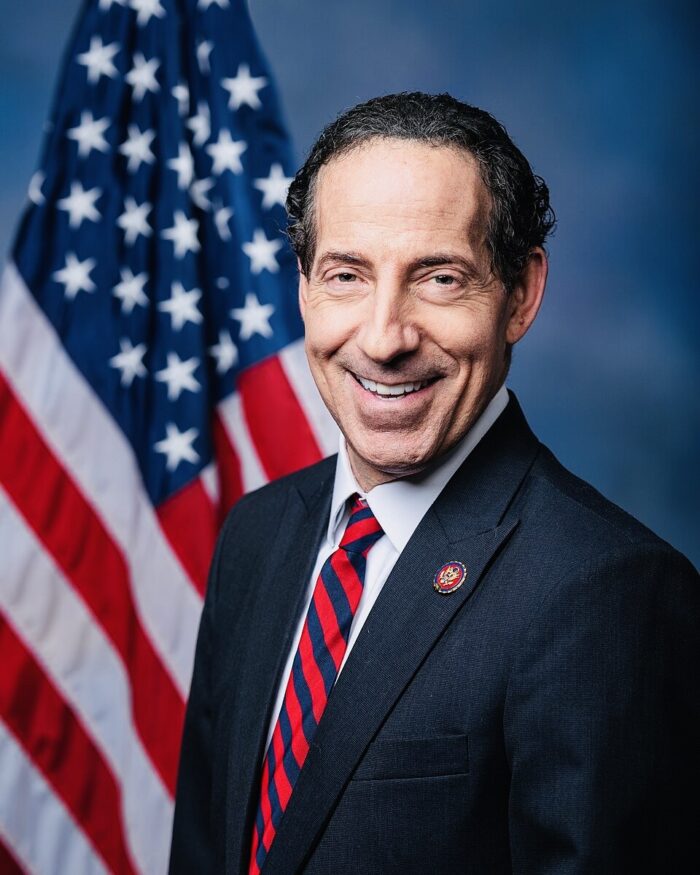
Rep. Jamie Raskin, a Jewish Democrat from Maryland, joined a growing list of Jewish Democrats who supported a bill to withhold the transfer of offensive weapons to Israel. Three of his Jewish colleagues — Rep. Sara Jacobs of California, Rep. Becca Balint of Vermont and Rep. Jan Schakowsky of Illinois — concurred with his view.
The ascendancy of Zohran Mamdani — a harsh critic of Israel who is likely to become New York City’s first Muslim mayor — speaks volumes about the current direction of the Democratic Party.
As the Institute for National Security Studies observed in a recent paper, “Mamdani represents an emerging faction within the party that is younger, more politically active, more critical of Israel, and increasingly aligned with the Palestinian cause. Candidates like Mamdani are gaining ground amid the dissatisfaction among younger voters with the Democratic Party’s existing leadership.
“As progressive candidates run for political office, many are increasingly unwilling to accept the Democratic Party’s traditional stance on Israel. Just a few years ago, positions like those voiced by Mamdani would have made winning a race like this nearly impossible. This turn of events poses a major challenge for Israel.”
To say the least.
The bottom line is that Israel can no longer assume it has bipartisan support in Congress.