
Gentrification refreshes and livens up a neighborhood, but often displaces residents who cannot afford far higher rents. Jaffa, a southern extension of Tel Aviv, finds itself exactly in this position today, judging by Jaffa: A Guide To Gentrification, a film by Osnat Trabelsi, Karen Shayou and Lavi Vanounou.
It is now available on the ChaiFlicks streaming platform.
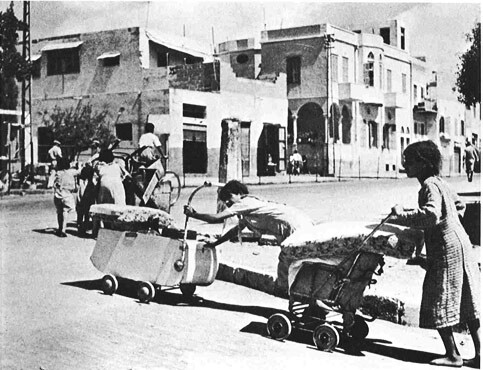
Once known as the “Bride of the Sea,” Jaffa was inhabited by 70,000 Palestinians prior to the 1948 Arab-Israeli war. Under the 1947 Palestine partition plan, which was never implemented due to Arab intransigence, Jaffa would have been in a Palestinian state.
When the war ended, Jaffa had been conquered by Jewish forces and the vast majority of Palestinians had fled. Some left voluntarily. Still others were forced out, leaving only 3,500 Arabs behind.
Empty Arab residential buildings, some which were exquisite in terms of their architectural style, were occupied by new Jewish immigrants, mainly from Bulgaria. My late mother-in-law and father-in-law were among the Bulgarian Jews who settled down in Jaffa. They lived in a compact apartment near Jaffa’s main thoroughfare, Jerusalem Boulevard, almost until their deaths.
When I met them in 1971, Jaffa was a working-class neighborhood rough around the edges. During the 1960s, when it was still largely a slum and plagued by a high crime rate and prostitution, old Jaffa was rejuvenated into an attractive and atmospheric artists’ quarter that attracted Israeli and foreign tourists alike.
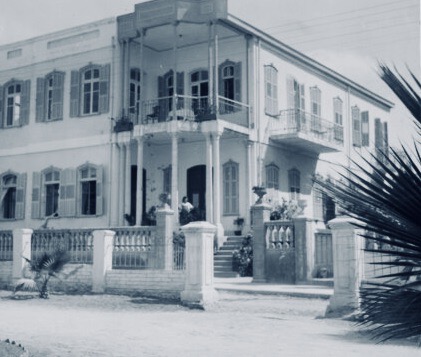
During that period, the Arab-populated district of Jaffa, some of whose buildings offered magnificent views of the Mediterranean Sea, remained virtually untouched.
Gentrification began, albeit slowly and gradually, in the mid-1970s. I recall walking past a new condominium building near the sea and thinking what a great location the developer had chosen.
According to the film under review, Jaffa was discovered by real estate developers in the mid-1980s. Around this time, municipal authorities unveiled a master plan to preserve Jaffa’s finest architectural qualities, including its iconic Ottoman clock tower.
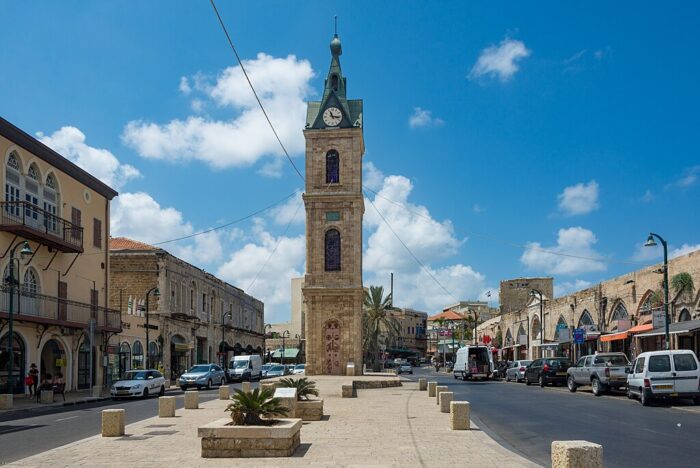
Since then, and especially in the past decade, Jaffa has blossomed into a popular tourist destination and a hub of new construction. Ilan Pivko, a Jewish architect from Tel Aviv who bought three apartment units and converted them into high-priced seaside flats that only the affluent can afford, seems to typify this trend.
The Flea Market, which was once known for its cheap second-hand goods, has flourished and morphed into a mecca of high-end shops, cafes and restaurants.
Gentrification has proceeded rapidly, drawing in Jewish millionaires and displacing Arabs and Jews from modest homes owned, in part, by the Israel Land Authority, a government body.
Their evictions have caused resentment and anger.
Soaring and unaffordable rents have been another byproduct of gentrification. It is no longer possible to rent an apartment, however small, at a reasonable price. Adham Abu Rahima, a 26-year-old Arab born and raised in Jaffa, is one the losers. When he looks for an apartment for his mother, a victim of eviction, he learns that the rents are beyond his means, and that tenant protection laws favor landlords.
Arabs evicted from their homes have no alternative but to look for new quarters outside Jaffa. That is the case because the nearest alternative, Bat Yam, has no mosques or churches. As a result, evictees must consider moving to Lod, a mixed Arab-Jewish town near the international airport where housing is considerably cheaper.
Jaffa: A Guide To Gentrification tells this story objectively, leaving a viewer with the impression that the struggle for fair housing continues. One suspects that Jaffa’s ongoing transformation into a rich man’s neighborhood will be at the expense of its poorest residents.