
President Emmanuel Macron of France has initiated a diplomatic process that brings Palestinian statehood one step closer to fruition yet still very far from realization.
Yesterday, at a followup United Nations conference on a two-state solution, Macron spelled out his objective. “The time has come to do justice for the Palestinian people and thus to recognize the State of Palestine in Gaza, the West Bank and Jerusalem,” he declared.

Israel’s ambassador to the United Nations, Danny Danon, denounced Macron’s statement, saying it would be trigger an Israeli response.
Earlier this month, in New York City, France and Saudi Arabia laid out a blueprint for a Palestinian state. Known as the New York Declaration, the seven-page document outlined “tangible, time-bound, and irreversible steps” toward a viable two-state solution.
It also called for an immediate ceasefire in the Israel-Hamas war in the Gaza Strip, the release of all Israel hostages held there, the disarmament of Hamas and its exclusion from governance, and the normalization of relations between Israel and Arab countries.
One hundred and forty two countries voted for the resolution. Israel and the United States, along with Argentina, Hungary, Micronesia, Nauru, Palau, Papua New Guinea, Paraguay and Tonga, opposed it. Twelve nations abstained.
Danon lambasted it as a “one-sided declaration (that) will not be remembered as a step toward peace,” but rather as “another hollow gesture that weakens the (United Nations’) credibility” and strengthens Hamas.
Two months on, judging by yesterday’s United Nations summit, the New York Declaration has gained traction. Britain, France, Canada, Australia, Portugal and a host of other Western countries have formally recognized a Palestinian state.
On September 21, Britain became the first Group of 7 country to officially recognize the still non-existent Palestinian state. British Prime Minister Keir Starmer said he had taken this step “to revive the hope of peace for the Palestinians and Israelis, and a two-state solution.” He denied that it constitutes “a reward for Hamas,” as Israel claims. Looking ahead, Starmer said that Hamas can have “no future, no role in government, no role in security.”
French Foreign Minister Jean-Noel Barrot told reporters last week that the New York Declaration is not “a vague promise for the distant future, but rather a roadmap that begins with the top priorities: a ceasefire, the release of hostages, and the unimpeded entry of humanitarian aid into Gaza.”
On the basis of facts on the ground, Israel has been fighting a decades-long losing battle to stem the tide of Palestinian statehood.
Algeria, a member of the Arab League, was the first country to recognize Palestinian statehood. This occurred on November 15, 1988, minutes after Yasser Arafat, the then chairman of the Palestine Liberation Organization, unilaterally proclaimed an independent Palestinian state.

Dozens of countries, including Russia, China and India, followed suit in the next few weeks and months. Still more countries recognized Palestinian statehood in 2010 and 2011.
In 2012, the UN General Assembly upgraded the observer status of the Palestinian delegation to “non-member state” from “entity.”
Spain, Norway and Ireland recognized a Palestinian state following the outbreak of the Gaza war in October 2023. Israel’s current military offensive in Gaza City has driven an additional 13 countries to do so.
Approximately three-quarters of the 193 member states of the United Nations have now recognized the state of Palestine, isolating Israel on this issue.
Prime Minister Benjamin Netanyahu, who paid lip service to a two-state solution during Barack Obama’s presidency, condemned the latest moves to recognize Palestinian statehood.
“I have a clear message to those leaders who recognize a Palestinian state after the horrific massacre on October 7,” he said in a reference to Hamas’ attack inside Israel in 2023. “You are handing a huge reward to terror. It will not happen. A Palestinian state will not be established west of the Jordan.”
Netanyahu said he would release his official reaction “to force a terrorist state upon us in the heart of our land” following his trip to the United States this week. He is scheduled to meet U.S. President Donald Trump at the White House on September 29, after which he will fly back to Israel and enunciate his policy.
Netanyahu has boasted that, under his leadership, Israel “doubled Jewish settlement in Judea and Samaria — and we will continue on this course.”
In July, in a non-binding motion, the Knesset voted by a margin of 71-13 to apply sovereignty in the West Bank. Netanyahu is reportedly considering annexing parts of the West Bank or building more settlements there in reaction to Western recognition of Palestinian statehood.
The Trump administration opposes recognition of Palestinian statehood at this juncture.
Trump, in a speech at the United Nations on September 23, said that the current wave of recognitions of Palestinian statehood encourages conflict, rewards Hamas and represents a submission to its “ransom demands” regarding the hostages.
A few days ago, a State Department spokesperson said, “Our focus remains on serious diplomacy, not performative gestures. Our priorities are clear: the release of the hostages, the security of Israel, and peace and prosperity for the entire region that is only possible free from Hamas.”
Mainstream Israeli politicians are united when it comes to this issue. The leader of Israel’s opposition, Yair Lapid, called recognition “a harmful step and a reward for terror.” Yair Golan, the chairman of the left-wing Democrats Party, said it was “destructive” and “extremely damaging” to Israel.

Prior to the massacres perpetrated by Hamas on October 7, Lapid and Golan were in favor of a two-state solution. Like the majority of Israelis, they have since hardened their positions on Palestinian independence.
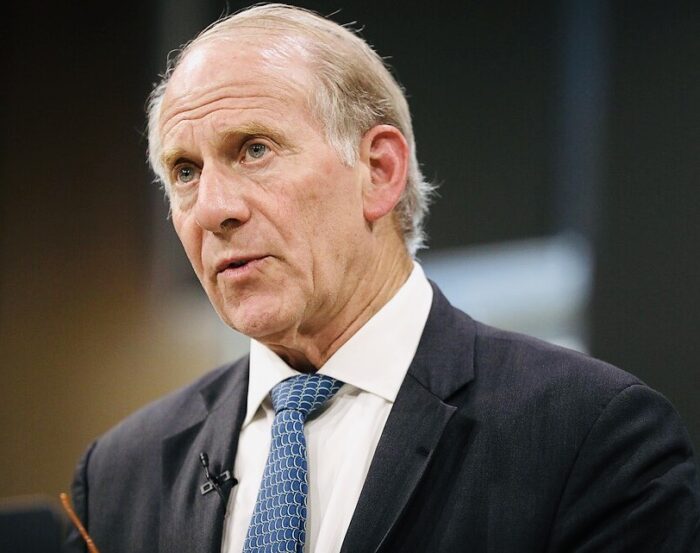
In theory, a demilitarized Palestinian state at peace with Israel would be in Israel’s long-term interests, writes Richard Haass in a cogent essay in Foreign Affairs.
“A Palestinian state, rather than providing a base for terror, would be more likely to reduce it in ways that the Israel Defence Forces cannot,” says Haass, the president emeritus of the Council on Foreign Relations and a former U.S. diplomat. “That is because terrorists can now act with near impunity, as they are not responsible for any territory or economy and have no citizens to answer to. Absent a Palestinian state, Israel likely faces a forever war. By contrast, the government of a Palestinian state would face the military and economic consequences of any attacks it authorized on Israel.
“Resolving the Palestinian issue would also create a context in which the Abraham Accords, and normalization between Arab countries and Israel more generally, could continue and broaden. Arab states could comfortably sell normalized relations with Israel to their citizens if they could point to a path for Palestinian statehood.
“Similarly, a Palestinian state would enhance the stability of Israel’s neighbors, above all Jordan, because satisfying the call for such an entity would relieve pressure on the Jordanian monarchy, which has long been willing to live in peace with Israel but would face domestic instability were an influx of Palestinians to enter the country and upset its demographic and political balance.
“Reducing the salience of the Palestinian issue would also allow Israel’s national security establishment to focus on other pressing threats, above all those posed by Iran.
“A separate Palestinian state would also be good for Israel’s identity and internal cohesion. There are some two million Arab citizens of Israel, some of whom could be radicalized if Israel continues to frustrate Palestinian political ambitions and treat Palestinians so harshly. Even more fundamentally, a Palestinian state would free Israel from having to choose between being a democracy and being a Jewish state: granting five million Palestinians equal rights would threaten the latter, while denying them such rights would threaten the former.
“Being seen as open to a Palestinian state would help Israel avoid pariah status around the world, a reality that is gaining momentum as a reaction to Israel’s military operations in Gaza. It would reduce the threat of economic sanctions from Europe and stem the growing alienation of many Americans, including younger American Jews — a trend that over time could even jeopardize U.S. military support for Israel. Israeli openness on this matter might also reduce antisemitism globally.
“Last but most pressing, support in principle for a Palestinian state would offer Israel a pathway out of Gaza and to getting the remaining hostages back.”
These arguments make sense and carry weight, but ultimately, Palestinian statehood will depend on Israel’s concurrence and cooperation.
Israel is adamantly opposed to a two-state solution. As Canadian Prime Minister Mark Carney said recently, “The current Israeli government is working methodically to prevent the prospect of a Palestinian state from ever being established.”
Netanyahu and his coalition partners are extremely unlikely to change course, particularly because Israel enjoys the support of the United States.
At the moment, given its stance on Palestinian statehood, Israel finds itself on the wrong side of history. But nothing is carved in stone. Israel may yet adopt a more conciliatory and realistic outlook once the Netanyahu era ends and many more Israelis reach the conclusion that living by the sword is unpleasant, untenable and unsustainable.