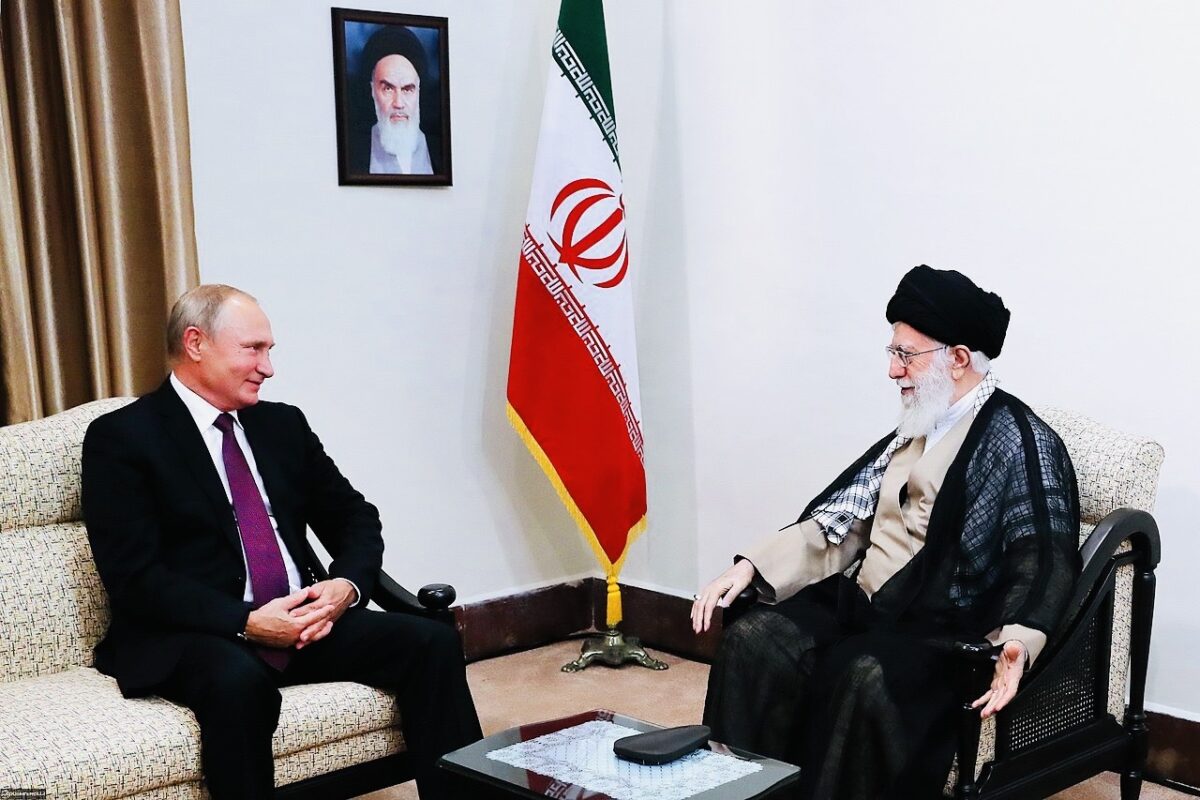
As Russia watches the current war in Iran play out, it is caught between its support of the Iranian regime and its desire to preserve bilateral relations with the United States and Israel, which attacked Iran a little more than a month ago.
Hewing to a calibrated policy of strategic equilibrium, Russian President Vladimir Putin has condemned the United States’ and Israel’s military campaign in Iran, a close ally, but has not taken drastic steps that could antagonize them.
Dmitry Peskov, Putin spokesman, articulated Russia’s position when he said, “This is not our war.” He thereby underscored Moscow’s view that diplomatic solidarity with Iran does not mean that Russia seeks direct involvement in the war.
Putin’s motives are clear.
With a wary eye on the Ukrainian war, which Russia ignited after invading Ukraine in 2022, Putin has been careful not to alienate U.S. President Donald Trump, who is cool towards the Ukrainian cause and desires good relations with Russia.
To this end, Trump has established fairly cordial ties with Putin, who wants to preserve open channels of communication with the Trump administration, which has been trying in vain to end the Ukrainian war through diplomatic means.
At the same time, Putin hopes to keep Russian-Israeli relations on an even keel. Putin recognizes Israel as a power in the Middle East and respects its military strength and boldness. Furthermore, he is well aware of Russia’s cultural and linguistic connections with Israel by virtue of the fact that more than one million former Soviet citizens live in the Jewish state.
On a personal level, he and Israeli Prime Minister Benjamin Netanyahu seem to be on friendly terms, their bond having been formed prior to the collapse of Syrian President Bashar al-Assad’s Baathist regime in December 2024.
Prior to Assad’s fall, when Syria was a Russian client state and Iran’s political influence in Syria reached its zenith, Israel and Russia maintained normal relations despite an enormous mutual problem.
With Iran attempting to build a new front against Israel on the Syrian side of the Golan Heights, the Israeli Air Force regularly bombed Iranian bases and Syrian anti-aircraft batteries in Syria. Russia did not interfere in Israel’s air strikes, thanks to a military coordination agreement forged by Netanyahu and Putin in 2015.
During this period, Russia expanded its bilateral relations with Iran across the board. Today, as the war in Iran rages, Russia continues to regard Iran as an important partner, and has wasted no time in condemning the United States’ and Israel’s joint attacks as a violation of Iran’s sovereignty.
Moscow sharpened its criticism after the Iranian regime confirmed that its supreme leader, Ayatollah Ali Khamenei, had been killed by U.S. and Israeli strikes on the first day of the war. Expressing his condolences, Putin denounced his assassination as a “cynical violation of the norms of human morality and international law.”
With Mojtaba Khamenei’s selection as Iran’s new supreme leader, Putin sent a congratulatory letter to him in which he voiced confidence that he would “honorably continue in his father’s path.”
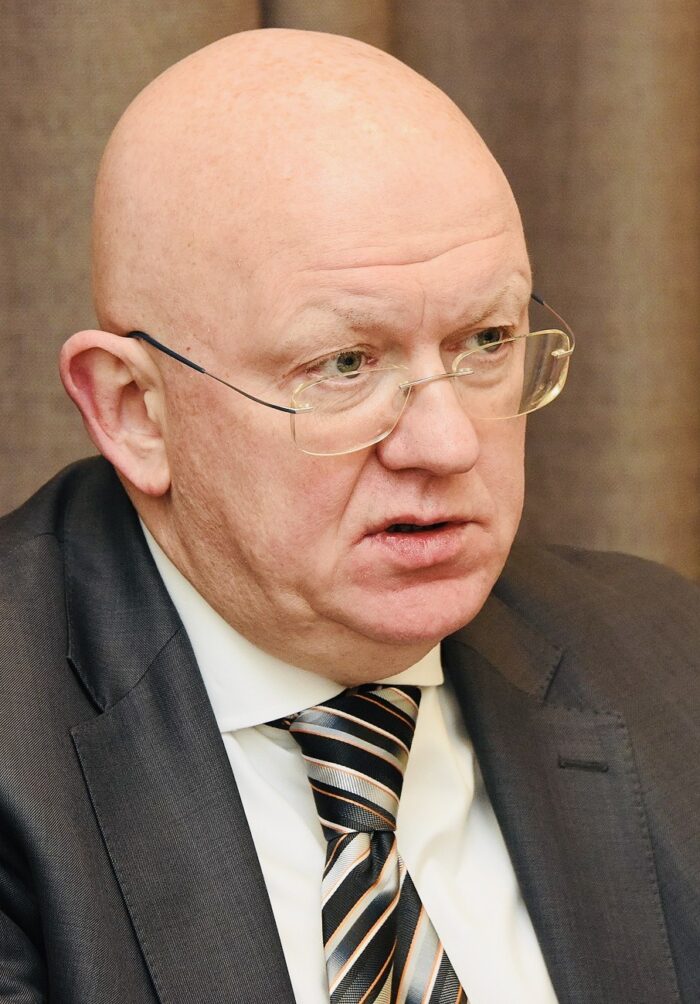
At the United Nations, Russian ambassador Vasily Nebenzya staunchly defended Iran. He said that Iran had been willing to engage in negotiations to avert a war, while the United States had stabbed Iran “in the back” by having launched an attack.
With the outbreak of hostilities, Putin tried to project an image as a statesman.
He conducted telephone conversations with Iranian President Masoud Pezeshkian and the leaders of the Arab Gulf states, which were struck by Iranian ballistic missiles and drones. As well, Putin offered his services to the United States as a mediator. Trump dismissed his overture, saying that Moscow “could be more helpful by getting the Ukraine-Russia war over with.”
At Russia’s request, the Board of Governors of the International Atomic Energy Agency was convened to address the risks arising from U.S. and Israeli strikes on Iran’s nuclear facilities.
Nine days later, Russia introduced a United Nations Security Council resolution calling on both sides to cease military activity immediately and refrain from further escalation. The proposal was not adopted due to U.S. objections.
From Russia’s perspective, the war presents short-term and long-term opportunities.
First, it diverts international attention away from the war in Ukraine, which has tarnished Russia as an imperialist superpower. As the Council on Foreign Relations points out, the United States is “expending scarce munitions” that could otherwise be sold to Ukraine.”
Second, rising energy prices benefit the Russian economy. Russia’s oil revenues are said to be increasing by about $159 million per day. And Trump’s desire to minimize sharp increases in the price of petroleum has led him to temporarily drop U.S. sanctions on the sale of Russian oil.
Third, the reluctance of U.S. allies to participate in the war or in the full reopening of the Strait of Hormuz to international shipping has so angered Trump that he has threatened to leave the NATO alliance, a prospect that Russia would gleefully welcome.
On April 1, Trump said he is seriously considering that possibility. “Oh yes, I would say (it’s) beyond reconsideration,” he told the British newspaper The Telegraph. “I was never swayed by NATO. I always knew they were a paper tiger, and Putin knows that too, by the way.”
The war, on the other hand, poses “significant risks” for Russia, says the Institute for National Security Studies at Tel Aviv University.
Russia fears that the Bushehr nuclear power plant, the flagship project of Russian-Iranian nuclear cooperation, may be damaged in the crossfire and thereby “weaken one of Russia’s key centers of influence in the energy sphere in the Middle East.”
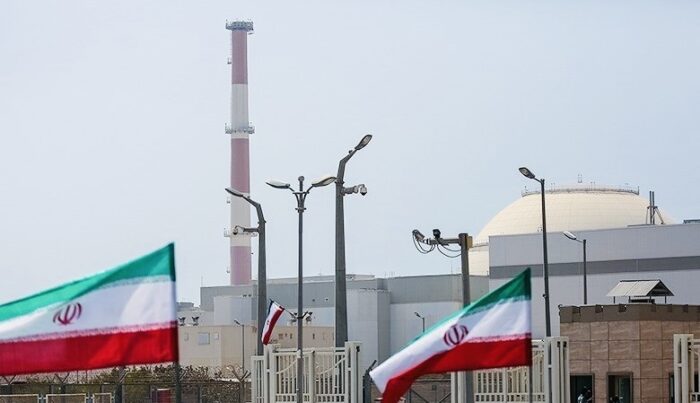
During Israel’s offensive in Iran last June, Netanyahu promised Putin that the Bushehr facility would not be targeted. By all accounts, Netanyahu has not delivered a similar assurance during this war.
In any event, neither Israel nor the United States have targeted the site.
Russia is also concerned that Iran’s defeat could be a geopolitical setback. As the Institute for National Security Studies puts it, “One of the most troubling scenarios is the potential destabilization of the Iranian regime or even its collapse. For Moscow, Iran is not merely a regional partner but part of a broader group of states opposed to Western hegemony, with which Russia seeks to shape an alternative international order. Consequently, the weakening or fall of the Islamic Republic could deal a severe blow to the anti-Western camp and be perceived as a strategic achievement for the United States and its allies.”
Fyodor Lukyanov, one of Russia’s leading foreign policy experts and an analyst close to Russian ruling circles, contends that the war in Iran represents an attempt by the United States and Israel to undermine the international system, encourage greater reliance on military force, and dismantle the regional order in the Middle East. In his view, this process began with the first Gulf War in 1991 and the U.S. invasion of Iraq in 2003.
Russia, in the meantime, is doing the bare minimum to assist Iran.
According to Ukrainian President Volodymyr Zelensky, Russia has provided Iran with satellite imagery of U.S. bases in the region. Zelensky told NBC News that Russian satellites captured images of Prince Sultan Airbase in Saudi Arabia. This information apparently helped Iran bombard the base on March 27. The bombardment injured more than 20 American soldiers and damaged one reconnaissance airplane.
The Wall Street Journal reports that Russia has expanded its military cooperation with Iran by providing parts to improve the navigation and targeting capabilities of Shahed drones, which are manufactured by Iranian and Russian companies.
U.S. Secretary of State Marco Rubio has downplayed Russia’s cooperation with Iran. “There is nothing Russia is doing for Iran that is in any way impeding or affecting our operation or the effectiveness of it,” he said.
Israel regards the Russian shipment of drones to Iran far more seriously. On March 18, Israeli aircraft bombed the Iranian Caspian Sea port of Bandar Anzali, a major hub of deliveries of Russian weapons and ammunition, the Wall Street Journal claims. Israel struck vessels, a command center, and a shipyard.
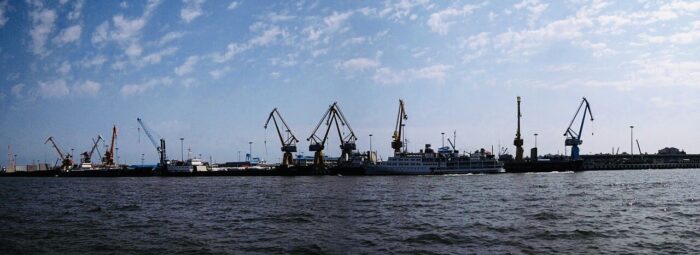
Israel landed a crushing blow in this raid, but one can assume that Russia will try to find alternative routes to help its Iranian ally without alienating the United States or Israel.