
Barry Avrich’s absorbing and uplifting documentary, The Road Between Us: The Ultimate Rescue, focuses on a shining episode in a chapter of darkness.
At the center of it is Noam Tibon, a retired Israeli army general who heroically braved immense danger to save his family on October 7, 2023, a day of infamy in Israel’s history.
Written and directed by Avrich, it was presented at the Toronto International Film Festival (TIFF) earlier this month in its world premiere. On the eve of its screening, TIFF pulled it from the lineup, citing security concerns and rights issues. But after an outcry, it was reinstated. Ironically, it won the People’s Choice Award for best documentary.

Ninety five minutes in length, it will be released in theatres in Canada and the United States on October 3.
It revolves around Tibon and his wife Gali. They risked their lives to rescue their son Amir, daughter-in-law Miri and infant granddaughters Galia and Carmel after Hamas terrorists from the Gaza Strip invaded Nahal Oz, a kibbutz only 850 meters from the border.
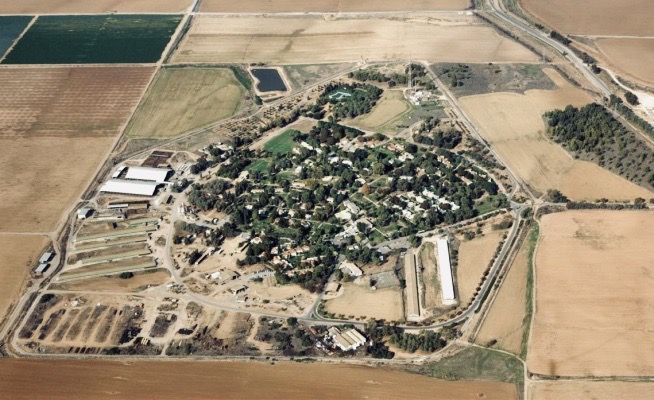
By all accounts, 180 Hamas gunmen staged the assault, murdering 15 civilians and taking eight hostages. One of the fatalities, Ilan Fiorentino, was in charge of security.
At an adjacent army base, 53 soldiers, males and females, were gunned down during the attack.
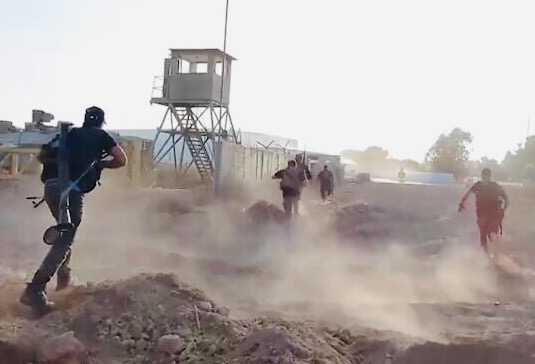
Thirty five terrorists were killed on the grounds of the kibbutz and another ten outside its perimeter.
Apart from storming Nahal Oz, the maurauders invaded a string of kibbutzim, towns, army bases, plus a music festival, in southern Israel in a coordinated offensive that caught Israel off guard. During their rampage, they murdered roughly 1,200 people and kidnapped 251 Israelis and foreigners, setting off Israel’s longest war.
Amir Tibon, a journalist on the staff of the daily newspaper Haaretz, is the author of The Gates of Gaza, an account of October 7 that was published last year. He and his wife moved to Nahal Oz, an oasis of sylvan beauty, shortly after the second cross-border war in Gaza in 2014. They were assured that it was perfectly safe, despite its proximity to Gaza, which was ruled by Hamas.

Early on the morning of October 7, the calm was abruptly broken when Miri and Amir heard the whistles of mortars. Rushing into a safe room, they could hear the sound of automatic gunfire and the voices of men shouting in Arabic.
They soon realized that something terribly was amiss, prompting Amir to text his father in Tel Aviv. “A gut feeling told me to go,” says Noam, who spent 35 years in the Israeli army in various command positions.
“He was always there to help his family,” says Gali, who referred to her husband as “911.” She insisted on accompanying him on the lengthy drive in a Jeep to Nahal Oz. “We worked as a team.”
They set off at 7:30 in the morning, describing their trip southward as a “mission.”
The film, a model of pacing, faithfully records their frantic journey. It is composed of chilling body cam footage recorded by the terrorists themselves and of interviews with the Tibons and the kibbutzniks who were supposed to protect Nahal Oz from intruders. Its ominous musical score adds an extra frisson of uncertainty to the menacing mood.
From the outset, Noam instinctively understood that the road he had embarked on was fraught with peril. “We were going into the unknown,” he says.

En route to the kibbutz, Noam stopped to assist a young couple who had escaped from the carnage of the Nova music festival, where more than 300 people were slaughtered in cold blood. “There was no way we would have abandoned them,” says Gali.
When police officers forbade them to proceed any further, they drove through fields to reach another road leading to the kibbutz. It was filled with corpses next to or inside their cars, a sight that repelled even an ex-general who had seen his share of dead and broken bodies.
By now, Noam, armed with only a pistol, realized that Hamas’ onslaught was far bigger than he had imagined, and that he was basically alone in his quest to help his son and family.
As for Amir, he sank into despair, believing at one point that the situation was hopeless.
At a junction closer to the kibbutz, Noam ran into soldiers, leaving him with the impression that the Israeli army chain of command had finally roared into action.
Further down the road, he retrieved a rifle from the corpse of an Israeli soldier and used it to kill a terrorist and wound another one.
He arrived at Nahal Oz at approximately 1 p.m., more than six hours after it had been attacked. By then, Israeli troops were fighting remnants of the Hamas attack force. “It was a battlefield,” says Noam.
During the late afternoon, he reached his son’s cottage. The bodies of five terrorists littered the lawn near his front door.
Nearly two years on, Noam expresses confidence that the kibbutz will recover from its ordeal, but adds that the hostages still in Hamas’ captivity must be brought back home. Gali, speaking in a mixture of sorrow and anger, accuses the Israeli government of having failed to protect its citizens.
October 7 was a catastrophe. But as The Road Between Us amply illustrates, October 7 was also a moment when courageous and fearless Israelis like Noam Tibon sprang into action to save the day.