
There have been no shortage of books about Jews in Canada in the past three decades. What comes to mind are the following: None Is Too Many, by Harold Troper and Irving Abella; The Jews in Canada, edited by Robert J. Brym, William Shaffir and Morton Weinfeld; Coat of Many Colours: Two Centuries of Jewish Life in Canada, by Irving Abella; No Better Home? Jews, Canada and the Sense of Belonging, by David S. Koffman and Ellen Scheinberg, and Canada’s Jews: A People’s Journey, by Gerald Tulchinsky.
The latest one, Faces in The Crowd: The Jews Of Canada (University of Toronto Press), is written by Franklin Bialystok, a historian who has taught at the University of Toronto and York University. His book ranks high up there and is a stellar contribution to Jewish Canadian historiography.

He makes clear in the first few pages that Jews were among the earliest European inhabitants of New France and British North America, which coalesced into Canada in 1867. Bialystok offers readers a sweeping and erudite overview of Jewish settlement before and after Canada’s emergence as a sovereign nation.
By his reckoning, the story of Canada’s Jews began in New France, the colony established by King Louis XIV in the late 17th century. Since Jews and Protestants were prohibited from settling in French colonies, there is no official record of Jewish settlers in New France. He speculates that conversos, Spanish and Portuguese Jews who had converted to Christianity, were possibly among the first newcomers.
Two thousand Jews lived under British colonial rule in the mid-18th century, the majority having emigrated from Britain and the German states. Among them were Aaron Hart and his brother-in-law, Samuel Judah, who were provisioners for the British army. “This tiny cohort, the first non-Christians in the colony, were indispensable to the British administration, active in trade, land development and governance,” he writes.
Hart, whom Bialystok claims was “the preeminent Jewish settler” in the early decades of British North America, was born in London, the scion of Bavarian Jews. He engaged in the fur, weapons and rum trades, and was reputed to be, at his death in 1800, the wealthiest person in the colony. One of his relatives, Aaron Hart David, was its first Jewish physician.
Apart from the Harts, the Hays and Joseph families were especially influential in the mid-19th century, when Jews constituted less than one percent of Canada’s population. By 1914, the number of Jews in Canada had swelled to 126,000.
Jewish immigrants arrived mostly as traders and pedlars. Once they gained a foothold, they became merchants and small manufacturers.
Jews lived all over the country, but were mainly concentrated in Montreal, Toronto, Winnipeg and Vancouver.
The 45,000 Jews of Montreal in the 1920s were Quebec’s largest non-Anglo minority. And until the 1970s, Montreal was the most populous Jewish city in Canada. Its most important Yiddish newspaper, The Canadian Eagle, was founded in 1906 and lasted until the 1960s.
Like their compatriots in Montreal, Jews in Toronto were heavily represented in the garment industry. Bialystok cites manufacturers such as Samuel Posluns and David Dunkelman.
The 17,000 Jews of Winnipeg constituted eight percent of Canada’s Jewish population in 1931. And in the province of British Columbia, smaller Jewish communities arose in Vancouver and Victoria.
Jews have enjoyed upward mobility in business.
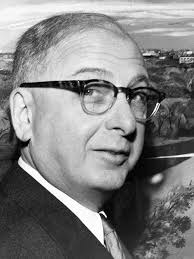
Samuel Bronfman founded the Seagrams liquor empire. Ray Wolfe was the chief executive officer of the Oshawa Group chain of grocery stores. Murray Koffler was the founder of Shoppers Drug Mart chain. John Daniels and Joseph Berman were major real estate developers.
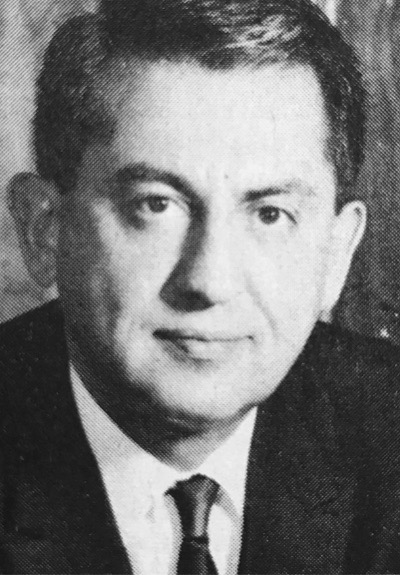
Louis Rasminsky was the first Jew to be governor of the Bank of Canada.
Jews went into politics. David Croll was Canada’s first provincial Jewish cabinet minister. Herb Gray was the first federal cabinet minister. David Lewis was one of the leaders of the New Democratic Party. Joseph Salsberg was the only member of the Communist Party ever to hold a provincial parliamentary seat. David Barrett was the first and still only Jew to be the premier of a province.
From A.M. Klein to Leonard Cohen, Jews have shone in the realm of literature.
Antisemitism has been a recurring force in Canada.
Goldwin Smith, a historian and a prominent intellectual until his death in 1910, was a purveyor of genteel antisemitism. Lionel Groulx, a French Canadian priest, regarded Jews as invidious foreigners.
Adrien Arcand, a journalist, referred to Jews as cockroaches. More recently, Alberta history teacher James Keegstra was charged with promoting a conspiracy theory that Jews were intent on destroying Christianity.
In Bialystok’s estimation, antisemitism reached its peak in the interwar period, when very few Jewish immigrants were allowed into Canada. During this era, the Christie Pits riot erupted in Toronto, resorts barred Jews, universities such as McGill kept a tight lid on Jewish enrollment, and the appointment of Samuel Rabinovitch as an intern in Montreal’s Notre Dame Hospital led to an unprecedented strike by non-Jewish interns.
These incidents did not deter Jewish immigration to Canada. Today, Jews represent 1.2 percent of the Canadian population. With about 400,000 Jews, Canada has the fourth largest Jewish community after Israel, the United States and France. Nearly 50 percent live in Toronto, 24 percent in Montreal, and 16 percent in Vancouver and Winnipeg.
Upwards of 35,000 Holocaust survivors and their children found a refuge in Canada after World War II. My parents and I were among this group. We arrived in Canada in 1948. According to the 1961 census, this cohort comprised up to 15 percent of Canada’s Jewish population. Today, this generation is virtually gone.
Bialystok has produced a book on a par with the best ones on the subject. His research skills are impeccable. His writing style is clear and strong. His assessments are measured.
Faces in The Crowd: The Jews Of Canada stands out as an exceedingly fine work of scholarship.