
Nearly six months after a U.S.-brokered ceasefire ended Israel’s 12-day war with Iran, both sides are on the cusp of renewing the fighting. Judging by the bellicose statements emanating from Jerusalem and Tehran since June, a second Israel-Iran war could well break out.
Shortly after declaring victory in Operation Rising Lion, Israeli Prime Minister Benjamin Netanyahu threatened to resume the war if Iran, its preeminent foe, continued to enrich uranium to levels up to and exceeding 60 percent. “If anyone in Iran tries to rebuild (the nuclear program), we will act with the same determination, with the same intensity, to foil any attempt,” he said last July.
Within days of the truce, Israeli Defence Minister Israel Katz warned that Israel would pursue a “policy of enforcement” aimed at preventing Iran from advancing its nuclear program, rebuilding its air power and developing “threatening long-range missiles.”
Senior Iranian officials quoted in the Iranian and Western media of late contend that the current ceasefire will collapse and lead to a resumption of war.
This past July, Iranian Foreign Minister Abbas Araghchi issued a warning that Iran would target Israel in a “more decisive manner” if the ceasefire broke down.
A month later, Yahya Rahim Safavi, a senior military adviser to Iranian supreme leader Ali Khamenei, said that another war with Israel could start at any time. “We are not in a ceasefire, we are in a stage of war,” he said.
During the same month, Defence Minister Aziz Nassirzadeh said that Iran had developed ballistic missiles with greater capabilities than those deployed during the war. “The missiles used in the war were manufactured a few years ago,” he said. “Today, we possess missiles with far greater capabilities than previous missiles. If the Zionist enemy embarks on an adventure again, we will undoubtedly use them.”
Ali Vaez, the Iran project director at the International Crisis Group and a scholar of Iranian history, has said that Iran is likely to respond to any Israeli attack far more vigorously.
Iranian officials told him that arms factories are working 24 hours a day to produce a much greater quantity of ballistic missiles. Should there be another war, Iran hopes to fire 2,000 missiles at once to overwhelm Israeli defences, said Vaez.
There is no evidence that a new war is imminent, Vaez believes. However, “Israel feels the job is unfinished and sees no reason not to resume the conflict,” he noted. Consequently, Iran is “doubling down preparedness for the next round.”
In its first war with Iran, Israel struck first, having been convinced that Iran planned to enrich its uranium stocks to dangerous levels. The United States joined the war several days later by bombing three nuclear sites, including the heavily fortified Fordow facility.
Israel’s success in striking a grievous blow to Iran’s nuclear infrastructure was due, in part, to its destruction of Iran’s air defence batteries in brief clashes in April and October 2024.

By objective standards, Israel outclassed Iran in the war and exposed it as something of a paper tiger. Israeli aircraft bombed uranium enrichment sites, ballistic missile launchers, air force and army bases, and the state broadcaster with impunity.
By all accounts, Israel hit two enrichment centers and destroyed about half of Iran’s arsenal of 3,000 missiles and 80 percent of its 500 missile launchers.
As well, Israel struck the homes of top military commanders and nuclear scientists, killing more than 40 of them. Altogether, roughly 1,000 Iranians died during the war.

The director of the Mossad, David Barnea, hailed Israel’s “historic” operation. In a reference to Iran’s nuclear program, he said, “The Iranian threat, which has endangered our security for decades, has been significantly neutralized. Israel today feels like a different country, a safer country that is prepared for the future.”
Be that as it may, Iran retaliated fiercely. Iran launched over 500 ballistic missiles and around 1,100 drones, killing 31 Israelis and wounding over 3,000, according to health officials and hospitals.
There were a total of 36 missile impacts and one drone strike in populated areas, causing damage to 2,305 homes in 240 buildings and to two universities and a hospital. These retaliatory strikes displaced over 13,000 Israelis.
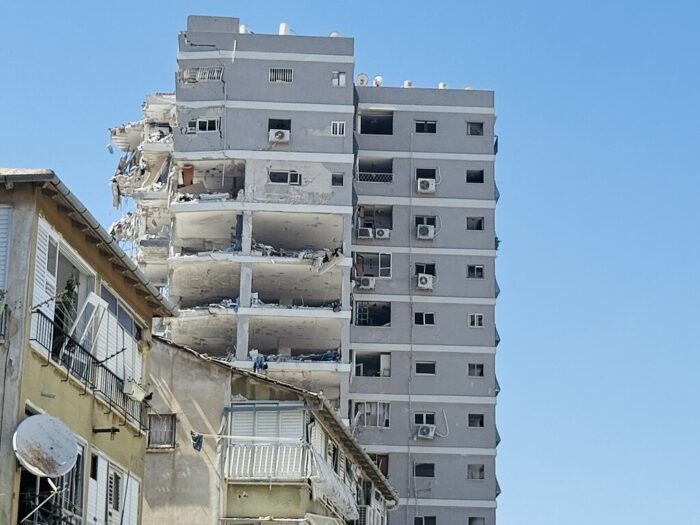
Almost six months on, Iran has begun rebuilding the missile-production sites bombed by Israel.
Brigadier General Ali Mohammad Naeini, a spokesman for Iran’s Revolutionary Guards Corps, said on November 16 that its missile program both deters and defeats Iranian adversaries
Iran, though, is still short of sodium perchlorate, a chemical precursor required to produce solid missile propellant. Iran also needs large mixers to make solid fuel for the missiles. The Iranian government has bought both of these products from China, which buys most of Iran’s oil.
Iran, too, is taking steps to rebuild its air defence system, hoping to purchase new systems from Russia or China.
In addition, Iran hopes to buy Su-35 fighter jets from Russia to address weaknesses that Israel exploited during the war. The Israeli Air Force achieved superiority in Iran within the first few days, a feat that enabled it to degrade Iran’s nuclear and ballistic missile programs.
As a result of Israeli and U.S. air strikes, Iran no longer has a clear path to produce weapons-grade uranium (uranium enriched up to 90 percent), The Institute for Science and International Security reports. In its estimation, all of Iran’s 20,000 centrifuges at Fordow and Natanz were destroyed or rendered inoperable.
The French daily Le Monde reported on September 13 that Iran lacks the equipment to begin rebuilding its nuclear weapons program in the short term, though Iran could rebuild its nuclear program over a longer period.
Israeli intelligence believes that Iran has maintained all its technical expertise despite Israel’s assassinations of more than a dozen of its scientists.
That being said, Iran possesses 440.9 kilograms of uranium enriched up to 60 percent, the International Atomic Energy Agency disclosed earlier this year.
On November 7, Iranian President Masoud Pezeshkian said that Iran seeks peace, but will not be coerced into abandoning its nuclear and missile programs.
Several days ago, Araghchi said that Iran is no longer enriching uranium due to the extensive damage caused by the Israeli and American air campaign.
“There is no undeclared nuclear enrichment in Iran,” he told the Associated Press. “All of our facilities are under the safeguards and monitoring of the International Atomic Energy Agency. There is no enrichment right now because our facilities — our enrichment facilities — have been attacked.”
Araghchi said that Iran has an “inalienable” and “undeniable” right to enrich uranium for peaceful purposes. “We have this right and we continue to exercise it. We hope that the international community, including the United States, recognizes our rights.”
Neither Israel nor the United States believe that Iran is sincere. Working on the assumption that Iran seeks membership in the exclusive nuclear club, they demand a total halt to uranium enrichment on Iranian soil.
Since Iran appears to have no intention of bowing to their demand, the expectation is that a new round of hostilities is bound to erupt in the not-too-distant future.