
The needle is stuck.
Despite concerted efforts by the United States, Egypt and Qatar to end the protracted war in the Gaza Strip and gain the release of the remaining Israeli hostages by means of a new ceasefire, the negotiations have failed and the status quo prevails.
Which is another way of saying that Israel and Hamas are still locked in combat after 22 months of warfare punctuated by two brief ceasefires, while the estimated 20 living hostages still languish in purgatory, much to the horror and anguish of their relatives and friends.
The impasse prevails because Israel’s and Hamas’ objectives are are completely at odds and therefore incompatible.
Prime Minister Benjamin Netanyahu seeks total victory — the destruction of Hamas’ military capabilities, Hamas’ removal from power, and the return of all the hostages. At the same time, he insists that Israel should retain full security control of Gaza, a euphemism for an extended Israeli military occupation.
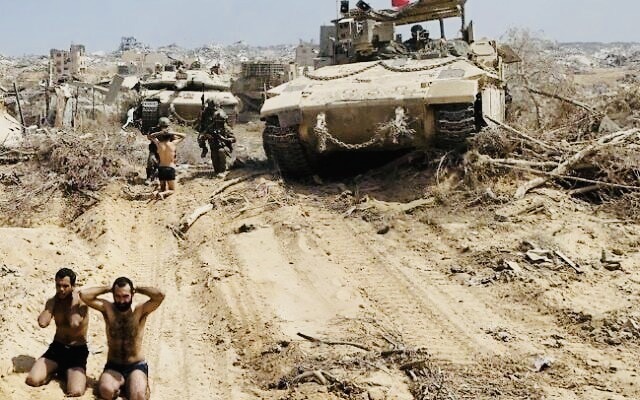
Hamas is just as adamant in terms of its demands. It insists on a full Israeli withdrawal from Gaza, a permanent end to the war so that it can regroup, survive and maintain its longstanding grip on Gaza, and the release of thousands of Palestinian prisoners in Israeli prisons.
Until now, Israel preferred partial rather than long-term truce deals. This pragmatic arrangement enabled Israel to free batches of hostages incrementally and continue the war. This worked to Netanyahu’s advantage because it mollified his extreme right-wing partners, the Religious Zionist Party, led by Finance Minister Bezalel Smotrich, and the Jewish Power Party, headed by National Security Minister Itamar Ben Gvir. They have threatened to leave Netanyahu’s coalition if the war ends prematurely and Hamas is left standing.
The collapse of his government would have real consequences. He would have to call new elections, which he might well lose. And given the criminal charges of corruption, fraud and breach of trust that he has faced since 2020, he could could well wind up in prison, a fate that that would irretrievably tarnish his legacy.
In light of all these factors, Israel and its chief ally, the United States, may be ready to adopt a radically new approach to negotiations with Hamas, the Israeli media reports.
It appears that Israel may be prepared to shift tactics — jettisoning its preference for incremental deals in favor of a comprehensive accord that would include the freeing of all the hostages and Palestinian prisoners in one fell swoop, the disarmament of Hamas, Gaza’s demilitarization, and the increased flow of humanitarian aid into Gaza.
This plan, if true, is unlikely to be accepted by Hamas. First, it mentions no full stop of the war. Second, it glosses over the notion of an Israeli pullout from Gaza.
Since these omissions will likely be regarded as deal breakers by Hamas, the plan most probably will be still-born and dead on arrival.
Hamas, in a forceful statement on August 2, said it will not disarm “as long as the occupation (in Gaza) exists” and until the “national rights” of the Palestinians are realized. In plain language, Hamas demands the establishment of “an independent Palestinian state with full sovereignty and Jerusalem as its capital.”
Hamas, which has denigrated a two-state solution in the West Bank and Gaza, does not spell out the site of a future Palestinian state. In any event, the current Israeli government is staunchly opposed to any form of Palestinian statehood.
Hamas’ glib promotion of Palestinian statehood is surely a ruse, since its unvarnished goal is and has always been an Islamic one-state solution. Hamas’ tactic is clear, designed to burnish its image among Palestinians in Gaza, the West Bank and abroad.
In its communique, Hamas also lashed out at Steve Witkoff, U.S. President Donald Trump special envoy to the Middle East. Last week, he and Mike Huckabee, the American ambassador to Israel, paid a five-hour visit to Gaza, where severe hunger prevails.
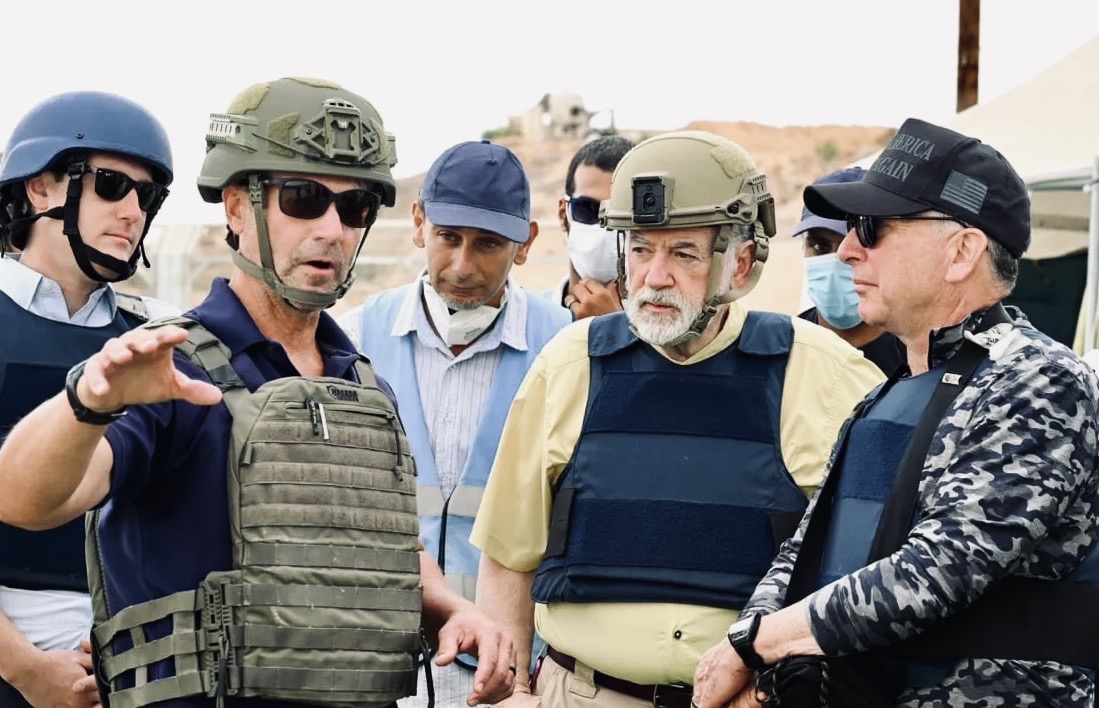
“The purpose of the visit was to give (Trump) a clear understanding of the humanitarian situation and help craft a plan to deliver food and medical aid to the people of Gaza,” Witkoff tweeted.
More specifically, Witkoff’s objective was to assess the effectiveness of the Gaza Humanitarian Foundation (GHF), the U.S. and Israeli organization that has distributed humanitarian aid to Palestinian civilians at four separate sites since May, sidelining United Nations groups such as UNRWA.
Hundreds of Palestinians have been killed at GHF sites, with critics having accused Israeli soldiers, U.S. contractors, Hamas provocateurs and armed Palestinian gangs of opening fire on them.
Their deaths have aroused a firestorm of rage at Israel, blackening its image.
In lambasting Witkoff’s trip, Hamas dismissed it as “nothing more than a pre-arranged theatrical performance” to provide Israel with “political cover for managing starvation and continuing the systematic killing of children and unarmed civilians from our people.” Hamas added that “the American administration is a full partner in the crime of starvation and genocide.”
To date, some 60,000 Palestinians, including about 20,000 Palestinian combatants, have been killed in the Israel-Hamas war.
Forty eight Israeli soldiers have been killed since Israel launched its latest offensive, Gideon’s Chariots, in May.
As the war rages and Hamas releases gruesome propaganda videos of hostages still in captivity, Israelis grow angrier and more frustrated with the government’s policy. Since last year, they have taken to the streets and roads to call for an end to the conflict and the release of all the hostages.

On August 3, after shocking videos of two emaciated captives — Evyatar David and Rom Braslavsky — were disseminated, dozens of demonstrators blocked traffic in Tel Aviv’s Ayalon Highway. The protesters, including relatives of freed hostages, chanted, “Why are they still in Gaza?” and “Bringing them back, everyone now.”

On the same day, 1,000 Israelis from the arts and literary communities signed a petition, titled “Stop the Horror in Gaza,” demanding a cessation of the war. It accuses the Israeli government of deliberately starving Gazans, killing innocent Palestinians and destroying their homes. “Against our values and will, we find ourselves complicit in the horrific actions carried out by our government in Gaza: the killing of children and civilians, policies of starvation, mass displacement, and the senseless destruction of entire cities.”

The petition was signed by, among others, the singer Chava Alberstein and the novelists Etgar Keret and David Grossman.
Previously, Grossman accused Israel of waging a war of “genocide” in Gaza. In an interview with the Italian daily La Repubblica, he said, “I refused to use that term, ‘genocide.’ “But now, after the images I have seen and after talking to people who were there, I can’t help but use it.”

There is no doubt that the war has caused deep fissures in Israel, which Hamas is cleverly exploiting.
It has also compelled Arab states to face reality. Last week, for the first time, the Arab League condemned Hamas’ October 7, 2023 attack in southern Israel and urged Hamas to lay down its weapons.
This is certainly a step in the right direction, but Hamas marches to its own music.