
Israel’s controversial plan to expand and intensify the war in the Gaza Strip by seizing Gaza City is in keeping with Prime Minister Benjamin Netanyahu’s unwavering belief that Israel must retain full security control of the crowded coastal enclave.
The decision, taken by the Israeli security cabinet on August 8 after ten hours of deliberation, was announced after Israel concluded that another ceasefire agreement with Hamas was unattainable.
Several days ago, Israel, backed by the United States, proposed a deal in which all the Israeli and foreign hostages would be released in exchange for Palestinian prisoners and an end to the war under a number of conditions. Hamas, which is dedicated to Israel’s destruction, rejected the proposal because Israel, at the moment, is not willing to withdraw from Gaza and permanently wrap up its military campaign.
Today’s announcement by Israel was not a declaration of its intention to take full control of Gaza, an objective to which Netanyahu alluded yesterday. But it was probably the first phase of what effectively is likely to be an Israeli reoccupation of Gaza.
Under Ariel Sharon’s premiership, Israel unilaterally withdrew from Gaza in the summer of 2005, dismantling all its settlements there and repatriating their inhabitants.
In the wake of Israel’s pullout, Hamas defeated Fatah in a legislation election. In the following year, Hamas staged a coup and assumed control of Gaza. From that point forward, Hamas launched thousands of rockets and mortars at Israel, thereby breaking a succession of ceasefires. These truce violations led to numerous skirmishes and border wars in 2008, 2012, 2014 and 2021.
Netanyahu’s plan to capture Gaza City, with some 800,000 residents, has aroused opposition inside Israel and has been condemned abroad.
Most of the hostages’ families have denounced it, warning that the captives will be put at enormous risk.
The chief of staff of Israeli armed forces, General Eyal Zamir, reportedly warned Netanyahu that the takeover of Gaza will “drag Israel into a black hole.” Israeli soldiers will be exposed to guerrilla warfare, the lives of the 20 living hostages may well be imperilled, and Israel will have to assume responsibility for two million Palestinians, he said.

Yair Lapid, the leader of the opposition in the Knesset, told Netanyahu that occupying Gaza would be “a very bad idea,” jeopardizing the hostages and leading to the deaths of yet more Israeli troops. To date, 450 have been killed.
Subsequently, Lapid called the move “a disaster that will lead to many more disasters.” And in a post on X, he said it was made in “complete contradiction to the opinion of the military and security ranks.”
Lapid charged that Finance Minister Bezalel Smotrich and National Security Minister Itamar Ben Gvir and Finance had “dragged” Netanyahu into it.
Critics contend that, in extending the war, Netanyahu has prioritized his political needs over the needs of the country and allowed his far-right allies to call the shots.

In approving the plan, the Israeli cabinet enunciated five principles for ending the war, which started nearly two years ago after Hamas attacked kibbutzim, towns and army bases in southern Israel on October 7, 2023, killing roughly 1,200 people and abduting 251 Israelis and foreigners.
Israel’s aims are to disarm Hamas, which already has been seriously degraded; to gain the release of all the hostages, including 30 deceased ones; to demilitarize Gaza, which Hamas turned into an armed camp brimming with attack tunnels; to gain security control in Gaza, and to establish an alternative civilian administration there without the participation of Hamas or the Palestinian Authority, the rival Palestinian organization that exercises limited control over parts of the occupied West Bank.
For the plan to succeed, Israel will have to evacuate the inhabitants of Gaza City southward to a coastal area comprising about 25 percent of Gaza’s land mass.
Currently, Israel controls about 75 percent of Gaza, with the coastal strip from Gaza City in the north to Khan Younis in the south being outside of its jurisdiction. The majority of the Palestinians who have been displaced from their homes since the start of the Israel-Hamas war have been housed in shelters, apartment buildings and tents in that constricted area.
The evacuation of Palestinian civilians from Gaza City will be a complicated operation, which may take months to achieve and may well be resisted by Hamas and its supporters.
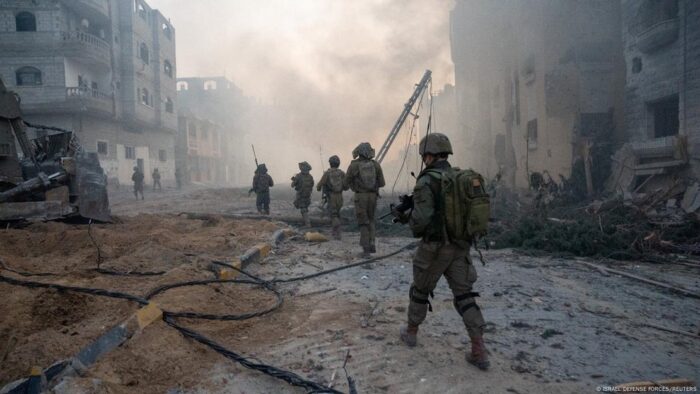
Once they have been evacuated, Israel is expected to launch a ground offensive into Gaza City with the goal of eradicating Hamas’ military infrastructure and killing its remaining operatives. Since 2023, some 20,000 Hamas commanders and foot soldiers have been eliminated.
After Gaza City is presumably conquered, Israeli forces will focus on capturing Palestinian towns and refugee camps in central Gaza, where the last of the hostages are believed to be kept.
In the meantime, Israel will provide humanitarian aid to the civilian population outside combat zones.
On August 6, the U.S. ambassador to Israel, Mike Huckabee, said that the Gaza Humanitarian Foundation — which was formed by the United States and Israel in May and which has distributed food packages in chaotic conditions resulting in the deaths of some 1,300 Palestinians — will expand its operations from three to 16 distribution sites and will operate 24 hours a day, seven days a week.
Since yesterday, Israel has scaled back the scope of its forthcoming military operation. When Netanyahu was asked by a Fox News reporter whether Israel would take over all of Gaza, he replied, “We intend to.”
Netanyahu said the seizure of new territory in Gaza would “assure” Israel’s security, remove Hamas from power, and enable Gaza to be ruled by a non-Hamas civilian administration. “We want to liberate ourselves and the people of Gaza from the awful terror of Hamas,” he said.
He said that Israel does not intend to annex Gaza or maintain permanent control over it. “We don’t want to keep it. We don’t want to govern it. We don’t want to be there as a governing body.”
Speaking in generalities, he said, “We want to hand it over to Arab forces.”
“We will never hand (Gaza) over to the Palestinian Authority or Hamas,” he added. “We will provide overall security. There will be a security perimeter provided by us.”
U.S. President Donald Trump has not intervened, having said it is “pretty much up to Israel” as to how it proceeds in Gaza in the days and weeks ahead.
The Axios news site disclosed that a recent Hamas propaganda video, showing the emaciated hostage Evyatar David in a tunnel digging his own grave, influenced Trump’s decision. Axios also reported that the Trump administration does not support the Israeli annexation of parts of Gaza.
U.S. Vice President J.D. Vance said today that, while the Trump administration endorses the defanging of Hamas and the resolution of the humanitarian crisis in Gaza, there is “some disagreement about how exactly to accomplish those common objectives.”
He did not elaborate, but it will be surprising if Netanyahu and Trump are exactly on the same page concerning the issues that are bound to arise.