
Anas al-Sharif is dead and buried, but the controversy surrounding his sudden death still lingers.
Sharif, a 28-year-old Al Jazeera correspondent based in the Gaza Strip and one of the most prominent Palestinian reporters there, was killed by an Israeli drone strike on August 10 while sheltering in a tent near Al-Shifa hospital in Gaza City.
Sharif’s colleague, Mohammed Qreiqeh, was also killed, along with cameramen Ibrahim Zaher and Mohammed Noufal and freelancers Moamen Aliwa and Mohammad al-Khaldi.
Sharif was one of the relatively few reporters covering the Israel-Hamas war and the humanitarian crisis there from inside Gaza. This was the case because the Israeli army has not permitted foreign correspondents to enter the costal enclave.
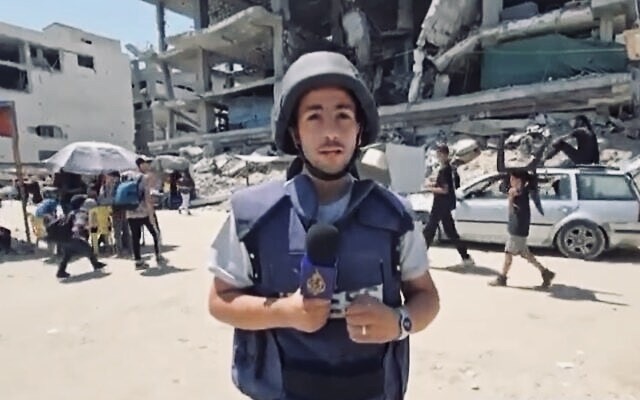
Born in Jabalia, in northern Gaza, he began working for Al Jazeera about two years ago. Often separated from his family for long stretches, he continued to file stories from the north after refusing to abide by Israeli evacuation orders.
He was killed shortly after Prime Minister Benjamin Netanyahu announced that Israel intended to widen the current war by capturing Gaza City and to allow foreign journalists into Gaza under Israeli military escort.
On the same day, the Palestinian ambassador to the United Nations called on the Security Council to facilitate the entry of foreign reporters into Gaza.
Several hours after Netanyahu’s announcements, Sharif and his associates were dead.
Al Jazeera, which is owned by Qatar, condemned their deaths. “The order to assassinate Anas al-Sharif, one of Gaza’s bravest journalists, and his colleagues, is a desperate attempt to silence the voices exposing the impending seizure and occupation of Gaza,” it said.
A spokesperson for British Prime Minister Keir Starmer, who has announced plans to recognize Palestinian statehood, said he was “gravelly concerned” about the targeting of journalists in Gaza.“Reporters covering conflicts are afforded protection under international humanitarian law, and journalists must be able to report independently, without fear, and Israel must ensure journalists can carry out their work safely,” the spokesperson said.
The United Nations High Commissioner for Human Rights condemned the killings as well, saying they were in “grave breach of international humanitarian law” and calling for “immediate, safe and unhindered access to Gaza for all journalists.”
Since the outbreak of the war nearly two years ago, about 186 journalists have been killed in the line of duty, according to the Committee to Protect Journalists.
It is tragic that Sharif and his colleagues died under such circumstances, but to be fair, there is much more to this story than meets the eye.
According to Israel, many of these deceased journalists were working for Hamas or had ties to it.
In a post on X after Sharif’s passing, the Israel Defence Force repeated a claim made last October that he was a “Hamas terrorist” who “posed as an Al Jazeera journalist.”
“Sharif was the head of a Hamas terrorist cell and advanced rocket attacks on Israeli civilians and troops. Intelligence and documents from Gaza, including rosters, terrorist training lists and salary records, prove he was a Hamas operative integrated into Al Jazeera. A press badge isn’t a shield for terrorism.”
In 2017, he apparently suffered an eye injury while undergoing military training with Hamas, Israel claims. Another Israeli document shows that his name was on the internal phone registry of the Nukhba Force, which played a leading role in the October 7, 2023 attack against Israel.
Sharif and Al Jazeera denied the allegations. Subsequently, the Israeli government suspended and then barred the network from operating in Israel and the West Bank, claiming that its biased coverage endangered soldiers.
Since then, Israel has released messages that Sharif posted on Telegram on October 7. First, he lauded, in real time, Hamas’ attack in southern Israel. “It’s a jihad, a jihad of victory and martyrdom,” he wrote in one post. And in another message, he exclaimed, “Nine hours later and the heroes are still roaming around the country, killing and capturing … God, God, how great you are.”
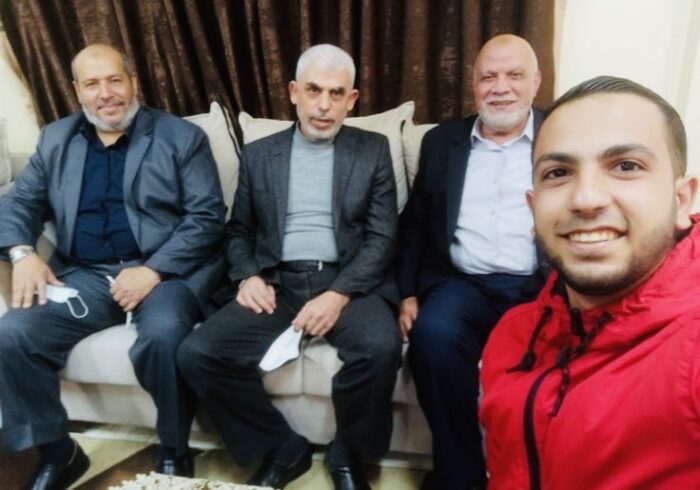
Israel has also released photographs of Sharif posing with Yahya Sinwar, the Hamas political leader who was assassinated in Gaza in 2024. It is clear that Sharif was deeply embedded in Hamas.
Jodie Ginsberg , the chief executive officer of the Committee for the Protection of Journalists, has minimized this damning information while deploring the demise of Sharif and his colleagues.
As she put it, “International law is very clear that the only individuals who are legitimate targets during a war are active combatants. Having worked as a media advisor for Hamas, or indeed for Hamas currently, does not make you an active combatant. And nothing that the Israeli forces have produced so far in terms of evidence gives us any kind of assurance that he was even an active member of Hamas.”

Ginsberg’s argument is valid to some degree. But ultimately, she dismisses and ignores the information, supplied by Israel, that Sharif was more than a journalist. He appears to have been a journalist who crossed the line into political activism and terrorism, at least as far as Israel was concerned.
He was playing with fire, and no one can be certain that he was not working for Hamas while employed by Al Jazeera. Having aroused Israel’s suspicion and fear about his real status, he doomed himself.
Palestinian journalists in Gaza should be extra careful not to make the same egregious mistake as Sharif. It cost him his life.