
When he resumed office as Israeli prime minister in December 2022 after an interlude of about a year in the opposition, Benjamin Netanyahu said that one of his main foreign policy goals was to reach a peace agreement with Saudi Arabia within the framework of the 2020 Abraham Accords.
In an interview with the Saudi newspaper Al Arabiya, he talked about the enormous potential of Israel-Saudi relations and the shared interests of both sides.
Judging by the meeting between U.S. President Donald Trump and Saudi Crown Prince Mohammed bin Salman in the White House on November 18, Netanyahu may well be disappointed by the outcome.
As the crown prince reiterated, Saudi Arabia’s position on establishing formal relations with Israel remains unchanged.
Without a credible, time-bound, irreversible pathway to Palestinian statehood in the West Bank and the Gaza Strip, a scenario that Netanyahu and his ministers abhor, normalization with Israel would be impossible, he said emphatically.
“We want to be part of the Abraham Accords, but we also want to be sure that we secure a clear path to a two-state solution,” he declared in no uncertain terms.
“We want peace with the Israelis, we want peace with the Palestinians, we want them to coexist peacefully in the region,” he went on to say, metaphorically throwing the ball into Israel’s court.
Trump, who brokered the Abraham Accords, told reporters that he and the crown prince, the de facto ruler of his nation, had extensive talks about the prospects of Israel-Saudi normalization.
The crown prince said, “We’re going to work on that to be sure that we can prepare the right situation as soon as possible.”
The “right situation” might occur should a recent United Nations Security Council resolution on the Gaza Strip reach fruition. The resolution, based on Trump’s 20-point peace plan, holds out the possibility that conditions may provide “a credible pathway to Palestinian self-determination and statehood” and thereby encourage the Saudis to join the Abraham Accords.
In the meantime, Trump is trying to unblock the logjam.
On the eve of the crown prince’s visit to Washington, his first since 2018, Trump speculated that Saudi Arabia may “very soon” establish normal relations with Israel.
This past May, during a visit to Saudi Arabia, Trump urged the Saudis to formally recognize Israel, but cautiously noted that the Saudis will not proceed until they are completely ready to make that historic move.
Two weeks before the crown prince’s trip to the United States, a prominent Saudi journalist close to the ruling House of Saud, Ali Shihabi, said that an Israeli-Saudi normalization deal was “virtually impossible” by the end of this year, unless a miraculous change took place in Israel.”
Last February, the Saudi Foreign Ministry declared that its policy regarding this pivotal issue remains”firm and unwavering.”
As matters stand, the current Israeli government is adamantly opposed to a two-state solution, contending that a Palestinian state would be a base for Palestinian terrorism, would jeopardize its security, and would compel Israel to relinquish its territorial claim to the West Bank.
Netanyahu doubled down on this position following Hamas’ invasion of southern Israel on October 7, 2023. Many Israelis support him, fearing that another massacre on this scale could occur in the future.
Prior to this calamity, Netanyahu appeared confident that he could persuade Saudi Arabia to join the Abraham Accords without embracing Palestinian statehood. His assumption was based on the fact that Israel was able to normalize relations with Bahrain, the United Arab Emirates, Morocco and Sudan — the countries that signed the Abraham Accords — without having to fulfill the Saudi condition.
Although Saudi Arabia stayed out of the Abraham Accords, the Saudi leadership tacitly supported the decision by the four Arab states to forge formal relations with Israel.
Shortly afterward, in what seemed like an unmistakable sign of a political thaw in Riyadh, there were two important developments. The Saudi government decided to allow El Al, the Israeli national carrier, to use its air space on eastward flights. The crown prince described Israel as a “potential ally.”
Riding on a wave of momentum, he told Fox News early in 2023 that he was open to establishing bilateral relations with Israel in exchange for a defence pact with the United States, the purchase of advanced U.S. fighter jets, and Washington’s assistance in helping Saudi Arabia build a civilian nuclear program.
The crown prince did not mention Palestinian statehood as a condition for forging a rapprochement with Israel, but he insisted that such an agreement would have to ensure “a good life for the Palestinians.”
Trump’s predecessor, Joe Biden, was in favor of his proposition and repeatedly tried to interest Israel in it.
While Netanyahu was eager to normalize relations with Saudi Arabia, he balked at accepting a roadmap to Palestinian statehood, fearing that his coalition would collapse and he would lose his job. In plain language, Israel’s control of the West Bank was more important to him than securing a foothold in Saudi Arabia.
With the outbreak of the Israel-Hamas war in Gaza, Saudi Arabia hardened its stance, saying it would not normalize relations with Israel until the creation of a Palestinian state, with East Jerusalem as its capital.
The Israeli government rejected that demand.
It could be argued that Israel has squandered a chance to further integrate itself into the region by refusing to accept Saudi Arabia’s offer. No less a person than Israel’s former ambassador to the United States, Mike Herzog, concurs with this argument. Last spring, he accused Netanyahu of having missed an opportunity to nail down a normalization agreement with Saudi Arabia.
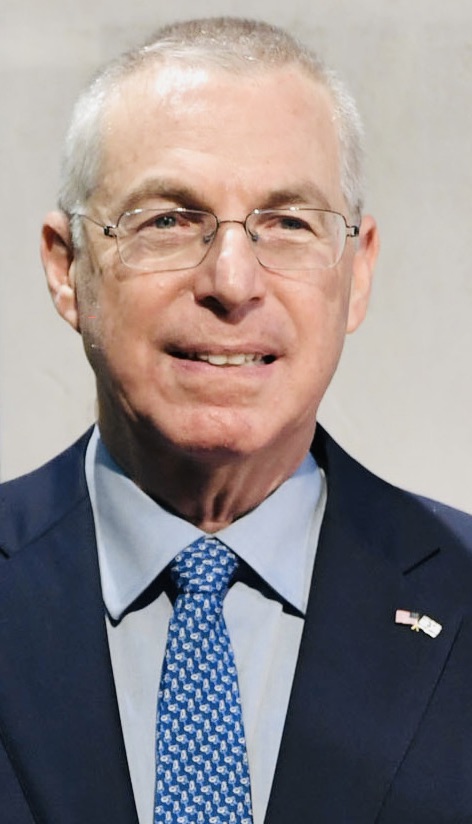
“I think Israel should make normalization a very high priority,” he told the Kan public broadcaster in May. “I don’t think that Netanyahu doesn’t want it, but he probably isn’t willing to pay the price.”
According to the Institute for National Security Studies at Tel Aviv University, Israel has a compelling strategic interest in establishing formal relations with Saudi Arabia, a leading Arab state, the seat of Islam, and the country with the world’s largest proven oil reserves.
A normalization agreement with Riyadh, the institute says, would advance ties between Israel and other Arab and Muslim states, including those outside the region.
“Its market offers substantial opportunities for Israeli companies across various sectors, some of which are already operating in the kingdom in various capacities.
“Given its economic and political weight, Saudi Arabia could also help calm the Israeli-Palestinian arena through economic incentives for Palestinians, thereby contributing to the stabilization of the Gaza Strip and the establishment of a non-Hamas government there.
“Israel and Saudi Arabia share common interests in addressing key challenges such as economic instability, radical Islam, and Iran’s malign regional influence and nuclear ambitions. Senior Saudi officials have publicly and repeatedly expressed interest in establishing diplomatic relations with Israel. However, they consistently emphasize that progress toward formal ties depends on advancing an Israeli-Palestinian settlement and achieving a two-state reality.”
Recognizing Netanyahu’s refusal to accede to Saudi Arabia’s demand on Palestinian statehood, Trump, on November 17, announced his intention to sell F-35s — the most advanced fighter jet in America’s arsenal — to Saudi Arabia without demanding its entry into the Abraham Accords.
“They’ve been a great ally,” he said of Saudi Arabia, the world’s largest customer of U.S. arms.
With this meeting, Trump consolidated the United States’ relationship with Saudi Arabia, which has been an ally since President Franklin Roosevelt conferred with King Ibn Saud abroad the USS Quincy in the Suez Canal in the winter of 1945.
In the spirit of that event, the Trump administration is additionally receptive to signing a mutual defence pact with the Saudis and eventually giving them access to U.S. nuclear technology.
The sale of F-35s to Saudi Arabia, a stealth aircraft that only Israel possess among the countries of the Middle East, may erode Israel’s air superiority, degrade its qualitative military edge, and alter the balance of power in the Middle East.
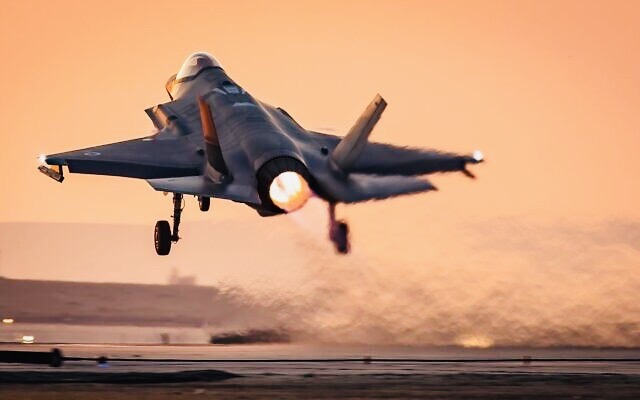
In the past, Israel has tried to prevent the sale of the F-35 to nearby countries such as Turkey and the United Arab Emirates.
There are also concerns in the American intelligence community that state-of-the-art F-35 technology could fall into the hands of China, a U.S. rival.
Since returning to office, Trump has made arms sales to the Saudis a priority. During his last trip to Saudi Arabia, he agreed to sell the desert kingdom weapons to the tune of almost $142 billion. The White House called it “the largest defence cooperation agreement” in American history.
Trump is determined to forge closer ties with Saudi Arabia, which has pledged to invest upwards of $1 trillion in the United States. What effect an enhanced U.S.-Saudi relationship would have on Israel’s security, or Saudi Arabia’s willingness to forge ties with Israel, remains to be seen.