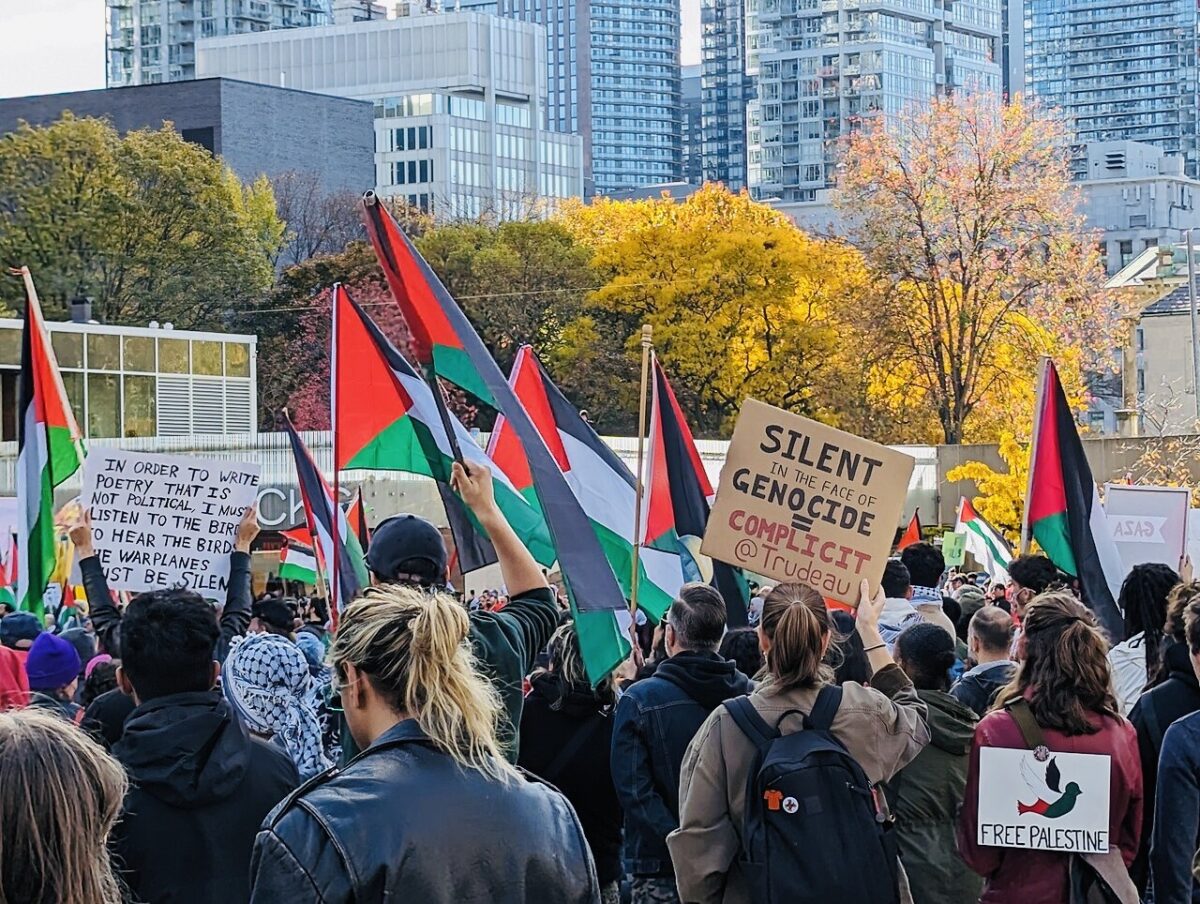
Since October 7, 2023, when Hamas hordes from the Gaza Strip invaded southern Israel in a murderous rampage that sparked a two-year war between Israel and Hamas, Palestinian protesters and their supporters have staged hundreds of anti-Israel demonstrations in Toronto.
They have demanded sanctions against Israel, which has cordial relations with Canada, and have called for a global intifada, or uprising, that Jewish organizations have condemned as an incitement to violence against Jews in the Diaspora.
Jewish-owned businesses, including the Indigo bookstore chain, and a mainly Jewish neighborhood in the northern part of the city, have been in the crosshairs of several of these rallies. This has sparked complaints that local Palestinians have conflated Canadian Jews with the Israeli government and singled out Jews for intimidation.
These marches have also triggered criticism that the police have not acted vigorously enough in the face of the protesters’ provocations.
This simmering issue exploded into the open recently when Ontario Solicitor-General Michael Kerzner, the only Jewish minister in Premier Doug Ford’s cabinet, sent a public letter to police chief Myron Demkiw and Police Service Board chair Shelley Carroll urging police to “act promptly and decisively” to counter “hate-motivated” and “disruptive” demonstrations.
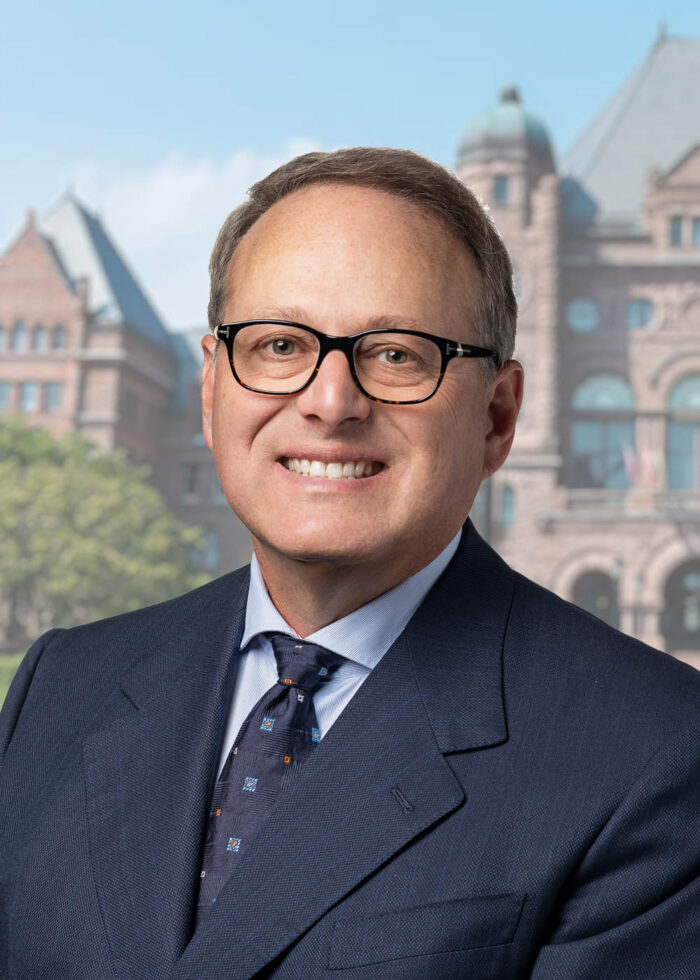
In his letter, which he posted on social media, Kerzner wrote, “These incidents have left many residents living in a state of heightened fear and anxiety, concerned about a lack of visible response and feeling unable to move freely and safely in public spaces our within their own neighborhoods. When such incidents occur repeatedly and without visible consequences, it substantially undermines public confidence in the rule of law and in the institutions responsible for upholding it.”
In closing, Kerzner said that since the province has given police the resources they require to address hate-motivated crime and challenges to the “public order,” the police should enforce the law. “We have made our expectations clear: these tools must be used. Torontonians and all Ontarians deserve to feel safe in their neighborhoods, in public spaces, and in their daily lives.”
Deputy Conservative Leader Melissa Lantsman, who represents the heavily Jewish Thornhill riding in Canada’s Parliament, agrees with Kerzner.

“Toronto’s Jewish community isn’t safe,” she said. “The weekly gatherings of lawless mobs aren’t peaceful protests. They are threats meant to intimidate Jews. Marches into predominantly Jewish neighborhoods and chants praising ‘intifada’ and ‘resistance by any means’ are clear incitements to violence, and are criminal under Canadian law and never actually punished. Worse, Toronto Police Service’s response is willful blindness. Ignoring the obvious erodes public trust.”
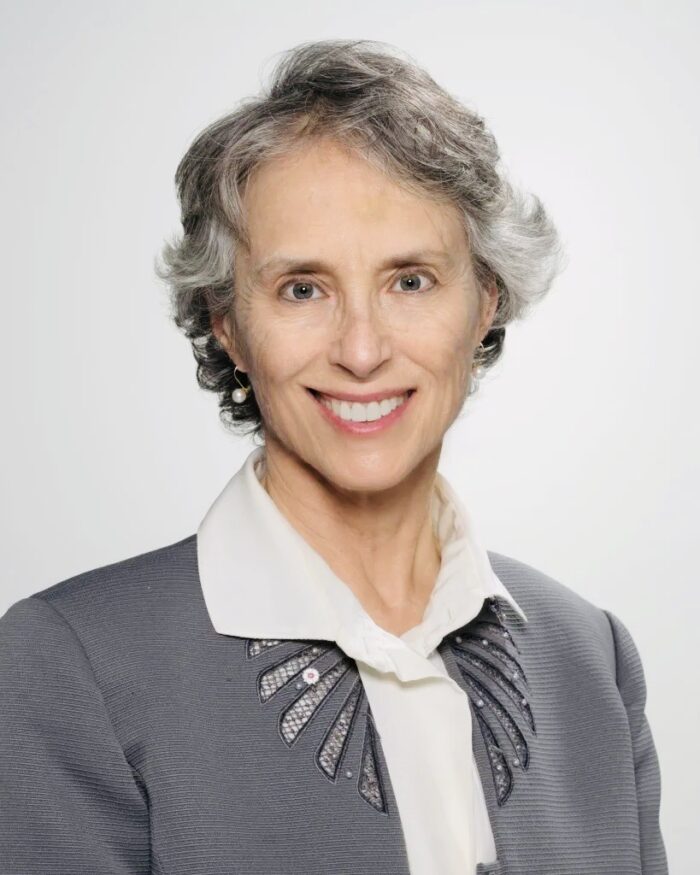
Dianne Saxe, a Toronto municipal counsellor, is equally upset.
In a piece in The National Post on January 14 in which she compared the current situation to a notorious antisemitic incident in the Christie Pits park more than 90 years ago, she wrote, “After the Christie Pits riot in 1933, Mayor William Stewart lost no time making it clear that Nazi symbols would not be tolerated in public places in Toronto. Result? There were no more riots, no more Nazi banners in our parks.
“Why is there no such leadership from Premier Doug Ford and Mayor Olivia Chow? At a minimum, we need them both to clearly state which words and actions in public will lead to arrest and prosecution. And then they must have their governments follow through. If they need new laws, they must pass them. If they need federal help, they must ask for it.
“Everyone in Toronto has a right to live peacefully and in safety in their own communities and their own homes. For the past two years, our leaders’ inaction has stripped this right away, especially from the beleaguered Jewish minority, but also from the majority who simply wish to peacefully shop, skate, picnic, celebrate or use a public street.”
Saxe, however, credits the Toronto Police Service with having tripled the size of the Hate Crime Unit and having spent tens of millions of dollars attending and investigating demonstrations, as well as protecting vulnerable groups and institutions. “They have made hundreds of arrests and laid hundreds of charges. So far, they have successfully prevented most physical violence against people, including charging three armed men for allegedly hunting Jewish women through our streets.”
In a reference to an antisemitic attack in Sydney, Australia, last month during which 15 people were killed by two Muslim terrorists loyal to the Islamic State organization, she credited Toronto police with saving lives.
“It is because of the police that we haven’t had our own Bondi Beach here, at least not yet. But this isn’t enough to make Toronto safe. The key issue is that Premier Ford and Mayor Chow have never spelled out the rules. What words and actions must be tolerated, and where?
“Is it legal to shout slogans from the charter of Hamas, a recognized terrorist organization? To wave its flag? What public and private activities and celebrations can protesters disrupt with impunity? For how long? How often? What roads can they block? Why can a mob hide behind masks, when it is forbidden to be masked during an illegal assembly? Why do the angry few face no consequences for flouting the bylaws that apply to everyone else? Are there any limits to what they can say about Jews? Or about any other minority? If so, what are those limits? Surely we are all entitled to know.”
The facts are clear.
According to Stephanie Sayer, a Toronto Police Service spokesperson, the force has policed more than 800 anti-Israel demonstrations since the October 7 attacks, arrested almost 500 protesters, and laid more than 1,000 criminal charges.
Last May, Toronto passed a bylaw restricting protests near synagogues, churches, mosques and temples.
Sayer told the media that police play “a critical role in responding to hate-motivated crime and threats, and we act when conduct crosses the criminal threshold. At the same time, not all hateful or offensive speech is criminal under Canadian law. Some behavior may be deeply upsetting or harmful without meeting the legal standard for police enforcement.”
Certain kinds of speech, she noted, either do not meet the threshold for criminality, or is protected under the Charter of Rights and Freedoms.
The Toronto Police Service stands “shoulder-to-shoulder” with the city’s Jewish community, she said. At the moment, “there are no known threats to Toronto’s Jewish community.”
That being said, the Toronto Police Association — the union representing about 8,000 uniformed and civilian employees of the Toronto Police Service — believes that police officers have not received sufficient direction on how to deal with pro-Palestinian protests.
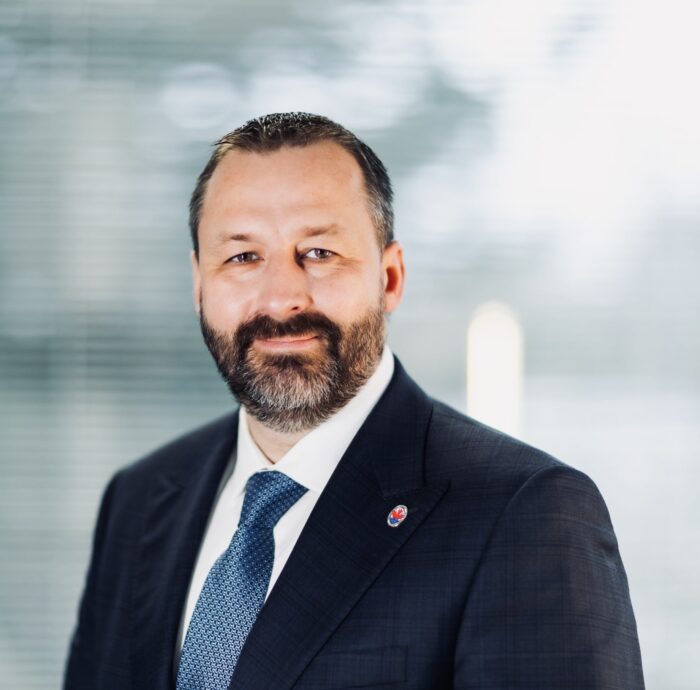
Responding to Kerzner’s letter, Toronto Police Association president Clayton Campbell said, “All we want is clear and consistent direction to our members and the public about what is lawful and unlawful when it comes to protest activity.”
It is obvious that the Toronto Police Service needs to work on this issue, which is in dire need of a satisfactory resolution. Failure to deal with it could result in tragic consequences.