
Aaron Sapiro was a Jewish American folk hero who has faded into obscurity. A century ago, he created newspaper headlines when he filed a lawsuit against the American industrialist Henry Ford on the grounds that his notoriously antisemitic newspaper, The Dearborn Independent, had defamed him as a Jew and damaged his reputation as a lawyer.
The case, a cause célèbre in the struggle for the advancement of human rights in the United States, was a triumph for Sapiro and the Jewish community.
Gaylen Ross’ absorbing documentary, Sapiro V. Ford: The Jew Who Sued Henry Ford, resurrects Sapiro’s titanic legal battle with Ford, an exemplar of the American Dream and one of the most powerful and influential voices of antisemitism in the country.
Her movie, which is slightly more than one hour in length, will be screened at the New York Jewish Film Festival, which runs from January 14-28, and at the Miami Jewish Film Festival on January 18. It can also be viewed on streaming platforms from January 19-28.
Born in Oakland, California, Sapiro was the son of impoverished immigrant parents. When his father was fatally struck by a speeding train, his mother sent Sapiro to an orphanage, where he languished for six years. Aspiring to be a rabbi, he studied at the Hebrew Union College before choosing law as a profession.

The actor Ben Shenkman portrays Sapiro on screen. The words he speaks are extracted from Sapiro’s voluminous letters and notebooks. Historians provide insightful analyses of his confrontation with Ford, the seeds of which were planted when the state of California hired Sapiro to assist struggling farmers to organize cooperatives.
In 1922, he created the National Farmers Marketing Association, representing 60 cooperatives on wheat, cotton, tobacco, fruit, vegetable and dairy farms generating an annual revenue of $400 million, or $7.3 billion in today’s currency.
Subsequently, he was instrumental in helping grain farmers in the Canadian province of Saskatchewan to establish wheat pools. Considering himself a friend of farmers, Sapiro sought a fair deal for them in the face of corporate greed and exploitation.
Sapiro, who would later practice law in New York City and Chicago, was hailed by The New York Times as “the leader of one of the greatest agricultural movements of modern times.”
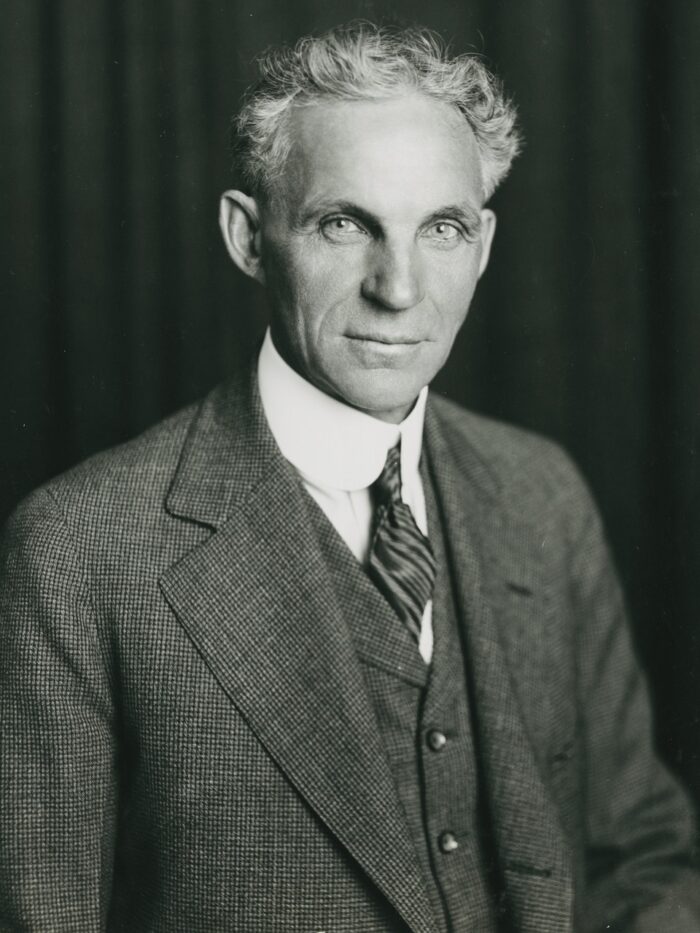
Sapiro’s success upset Ford, a pioneer in the fledgling automobile industry. Convinced that Sapiro was part and parcel of a Jewish conspiracy to undermine capitalism and gain control of American and Canadian farmers, Ford launched a smear campaign against him in The Dearborn Independent, which he started in 1918.
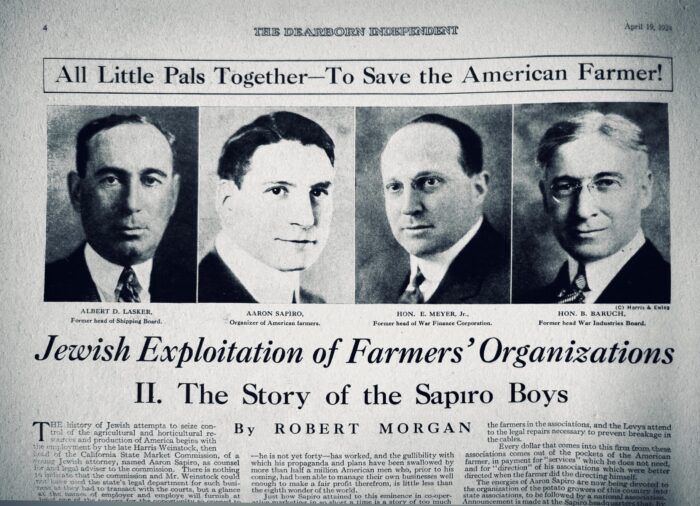
One of its articles, emblazoned with the headline “Jewish Exploitation of the American Farmer’s Organizations,” singled out Sapiro as a manipulator who wanted “to turn American agriculture over to the international Jews, to spread Communism and Bolshevism among our people.”
Ross, unfortunately, does not delve into the roots of Ford’s antisemitism, but she leaves the impression that he acquired his dislike of Jews as a pacifist who claimed that German Jewish bankers had caused World War I.
Obsessed with Jews, Ford believed that America’s ills could be traced back to them. Keen to offers readers an explanation of the so-called Jewish international conspiracy, he serialized The Protocols of the Elders of Zion, a czarist police forgery, in the pages of The Dearborn Independent, a sensationalist rag which acquired an immense circulation due to Ford’s insistence that all his dealerships were required to carry it in their showrooms.
In Ross’ opinion, The Dearborn Independent was instrumental in boosting the membership of the resurgent Ku Klux Klan, which regularly denounced American Jews and demeaned African Americans.
Adolf Hitler, the leader of the Nazi Party in Weimar Germany, praised Ford as an outstanding patriot.
Sapiro watched these developments with a sense of apprehension and dread, but he was particularly angry with Ford’s hateful articles that, he thought, harmed him as an attorney.
In 1925, he filed a $1 million lawsuit against Ford. Farmers whose businesses had been saved by Sapiro encouraged him to fight Ford, but timid Jewish community leaders were less than keen to confront Ford.
The case went to trial in Detroit in March 1927, but was declared a mistrial due to a controversy over a juror.
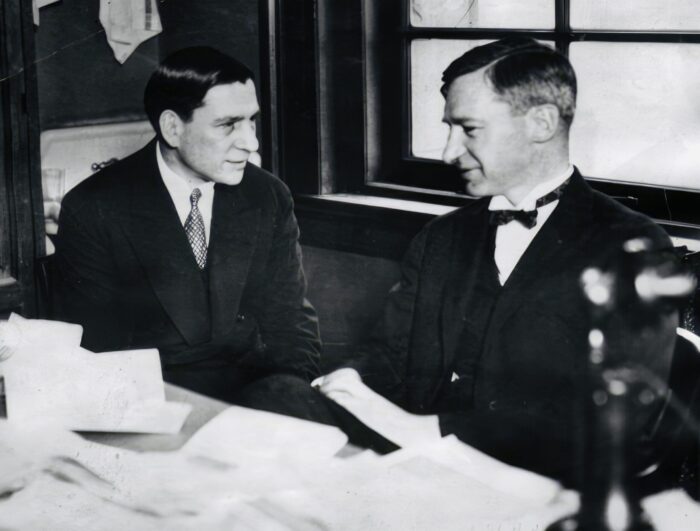
Shortly afterward, Ford sent an emissary to Louis Marshall, a distinguished Jewish lawyer, with a proposal to settle the matter outside the courtroom.

On Marshall’s recommendation, Ford issued a public apology regarding his antisemitic views, but left out Sapiro’s name. Sapiro was incensed and demanded justice. Ford ultimately agreed to cover his legal fees and court costs and to shut down The Dearborn Independent.
Ross fails to explain Ford’s retreat, but one can assume that it stemmed from commercial self-interest.
Sapiro was satisfied with the outcome. “This announcement of Mr. Ford’s justifies all the worry, trouble and expense of the long and bitter suit at Detroit,” he told the Associated Press.
And in a reference to the antisemitic content in The Dearborn Independent, he added, “I felt certain that Mr. Ford was being deceived by subordinates and that if he were pushed face to face with what his paper had done he would do the manly thing and refute the attacks. I am proud to have been the agency to bring these things to his attention, and thereby to have enabled him to have set himself right as a maker of opinion throughout the world.”
In the wake of this incident, Sapiro embarked on a North American lecture tour, delivering speeches about his trials and tribulations. But he soon fell out of the spotlight and was effectively forgotten.
Sapiro V. Ford brings his story back to life and honors a courageous fighter who had the temerity to challenge and take on Ford.