
Elie Wiesel, the late Jewish novelist and human rights activist, was deeply affected by the Holocaust. He was personally traumatized by it and drew on its horrors as a writer.
Oren Rudavsky’s documentary, Elie Wiesel: Soul On Fire, which is scheduled to be broadcast by the PBS network on Tuesday, January 27 at 9 p.m. (check local listings), focuses on this searing aspect of his life. By no coincidence, it will appear on International Holocaust Remembrance Day.
This absorbing film is underpinned by old interviews with Wiesel, who died in 2016, and by black-and-white animation sequences pertaining to his pain and torment as a persecuted Jew in Auschwitz-Birkenau and Buchenwald, the Nazi concentration camps in Poland and Germany.
It unfolds in chronological order, starting in Sighet, the town in the Carpathian mountains where he was born in 1928, and ending in New York City, where, ironically, a German doctor took charge of his medical treatment for blood cancer.

Wiesel, who described himself as a “teller of tales,” recalls Sighet fondly. The scion of a religious family who aspired to be a rabbi, he particularly remembers the beaming faces of its Jewish inhabitants during the sabbath.
Hell descended on Sighet in the spring of 1944, when its majority Jewish population was deported to Auschwitz Birkenau. Sighet was part of Romania until its occupation by Hungary in 1940. In the late winter of 1944, Germany invaded Hungary, its ostensible ally, and began rounding up Jews in Hungarian-held territories.
Jews in Sighet were herded into a ghetto, after which they were crammed into trains bound for the Nazi extermination camp in southern Poland. By Wiesel’s estimation, upwards of 15,000 Jews in Sighet were transported to Auschwitz-Birkenau. From March until July, more than 400,000 Jews from Romania and Hungary were murdered by the Nazis and their local accomplices.
As he looks back at that period, Wiesel can barely believe that mass murder on such a scale could have occurred.
In Auschwitz-Birkenau, Wiesel’s mother and younger sister were gassed. “Everything died in Auschwitz,” he says mournfully. He and his father, Elisha, stayed closely together. Wiesel credits him for keeping him alive. In Buchenwald, however, Elisha died. Wiesel, heartbroken, regrets he was powerless to help his beloved father.
Along with several hundred child survivors of the Holocaust, Wiesel was sent to a Jewish children’s home in France after World War II. He regarded the other boys and girls there as his surrogate family. And it was where he found a refuge in Judaism.
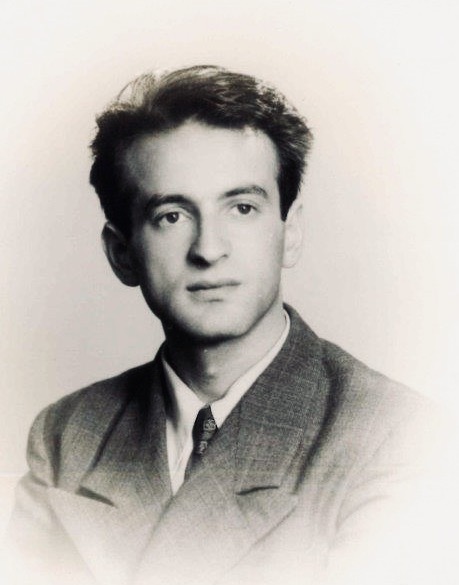
Wiesel studied at the Sorbonne in Paris, perfecting his French and immersing himself in literature. As he tells it, the French language became his new home. An impoverished scholar, he lived alone in a dark garret. Rudavsky glosses over this phase far too lightly.
Nor, unfortunately, does he elaborate on Wiesel’s budding career as a journalist. Wiesel worked as a roving correspondent for an Israeli daily, but Rudavsky all but leaves it out of the film.
Wiesel wrote Night, perhaps his most famous novel, to bear witness to the Holocaust on behalf of himself and his fellow survivors. Published in an abridged version in Argentina, it initially languished in the marketplace. Night, he adds, formed the basis of his subsequent novels.
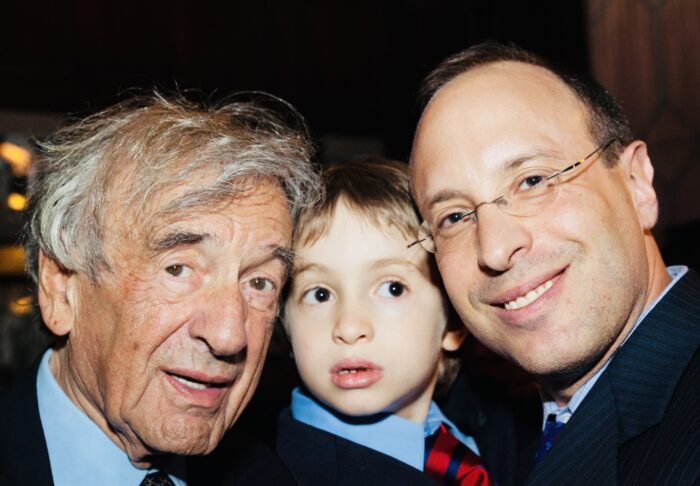
Wiesel began living normally after his marriage to an Austrian Jewish woman named Marion. Their only child, Elisha, appears in several interviews.

The most compelling segment in the film concerns Wiesel’s impassioned but ineffective appeal to U.S. President Ronald Reagan to cancel a planned appearance at a German military cemetery in Bittburg, West Germany, where, as it happened, 49 members of the Waffen-SS were buried.
Reagan’s visit, timed to coincide with the fortieth anniversary of the end of World War II, was a public relations debacle for Reagan, but a moral victory for Wiesel, who claimed he sought reconciliation with the German people.
The film devotes several minutes to Wiesel’s acceptance of the 1986 Nobel Prize for Peace. While Wiesel publicized the plight of the downtrodden and the oppressed around the world, he aroused unfavorable notice by declining to criticize Israel’s controversial policies toward the Palestinians and its construction of settlements in the West Bank and the Gaza Strip.
Elie Wiesel: Soul On Fire is a fine documentary within the narrow limits of its purview. It could have been better had its scope been broadened to include Wiesel’s interregnum as a journalist and his foray into fiction. That being said, it explores an infinitely important facet of his development as a person and a novelist.