
Prime Minister Benjamin Netanyahu is unyielding in his refusal to create a state commission of inquiry to investigate Hamas’ one-day invasion of southern Israel on October 7, 2023, the worst military and intelligence failure in Israel’s history. Claiming the lives of roughly 1,200 people and resulting in the abduction of 251 Israelis and foreign nationals, the attack triggered both the two-year Israel-Hamas war in the Gaza Strip and Israel’s invasion of southern Lebanon about a year later.
Amid insistent calls from Israeli citizens and Netanyahu’s political rivals that a state commission should be established as soon as possible, he demurred, promising to set up one after the war.

In the meantime, the Israeli army conducted internal inquiries, concluding that senior officers had underestimated Hamas’ military capabilities and had downplayed warnings that a major attack was in the offing. These investigations led to the resignations and removals of several high-ranking officers.
Last month, Netanyahu’s coalition government finally got around to this pressing issue when it voted in favor of a parliamentary bill to create a commission of inquiry. Introduced by Ariel Kallner, a member of Netanyahu’s right-wing Likud Party, it would lead to a politically appointed panel rather than an independent state commission.
Kallner’s bill, in a word, is divisive.
Universally condemned by the families of the now-released hostages and the relatives of the Israelis murdered on October 7, it is also denigrated by the leaders of opposition parties in the Knesset.

On January 6, two hundred families whose relatives were killed or kidnapped on that dark day signed an open letter calling for an independent state commission. As they wrote, “Without a true investigation, we cannot guarantee that the disaster of October 7 will never happen again.”
On January 19, protesters converged on the Knesset to demand the establishment of such a commission and to register their objection to Kallner’s bill, which is currently being discussed by the Knesset’s Constitution, Law and Justice Committee.
“We will not cooperate with the cover-up committee, nor allow a government whose failures are engraved in the blood of our loved ones to choose the investigators, the questions, or the boundaries of truth,” the protesters said.
“A state commission of inquiry is not a political gesture but a moral obligation by the state to its citizens. Anyone preventing it today consciously chooses the side of concealment, fear, and evasion of responsibility. We are here to remind everyone: The truth will be investigated, with or without the cooperation of the cover-up government.”
Netanyahu, who has so far refused to accept personal responsibility for October 7, has defended his rejection of a state commission. He claims that the Kallner bill enjoys a “broad consensus” among Israelis and is “the only way the truth will come to light.”
He also has said that he has spent “long hours” answering questions put to him by the state comptroller, and that a commission appointed by the Supreme Court, whose powers his government has sought to curb in the past few years, would be biased.
“A day will come when the truth on everything that preceded the war and everything that happened at the time of the war will be exposed to the broader public,” he said. “I’m the first who wants everything to be presented in public. I have nothing to hide.”
Under existing Israeli law, the members of an independent state commission should be chosen by the president of the Supreme Court, Chief Justice Yitzhak Amit, rather than by legislators in the Knesset.
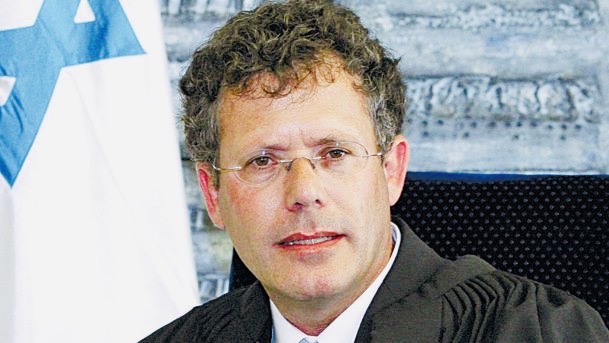
Netanyahu’s government claims that the public has no faith in Amit, and that a “special commission” composed of six members is required. Under the terms of Kallner’s bill, three of its members would be chosen by the Likud Party, while the rest would be selected by the parliamentary opposition.
“This will be an egalitarian commission,” Netanyahu said recently. “No side will have an advantage in appointing the members of the commission.” He added that it will be independent.
Netanyahu’s argument goes against the grain of Israel public opinion. Surveys have indicated that most Israelis are in favor of a state commission, while Netanyahu’s critics contend that he is trying to evade responsibility for the alarming failures of October 7. Yair Lapid, the head of the centrist Yesh Atid Party and the leader of the opposition, has adopted this position and indicated he will not cooperate with “this shameful farce.”
Lapid is correct.
State commissions must be appointed on the basis of the current law and should not be tainted by partisan political considerations.
Netanyahu, Israel’s longest-serving prime minister, may well fear that a state commission will expose his shortcomings and end his career.
Judging by the past, he has every reason to be apprehensive.
The Agranat Commission, which examined the failures of the 1973 Yom Kippur War, forced the prime minister, Golda Meir, and the defence minister, Moshe Dayan, to resign.

The Kahan Commission, which was established following Israel’s invasion of Lebanon in 1982, recommended the removal of Israeli Defence Minister Ariel Sharon. He was closely associated with the Christian Phalange militia, which massacred hundreds of Palestinian civilians in the Sabra and Shatilla refugee camps around Beirut. Under pressure, Sharon tendered his resignation.
Netanyahu, of course, fears that a similar fate will await him should a conventional state commission be appointed. His misgivings are not far fetched. As U.S. President Harry Truman once famously said, the buck stops in his office.
In the interests of honesty, transparency and good governance, Netanyahu should be open to establishing such a commission. He will have every opportunity defend himself and his policies.
The unvarnished truths surrounding the events of October 7 must be determined once and for all. Israel’s long-range security may well depend on it.