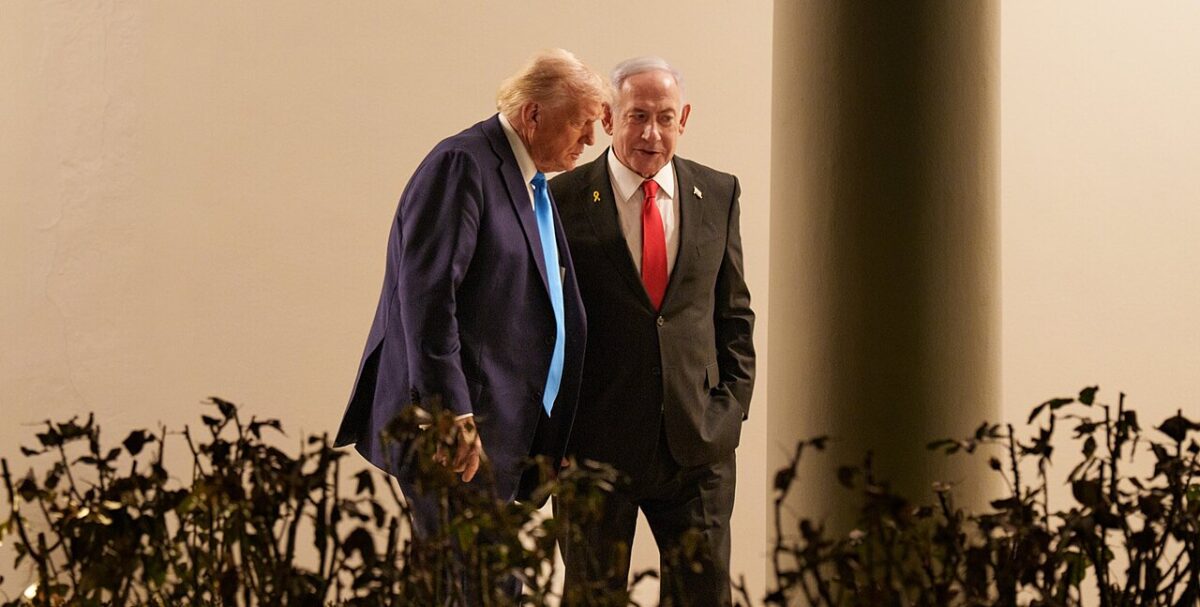
Donald Trump is engaged in a guessing game with respect to Iran.
Since Iran’s brutal crackdown on anti-government protesters last month, the American president has spoken out from both sides of his mouth about an issue that could well trigger a war in the Middle East.
While he has threatened to attack Iran, he has also expressed a preference for diplomacy to resolve the gnawing and increasingly tense standoff over Iran’s highly controversial nuclear program.
Benjamin Netanyahu, the prime minister of Israel, got a first-hand preview of Trump’s thinking when he paid a private visit to the White House on February 11 to discuss Iran and other regional issues.
This was Netanyahu’s seventh appearance at the White House since Trump returned to office just over a year ago. Given the sensitivity of the Iran file, neither Trump nor Netanyahu fielded questions from reporters. Nor did they call a press conference following their three hour meeting.
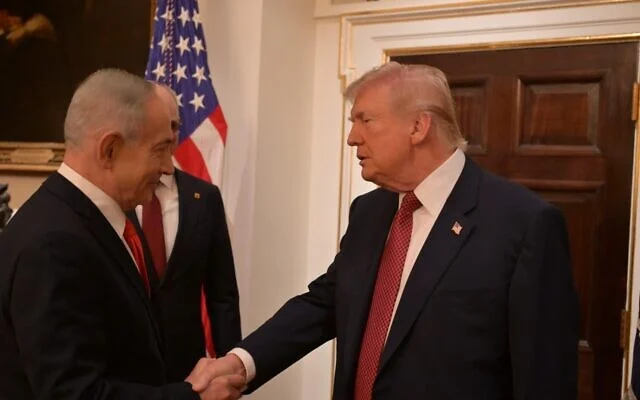
On the eve of their discussions, Netanyahu said he would present Israel’s “principles” concerning the United States’ negotiations with Iran, the first round of which took place in Oman earlier this month.
Last year, the U.S. and Iran held five rounds of talks on curbing Tehran’s nuclear program. When the process broke down over disputes related to uranium enrichment inside Iran, the United States bombed three Iranian nuclear facilities toward the close of Israel’s 12-day war with Iran last June.
The date and venue of the next round of talks have yet to be announced. Iranian President Masoud Pezeshkian has said that a new round would be “an appropriate opportunity for a fair and balanced resolution of this case,” and that a desired outcome was attainable if the United States avoids “maximalist positions and respects its commitments.” He added that Iran would continue to demand the lifting of sanctions and insist on its “nuclear rights, including enrichment.”
Israel is wary of an agreement that fails to end Iranian uranium enrichment or falls short of absolving Iran of the requirement to move its stocks of near-weapons-grade uranium overseas.
Israel, too, is demanding strict limits on the size and scope of Iran’s ballistic missile arsenal and is calling for an iron-clad commitment from Iran that it will no longer support regional proxies such as Hamas and Hezbollah in its anti-Israel Axis of Resistance alliance.
The Israeli media reported on February 8 that Israeli officials informed the Trump administration that Iran’s ballistic missiles pose an existential threat to Israel. During last year’s war, Israel downed the majority of Iranian missiles, but the ones that got through Israel’s defences killed 31 civilians, displaced 13,000 and caused considerable property damage.
Israeli newspapers have suggested that Israel may be ready to launch a unilateral strike to destroy Iran’s stockpile of missiles and production facilities should it cross a certain “red line.”
U.S. Secretary of State Marco Rubio said recently that the Trump administration endorses Israel’s demands. But much to Israel’s chagrin, U.S. negotiators in Oman seemed to have addressed only Iran’s nuclear program.
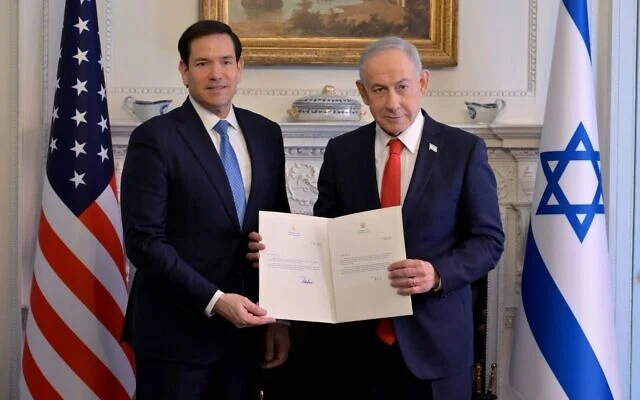
The American ambassador to Israel, Mike Huckabee, claims that Israel and the United States are in “extraordinary alignment” on these pivotal issues. As he put it, “The U.S. and Israel have the same red lines on Iran.”
Iran has threatened to strike U.S. bases in the Middle East as well as Israel in the event of a U.S. bombardment.
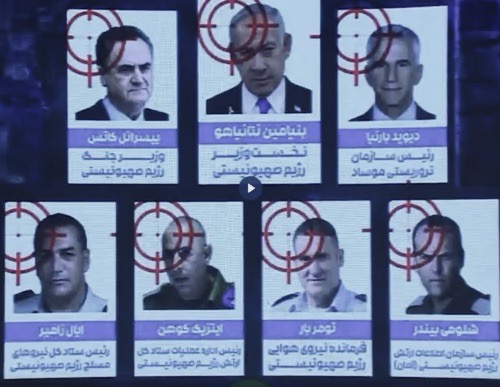
In the meantime, an Iranian state-run television channel has broadcast the photographs of seven top Israeli officials whose lives may be in danger. On the list, with crosshairs over their pictures, are Netanyahu, Mossad director David Barnea, Defence Minister Israel Katz, the chief of staff of the armed forces, Eyal Zamir, the commander of the air force, Tomer Bar, the director of military intelligence, Shlomi Binder, and the head of the Operations Directorate, Itzik Cohen.
Prior to Netanyahu’s latest trip to Washington, Trump said that Netanyahu “wants a deal” with Iran, and that the current talks on its nuclear program show promise. “We can make a great deal with Iran,” he claimed.
Trump described the Oman talks as “very different” because the United States already has used military force to degrade Iran’s nuclear sites in Natanz, Isfahan and Fordow. “Last time, they didn’t believe I would do it,” he told the Axios news site. “They overplayed their hand.”
Before flying to Washington, Netanyahu positioned himself on the same page as Trump. “The president believes the Iranians already understand who they are dealing with,” he said. “(Trump) thinks the conditions he is setting, combined with (Iran’s) understanding that (it) made a mistake last time by not reaching an agreement, could lead them to accept terms that would make it possible to achieve a good deal.”
In the same breath, however, Netanyahu voiced skepticism about “the possibility of reaching any agreement with Iran.” And he reiterated that any accord “must include the components that are important to us, to Israel, and in my view also to the entire international community — not only the nuclear issue, but ballistic missiles and Iran’s regional proxies.”
In the wake of Netanyahu’s visit, Trump took to his Truth Social site to explain what had happened in Oman.
“It was a very good meeting, and the tremendous relationship between our two countries continues,” he said. “There was nothing definitive reached other than I insisted that negotiations with Iran continue to see whether or not a deal can be consummated. If it cannot, we will just have to see what the outcome will be.”
Netanyahu’s office said the meeting underscored Israel’s “security needs in the context of the negotiations.”
Trump, in a tacit threat aimed at Iran, shared a Wall Street Journal report claiming that the United States was preparing to send a second aircraft carrier to the Middle East. On February 13, the Associated Press reported that Trump intends to dispatch the USS Gerald R. Ford to the region, joining the SS Abraham Lincoln there.
A day earlier, he warned Iran of “traumatic” consequences should an agreement not be reached. “We have to make a deal, otherwise it’s going to be very traumatic, very traumatic,” he said. “I don’t want that to happen, but we have to make a deal. This will be very traumatic for Iran if they don’t make a deal.”
Iran has consistently denied it has weaponized its civilian nuclear program. Yet Iran has enriched uranium to 60 percent levels, which have no peaceful application. And since last summer, Iran has obstructed international inspectors from examining its nuclear facilities.
In addition, Iran has expanded its ballistic missile capabilities. Ali Shamkhani, an adviser to Iran’s supreme leader, Ayatollah Ali Khamenei, said during a march commemorating the 47th anniversary of the Islamic Revolution that its “missile capabilities are non-negotiable.”
This could be bluster.
According to the Institute for the Study of War, a U.S. think tank, “Iran may be floating the possibility of talks about Iran’s ballistic missile program in an effort to delay possible U.S. military action and extract concessions from the United States in nuclear negotiations.”
Media reports in Israel suggest that, while Iran is unwilling to compromise on its ballistic missile program at this moment, the regime may be willing to discuss it in the future.
On February 10, Ali Larijani, the secretary of the Iranian Supreme National Security Council, told reporters in Oman that Iran might expand the scope of its current talks with the United States “to other areas” if nuclear negotiations succeed. His comment appears to be consistent with Iran’s position that ballistic missiles will not be on the agenda in the current talks.
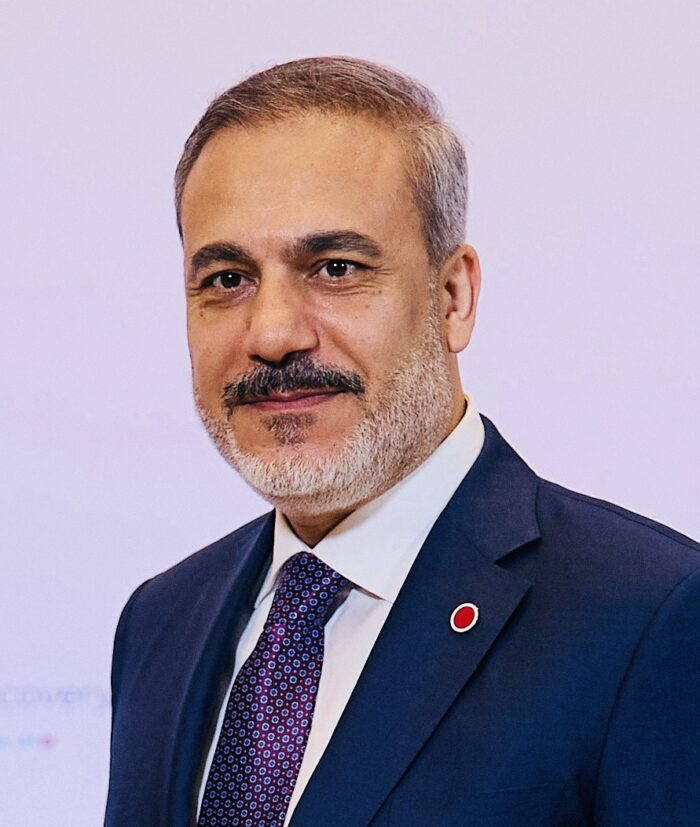
Turkey’s foreign minister, Hakan Fidan, claims that the U.S. risks igniting a regional war if it tries to force concessions from Iran regarding its ballistic missiles and its support for regional proxies. Attempting to address all these issues at once, he argues, may prevent the nuclear talks from progressing.
U.S. Vice President JD Vance has said that the Trump administration is focused on preventing Iran from obtaining nuclear weapons, and that the U.S. is not planning to overthrow the Iranian regime.
On February 13, Trump contradicted Vance, saying that regime change in Iran “would be the best thing that could happen.”
In the face of mass protests in Teheran and other cities last month, he urged demonstrators to “take over” government institutions and reportedly asked aides for a strike plan to topple the regime.
Vance said that Trump’s objective is to hammer out an agreement that ensures that Iran cannot produce nuclear weapons. “But if we can’t cut that deal, then there’s another option on the table,” he said in a veiled reference to military strikes. “The president is going to continue to preserve his options.”
Which means that Trump has no intention of revealing what he will do until the very last minute. Depending on conditions, he will either stick with diplomacy or pivot toward war.