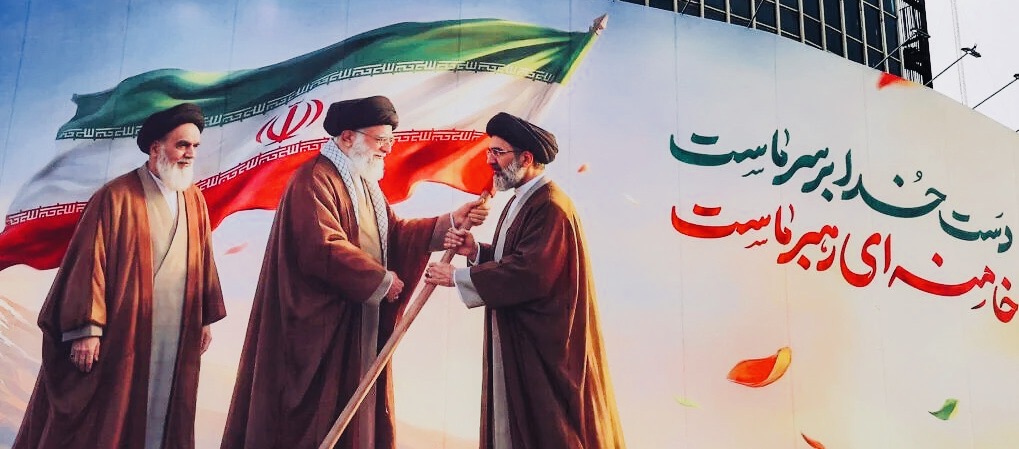
Iran was decisively defeated by the United States and Israel in the 40-day war that broke out on February 28. Yet the Iranian regime has not only survived the onslaught, but has seized control of the vital Strait of Hormuz and is implicitly daring U.S. President Donald Trump to restart the war.
Not exactly what he had in mind when he joined forces with Prime Minister Benjamin Netanyahu to attack Iran after three rounds of peace talks.
U.S. Defence Secretary Pete Hegseth, however, has threatened to resume hostilities. “Our forces are maximally postured to restart combat operations,” he said on April 16.
Although Trump has threatened to wreak further destruction on Iran, his gut tells him that the continuation of the war would be too costly politically and financially.
From the very outset, the war was unpopular in the United States, even among the Make-America-Great-Again faction of the Republican Party. And with the price of gasoline having reached an average of $4 per gallon, the already high cost of food is bound to escalate, leaving the Republicans vulnerable in the forthcoming mid-term elections.
Perfectly aware of these harsh realities and Trump’s desire to halt to the war, Iran has been in no hurry to settle it on his maximalist terms. Indeed, Iran’s goal is to establish “new security and political equations” in the Middle East that recognize its “power,” according to its Supreme National Security Council, which formulates foreign and defence policies.
On April 21, at Pakistan’s request,Trump extended the April 8 ceasefire indefinitely until “discussions are concluded, one way or the other.” He did so after Vice President JD Vance failed to reach an agreement with Iranian negotiators at high-stakes talks in Islamabad. From Iran’s perspective, Trump blinked.
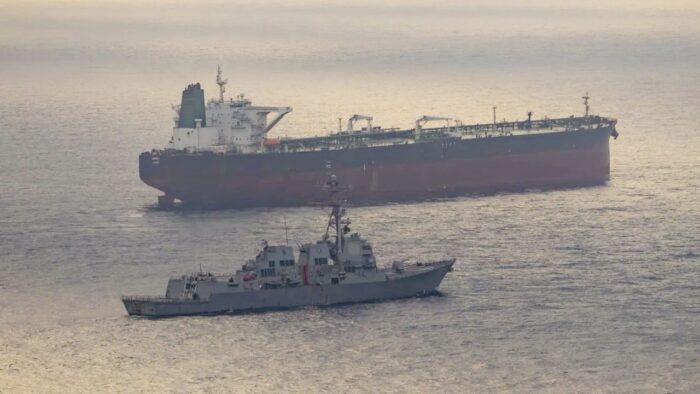
Trump’s extension of the truce presumably validated the Iranian leadership’s conviction that their willingness to endure economic pain is higher than his. Iran may even think that it can withstand the U.S. blockade of Iranian ports longer than Trump is willing to tolerate Iran’s selective closure of the Strait of Hormuz, through which 20 percent of the world’s oil and natural gas flows.
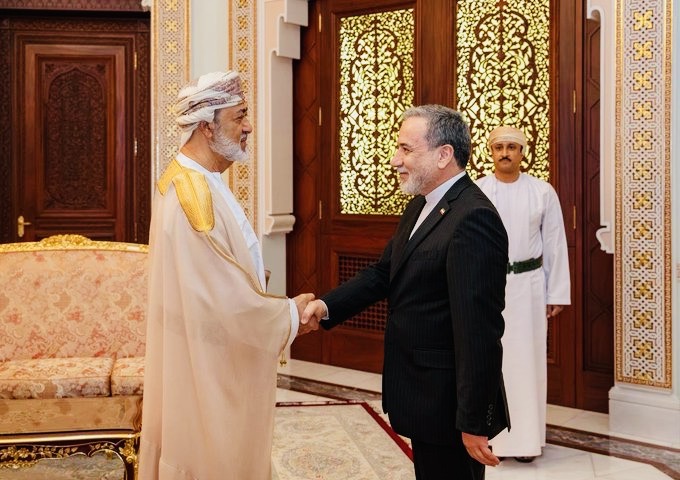
Vance was prepared to fly to Pakistan again in a bid to seal the deal, but Iran was not in a cooperative mood, forcing him to cancel his mission. In addition, Trump called off a trip by two of his top negotiators. Steve Witkoff, his special envoy, and Jared Kushner, his son-in-law, had been scheduled to travel to Islamabad, but Iran’s negotiator, Foreign Minister Abbas Araghchi, left the Pakistani capital before their departure.
In the face of this snub, Trump, who recently demanded Iran’s “unconditional surrender,” insisted that the United States has the upper hand. “We have all the cards,’” he claimed. “They can call us anytime they want.”
The cancellation of Kushner’s and Witkoff’s trip was telling. It was the latest sign that the United States and Iran are deadlocked and are no closer to reaching a deal to end the war. It was also an indicator that the Trump administration has yet to achieve its primary goals: the scrapping of Iran’s nuclear program, the removal of Iran’s stockpile of 400 kilograms of 60 percent enriched uranium, the reduction of its ballistic missile arsenal, and the cancellation of Iranian support of regional proxies like Hezbollah and Hamas in the Axis of Resistance.
According to Axios, Iran recently submitted a proposal to reopen the Strait of Hormuz and end the naval blockade and the war, while delaying negotiations on its nuclear program for a later stage.
The Wall Street Journal suggests that Iran’s latest proposal represents an effort to finish the war on its own terms. During the first phase, the United States and Israel would agree to permanently end the war. During the second stage, the United States and Iran would discuss the status of the Strait of Hormuz and the U.S. would lift its blockade on Iranian ports. During the third stage, Iran and the United States would begin negotiating over the nuclear issue.
Trump is reportedly dissatisfied with Iran’s proposal and intends to keep the blockade in place, according to reports. The U.S. Central Command, whose purview is the Middle East, has so far ordered more than 30 Iranian-linked vessels to turn around or return to port since the start of the blockade on April 13.
The Strait of Hormuz, an international waterway, was not a problem prior to the war, but has since morphed into a major one.
The Iranian regime, having recognized its strategic importance and its potential as a bargaining tool, has claimed sovereignty over it, even though Iran has no legal claim to it. Iran has repeatedly attempted to regulate traffic through it by directing ships through Iranian territorial waters, extracting shipping fees, and attacking and threatening maritime traffic.
The Institute for the Study of War contends that this is a serious issue: “Any U.S. settlement or resolution of the conflict that enables Iran to control traffic through the Strait of Hormuz would represent a major U.S. defeat and set a precedent with critical implications for global trade, given the strait’s role as a critical energy chokepoint.
“Recent Iranian proposals to the United States have implicitly demanded that the United States and international community recognize Iran’s ‘control’ over the strait. Iran has offered to ‘let’ vessels transit the strait in these proposals, but Iran’s ‘letting’ traffic through the strait implies that Iran can ‘let’ traffic through an international waterway. These proposals are consistent with persistent Iranian messaging throughout the war that Iran seeks to impose a new status quo for transit through the strait. Any U.S. acceptance of Iran’s ability to regulate transit would undermine the principle of freedom of navigation through the Strait of Hormuz and enable Iran to condition access to the strait on compliance with its demands, thereby enabling Tehran to exert persistent pressure on the global economy and the United States and its allies.”
What Iran is essentially attempting to do is to establish a “protection racket” in the Strait of Hormuz, the Institute for the Study of War charges.
Its virtual closure is an unmistakable sign of infighting within the Iranian regime.
Araghchi, on April 17, announced that it was “completely open” to commercial traffic. But on April 18, in a marked reversal, the Islamic Revolutionary Guards Corps (IRGC) announced that it had attacked several vessels and declared that no ship of “any type or nationality” was permitted passage through the Strait of Hormuz.
The discrepancy in their positions validates the argument that there is a power struggle pitting Mohammad Bagher Ghalibaf, the Speaker of Parliament, against Ahmad Vahidi, the IRGC’s commander, who is suspected of having planned the bombing of the Jewish community center in Buenos Aires in 1994 that killed 85 people. At the moment, Vahidi appears to have the upper hand in this jockeying for dominance.
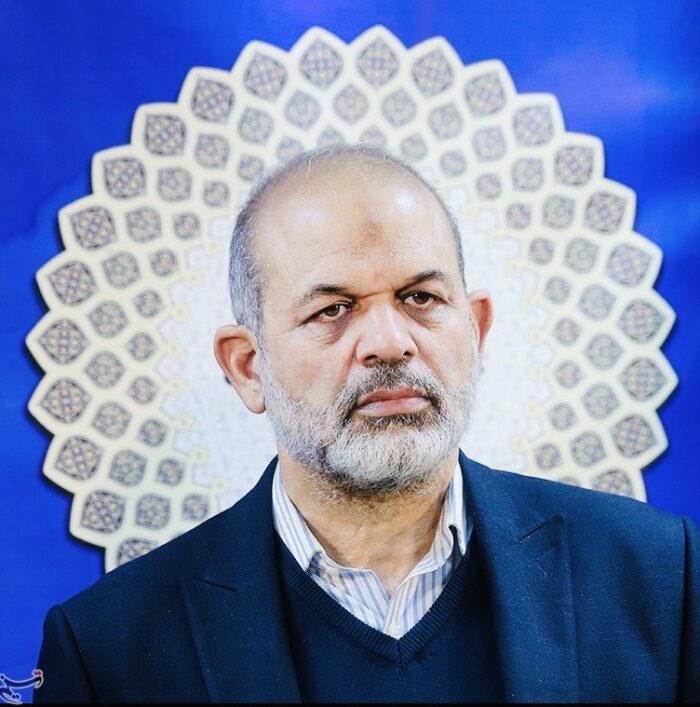
The Institute for the Study of War believes that Vahidi and his associates have “likely secured at least temporary control over not only Iran’s military response in this conflict but also Iran’s negotiating position.”
Vahidi seems to be the only senior Iranian official with direct access to Mojtaba Khamenei, the current supreme leader. He succeeded his father, Ali, following his assassination on February 28. Mojtaba was seriously wounded on that day and has gone into hiding. He has yet to appear in public. By all accounts, he relays key decisions through Vahidi, a situation that empowers Vahidi.
In the interim, Iran is ruled by the Supreme National Security Council, whose members include top civilian and military officials. While Ghalibaf has emerged as its representative face and chief negotiator with the United States, Vahidi appears to be pulling the strings from behind the scene.
The existence of a collective leadership in Tehran means that the decision-making process has become infinitely more complex and time-consuming. It also means that Iran’s conflict with the United States may last longer than Trump desires, much to his detriment.