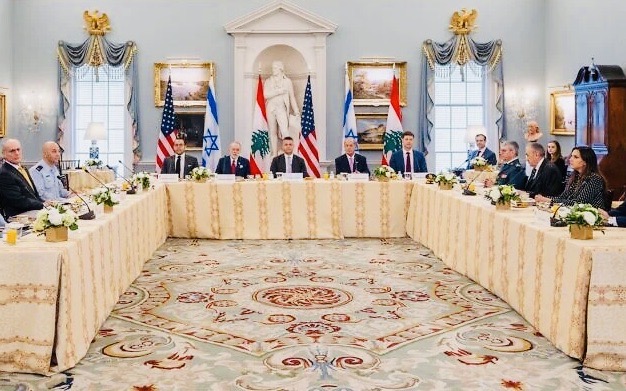
When the third round of U.S.-mediated Israel-Lebanon talks ended at the State Department in Washington on May 15, the United States announced a 45-day extension of the April 16 ceasefire in Lebanon. State Department spokesman Tommy Pigott sounded an upbeat note, describing the two-day talks as “highly productive.”
“We hope these discussions will advance lasting peace between the two countries, full recognition of each other’s sovereignty and territorial integrity, and establishing genuine security along their shared border,” he said.
The U.S., he went on to say, believes that “comprehensive peace is contingent on the full restoration of Lebanese state authority and the complete disarmament of Hezbollah. These talks aim to break decisively from the failed approach of the past two decades, which allowed terrorist groups to entrench and enrich themselves, undermine the authority of the Lebanese state, and endanger Israel’s northern border.”
Israel’s chief representative at the negotiations, Yechiel Leiter, the Israeli ambassador to the United States, realistically called the current truce “a ceasefire in aspiration.” But in a post on X, he wrote that the most recent talks had been “frank and constructive” and that “the potential for success is great.”
The third round, for the first time, included military officials from both sides. Israel’s acting defence attache to the United States, General Arik Ben Dov, and the head of the army’s strategic division, General Amichai Levin, represented Israel.
The Lebanese officials remained unidentified.
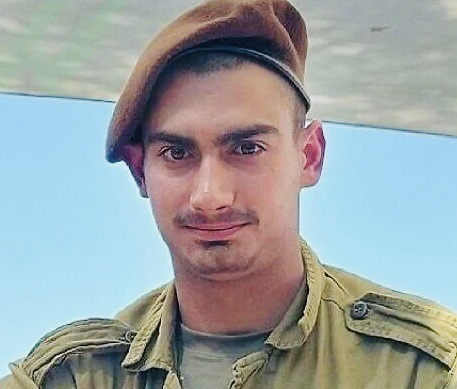
As the third round of talks got under way, Hezbollah continued to fire missiles and drones at Israel, while an Israeli soldier, Negev Dagan, 20, was killed during a clash with Hezbollah near the Litani River in southern Lebanon. His death brought to 19 the number of Israeli soldiers who have died since the current round of hostilities erupted on March 2, following U.S. and Israeli air strikes in Iran.
Two Israeli civilians have been killed by Hezbollah rockets, and an Israeli civilian was mistakenly killed in the Galilee by Israeli artillery shelling.
In the 48 hours before the talks began, 55 people in Lebanon were killed by Israeli air strikes in and near the southern Lebanese city of Tyre after Israel issued evacuation orders for the area.
Since March 2, the death toll in Lebanon has risen to at least 2,500. Many of the victims are Hezbollah operatives, including hundreds of members of its elite Radwan Force. On May 6, Israel eliminated its commander, Ahmed Ghaleb Balout, in a strike in Beirut, the Lebanese capital.
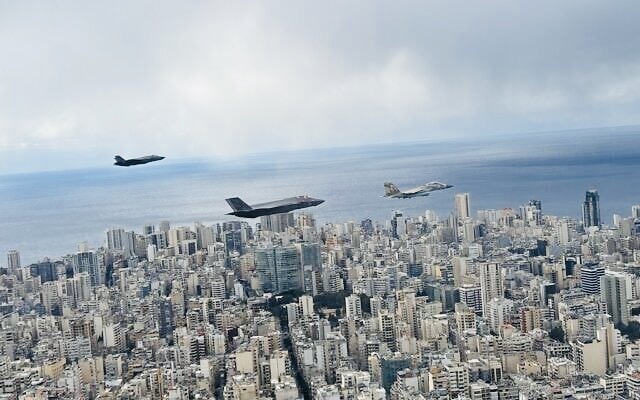
Israel has struck more than 5,000 Hezbollah targets, notably command centers, weapon depots, and rocket and missile launchers, according to the Israel Defence Forces.
Hezbollah has fired 5,500 rockets and around 300 drones at Israeli troops in Lebanon and at Israel itself from sites north of the Litani River. Israel has created a buffer zone south of the river from which most of its inhabitants have been evacuated.
On the eve of the latest talks, Leiter said that Israel would present the Lebanese delegation with a proposal to gradually disarm Hezbollah and expand political relations with Lebanon, which has been in a technical state of war with Israel since 1948.
Leiter said that Hezbollah remains heavily armed despite the Lebanese government’s claim that is it clearing southern Lebanon of Hezbollah’s weapons. He added that Israel has found 8,000 rockets, missiles, weapons and tunnels in that area since March 2.
“We need to see, in practice, how the Lebanese government strengthens the Lebanese army and acts concretely,” he said. “Under no condition will we agree to … allow Hezbollah to rearm.”
Leiter said that Israel is pursuing a broader diplomatic initiative to achieve two interlocking objectives.
“We are prepared for two tracks. One track is to conduct negotiations for full peace (with Lebanon) as though Hezbollah does not exist — borders, embassies, visas, tourism, everything. An agreement like that could be reached within a few months. But it would be contingent on the success of the second track — dismantling Hezbollah.”
Leiter said he told U.S. President Donald Trump and senior American officials in the previous round that any agreement with Iran would have to include an end to Iran’s support of regional proxies such as Hezbollah.
By Leiter’s account, the Lebanese ambassador informed Trump that if a U.S. peace agreement with Iran does not include a total cessation of Iranian support for Hezbollah, “there will be no future for Lebanon.”
Nearly two weeks before the talks, Hezbollah’s secretary general, Naim Qassem, said that Hezbollah would not “relinquish its weapons or its defences.”
He demanded that the Lebanese government must pursue five goals: an end to Israel’s operations in Lebanon, the withdrawal of Israeli troops in Lebanon, the release of Lebanese prisoners in Israel, the return of Lebanese civilians displaced in southern Lebanon, and the reconstruction of the country. In addition, he said, Hezbollah supports the deployment of the Lebanese army south of the Litani River.
The American Task Force on Lebanon believes that a comprehensive strategy will be required if negotiations are to succeed.
“While peaceful relations remain the ultimate objective, progress will depend on achieving intermediate, credible deliverables that sustain the ceasefire and build momentum.
“This will necessarily take the form of intermediate steps that ensure the ceasefire is durable and enforced: phased approaches to disarmament that are paired with reciprocal Israeli de-escalatory measures, the return of displaced populations to secured areas that are supported by the Lebanese armed forces with international monitoring and deconfliction, and movement toward a security arrangement and eventual end-of-conflict framework that can support future dialogue around peace. Such progress will depend on short-term confidence-building measures by both parties that build trust and sustain a viable negotiation process, especially considering Israel’s low tolerance for a drawn-out disarmament process.
“The road to peaceful relations will depend on the ceasefire holding. The current talks will thus be critical in shifting the trajectory from escalation to managed negotiation. If sustained, they can gradually establish the foundations for confidence-building measures, deconfliction, intelligence sharing, localized stabilization, and structured engagement on security arrangements. However, all this will require discipline from all parties and prolonged U.S. engagement.”
In the meantime, Israel has expanded the scope of its military campaign in Lebanon.
Over the past two weeks, the Israeli Air Force has conducted attacks in the Bekaa Valley, a Hezbollah stronghold, and targeted vehicles in drone strikes along Lebanon’s coastal highway. Israeli infantry has crossed the Litani River for the first time in operations to destroy Hezbollah infrastructure ranging from tunnels to mortar launch sites.
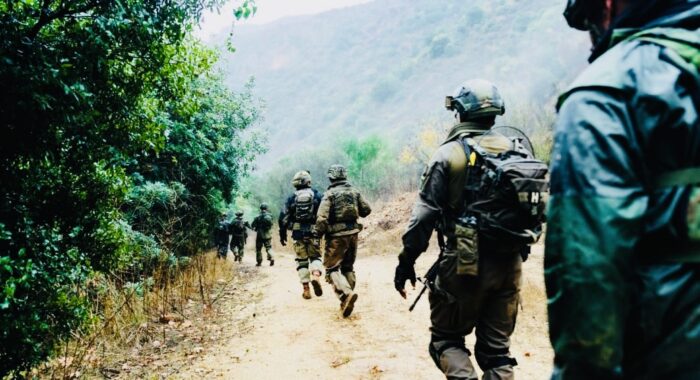
Israel has demolished Lebanese villages near the Israeli border and set up army posts several kilometers inside Lebanon to protect Israeli communities in the Galilee.
According to the Lebanese government, demolition operations have razed or damaged more than 10,000 homes. “Since the current ceasefire … 5,386 housing units have been completely destroyed and 5,246 housing units have been damaged,” said Chadi Abdallah, the head of the Lebanon’s National Council for Scientific Research, on May 14.
Looking ahead, the Israeli chief of staff, General Eyal Zamir, has instructed the armed forces to target Hezbollah’s FPV drone production and supply chain infrastructure “beyond southern Lebanon.” Israeli strike are part of a new “offensive policy” in which Israel will try to disrupt Hezbollah’s drone activity and wipe out Hezbollah drone operators.
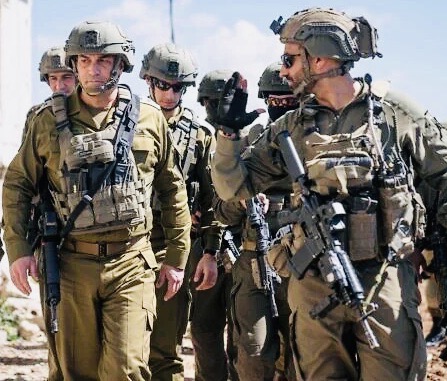
FPV drones are controlled by invisible fiber-optic cables rather than by radio signals and are designed to evade electronic jamming. The majority of fiber-optic FPV drones cost between $300 and $400 per unit, whereas radio-controlled FPV drones cost over $1,000 per unit. Iran has likely provided Hezbollah with this drone technology.
In the past month, FPV drones have killed and wounded a succession of Israeli soldiers in high-precision attacks. According to The Institute for the Study of War, “The Israel Defence Forces has struggled to disrupt Hezbollah’s FPV drone capabilities because Hezbollah has decentralized its command-and-control network for FPV drone operators and dispersed them across various units in southern Lebanon.
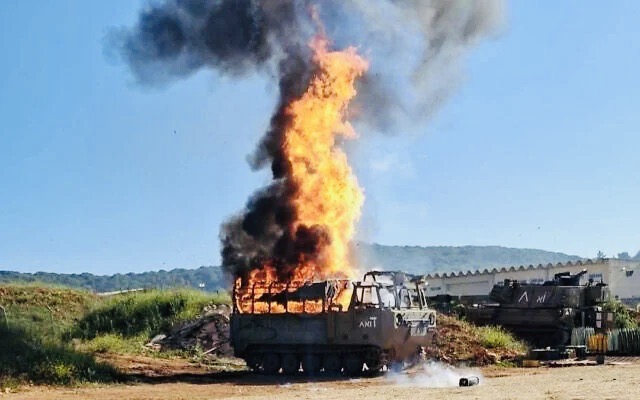
“An Israeli military correspondent reported on May 11 that Israel has killed less than 10 of Hezbollah’s roughly 100 FPV drone operators during the current conflict. Hezbollah has demonstrated the capability to use FPV drones in cross-border attacks on sensitive military equipment. The group recently posted video footage of two FPV drone attacks damaging an Israeli Iron Dome missile defence battery near the Israel-Lebanon border on May 7 and 8.”
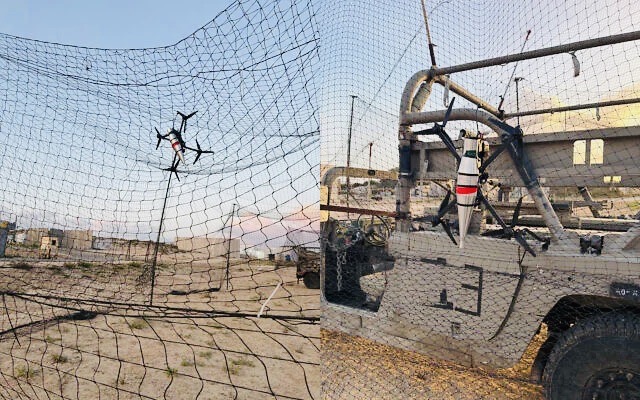
Israel has rushed in mesh netting to protect soldiers and equipment, but it has yet to be determined how effective this material will be.
Israel is proceeding on the realistic assumption that the ceasefire in Lebanon is a ceasefire in name only.