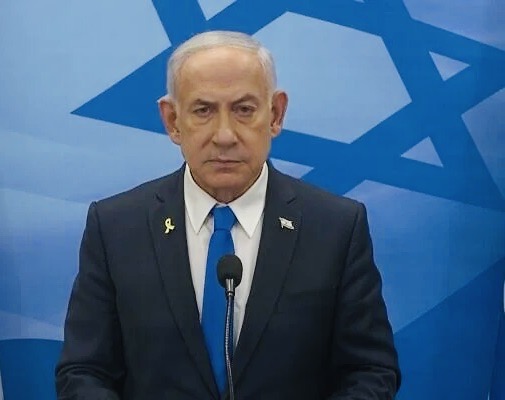
Benjamin Netanyahu, the leader of the Likud Party, is Israel’s longest-serving prime minister, having held his post, on and off, for 18 years now. First elected in 1996, he went down to defeat in 1999, only to regain his job in 2009 after serving as foreign and finance minister. Swept out of office in June 2021, he reclaimed the premiership in December 2022, following the fifth election in less than four years.
With the next election four or five months away, Netanyahu is looking forward to extending his electoral streak and political longevity. But with the formation of the Yachad (Together) Party on April 26, Netanyahu’s chances of regaining power are by no means assured.
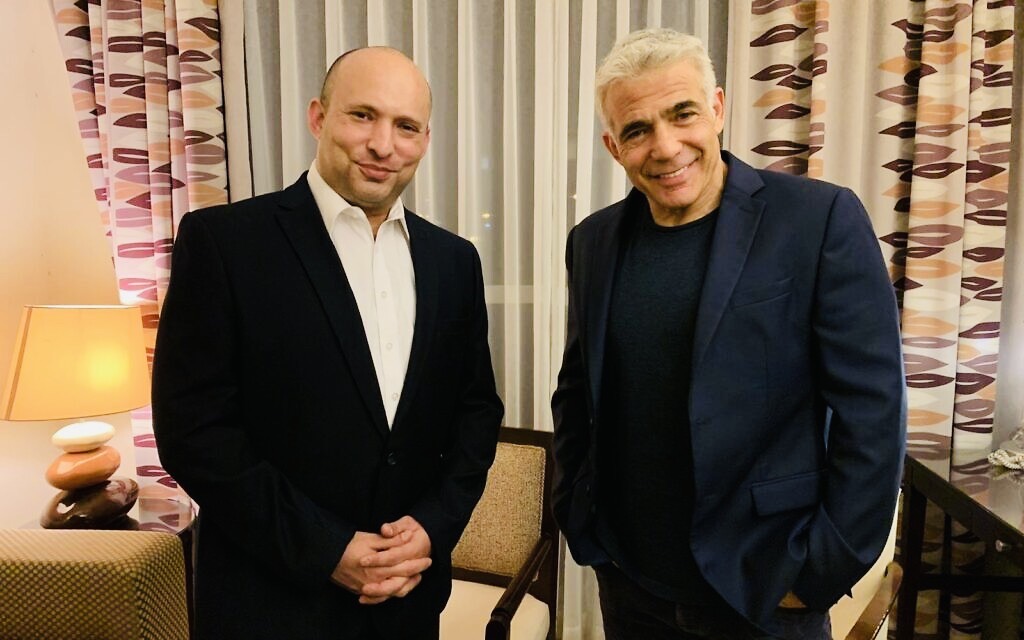
Yachad was formed by two former prime ministers, Naftali Bennett and Yair Lapid, who shared Netanyahu’s premiership while he was briefly opposition leader. Lapid headed the middle-of-the-road Yesh Atid Party, which currently holds 24 Knesset seats. Bennett, a rightist, led the Bennett 26 Party. Previously, he was at the helm of the Jewish Home Party and the New Right Party.
“Bennett and I don’t pretend to agree on everything,” Lapid said the other day. “He’s a right-winger, I’m a centrist. We have disagreements, and that’s good. For too long we’ve let our differences define us. This time, we decided to start with what unites us. Before all our disagreements, we are patriots, we are Zionists, we believe in a Jewish and democratic state, and we believe in each other.”
In this unifying spirit, the pair think they can oust Netanyahu, but there are no guarantees in Israeli elections.
As Netanyahu’s former advisor, Mitchell Barak, has pointed out, Bennett has a history of starting out strong and petering out, while Netanyahu is often initially weak but comes up on top. Case in point: Tzipi Livni, a centrist, won more seats than Netanyahu in the 2009 election, but was unable to form a coalition, giving him the opportunity to cobble together a government.
At the moment, Netanyahu and his coalition partners have 64 seats in the 120-seat Knesset, eight more than their opponents. The Likud has 32 seats, more than any other party.
According to a recent Channel 12 News poll, Yachad would be two seats shy of a majority after the next election. A Zman Yisrael survey found that Yachad and Likud would emerge as the largest parties. Yachad would win 60 seats, just one seat short of a majority, leaving the Israeli Arab parties, Ra’am and Hadash-Ta’al, holding the balance of power. They currently have ten seats.
Which means that neither Yachad nor Likud would command a parliamentary majority without the support of Arab parties, whom leaders of both blocs have rejected as potential coalition partners.
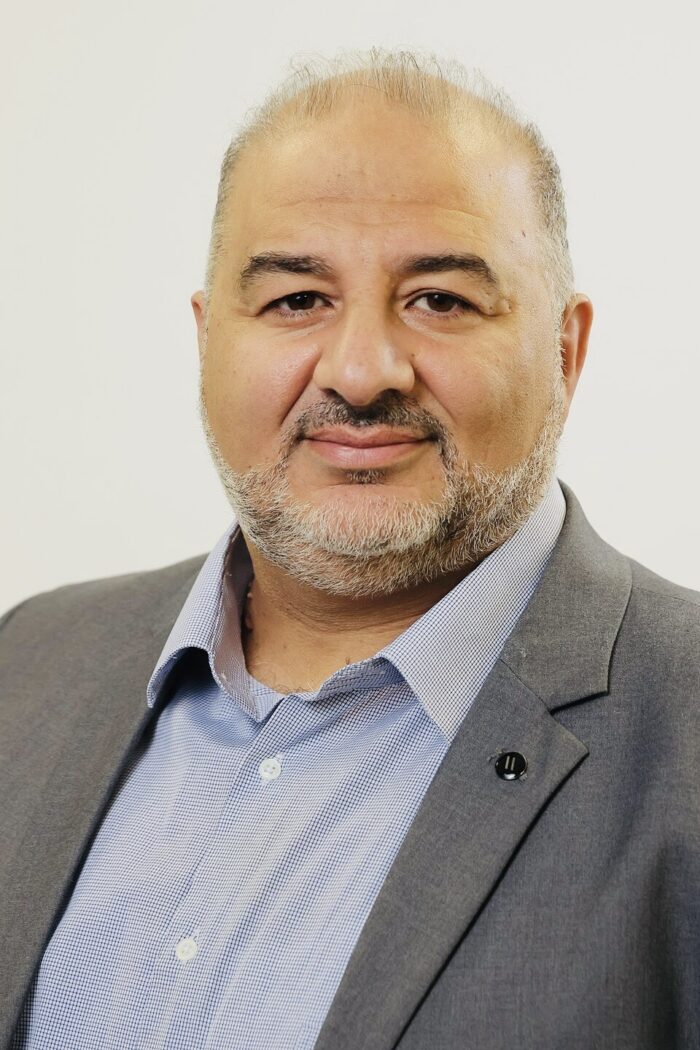
Ra’am, an Islamist party under the leadership of Mansour Abbas, joined the Bennett-Lapid coalition in 2021. His presence in the government was partly responsible for its demise. Some Jewish right wingers believed that an Arab should not be in a position to influence Israel’s policies.
This time around, Bennett has ruled out the possibility of inviting an Arab party into a coalition government, saying that the situation since Hamas’ attack against Israel on October 7, 2023 demands that only Zionist parties lead Israel. “That means the next government won’t include Arab parties,” he said bluntly.
Bennett, however, has made it clear that a government he leads would uphold the rights of Israeli Arab citizens, who comprise 21 percent of Israel’s population of 9.6 million.
Arab parties have long represented the Muslim and Christian minorities in the Knesset, but have historically remained outside governing coalitions. Their inclusion would have been regarded as politically untenable. Nonetheless, there were instances when Arab parties supported ruling Jewish parties from the outside in exchange for certain concessions.
This expedient arrangement was upended in 2021, when Abbas was invited into the coalition by Bennett and Lapid. Although Abbas’ party is an offshoot of the Islamic Movement in Israel, which has had ties to the virulently anti-Israel Muslim Brotherhood, Abbas was widely seen as a pragmatist who was willing to work with Jewish parties to secure gains for his Arab constituents.
In the past few years, Abbas has tried to distance Ra’am from the Islamic Movement and has denied any affiliation with the Muslim Brotherhood. After October 7, he condemned Hamas and stated that “the state of Israel was born as a Jewish state, and it will remain one.”
Nevertheless, Arab parties in Israel do not define themselves as Zionist.
As a result, 72 per cent of Israeli Jews, mostly right wingers, oppose their inclusion in a governing coalition, according to the Democracy Index poll. Forty three percent of centrist voters and 20 percent of left-wing voters oppose such coalitions as well.
With an election on the horizon, this has become a volatile issue.
Shortly after Yachad’s formation, Finance Minister Bezalel Smotrich, the leader of the far-right Religious Zionist Party, claimed that Bennett’s decision to include Ra’am in his 2021 coalition was a failure “a thousand times worse” than Israel’s intelligence mishap on October 7.
In fact, as some commentators have gleefully noted, Netanyahu was the first prime minister to attempt to entice Abbas into his government.
Five years on, Netanyahu’s operatives are pouring scorn on the expectation that Bennett and Lapid may revise their decision to exclude Arab parties from a coalition.
AI-generated viral videos they have posted of late portray them as dupes of Israeli Arab puppetmasters and equate Arab parties with the Muslim Brotherhood and Hamas.
One video, with over one million views, shows Bennett and Lapid embracing before they peel off their faces to reveal Abbas and Ahmad Tibi, another Arab member of the Knesset.

Still another video, depicting Bennett and Lapid as children sitting obediently in the back seat of a car as Abbas drives, is accompanied by a caption: “In any case, Bennett and Lapid will go again with the Muslim Brotherhood, the terrorism supporters.”
Yair Golan, the chairman of the left-of-center Democrats Party and the former deputy commander of the Israeli armed forces, has adopted a conciliatory approach toward Abbas’ inclusion in a government.
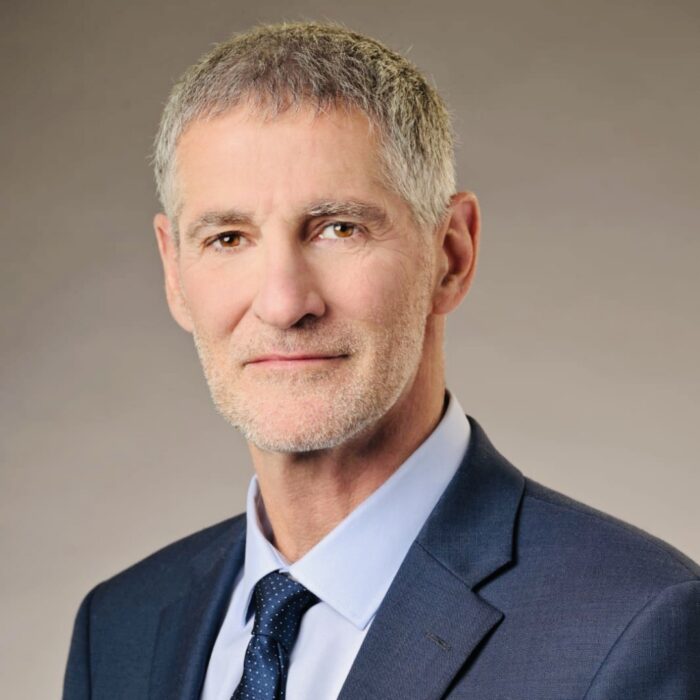
In a biting reference to Netanyahu’s stewardship, he said, “If we must rely on the votes of Ra’am to topple this failed government of disaster, the most dangerous to Israel’s security, then Ra’am is a worthy partner.”
The rejection of Ra’am, he added, “plays into the hands of Netanyahu and his partners, who are deliberately dragging us toward national catastrophe and the destruction of the Zionist enterprise.”
Netanyahu is certainly skating on thin ice as the election draws closer.
A Channel 12 News poll released on May 8 showed that 42 percent of Israelis who voted for the Likud in the previous election would cast their ballots for another party.
Ten percent of voters would switch to Yachad, six percent would back Gadi Eisenkot’s centrist Yashar Party, and four percent and three percent would respectively back Avigdor Liberman’s secular right-wing Yisrael Beitenu Party and Itamar Ben Gvir’s radical right-wing Otzma Yehudit Party. The rest would vote for Yoav Hendel’s right-wing Reservists Party, Benny Gantz’s Blue and White (National Unity) Party and Smotrich’s Religious Zionist Party.
Netanyahu, who has been on trial for the past six years on criminal charges of fraud, breach of trust and corruption, is trailing in the polls due to a number of reasons.
His failure to acknowledge responsibility for the October 7 onslaught has upset a wide range of Israelis. Several days ago, he admitted that “everyone” from the top to the bottom of the political, military, and security hierarchies shoulders blame. But he quickly went on to say that the “real issue” is what has happened since that day of infamy.
Hezbollah attacks have raised questions about Netanyahu’s claim. Reports suggest that some residents of northern Israel have lost faith in him since the eruption of Israel’s second war with Hezbollah in two years. Netanyahu claimed that Hezbollah’s military capabilities were significantly degraded during the 2024 war, but facts on the ground have proved otherwise. Since March 2, the Galilee — a Likud stronghold — has been bombarded by Hezbollah, a proxy of Iran, leaving its inhabitants embittered.
Israelis are also livid over Netanyahu’s handling of the haredi draft issue. About 80,000 ultra-Orthodox yeshiva students have been called up for military service in accordance with a Supreme Court ruling, but only some 2,000 have answered the call in a flagrant rebuke of the government’s authority. Netanyahu has not enforced this order, much to the outrage of Israelis whose sons and daughters serve in the armed forces.
Still other Israelis are furious over Netanyahu’s efforts to overhaul the judiciary and weaken the powers of the Supreme Court. They believe that his campaign has led to an erosion of democracy in the country.
Cognizant of these developments, Bennett and Lapid smell blood, thinking they can capitalize on the seething discontent among Israeli voters. They may be right, but Netanyahu, a shrewd and seasoned operator, may surprise them come the election.