Donald Trump lambasted the 2015 Joint Comprehensive Plan of Action (JCPOA), which placed severe restrictions on Iran’s nuclear program. He called it “one of the most incompetently drawn deals I’ve ever seen.” After he unilaterally withdrew from the agreement in 2018, he assured Americans that he would forge a far better deal than his predecessor, Barack Obama.
Eight years on, following the joint attack launched by the United States and Israel against Iran last February, Trump was presented with a tangible opportunity to make good on his boast.
He appears to have failed.
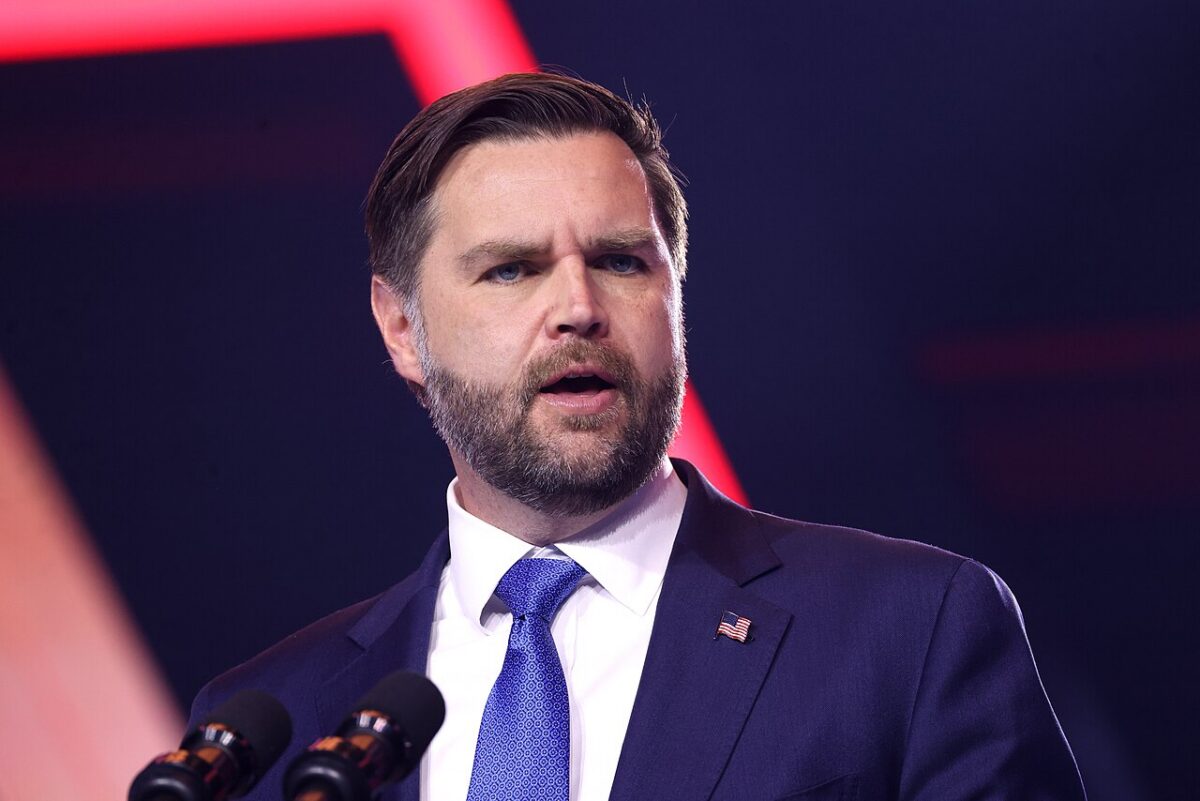
Although he and Vice President JD Vance have lauded the memorandum of understanding as a stellar diplomatic achievement, their upbeat assessment has been vigorously challenged, particularly in Israel.
While Iran’s supreme leader, Mojtaba Khamenei, endorsed it, he claimed that Trump made the deal out of “desperation.” Iran’s lead negotiator, Mohammad Bagher Ghalibaf, likened it to a “record of U.S. failure. People will see it and judge.”
Thomas Friedman, a New York Times columnist, basically agrees with their verdict. In a June 19 piece, he wrote, “Trump sold out America’s ally in the war, Israel, and the Arab Gulf states for the swing states of Pennsylvania, Georgia and Michigan. Trump knew that the food inflation and high gasoline prices triggered by this war were a prescription for a Republican wipeout in the midterms. He had to stop the war now to get prices down by November … So, Trump did what he always does: He abandoned all principle and all allies and put his personal interests above all other considerations.”
Friedman has a valid point.
Trump started the war with three assumptions. He expected it to last no more than six weeks. He assumed it would not have a detrimental effect on the U.S. and global economies. And he thought he would coast to an untrammelled victory over Iran.
The resilient Iranian regime shattered his preconceived notions. The United States and Israel were militarily successful, pummelling Iranian targets day and night in devastating air strikes, but Iran did not submit to defeat. Indeed, Iranian leaders refused to bow to Trump’s demand for “unconditional surrender.” Furthermore, they seemed in no hurry to end the war and begin negotiations, greatly frustrating Trump.
Despite his threats and blustery rhetoric, Trump knew that the longer the war went on, the worse his political standing in the United States would be. With oil, natural gas, fertilizer and food prices rising exponentially after Iran’s closure of the Strait of Hormuz early in the war, Trump effectively lost control of its dire economic consequences.
Judging by public opinion polls, Trump was acutely aware that the war was unpopular with at least 60 percent of Americans. And with midterm elections looming in November, Trump feared that some voters would turn against the Republican Party.
In the final analysis, Trump had no stomach for a protracted, or “forever,” war, a scenario he consistently denounced during his two presidential campaigns.
Trump was eager to put the war behind him and get on with his domestic and international priorities.
After months of on-again, off-again negotiations, the U.S. and Iran signed a memorandum of understanding officially ending the war.
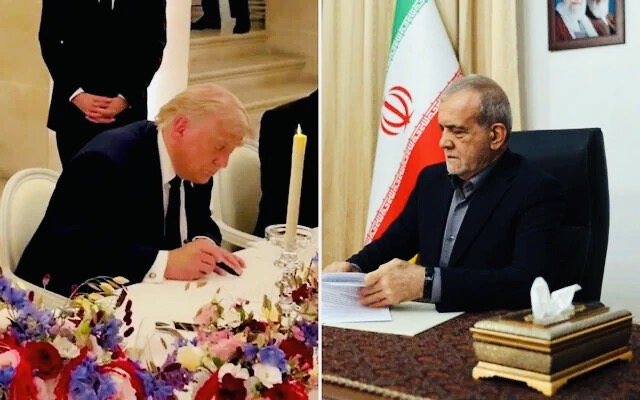
It was signed by Trump and Iranian President Masoud Pezeshkian on June 17. Israel, which was not a party to it, says it will not be bound by the agreement, which terminates all military operations on all fronts, including Lebanon, and sets the stage for 60 days of talks to reach a final accord.
Realistically, no one really thinks that a detailed agreement with Iran can be negotiated within that time frame. Lest it be forgotten, the 2015 nuclear deal that Trump so disparaged took 18 months to hammer out.
Khamenei has already indicated that Iran will reject “excessive demands” by the United States, which is an unmistakable signal that the Iranian regime intends to drag out talks and stick to its demands. Khamenei’s comment is an indicator of his perception that Iran, though militarily pulverized, won the war and can dictate its postwar terms.
As Trump himself presciently said six years ago, “Iran never won a war, but never lost a negotiation!”
A careful reading of the memorandum of understanding, a preliminary framework for a comprehensive accord, suggests that Iran gained far more than the United States.
First, it does not address Iran’s Axis of Resistance, its anti-Israel and anti-American alliance of regional proxies such as Hezbollah, Hamas and the Houthis of Yemen.
Second, it ignores Iran’s arsenal of ballistic missiles, which pose a real threat to Israel, the Arab Gulf states and U.S. military bases in the Arab world.
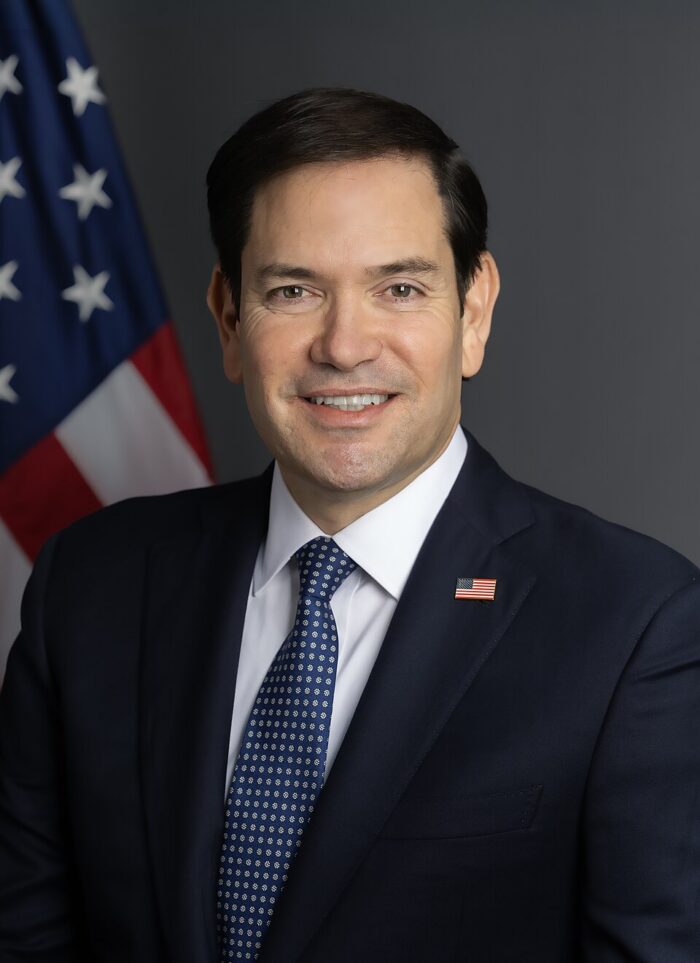
Trump administration officials, from Secretary of State Marco Rubio on down, repeatedly insisted that these issues would be firmly addressed in future talks. This past March, Rubio described the destruction of Iran’s ballistic missiles as one of the goals of the war. “The United States is conducting an operation to eliminate the threat of Iran’s short-range ballistic missiles,” he said.
It is unclear why this issue was left out of the memorandum of understanding. But when asked about this glaring omission, Vance echoed Trump’s assertion that Iran has a right of self-defence.
The Strait of Hormuz, an international waterway through which about a fifth of the world’s oil and natural gas is shipped, is mentioned in the memorandum of understanding. Under its terms, the United States is supposed to remove its naval blockade of Iranian ports, while Iran is obliged to allow the free passage of ships through the strait during the 60-day negotiation period. But what happens after two months is murky.
The United States has said it will not permit Iran to impose tolls, but the Iranian regime has made it clear that the strait’s status has changed since the war, that a “maintenance” or “environmental” fee will be necessary, and that Iran, in league with Oman, will in fact levy a fee for passage.
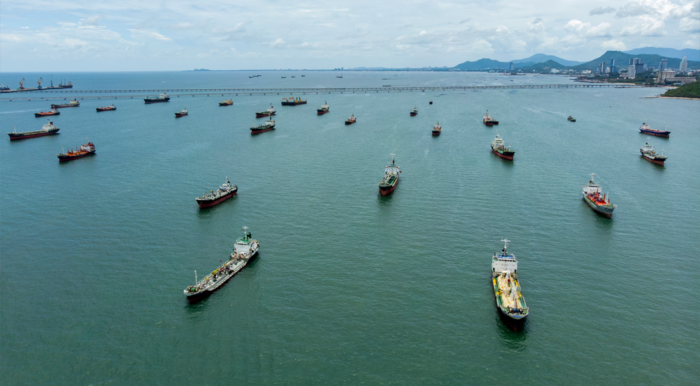
Iran’s position is at odds with both international law and traditional practice and may embolden other countries to charge fees at chokepoints. Yet this is an open issue in the memorandum of understanding.
Iran reaffirms that it will not “procure or develop nuclear weapons.” But the United States and its allies regard this affirmation as largely meaningless. The agreement, furthermore, does not settle the question of whether Iran will retain the right to enrich uranium. And it is vague regarding Iran’s right to keep stocks of enriched uranium after a final agreement is reached.
Vance expressed confidence that a final agreement will uphold Trump’s pledge that Iran will not possess nuclear weapons. “They have promised not to enrich, they have promised they would allow inspectors in to destroy that highly enriched stockpile,” he said.
Iran is required to “down-blend,” or dilute, the estimated 11 tons of enriched nuclear material in its possession. This includes the 970 pounds of uranium enriched to 60 percent, which falls just short of bomb grade. It does not require Iran to surrender that material and ship it out of the country. Under the 2015 deal brokered by Obama, Iran sent about 97 percent of its stockpile to Russia.
The memorandum of understanding calls for the “immediate and permanent termination of military operations … in Lebanon.” Iran insisted on this clause to protect Hezbollah, its chief surrogate in the Middle East. Iran, too, is calling for a full Israeli withdrawal from Lebanon.
Trump accepted Iran’s demand for a ceasefire due to his belief that the fighting in Lebanon could derail his peace deal with Iran. He has since attempted to constrain Israel’s campaign in Lebanon, much to its objection.
The memorandum of understanding calls for two additional measures: the lifting of international sanctions, which have crippled Iran’s economy for decades, and the release of $24 billion worth of Iranian frozen funds. These clauses are contingent on the signing of a final agreement. In theory, Iran could use these funds to rebuild its armed forces and its proxies.
Vance has downplayed the lifting of oil sanctions on Iran. Until now, Iran was compelled to sell its oil at considerable discounts, but from this point onward, Iran will be able to fetch higher prices, thereby fattening its coffers.
The memorandum of understanding commits the United States to support the creation of a $300 billion reconstruction fund for Iran, but it is unclear where these funds will come from.
Within 30 days of the signing of a final deal, the United States undertakes to pull out its military forces from “the proximity” of Iran. This clause is hazy, but it may enable Iran to claim that it has whittled down American influence in the Middle East.
Israel, Washington’s chief ally in the region, is less than pleased with the memorandum of understanding. In deference to Trump, Prime Minister Benjamin Netanyahu has remained silent, but a few of his ministers have denounced it.
David Horowitz, the editor of the Times of Israel, has described it as “a catastrophic capitulation” on the part of the United States. Chuck Freilich, a former deputy national security advisor, calls it “an Iranian victory over the U.S. and Israel.”
Danny Citrinowicz, a senior Iran researcher at the Institute for National Security Studies in Israel, classified it as a strategic “catastrophe.” What started as a joint U.S.-Israeli campaign to weaken or oust the Islamic Republic has degenerated into American recognition of Iran’s power. “We went to topple the regime with U.S. backing and ended with Washington effectively giving legitimacy and strengthening the same regime we wanted to bring down,” he said.
Significantly, the deal delivers none of Israel’s core demands: no curbs on Iran’s missile program or proxies and no clear path to dismantling its nuclear facilities
Vance disagrees with the naysayers. Contending that the memorandum of understanding is a “home run for the American people,” he said that some Israelis have failed to show appreciation for American support of Israel.
As he put it on June 18, “Donald J. Trump is the only head of state in the entire world who is sympathetic to the nation of Israel at this moment in time. If I was in the cabinet of the Israeli government, I might not be attacking the only powerful ally that I have anywhere left in the entire world.”
Hewing to this theme, Trump asserted that Israel owes its existence to him because Iran’s nuclear program has been badly degraded. “If it weren’t for the United States of America … Israel would not exist right now. Israel would have been blown off the face of the earth, 100 percent. And every smart person in Israel knows that.Without us, without the United States, there would be no Israel.”
Vance, however, has acknowledged that U.S. and Israeli interests occasionally diverge. Which means, of course, that the Israeli government has every right to oppose a deal that strengthens Iran.