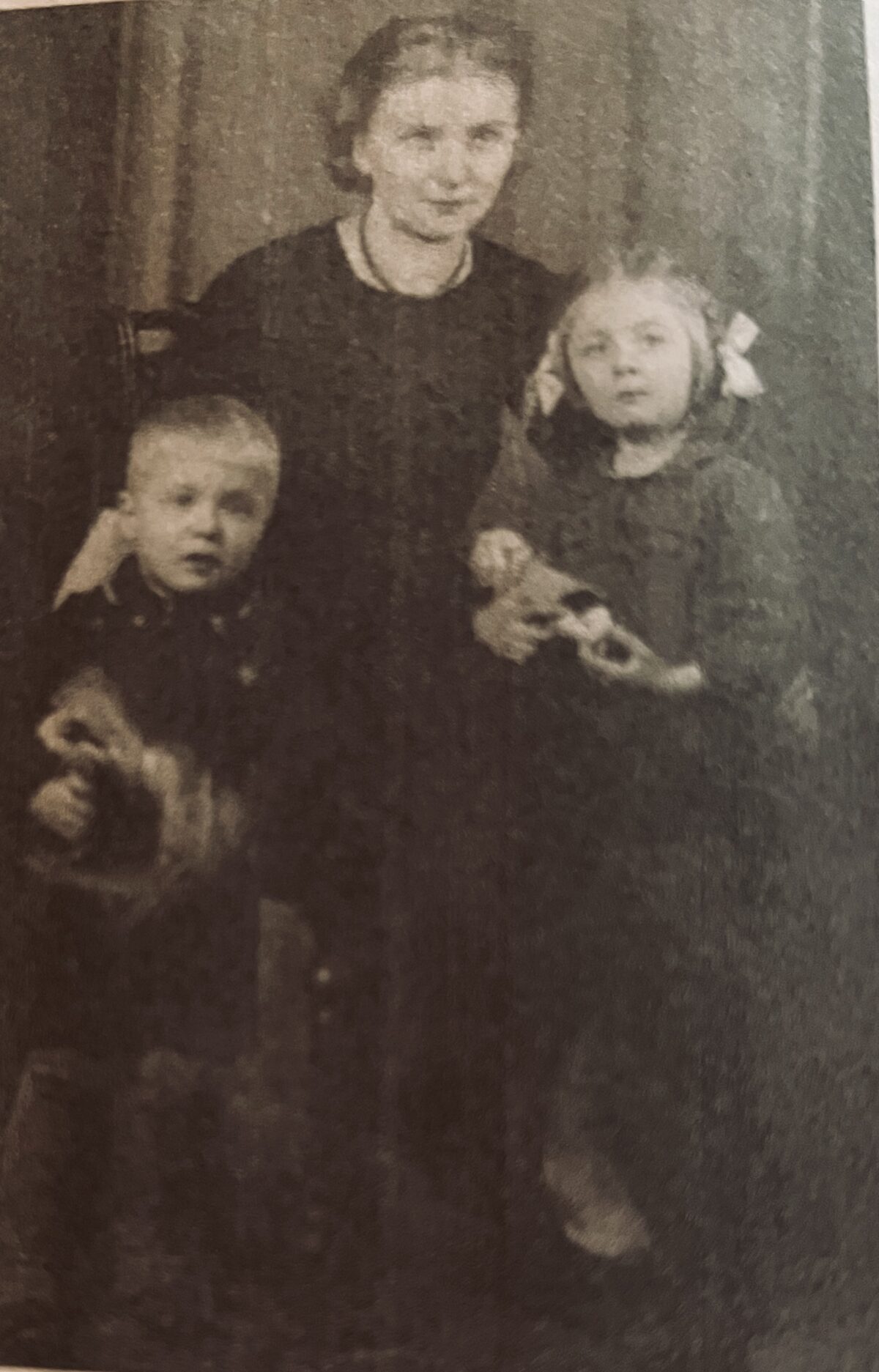
Germans of mixed race ancestry fared badly in Nazi Germany. Thomas Paul Bernstein was one of them, a half-Jew who barely survived the brutalities of the Third Reich.
He and his sister, Barbara, tell their story in Holocaust: German History And Our Half-Jewish Family (Cherry Orchard Books/Academic Studies Press), a book of distinction in terms of content and style. It is based, in part, on conversations with their late mother, Johanna Moosdorf, a novelist and poet, and on a lengthy letter she wrote to them about their Jewish father, Paul.
Holocaust is greatly enhanced by succinct but illuminating chapters on antisemitism in Germany, the Nazi persecution of Jews, and the treatment that the regime meted out to Jews of partial Jewish descent.
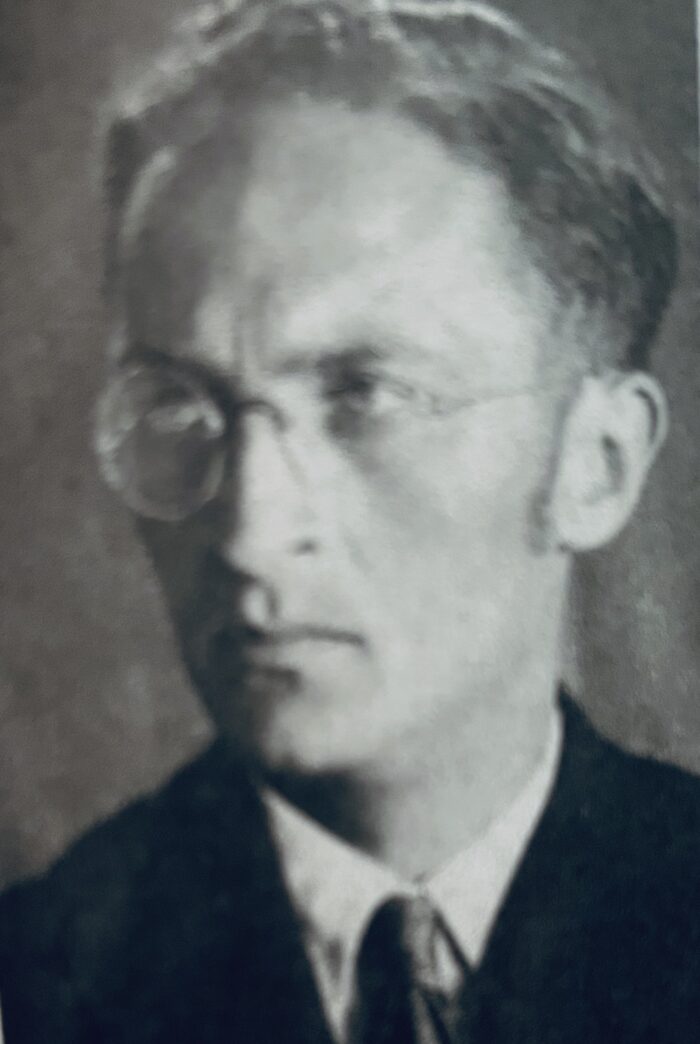
At the center of this absorbing volume is Paul Bernstein, an assimilated and patriotic Jew from Berlin who served in the German army during World War I.
Of the 66,000 Jews who enlisted, 12,000 were killed. Thirty five thousand Jewish soldiers received military medals. One Jewish soldier was the recipient of the Pour le Merit, the highest decoration for valor.
Yet in 1916, antisemitic officers propagated the canard that Jews were shirking combat. This lie prompted the emperor, Wilhelm II, to order an investigation into the matter. A report showed that the percentage of Jews serving on the front lines was as high as Christians, but this information was kept under wraps.
It goes without saying that this incident underscored the vehemence of antisemitism in Germany, which escalated with the arrival of Russian and Polish Jewish migrants in the late 19th century.
Anti-Jewish tropes not only perpetuated derogatory stereotypes about Jews, but displayed hostility to their emancipation and integration into German society, writes Bernstein, a professor emeritus of political science at Columbia, Yale and Indiana universities.
Nevertheless, German Jews thrived in business, the arts and the professions. Their success aroused resentment, especially among conservatives and the military.
According to the 1933 census, Germany was home to 522,000 Jews. It excluded Jewish converts to Christianity, Jews who had left the community, and Jews who had married Christians. Under Adolf Hitler’s rule, they were all victimized by antisemitic decrees.
Nonetheless, Jews of partial Jewish background, known as mischlinge, fared somewhat better. There were 52,000 half-Jews and 32,000 quarter-Jews when Hitler assumed power in 1933. Fervent Nazis believed that they should be treated as full Jews, with all the attendant consequences. The government decreed that they could be integrated into the German volksgemeinschaft (folkish community) only if they satisfied a number of criteria. Even so, Aryans married to Jews were encouraged to divorce their spouses.
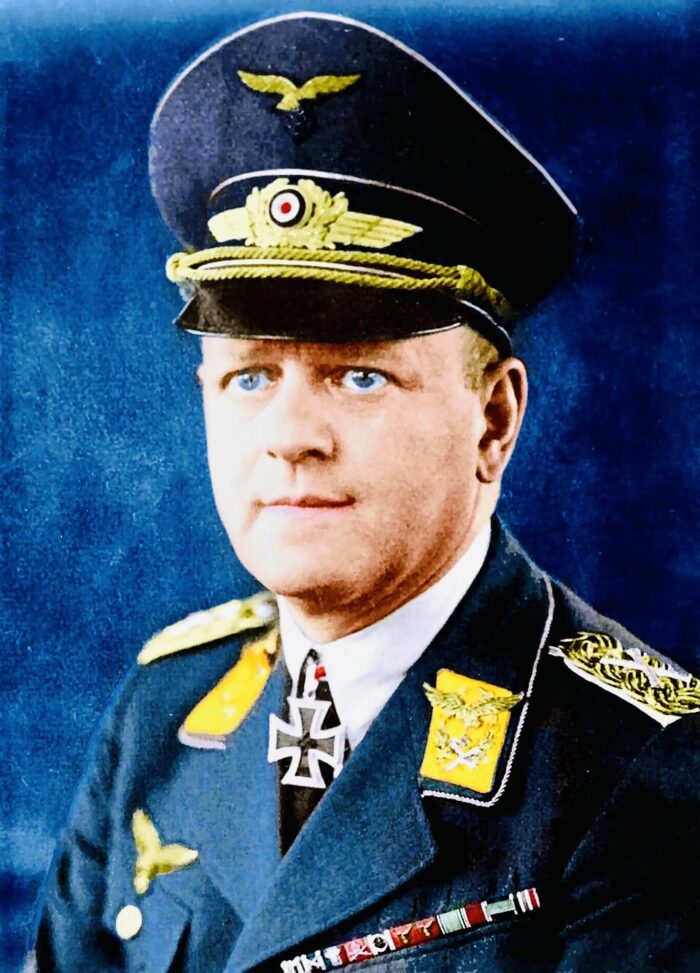
Until 1941, quarter-Jews were allowed to serve in the armed forces, but could not be promoted. However, Erhard Milch, an air force general whose father was supposedly Jewish, was allowed to remain in his post thanks to his friendship with Hermann Goring, one of the leading officials in the Nazi regime.
The persecution of Jews intensified after the outbreak of the war in 1939. By then, some 360,000 had managed to emigrate. After October 1941, they were officially forbidden to leave and subjected to deportations.
Bernstein’s parents remained in Germany after Hitler’s accession to power due to their attachment to the country. But after Kristallnacht, the nation-wide pogrom that broke out in 1938, they finally decided to emigrate. They were unable to depart because they could not obtain a U.S. visa.
As a result of the dire conditions in Nazi Germany, Bernstein and his sister were both baptized, and he was not circumcised. In the meantime, their parents struggled to earn a living. Under pressure from her employer, Johanna, their mother, divorced her husband, Paul, an adult education teacher, but they often met secretly.
Paul’s reprieve ended in January 1944, when he was sent to the Theresienstadt concentration camp near Prague. Eight months later, he was transported to Auschwitz-Birkenau, where he perished. He was among 170,000 German Jews who were murdered during the war. Johanna never got over his death and expressed her grief in books and poems.
Back in Nazi Germany, Barbara, a half-Jew, was subjected to several hurtful experiences at school. Thomas Paul, who did not look Jewish, managed to avoid unpleasant incidents.
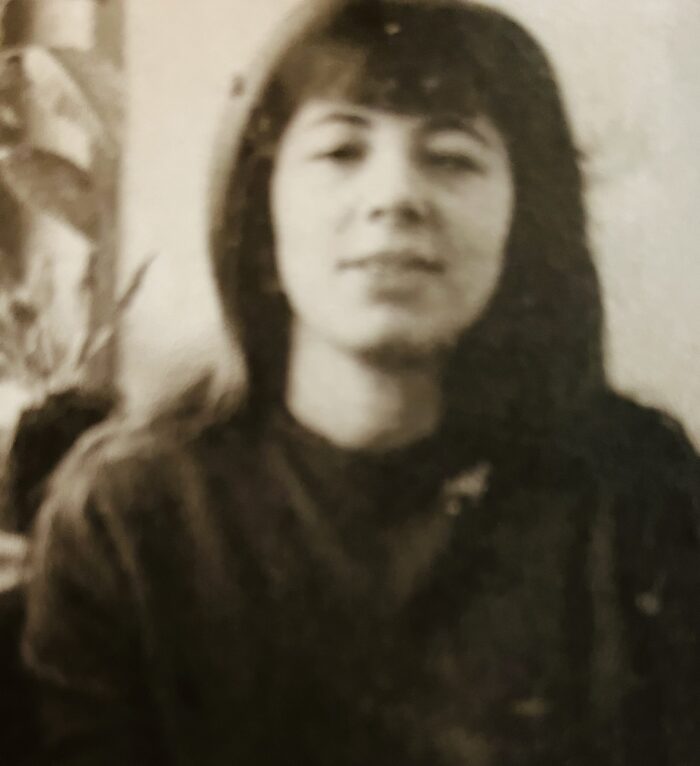
Their nightmare ended on April 18, 1945 when U.S. troops occupied Leipzig, a city in eastern Germany to which they had moved in 1939. Mentally and physically exhausted by the years of anxiety and stress, Johanna had a nervous breakdown and was hospitalized for five months.
Since Soviet occupation forces classified the Bernsteins as “victims of fascism,” they were allocated an apartment that had been seized from a Nazi family. Johanna became the editor of the culture page of a daily newspaper.
Stifled by the political repression in communist East Germany, Johanna and her new husband fled to West Germany in 1950. Thomas Paul went to the United States in 1953. After graduating from Harvard, he launched his career as a university professor.
In 1990, he married a Jewish woman who introduced him to Judaism. He did not formally convert to Judaism, but he and his wife joined a Reconstructionist synagogue in California.
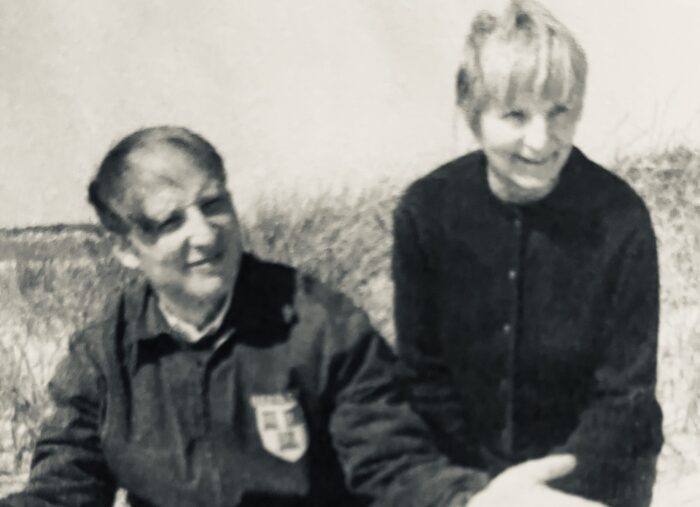
Reflecting on his life as an outcast in Nazi Germany, Thomas Paul says he does not share his father’s unconditional love of Germany. “In the U.S., I have rarely talked about my German background … I have tried to avoid being identified with Germany.”
One can understand his alienation from a country that murdered his father and constantly demeaned him. His feelings emerge strongly in Holocaust: German History And Our Half-Jewish Family.