Iran appears to have won a strategic diplomatic victory over Israel, having succeeded in placing Israel’s current conflict with Hezbollah in Lebanon at the center of its talks with the United States to officially terminate their war.
During the opening round of U.S.-Iran negotiations in Switzerland on June 21, which was aimed at turning a 60-day ceasefire/memorandum of understanding into a lasting peace agreement, Iranian negotiators effectively prevailed.
According to Iranian state media, they insisted that further talks between Iran and the United States could not proceed unless the memorandum of understanding was strictly observed.
Its first clause states that the United States, Iran and its allies, notably Israel and Hezbollah, will “declare an immediate and permanent termination of military operations on all fronts, including Lebanon,” and that “the territorial integrity and sovereignty of Lebanon” will be respected.
Ceasefires have come and gone since Hezbollah, Iran’s chief proxy in the Middle East, launched a flurry of rockets into Israel on March 2, shortly after the United States and Israel attacked Iran in a joint air offensive on February 28.
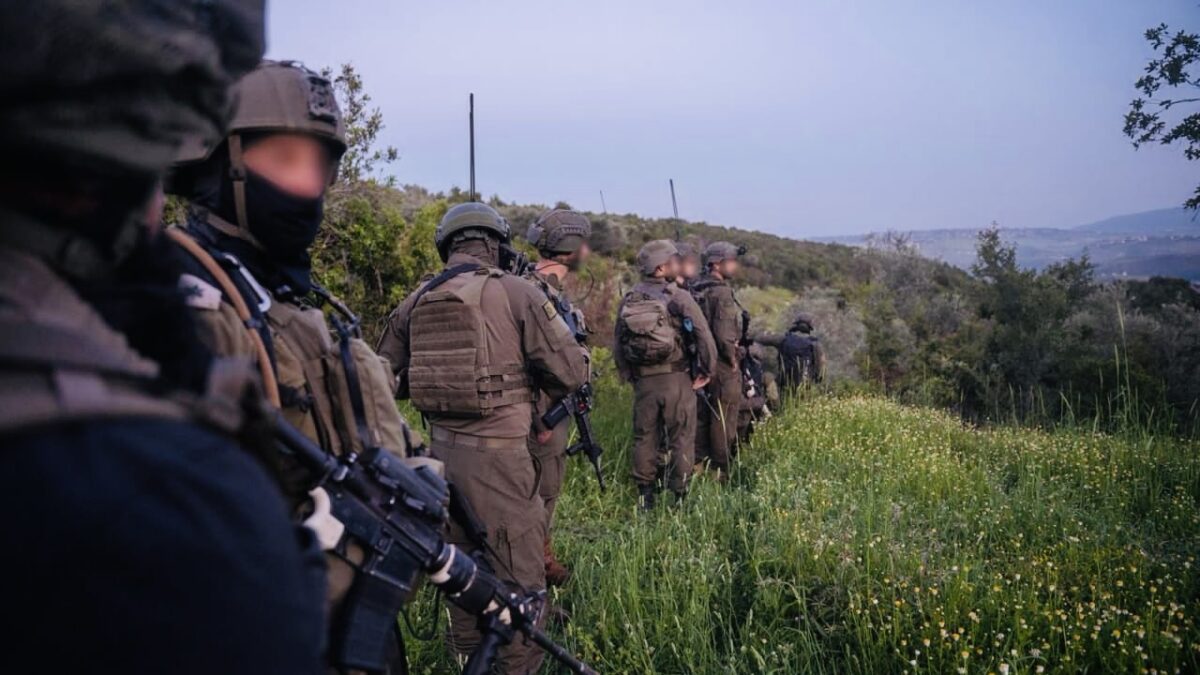
Hezbollah’s bombardment drove Israel to invade southern Lebanon, where it created a buffer zone up to the Litani River to protect Israeli communities in the Galilee from Hezbollah aggression. Since then, Israel and Hezbollah, in their second war since 2024, have clashed regularly.

Prior to the latest talks in Switzerland, which were mediated by Pakistan and Qatar, Esmail Baghaei, Iran’s Foreign Ministry spokesman, warned that it would be impossible “to move to the stage of negotiating a final agreement” unless the fighting in Lebanon ended.
The talks had been slated to begin on June 19, but were delayed after Iranian officials refused to attend due to the strife in Lebanon.
Iran’s strategy is clear: to preserve Hezbollah as its primary proxy and Lebanon’s preeminent military organization, to force Israel out of Lebanon, and to increase its political influence in Lebanon, which has been in a technical state of war with Israel since 1948.
Or, as the Institute for the Study of War put it in one of its most recent commentaries: “Iran is using the first clause of the memorandum of understanding, which calls for a ceasefire on all fronts, to try to pressure the United States to compel Israel to cease operations against Hezbollah in Lebanon and withdraw its forces from Lebanese territory. Iran’s interpretation of this clause is part of its broader effort to preserve Hezbollah as a central element of Iran’s deterrence strategy against Israel.
“This interpretation creates a win-win situation for the Iranian regime: if the United States agrees to Iran’s interpretation and compels Israel to withdraw its forces from Lebanon, this would represent a strategic victory for Iran and Hezbollah. If, on the other hand, the United States does not accept Iran’s interpretation of this clause, Iran can continue to postpone nuclear negotiations by claiming that the United States is violating the memorandum of understanding.”
Until recently, Israel and its main ally, the United States, sought to keep the conflict in Lebanon on a separate track from the war in Iran. The Iranian regime, emboldened by its perception that it defeated the United States and Israel in the war, successfully pushed back.
Iran warned the United States that continued Israeli air strikes in Beirut, a Hezbollah stronghold, would jeopardize talks to end the war. Iran upped the ante by saying that Israel’s military campaign in southern Lebanon had to end.
The Trump administration more or less sided with Iran on this pivotal issue, turning many Israelis against Trump.
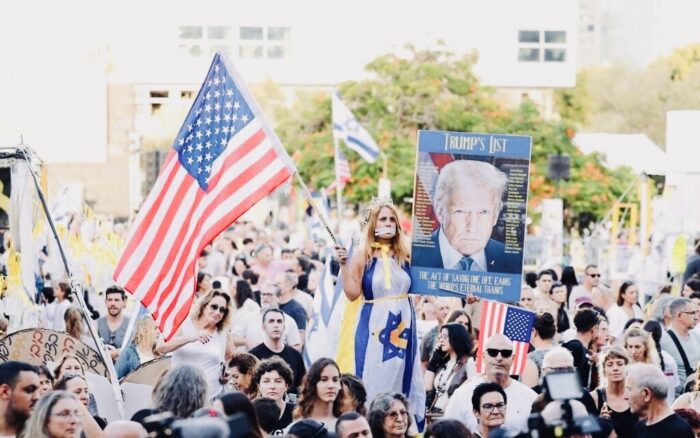
Iran’s tactic is “to stir the pot” and create a wedge between the United States and Israel, says Dana Stroul, a former Pentagon official during the previous Biden administration and now a senior fellow at the Washington Institute for Near East Policy.
In pursuit of this policy, Iran launched a barrage of ballistic missiles at Israel earlier this month. Israel retaliated before the United States intervened and stopped the exchange, which threatened to reignite a war that U.S. President Donald Trump desperately wanted to finish once and for all.
On the eve of the talks in Switzerland, Iran announced that it had closed the Strait of Hormuz — a vital international waterway through which one-fifth of the world’s oil and liquified natural gas passes — due to the ongoing battles in Lebanon.
The U.S. Central Command, which operates in the Middle East, disputed Iran’s claim and said that ships had transited the Strait of Hormuz. U.S. Vice President JD Vance said that millions of barrels of oil have moved through it in recent days. He also disclosed that Trump hopes to “turn over a new leaf” with Iran.
Israel’s justification for attacking Hezbollah was that it was responding to Hezbollah’s violations of the ceasefire, which has been repeatedly breached since its inception in April.
In one of its deadliest strikes, Hezbollah struck an Israeli tank, killing its four occupants, including a high-ranking officer. Their deaths brought Israel’s death toll in Lebanon to more than 30 soldiers since March. Almost 4,000 Lebanese civilians and combatants have been killed during that period.
Amid the carnage, Hezbollah’s secretary-general, Naim Qassem, has vowed to expel Israeli forces from Lebanon.
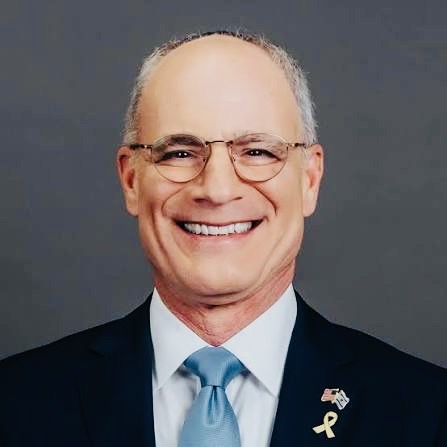
Israel’s ambassador to the United States, Yechiel Leiter, told the media that Hezbollah fired 147 rockets, 20 drones and nine anti-tank missiles at Israeli troops in southern Lebanon during the latest incident. “Israel is honoring the ceasefire while defending itself against terrorist attacks, as any self-respecting country would,” he said. “Iran is using its proxy to extract concessions” He added that Israel has “no territorial ambitions in Lebanon.”
Despite Israel’s conciliatory tone, the Trump administration has exerted continual pressure on Israel to constrain its operations in Lebanon.
On June 18, a few days before the talks in Switzerland got underway, Trump said categorically, “We expect a complete ceasefire on all fronts, including Lebanon, Hezbollah and Israel. The United States is committed to PEACE, and we encourage everyone … to maintain their commitment to allowing our negotiations (with Iran) to beautifully unfold.”
On June 20, Trump said he would be able to head off fresh Israeli attacks in Lebanon. “(Israel) has a lot of respect for me, and they will do as I say.”
U.S. pressure on Israel has yielded results, with Vance having said that conditions in Lebanon have improved. “We’ve seen great progress over the last couple of days in ensuring that the ceasefire holds in Lebanon,” he said.
In the past week, the scale and pace of Israeli strikes have declined. Israel, too, has stopped issuing evacuation warnings, which heretofore have displaced more than one million Lebanese.
On June 21, the Israel Defence Forces disclosed it had received “updated directives” from Prime Minister Benjamin Netanyahu not to conduct “proactive strikes” in Lebanon. However, the IDF said it reserved the right to respond to Hezbollah fire and would operate only in its self-declared buffer zone.
In the meantime, Trump has called on Iran to rein in Hezbollah. “If they don’t, we’ll hit Iran very hard again,” he wrote in his Truth Social media site.
Following the Swiss talks, Pakistan and Qatar announced that Iran and the United States, along with Lebanon, had agreed to set up a “deconfliction cell.” This monitoring mechanism is designed to resolve direct violations of the ceasefire, Vance explained.
A similar mechanism, brokered by the previous administration of Joe Biden, was established in November 2024 following the first Israel-Hezbollah ceasefire. Under its terms, as Axios points out, Israel retained the right to act against both imminent threats and emerging threats posed by Hezbollah. Under current conditions, Israel’s freedom of action appears to be limited to imminent threats only.
While the members of the original mechanism were Israel, Lebanon, the United States, France, and the United Nations, the reconstituted body consists of the United States, Iran, Lebanon, Qatar and Pakistan, but not Israel.
Israel’s exclusion prompted Iranian Foreign Minister Abbas Araghchi to say that “major progress” had been made in talks with the United States.
Axios reports that Israel is worried that the new mechanism “will undermine months of efforts by the U.S. and Israel to weaken Hezbollah and decrease Iran’s influence in Lebanon.”
The deaths of the four Israeli soldiers angered National Security Minister Itamar Ben Gvir, who said that Israel should “burn all of Lebanon.”
Araghchi claimed that Ben Gvir’s comment was proof of Israel’s intentions in Lebanon. “This is not a rant by a random genocidal lunatic,” he said on X. “It’s a public post by the national security minister of the Israeli regime. The genocidal death cult headquartered in Tel Aviv is a threat to all of humanity. It threatens all humans. Its only interest is permanent war.”
Netanyahu, who was not a party to the United States’ memorandum of understanding with Iran, insists that he is not bound by it. He said that Israel would keep troops in southern Lebanon “for as long as it takes” to protect Israelis.
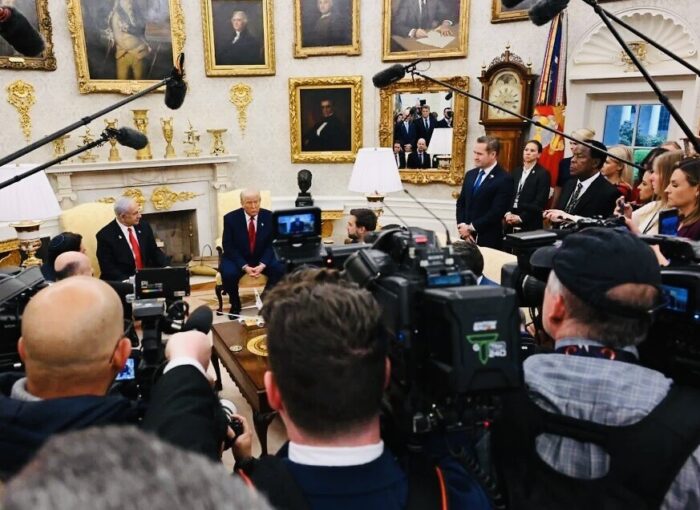
Netanyahu admitted that he and Trump have had disagreements over Lebanon. “We’re leaders of independent and proud countries,” he said. “Often we see eye to eye. Sometimes, we don’t.”
Netanyahu defended Israel’s military campaign after Trump’s recent remark that Syria would do a better job combating Hezbollah. “No country would do it better,” Netanyahu said in countering Trump’s’ farfetched claim.
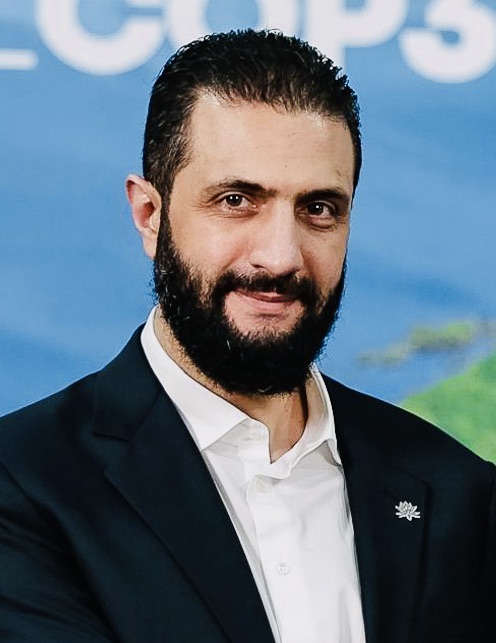
As expected, Syria has officially declined to undertake that daunting task. Syrian President Ahmed al-Sharaa told the Dubai-based Al Mashhad on June 21 that Damascus is “looking for economic channels between Lebanon and Syria, not military ones.”
With an Israeli election looming later this year, Netanyahu is struggling for political survival amid widespread grumbling that Trump’s memorandum of understanding has curtailed Israel’s freedom of action in Lebanon and given Iran a tactical advantage.
Mitchell Barak, an Israeli pollster who has worked for Netanyahu, believes that he miscalculated by aligning Israel so closely with Trump. “This is what you get when you put all your foreign policy eggs in Trump’s basket,” he told The New York Times. “Trump was viewed as the savior of Israel, and now Israelis feel he threw us under the … bus.”
Michael Oren, Israel’s former ambassador to the United States, thinks that Netanyahu needs to maintain “a very strong position” on Lebanon to win the election in September or October.
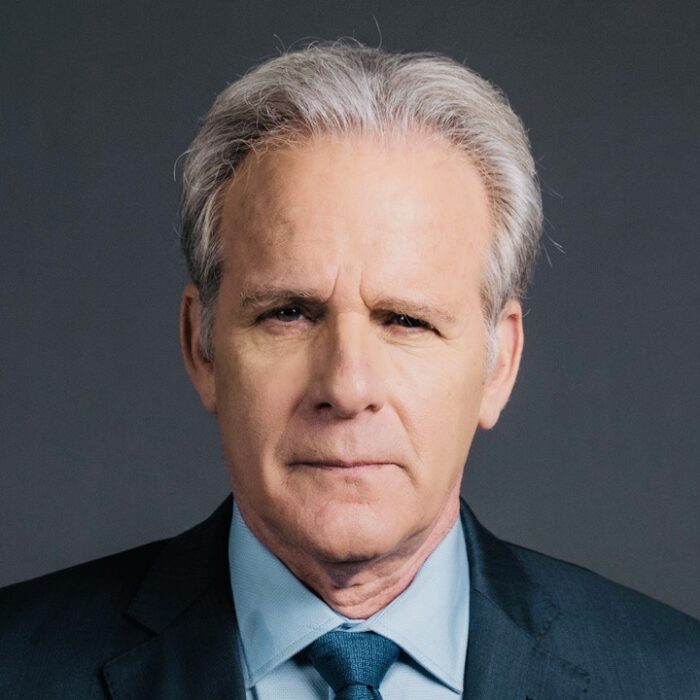
On the other hand, he noted, Trump must keep Netanyahu in line so as to extricate himself from a geopolitical nightmare in Iran and ensure that the Republican Party fares well in November’s midterm elections.
Their competing priorities are expected to widen the growing rift between Israel and the United States with respect to Lebanon and the memorandum of understanding. These issues could well tarnish Netanyahu’s relationship with Trump.
Three days ago, Israeli President Issac Herzog addressed this seething problem, saying that negotiations to terminate Israel’s conflict with Lebanon cannot be achieved “by Iranian extortion.”
“Tying Iran to Lebanon not only leaves Israel exposed to constant threats, but leaves Lebanon weak and powerless,” he added.
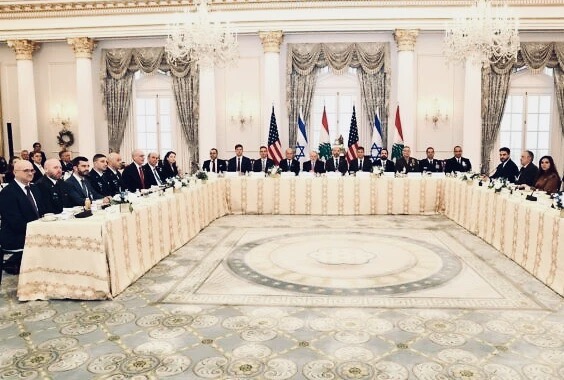
Alluding to the round of Israel-Lebanon negotiations that took place in Washington on June 23, Herzog said that the Lebanese army should be the sole military force in the country. “The disarmament of Hezbollah must be inherent to any solution in Lebanon, and Iran cannot dictate the future of Lebanon. On these fundamental points there is full agreement between Israel and Lebanon,” said Herzog.
If Herzog’s assessment is correct, the Lebanese government would be wise to prepare itself for a titanic struggle with Hezbollah and its sponsor, Iran. This conflict could well spark another civil war, which would plunge Lebanon into further chaos.