
Three left-wing candidates endorsed by New York’s anti-Zionist mayor, Zohran Mamdani, won Democratic Party primaries on June 23, upending politics in the city and underscoring Israel’s rapidly declining image and standing in the United States.
In what was described as a pro-Palestinian sweep, Brad Lander, Claire Valdez and Darializa Avila Chevalier won progressive districts in races for the U.S. House of Representatives. Significantly enough, in a bold sign of the times, they triumphed in a city with the largest Jewish population in the United States.
Like Mamdani, New York’s first Muslim mayor, Valdez and Chevalier are democratic socialists. U.S. President Donald Trump quickly denigrated them as “communists.”
All three stand a good chance of defeating their Republican opponents in the mid-term elections in November.

Valdez, a member of New York’s State Assembly, defeated Antonio Reynoso, the president of the borough of Brooklyn. She told supporters that she was committed to “Palestinian liberation,” which is widely regarded as a code phrase for Israel’s destruction.
Chevalier, a community organizer who participated in the pro-Palestinian encampment on the campus of Columbia University in 2024, defeated incumbent Adriano Espaillat. At her victory party, chants of “free Palestine” were heard.
Lander, New York City’s former comptroller, rolled over Representative Dan Goldman, a two-term Democrat from Brooklyn. Lander, a self-styled liberal Zionist who supports a two-state solution to resolve Israel’s conflict with the Palestinians, accused Goldman of being insufficiently critical of Israel.
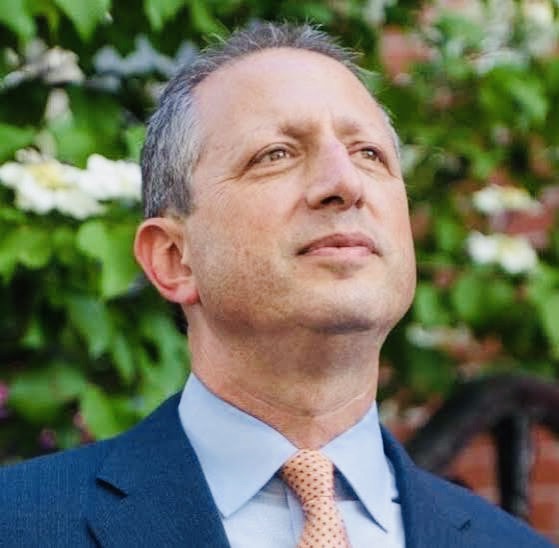
During the final days of Goldman’s campaign, the owner of a local coffee shop chain let it be known that Goldman — a critic of Prime Minister Benjamin Netanyahu right-wing government — should stay away from his cafe because “genocide enablers” are not welcomed.
Although the primary issues at hand in all three districts focused on economic affordability and immigration, Israel was thrust into the mix.
Mamdani’s preferred candidates accused Israel of genocide, in a reference to its military campaign in the Gaza Strip from 2023 to 2025. And they castigated the American Israel Public Affairs Committee (AIPAC), a pro-Israel lobbying group that Mamdani and liberals have sharply criticized.

The resounding victories by Valdez, Chevalier and Lander signify that a new generation of Democrats have turned on Israel, which has been gradually drifting to the right since the 1967 Six Day War. These democrats are particularly dismissive of Netanyahu and his government, which opposes Palestinian statehood.
Nonetheless, some pro-Israel Democrats prevailed in New York’s primaries.
Representative Ritchie Torres defeated former New York Assembly member Michael Blake, who criticized Israel and Torres’ support from AIPAC. Micah Lasher replaced Jerry Nadler, who retired.
That being said, 80 percent of Democrats and independents are critical of Israel, according to the Pew Research Center. Among Democratic voters, support for Israel has all but crumbled.
As Lander said, “There is no doubt that the landscape has moved dramatically away from sympathy for Israel as Israel has acted in utterly unsympathetic ways.”
“The Democratic establishment would do well to pay attention,” Beth Miller, the anti-Zionist political director of the Jewish Voice for Peace Action, told The New York Times.
According to the Jewish Telegraphic Agency, the results of last Tuesday’s primaries feel “more seismic” than Mamdani’s ascension to City Hall last November.
“Being staunchly anti-Israel is no longer a road block to success in Democratic politics … This is the first time that incumbent congressmen have lost their seats in campaigns in which they were repeatedly attacked for being too supportive of Israel. Whatever other issues were at play in the individual races, the success of candidates with an outsized focus on criticizing the Jewish state and groups that support it — in particular, the American Israel Public Affairs Committee — sends the message that their approach is a winning strategy.”
The Free Press contends that the results should be seen within the context of a major shift within the Democratic Party, which is consumed by “an internal battle pitting its traditional old guard against an insurgent, socialist, and virulently anti-Israel left wing.”
While many Democratic officials remain broadly supportive of Israel, the new class of congressional Democrats tends to be more wary concerning the U.S.’ relationship with Israel than at any other moment since Israel’s birth in 1948.
Or as The New York Times commented, “The election results in New York became the latest evidence of a swing against Israel in public opinion that is fast eroding the foundations of U.S. support for the Jewish state. The results underscore the deep fractures in support for Israel within the United States, a trend that already has profound political implications for Republicans as well as Democrats. If the erosion of support continues, it could reshape one of the nation’s closest alliances, one that nonetheless remains bolstered by generations of ties, the influence of Israel’s remaining supporters, and the complexity of U.S. interests in the Middle East.”

Senator Chris Van Hollen, a Democrat from Maryland, is among a coterie of politicians who wish to cool the United States’ relations with Israel. As he said recently, “You’re seeing more and more Democrats making it clear that we should provide no U.S. taxpayer support to the government of Israel. I hope we will see a Congress that doesn’t provide reflexive unconditional support to the government of Israel.”
Last April, roughly three-quarters of Democrats in the U.S. Senate supported a bill to cancel arms sales to Israel, up from about half since last year. The measure, sponsored by Senator Bernie Sanders of Vermont, failed due to Republican opposition, but it was yet another indicator of declining Democratic support for Israel.
Since 2023, the year Hamas attacked Israel in a devastating one-day invasion, increasing numbers of mainstream Democrats have migrated to the progressive wing of the party, which is harshly critical of Israel. The progressive camp encompasses politicians such as Ilhan Omar, an ethnic Somali Muslim, and Rashida Tlaib, the only Palestinian member of Congress.
Even Democrats supportive of Israel have distanced themselves from AIPAC.
At a Democratic primary debate in Minnesota, the lieutenant governor, Peggy Flanagan, said, “I don’t take AIPAC money because my values don’t align with AIPAC.” Her opponent, Representative Angie Craig, whom AIPAC has endorsed in the past, said she has taken “not one penny” from it.
In Michigan, which is home to substantial Jewish and Muslim communities, a tight Democratic Senate primary is unfolding. Representative Haley Stevens, a staunch backer of Israel, is running against Abdul El-Sayed, a progressive who has compared Israel’s military operations in Gaza to genocide and opposes military aid to Israel. The third contestant, state senator Mallory McMorrow, has adopted a middle-of-the-road position and is lagging in the polls.

Philip H. Gordon, who was Vice President Kamala Harris’ national security adviser, believes that public opinion on Israel has undergone a sea change in recent years due to Israel’s policies with respect to the Palestinians.
He predicts that the 10-year $38 billion military aid package signed by the Obama administration, which expires in 2028, may be the last of its kind.
Public opinion polls tell the story.
A survey released by Quinnipiac University on June 24 found that 48 percent of American voters think the United States is “too supportive” of Israel. It indicates that 38 percent of respondents think that U.S. support of Israel is about right, while 7 percent think the U.S. is not supportive enough of Israel.
Broken down by party, 66 percent of Democrats think the U.S. is too supportive of Israel, while 9 percent think it is not supportive enough. Eighteen percent think that U.S. support is about right.
Among Republicans, 20 percent think the U.S. is too supportive of Israel, 69 percent think American support is about right, and 6 percent think the U.S. is not supportive enough.
Among independent voters, 55 percent think the U.S. is too supportive of Israel, 34 percent think U.S. support is about right, and 7 percent think the U.S. is not supportive enough.
The Pew Research Center, in March, found that 60 percent of U.S. adults have an unfavorable view of Israel, up from 53 percent last year. Fifty nine percent have little or no confidence in Netanyahu to do the right thing, up from 52 percent in 2025.
In both political parties, the majority of adults under the age of 50 currently rate Israel and Netanyahu negatively.
At the same time, Trump himself has begun to voice harsh criticism of Netanyahu over his positions on Lebanon and the recently concluded war in Iran, while a greater percentage of Republicans have lined up against Israel.
There are still plenty of pro-Israel Democrats capable of winning seats in the Senate and House of Representatives. For example, Adrian Boafo won a primary in Maryland last week to fill a seat being vacated by Steny Hoyer, who has been supportive of Israel.
Yet pro-Israel candidates in the Democratic congressional caucus now realize that their views have become increasingly unpopular and that their political careers may well be in jeopardy.
This seminal shift is bound to have profound consequences in the United States, Israel and the Middle East.