The French resistance movement battling the pro-German Vichy regime and its ally, Nazi Germany, was a source of hope to persecuted Jews in France. The resistance condemned Vichy’s antisemitic edicts and Germany’s genocidal policy toward Jews, yet the whiff of antisemitism persisted in its ranks.
This, in essence, is the overarching theme of Renee Poznanski’s massive work, Propaganda and Persecution: The French Resistance and the Jewish Question, published by the University of Wisconsin Press.
Poznanski, a specialist in wartime France and a professor emeritus at Ben Gurion University of the Negev in Israel, delves into this topic in voluminous detail in her dense and ambitious book. Although the attitude of the French resistance toward Jews is at the very core of it, she wisely devotes considerable space to the related issue of antisemitism in the first third of 20th century France. A long and ignoble history of hatred toward Jews, of course, laid the foundation of Vichy’s relentless assault against the Jewish community.
When France was conquered and occupied by Germany in 1940, French Jews accounted for only 0.7 percent of its population. Yet the 330,000 Jews of France loomed large in the eyes of antisemites. France was the first Western nation to emancipate Jews, yet its Jewish citizens faced unremitting hostility from antisemites.
“French antisemitism drew on a concept of nationality linked to a person’s community of origin, in which Catholicism was the essence of the French nation, and not on a notion of citizenship in its republican version,” Poznanski writes in a perceptive passage. “It rested on the axiom that the Jews were not and never could be French … and would always remain … foreigners.”
From its beginnings, modern antisemitism in France was connected to xenophobia and was anchored by the insinuation that Jews controlled all aspects of political, economic, intellectual and cultural life and the moral decadence that this produced. This was clearly the case during the interwar period, when nearly every corner of French society was infected by “rampant” xenophobia and antisemitism, she states.
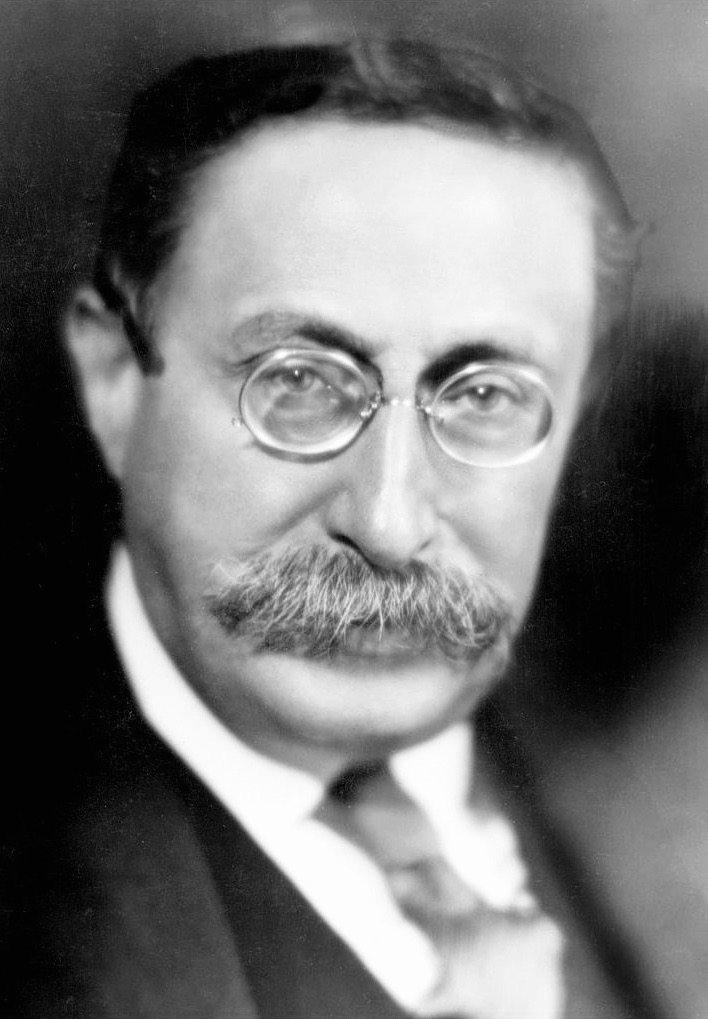
The far right, the transmitter of this venomous philosophy, omitted no one from its scornful purview. Even Leon Blum, a prime minister in the 1930s, felt its fury. In its scurrilous periodicals, he was trashed as “human garbage” and a “wandering Jew.”
While Jews were regularly attacked by anti-Jewish ideologues such as Edouard Drumont, they were equally maligned by respected literary figures like Louis-Ferdinand Celine and Georges Bernanos. “There is a Jewish racial and national problem,” Bernanos claimed, categorizing Jews as an “unassimilable and dangerous people.” Yet he distanced himself from Vichy’s “hideous antisemitic propaganda” and unconvincingly insisted he was not antisemitic.
What he may have objected to were Vichy’s harsh antisemitic laws, the majority of which were enacted in 1940. These laws, however, were in full harmony with the beliefs of French people who hated Jews.
In short order, Jews in France were stripped of their civic rights, fired from civil service jobs, and completely demonized and marginalized. At the same time, the Germans introduced their own anti-Jewish ordinances. And with the repeal of the Cremieux Law of 1870, Jews in the French colony of Algeria were deprived of their French nationality.
Having drawn a rounded pen portrait of Vichy’s vile mistreatment of Jews, Poznanski segues into the primary subject of her 598-page book, which, regrettably, is bereft of photographs to break up the small print.
Oddly enough, she neglects to provide readers with a roster of the resistance organizations, their leaders and their ideologies. Instead, an extensive litany of names appear.
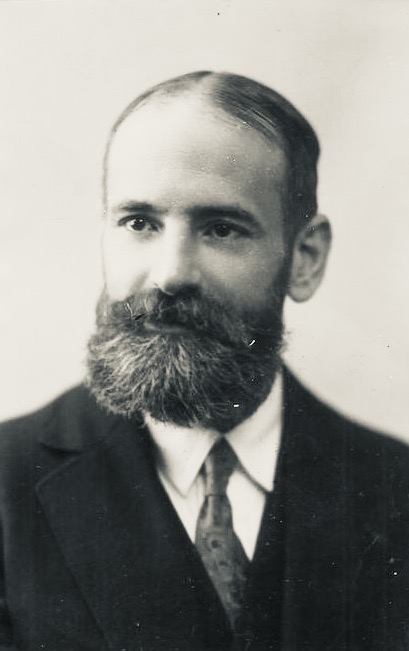
One of Vichy’s most prominent opponents, Rene Cassin, a Jew, announced in 1940 that all its legislation was null and void. In his speeches, Charles de Gaulle, a major figure in the Free French Forces, did not oppose any specific aspect of Vichy policies. But in 1941, in a letter to the president of the American Jewish Congress to mark the 150th anniversary of the emancipation of French Jews, he expressed support for Cassin’s statement. Another notable Vichy adversary, Jacques Duchesne, likened its antisemitic laws to those of Nazi Germany.
Despite their denunciations, the resistance waited until 1942 to broadcast a radio report focused on Vichy’s antisemitism, notes Poznanski in a tacit scolding. Until that year, she adds, underground publications rarely addressed the persecution of Jews. When it was alluded to, the Germans were held to be responsible.
When the BBC reported that 700,000 Polish Jews had been murdered, the news was not picked up by the underground press in France with the exception of the Bund’s Yiddish-language newspaper. And not a single underground newspaper published news of the Warsaw ghetto uprising in 1943, she says.
Poznanski’s explanation of the deafening silence is plausible. She attributes it to “the dichotomy between the sympathy felt for the victims of a savage persecution and the persistence of the prejudice against Jews.”
The philosopher Jean-Paul Sartre reacted to this ambivalence following the liberation of Paris in the summer of 1944. “Now all of France rejoices and fraternizes in the streets,” he wrote in his illustrious book, Antisemite and Jew. “The newspapers devote whole columns to stories of prisoners of wars and deportees. Do we say anything about the Jews? Do we greet the return among us of the survivors? Do we give a thought to those who died in the gas chambers? Not a word. Not a line in the newspapers.”
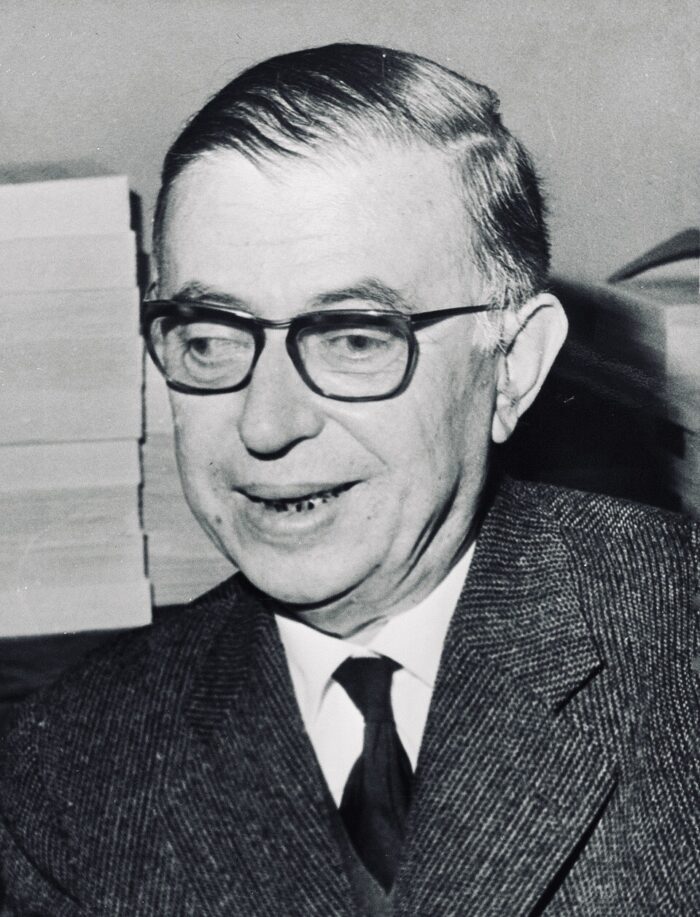
Poznanski chimes in with an accusation. “Saying too much about Jews was clearly out of bounds.” Referring to Sartre’s book, she observes, “The prestigious publisher Gallimard rejected Sartre’s manuscript, which was finally brought out by a small firm.”
With the fall of the Vichy regime, all antisemitic decrees were eliminated and “every distinction between Jews and non-Jews was abolished.”
Poznanski charts these developments with an avalanche of material, some of which is bound to overwhelm most readers. She could have made her case far better with judicious deletions. That being said, Propaganda and Persecution remains a worthy contribution to French historiography.