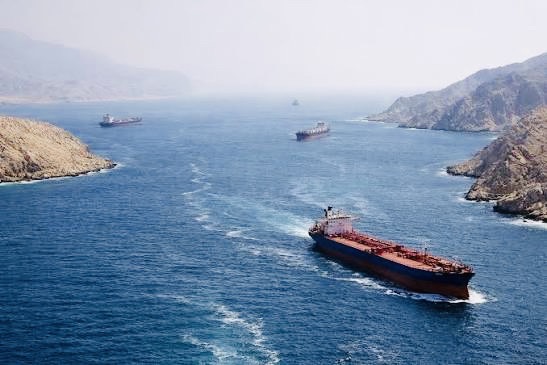
Shortly after the eruption of the war in Iran last winter, the Iranian regime closed the Strait of Hormuz to virtually all commercial shipping. The selective closure of this international waterway excluded allies like China and Pakistan, but inflicted severe damage on the global economy.
Oil and liquified natural gas prices soared, increasing the cost of living across the board and driving U.S. President Donald Trump to call for an end to the war.
In the process, Iran discovered that its ability to disrupt traffic in the strait, through which about 20 percent of the world’s oil and gas passes, was a form of critical leverage that worked to its advantage in its confrontation with the United States
Today, Trump is so focused on the strait that he seems to have shelved issues that triggered the war in the first place — namely Iran’s weaponized nuclear program, its support of regional allies like Hezbollah and Hamas within the Axis of Resistance, and its stockpile of long-range ballistic missiles.
The strait has emerged as a major postwar issue due to one compelling factor. Since the cessation of hostilities, Iranian spokesmen from Foreign Minister Abbas Araghchi on down have made it clear that Iran intends to be the central authority in managing the strait and charging tolls for the safe passage of ships.
The imposition of tolls was once unthinkable, since the principles that govern shipping are underpinned by the concept that global chokepoints should remain free to navigate.
Iranian leaders categorically reject this tenet. If they succeed in imposing their will, they will be able to claim that Iran has emerged from the war with a great strategic victory over much stronger adversaries.
Furthermore, tolls would be of immense benefit to Iran’s economy, which has been battered by crippling U.S. and European sanctions for years now. At the very least, Iran could utilize tolls to repair extensive war damage and channel funds to its allies in the Middle East.
Having been emboldened by the outcome of the war, Iran has deployed military force to assert its control over the strait. Iran has periodically attacked vessels and warned ship owners that the strait will be off-limits to them unless they use a northerly route in its territorial waters.
The United States, which attacked Iran in a joint air campaign with Israel starting on February 28, vehemently opposes Iran’s position.
On June 25, the United States and the Gulf Cooperation Council issued a statement demanding free, unconditional and unrestricted navigation through the strait and rejecting the notion of tolls or fees.
Around this time, U.S. and Iranian forces clashed over the course of four consecutive days in the Persian Gulf. The armed exchange began when Iran struck two cargo ships on Oman’s southerly side of the strait, prompting retaliatory American bombardments and Iranian reprisals during which U.S. bases in Bahrain and Kuwait were targeted.
U.S. Vice President JD Vance had warned Iran that “violence will be met with violence.”
These clashes imperilled the U.S.’ memorandum of understanding and ceasefire with Iran and dashed hopes that shipping through the strait would return to prewar levels, a requirement for economic stability.
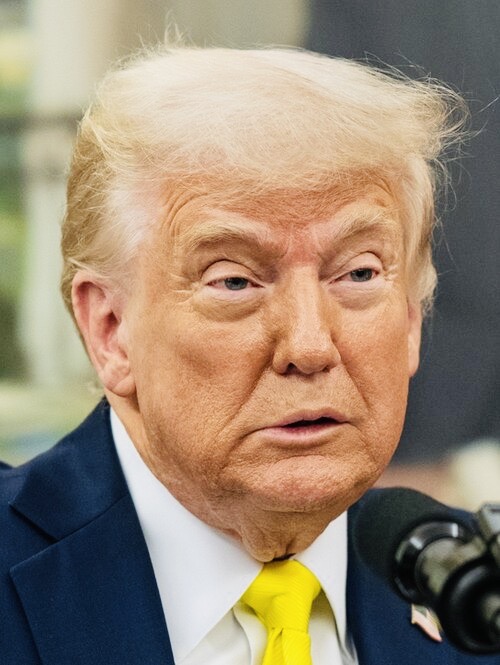
Trump accused Iran of violating the truce and, in his usual blustery style, threatened to resume the war. In an inflammatory post on his social media site, he wrote, “United States aircraft just struck Iranian missile and drone storage locations and coastal radar sites … There may come a point when we are no longer able to be reasonable, and will be forced to militarily complete the job that we very successfully started. If that happens, the Islamic Republic of Iran will no longer exist!”
Trump’s threat was rhetorical due to his aversion of restarting the war. Trump fears that a new round of sustained fighting will affect the oil-dependent U.S. economy just a few months before the midterm elections in November.
In a bid to stave off further escalation, the U.S. and Iran paused military operations and allowed negotiators to conduct indirect talks in Doha, the capital of Qatar, on July 1. Further negotiations are expected. In the meantime, Iran and its neighbor, Oman, have discussed a proposal to levy service fees on ships transiting the strait. This discussion is still in progress, much to the ire of the Trump administration.
As Araghchi recently warned, Iran is bent on controlling the strait. “Any attempt to adopt new or separate arrangements from those currently pursued by the Islamic Republic will only lead to further complications, delays in reopening the strait, and an increase in tensions,” he said.
He was referring to an announcement by Oman and the International Maritime Organization, a United Nations agency, that a new route through the strait would pass through Oman’s territorial waters.
This announcement was in conflict with Iranian policy. Iranian authorities are demanding that all vessels must coordinate their movements with Iran. Iran’s deputy foreign minister, Kazem Gharibabadi, said that safe passage through the strait cannot be based on “parallel routes.”
Iran claims that its memorandum of understanding with the United States allows it to manage marine traffic in the strait. Under that agreement, Iran would exert its “best efforts” to ensure the safe passage of ships through the strait. Since the wording is nebulous, Iran can interpret the memorandum of understanding in its self-interest.
On July 2, Iran issued a warning that it will continue to employ force to compel oil tankers and commercial vessels to use the Iranian-designated route. Iran said that its armed forces will intercept any vessel that uses the alternative route, which hugs the coast of Oman.
Iran is employing “diplomatic outreach and military coercion” to pressure regional Arab states like the United Arab Emirates and Saudi Arabia to support its policy, says the Institute for the Study of War.
In its estimation, Iran also seeks to advance its long-standing objective of expelling the United States from the Middle East. “Iran has long sought to convince Gulf and other regional states to remove U.S. military forces from their territory by claiming that the presence of U.S. forces in their territory threatens their security.”
Araghchi, in this spirit, has emphasized the importance of establishing a regional security framework led by regional countries rather than foreign powers like the United States.
In theory, Arab Gulf states oppose Iran’s efforts to be the dominant authority in the strait. In practice, however, they may well abandon their principles in a crunch. Having been constantly bombed by Iran during the war, they fear Iran’s wrath.
It is debatable whether the United States possesses the will or the power to stop Iran in its tracks. Iran appears to have created a new geopolitical equilibrium in the Middle East that may endure for years to come.