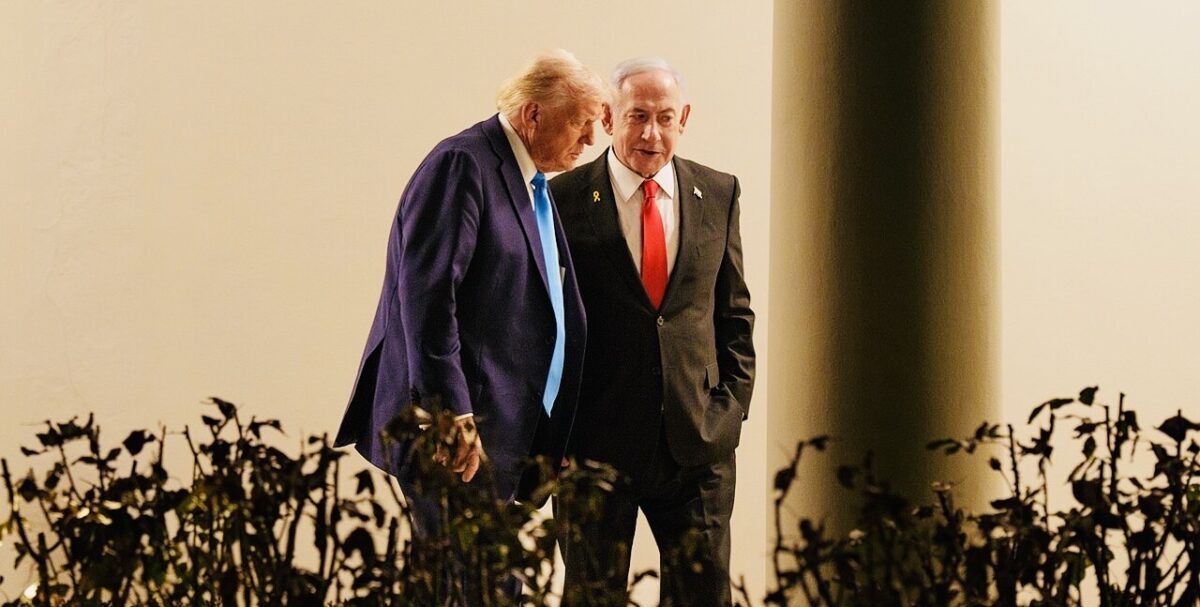
There is a glaring disconnect between Israel’s sagging popularity in the United States and President Donald Trump’s regard and respect for Israel.
By virtually every yardstick, Trump is the most pro-Israel president in American history.
During his first term, he moved the U.S. embassy from Tel Aviv to Jerusalem and recognized Israel’s sovereignty over the disputed Golan Heights, thereby earning the gratitude of Prime Minister Benjamin Netanyahu.
During his current presidency, the United States and Israel jointly conducted 38 days of air strikes against Iran, marking the first time they had fought a war together. This unprecedented level of military cooperation was a milestone in the annals of Israel’s relations with the United States, its friend, ally and patron.
Yet ironically, Israel’s image in the United States has been seriously tarnished, if not damaged, during this period.
Public opinion polls indicate that, for the first time, most Americans, particularly those under the age of 30, hold unfavorable opinions of Israel and are more sympathetic to the Palestinian cause.
Until quite recently, bipartisan support for Israel was taken for granted by Israel and its supporters. But in the past three years, following Israel’s war with Hamas in the Gaza Strip, the progressive wing of the Democratic Party has grown increasingly cold to Israel. Even middle-of-the road Democrats have criticized Israel in unusually harsh terms. Much of their ire has been focused on Netanyahu and his right-wing government.
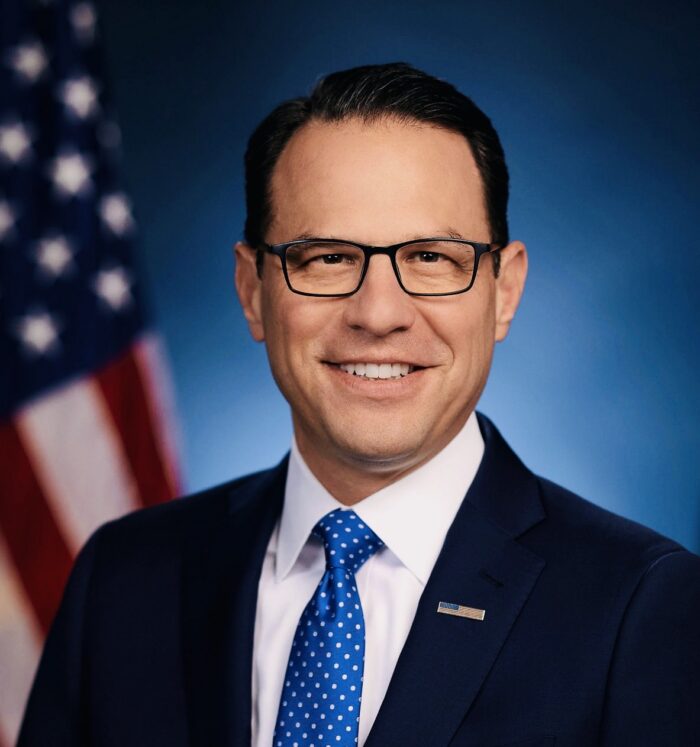
The emergence of a cadre of pro-Palestinian politicians within the Democratic fold risks “dooming the chances” that a Jewish candidate, such as Pennsylvania governor Josh Shapiro or former Chicago mayor Rahm Emanuel, might win the party’s 2028 presidential nomination, writes Konrad Yakabuski in The Globe and Mail.
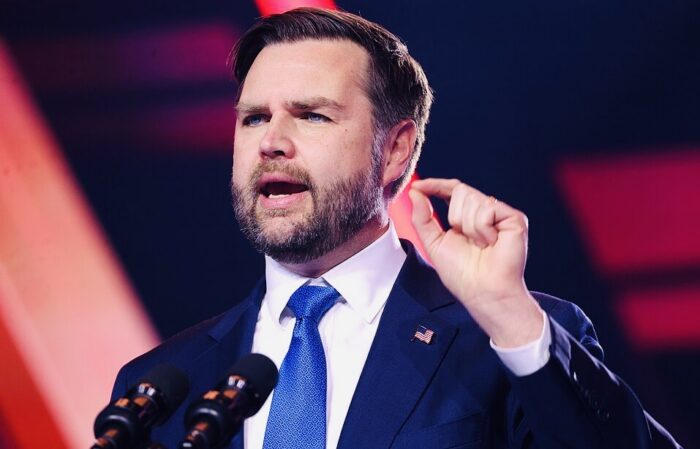
At the same time, isolationist voices within Trump’s Republican Party, ranging from Vice President JD Vance to podcaster Tucker Carlson, have either distanced themselves from Israel or denounced it in anti-Zionist rhetoric. Republicans of this stripe blame Israel for dragging the United States into a war with Iran.
Trump himself has remained in Israel’s corner, as Netanyahu’s visit to the White House on July 28 illustrates. Yet Trump has caused some concern in Israel.
He has tried to constrain Israeli military operations in Iran, Gaza, Lebanon and Syria. And he alarmed Israel by signing a memorandum of understanding with Iran last month that has since collapsed. The Israeli government was critical of it because Iran, Israel’s most powerful enemy, succeeded in temporarily pressuring the United States to draw a direct connection between a ceasefire in Iran and an Israeli withdrawal from southern Lebanon.
These developments surfaced at a moment when antisemitic incidents in the United States have risen to alarming levels since Hamas’ attack in southern Israel on October 7, 2023.
Such is the anti-Israel mood in Washington today that, on July 15, half of the Democrats in the House of Representatives voted to eliminate U.S. aid to Israel. The measure, promoted by progressives and their backers, sought to cut the $3.3 billion in annual military and humanitarian aid to Israel from a foreign affairs spending bill.
It failed by a vote of 314 to 104, with 10 voting “present.” But it was the latest evidence that the Democratic Party is struggling with a groundswell of hostility toward Israel and its conduct of the war in Gaza. The days when Israel could expect unequivocal congressional support may be over. A fundamental reset in the United States’ relationship with Israel could well be taking place.
As Representative Greg Casar of Texas, the chairman of the Congressional Progressive Caucus, put it in a letter to his colleagues, “The American people are crying out for an end to U.S. tax dollars subsidizing Israel’s military.”

The call among Democrats to end American military assistance to Israel comes at a crucial juncture. Currently, Israel is preparing for negotiations with the United States on a new memorandum of understanding concerning military aid. The last such package, valued at $38 billion, was approved by President Barack Obama in 2016, and is scheduled to expire in 2028.
It may not be renewed, given the Trump administration’s broad intention to phase out military aid to foreign allies. By one estimate, the United States has provided Israel with $174 billion in such assistance since the 1960s. During Joe Biden’s presidency, when Israeli forces were fighting wars in Gaza and Lebanon, Israel received $14 billion in emergency military aid. Biden held back a shipment of 3,500 heavy bombs in 2024 amid a dispute over Israel’s plans to capture the Gazan town of Rafah, but Trump released them after taking office in 2025.
Netanyahu, having read the tea leaves regarding the current mood in the United States, has said that Israel should wean itself off external assistance, build up its already substantive arms industry, and move from “aid to partnership” in its weapons relationship with the United States. Under this proposed arrangement, Israel would buy and sell arms from and to America, thereby ending its dependency on U.S. aid.
Netanyahu’s “partnership” scheme would likely silence some voices in the U.S. Congress critical of Israel, but it would not resolve Israel’s basic problem in the United States.
“Opposition to Israel is now a major foreign policy issue,” Michael Koplow, an Israel Policy Forum analyst, said recently. “It’s not on the fringe anymore … It’s front and center in (political) campaigns and in worldviews.”
And it could figure prominently in the 2028 presidential primaries and in the election itself.
For Democratic and Republican critics of Israel, Israel’s claim of being the sole democracy in the Middle East no longer carries the same weight as it did for decades. As a result, Israel’s special relationship with the United States has come under close and critical scrutiny.
A perception has emerged that Israel and the United States do not necessarily share the same values with respect to human rights and Israel’s treatment of the Palestinians. This impression was created during Israel’s two-year offensive in Gaza, during which Israel was accused of genocide, a charge that the Israeli government stoutly denies.
The accusation was hurled, in the main, by left-of-center Democrats like Alexandra Ocasio-Cortez and Republicans like Thomas Massie and Majorie Taylor Greene, who doubt whether Israel is a strategic asset and that U.S. and Israeli interests are identical.

Israel’s strained relationship with the United States prompted former Israeli prime minister Naftali Bennett to say that the U.S.-Israel alliance has reached a new low and that mending it will require much work. “For the first time since its establishment, Israel is a net negative in the United States,” he said recently. “That’s a disaster.”
Bennett is not exactly correct. During the presidency of Dwight Eisenhower in the 1950s, Israel’s bilateral ties with the United States came under immense stress, particularly during the 1956 Sinai War. Yet Bennett has a valid point, his hyperbole notwithstanding.
The far-left Democratic Socialists of America movement, which is gaining ground across the country and includes leftists such as New York City Mayor Zohran Mamdani and Ocasio-Cortez, recently unveiled its platform.
Its manifesto supports the end to all military and economic aid to Israel and the prosecution of U.S. and Israeli leaders “responsible for the genocide in Gaza.” It also endorses the Palestinian “right to resist military occupation,” demands the right of Palestinian refugees to “return” to their homes and properties in what is now Israel, and calls for the “right to self-determination in a free Palestine with Jerusalem as its capital.”
It does not acknowledge Israel’s right to exist as a Jewish state and implies that Israel should be replaced by a binational state.
Critics of Israel in Congress have not gone that far in their critiques, at least not yet. But if current trends continue unabated, Israel may one day find its decades-long alliance with the United States in tatters. The real question, then, is no longer whether Trump supports Israel, but whether the next generation of American political leaders will.
France, Israel’s closest ally from the mid-1950s until the mid-1960s, broke its alliance with Israel in the wake of the 1967 Six Day War. It could happen again in the United States.